


If your symptoms are sudden, intense surges of fear that peak within minutes, you are likely describing panic attacks. If they are persistent, excessive worries that have lasted for months, you are more likely describing generalized anxiety. Panic disorder involves recurrent unexpected panic attacks plus at least a month of worry or behavior change, while generalized anxiety disorder means excessive worry on most days for six months or more. Overlap happens, and we always recommend a professional evaluation to sort out which one fits.
TL;DR:
- Panic attacks peak suddenly within 10 to 20 minutes and are often triggered by internal sensations like a racing heart or breathlessness.
- Generalized anxiety involves persistent worry over months, with symptoms like muscle tension, sleep disturbance, and difficulty focusing, developing gradually.
- Diagnosis hinges on timing: panic disorder needs recurrent attacks with at least one month of worry, while GAD requires six months of pervasive, uncontrollable concern.
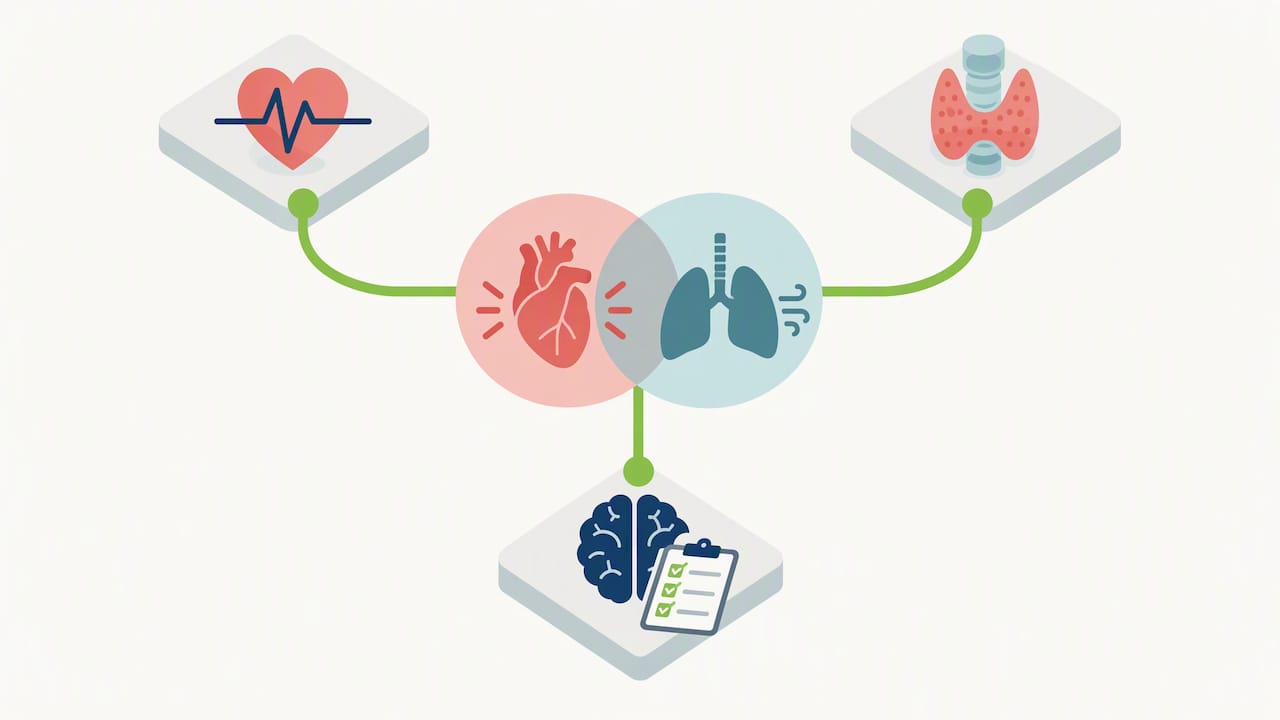
- Medical conditions such as thyroid issues or heart arrhythmias can mimic panic symptoms and should be ruled out with basic testing before psychiatric diagnosis.
- Both conditions respond well to therapy, mainly cognitive behavioral therapy and SSRIs or SNRIs, but early treatment reduces long-term impairment.
Table of Contents
- Panic attacks and panic disorder: what they are and how they feel
- Generalized anxiety and chronic anxiety: definition and symptom profile
- Practical differences: onset, duration, symptom quality, triggers, and behavior
- How clinicians diagnose panic disorder and GAD: screening questions, DSM thresholds, and red flags
- Prevalence and risks: how common these disorders are and why early care matters
- Evidence-based treatment options: CBT, medications, short-term management, and practical self-help
- When to see a psychiatrist and what to expect from an assessment
- Long-term prognosis and potential complications for both panic disorder and generalized anxiety disorder
- Comorbidities commonly associated with panic disorder and generalized anxiety disorder
- Self-management strategies and lifestyle modifications for anxiety and panic symptoms
- Role of panic attacks within anxiety disorders and their clinical significance
- Clinician perspective: concise guidance and realistic expectations
- FAQ
- Sources
- Getting the right care for panic disorder or anxiety
Panic attacks and panic disorder: what they are and how they feel
A panic attack is a sudden wave of intense fear or discomfort that reaches its peak within 10 to 20 minutes, though some symptoms can linger well after that peak passes. We often hear patients describe it as feeling like a heart attack, a stroke, or a complete loss of control, which makes sense given how physical the experience is.
The symptoms cluster around a few patterns:
- Racing heart, chest tightness, or palpitations
- Sweating, trembling, or shortness of breath
- Dizziness, nausea, or a choking sensation
- Fear of dying, losing control, or “going crazy”
- Derealization, a feeling of being detached from your surroundings
Many adults may experience an isolated panic attack at some point, but a single episode does not mean you have panic disorder. The diagnosis requires recurrent, unexpected panic attacks plus at least one month of persistent worry about having another attack, or a significant change in behavior because of them, such as avoiding places where an attack previously occurred.
We also want to flag something easy to miss: certain medical conditions mimic panic attacks closely enough that they deserve a look before anyone settles on a psychiatric diagnosis. Thyroid dysfunction and cardiac arrhythmias can produce the same racing heart and breathlessness, so when chest pain or palpitations show up alongside panic symptoms, a basic medical workup is a reasonable first step, not an overreaction.
Generalized anxiety and chronic anxiety: definition and symptom profile
Generalized anxiety disorder looks different from panic disorder in almost every way except that both involve fear. Instead of sudden spikes, GAD is a slow burn. The defining feature is excessive, difficult to control worry that occurs more days than not for at least six months, often about everyday things like work, health, finances, or family that most people would not find especially threatening.
The symptom picture tends to include:
- Persistent worry that feels hard to switch off
- Restlessness or a keyed up, on edge feeling
- Muscle tension, headaches, or jaw clenching
- Fatigue despite adequate rest
- Difficulty concentrating or a mind that “goes blank”
- Sleep problems, especially trouble falling asleep
What stands out clinically is how quietly GAD erodes someone’s functioning. There is rarely a dramatic moment, just a gradual narrowing of attention and energy. We see patients who have lived with this for years before recognizing it as something treatable rather than a personality trait. GAD also frequently travels with other conditions, particularly depression, which can blur the picture further and is part of why a careful history matters so much.
Practical differences: onset, duration, symptom quality, triggers, and behavior
Side by side, the two conditions separate along a few practical lines. We use this kind of mental checklist with patients fairly often.
- Onset and time course: panic attacks arrive abruptly and peak fast, while generalized anxiety builds slowly and stays elevated for months.
- Symptom quality: panic leans heavily physical, chest, breath, heart, while GAD leans cognitive, worry loops and anticipation.
- Triggers: panic disorder often involves sensitivity to internal bodily sensations, a racing heart itself can trigger fear of another attack, while GAD worry tends to spread across many unrelated life domains.
- Behavioral fallout: panic disorder can lead to avoidance of specific places or situations, sometimes progressing toward agoraphobia, while GAD tends to produce a broader, more diffuse caution that touches decision making across the board.
Pro Tip: Keep a simple log for two weeks noting when symptoms occur, how long they last, and what you were doing right before. That pattern often tells you more than trying to remember details during an appointment.
Neither pattern is more “real” than the other, and plenty of people experience features of both. That overlap is exactly why self-diagnosis has limits and why a clinician’s structured questions matter more than intuition alone.
How clinicians diagnose panic disorder and GAD: screening questions, DSM thresholds, and red flags
Diagnosis rests on timing as much as symptoms. Panic disorder requires at least one month of worry or behavioral change following recurrent attacks, while generalized anxiety disorder requires at least six months of excessive worry occurring more days than not. Those thresholds exist for a reason: anxiety that resolves on its own within weeks is common and not automatically a disorder.
During an evaluation, we tend to ask about:
- How often attacks or worry episodes occur, and how long they last
- What seems to trigger them, if anything identifiable at all
- How much the symptoms interfere with work, relationships, or daily tasks
- Whether there are any safety concerns, including thoughts of self-harm
Red flags that push us toward lab work or an ECG include chest pain with exertion, irregular heartbeat, unexplained weight change, heat or cold intolerance, or tremor, since these can point toward thyroid disease, cardiac issues, or blood sugar problems rather than a primary anxiety disorder. Getting the diagnosis right changes the treatment plan substantially, which is why this step is never just a formality.
Prevalence and risks: how common these disorders are and why early care matters
Nearly 30% of adults will experience an anxiety disorder at some point in their lives, placing anxiety disorders among the most common mental health conditions, right alongside depression.
Left untreated, both panic disorder and GAD tend to expand their footprint. People scale back work responsibilities, withdraw socially, or structure entire routines around avoiding triggers. Comorbid depression and substance use show up often, sometimes as an attempt to self-manage symptoms that feel unbearable otherwise. The encouraging counterpoint is consistent across the research: both conditions respond well to treatment, and starting care earlier tends to limit how much impairment builds up over time.
Evidence-based treatment options: CBT, medications, short-term management, and practical self-help
Treatment for both conditions rests on the same two pillars, psychotherapy and medication, though the specifics shift depending on which disorder you are dealing with.
Cognitive behavioral therapy is considered the gold standard psychotherapy for both panic disorder and generalized anxiety disorder, but the technique within CBT differs. For panic disorder, treatment often centers on interoceptive exposure, deliberately provoking physical sensations like a racing heart in a controlled setting to break the link between the sensation and catastrophic fear. For GAD, CBT leans more on cognitive restructuring, challenging the beliefs that fuel worry itself rather than any single physical trigger.
On the medication side:
- SSRIs and SNRIs are first-line pharmacologic options for both conditions
- Most patients need four to six weeks before noticing meaningful benefit, so early patience matters
- Clinicians often start at a lower dose in panic disorder specifically, since a jump in anxious activation during the first days of treatment is more common there
- Benzodiazepines can calm acute symptoms quickly, but they carry meaningful dependency and tolerance risk, which is why they are generally reserved for short-term or as-needed use rather than long-term management
You can read more about how benzodiazepine dependence develops and how clinicians manage that risk if that is a concern for you, and our overview of SSRI side effects covers what to expect in those first weeks.
Pro Tip: When a panic attack hits, try slow paced breathing (roughly four seconds in, six seconds out) alongside a grounding technique like naming five things you can see. It will not stop the attack instantly, but it shortens the ride.
While you arrange professional care, those grounding and breathing techniques, along with short walks or stepping away from a triggering environment, are reasonable bridges, not substitutes for treatment.
When to see a psychiatrist and what to expect from an assessment
A few signals usually mean it is time to book an evaluation rather than wait it out: symptoms that interfere with work or relationships, repeated panic attacks, any safety concerns, or self-help strategies that have not moved the needle after a genuine effort.
A thorough intake typically covers:
- A symptom timeline, including when things started and what has changed
- A review of relevant medical history and current medications
- A brief risk assessment
- What you have already tried, including prior therapy or medication
From there, treatment planning gets personalized, sometimes medication management, sometimes a referral for structured psychotherapy, and occasionally a conversation about more advanced interventional options when standard approaches have not provided enough relief. If you want a sense of how that conversation tends to go, our piece on how psychiatrists approach anxiety assessment and treatment walks through it in more detail. Bring a list of current medications and a rough timeline of symptoms, and know that telehealth and in-person sessions generally cover the same ground, just in a different setting.
Long-term prognosis and potential complications for both panic disorder and generalized anxiety disorder
With consistent treatment, the outlook for both conditions is genuinely good, though “cured” is rarely the right word. More realistic is “well managed,” with symptoms that come and go in intensity rather than disappearing permanently.
Left unaddressed, panic disorder has a particular tendency to narrow someone’s world. Avoidance of specific places or situations can slowly expand into agoraphobia, where leaving home at all starts to feel unmanageable. GAD’s long-term risk looks different: chronic worry that persists for years tends to wear down sleep quality, concentration, and relationships gradually rather than suddenly, and it raises the likelihood of developing depression alongside it.
Relapse is common for both conditions, especially during periods of high stress, but it does not mean treatment failed. Many patients do well with an initial course of therapy or medication, taper down, and later need a brief return to care during a difficult stretch. That pattern is normal, not a setback to be alarmed about. The people who tend to do best are those who stay connected to some form of care, even intermittently, rather than treating recovery as a one time fix.
Comorbidities commonly associated with panic disorder and generalized anxiety disorder
Anxiety disorders rarely show up alone. Depression is the most frequent companion to both panic disorder and GAD, and when it is present, treatment usually needs to address both conditions together rather than picking one first and hoping the other resolves on its own.
Substance use is another common overlap, often starting as an attempt at self-medication. Alcohol in particular can temporarily blunt anxiety symptoms, which makes it an appealing but risky coping tool since it tends to worsen anxiety as it wears off and can complicate medication choices later.
Panic disorder in particular carries an elevated risk of agoraphobia, where the fear of having an attack in an inescapable situation leads to avoiding more and more places. GAD, meanwhile, often overlaps with other anxiety presentations, like social anxiety disorder, where the worry simply has a narrower social focus.
None of this is meant to sound discouraging. It just means a good evaluation looks at the whole picture, not just the headline symptom, because treating panic disorder while ignoring an underlying depression, or vice versa, tends to produce incomplete results.
Self-management strategies and lifestyle modifications for anxiety and panic symptoms
Professional treatment is the foundation, but daily habits genuinely move the needle alongside it. We tend to recommend a short, realistic list rather than an overwhelming overhaul.
Regular aerobic activity, even brief walks most days, has a modest but real calming effect on both anxious and panic symptoms. Limiting caffeine matters more for panic disorder specifically, since caffeine can mimic or trigger the physical sensations that panic sufferers are already primed to fear. Consistent sleep timing helps both conditions, and disrupted sleep tends to worsen worry and lower the threshold for panic the following day; our partner resource on sleep and anxiety management covers the mechanics of that relationship if you want to go deeper.
Structured practices like paced breathing, progressive muscle relaxation, or brief daily mindfulness sessions give both conditions a practical outlet, though they work best as a complement to therapy rather than a replacement for it. Alcohol, while it feels calming in the moment, reliably worsens both conditions over time and is worth limiting deliberately rather than by accident.
Role of panic attacks within anxiety disorders and their clinical significance
Panic attacks are not exclusive to panic disorder. They can show up inside generalized anxiety disorder, social anxiety disorder, or even as an isolated event with no underlying disorder at all, which is part of why context matters so much in diagnosis.
Clinically, the significance of a panic attack depends less on the attack itself and more on what happens afterward. A single panic attack does not establish panic disorder, the diagnosis hinges on recurrence plus the month of worry or behavior change that follows. When panic attacks occur within the course of GAD, they often signal that the underlying worry has intensified past a tipping point, which can be a useful marker for adjusting treatment.
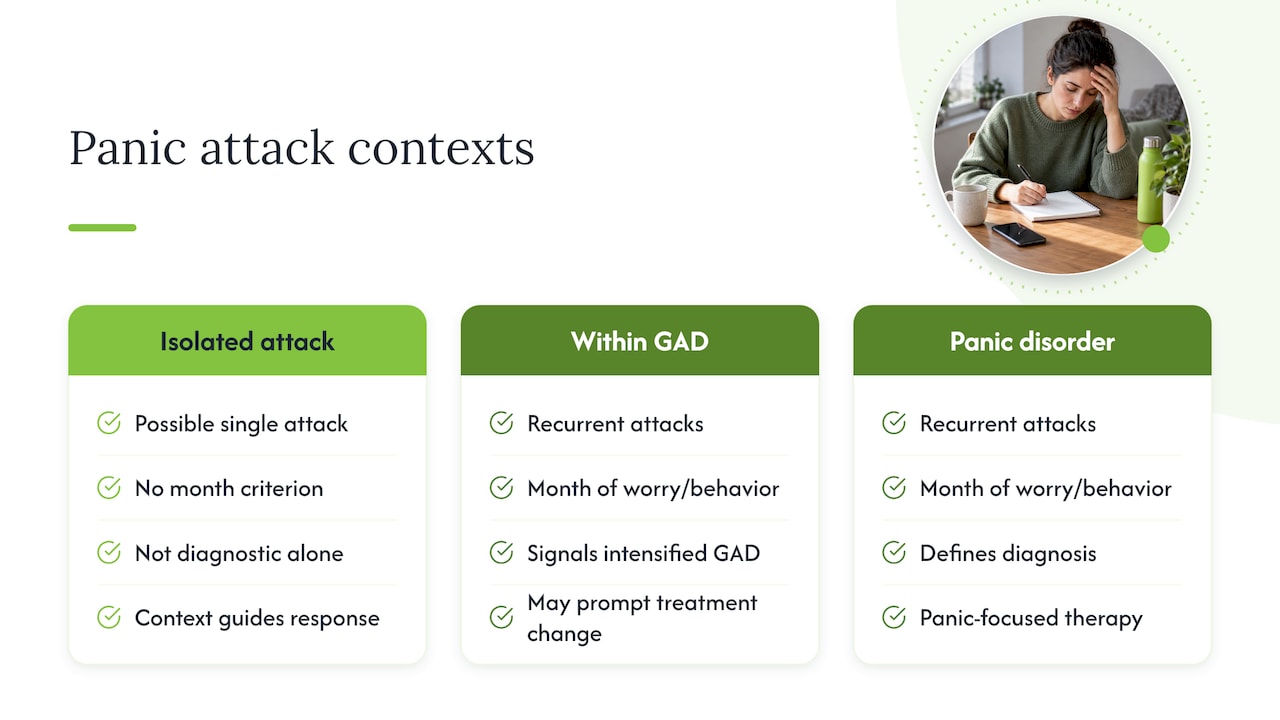
We think of panic attacks as a kind of alarm system that has become oversensitive, firing in response to sensations or situations that are not actually dangerous. Understanding where a panic attack sits within the broader anxiety picture, isolated event, symptom of GAD, or hallmark of panic disorder, shapes which therapy technique is likely to help most.
Clinician perspective: concise guidance and realistic expectations
In our work, the order of operations rarely changes: rule out anything medical that could explain the symptoms, make sure safety is addressed, then start treatment. Most patients land on a fairly familiar path, therapy, often paired with an SSRI, adjusted over a few months based on response. We have learned not to promise a fast fix, because anxiety recovery is a process, not a single appointment, but we can say honestly that both panic disorder and generalized anxiety disorder respond well to treatment, and that engaging with care, even imperfectly, tends to beat waiting it out alone.
— Felix
FAQ
Do I have anxiety or a panic disorder?
If your symptoms are sudden, intense, and peak within minutes, panic disorder is more likely, especially if attacks recur and you have spent at least a month worrying about the next one. If your symptoms are a steady, excessive worry that has lasted six months or more, generalized anxiety disorder fits better, though a clinician’s evaluation is the only way to confirm which one, or whether both apply.
What are 5 signs of panic disorder?
Common signs include recurrent unexpected panic attacks, a racing heart or chest tightness during episodes, fear of dying or losing control, avoidance of places tied to past attacks, and at least a month of persistent worry about having another one. These signs together, rather than any single symptom, point toward the diagnosis.
How do you talk yourself out of a panic attack?
Slow, paced breathing and grounding techniques, like naming objects you can see or touch, can shorten a panic attack’s intensity, though they will not stop it instantly. These are bridge strategies while you arrange proper treatment, not a substitute for it; our guide to panic attack treatment covers longer-term options that address the root pattern.
What are 7 types of anxiety disorders?
Commonly recognized categories include generalized anxiety disorder, panic disorder, social anxiety disorder, specific phobias, agoraphobia, separation anxiety disorder, and selective mutism, though exact groupings vary slightly by source. Each shares a core of excessive fear or worry but differs in triggers, timing, and typical age of onset.
How is panic disorder treated differently from GAD?
Both typically start with CBT and often an SSRI, but the therapy technique differs: panic disorder often uses interoceptive exposure to reduce fear of physical sensations, while GAD treatment focuses more on restructuring the worry itself. If standard treatment has not provided enough relief, our guide to next steps for adults seeking anxiety care outlines what comes after.
Sources
Getting the right care for panic disorder or anxiety
Sorting out whether what you are experiencing is panic disorder, generalized anxiety, or some overlap of both is hard to do alone, mostly because the symptoms can feel too close together to separate without training. We have developed an evaluation process designed to review your timeline, rule out medical causes, and create a treatment plan suited to your individual pattern. For most patients that means therapy paired with medication management, but when standard treatment has not moved the needle, we also offer Transcranial Magnetic Stimulation (TMS) Therapy and Spravato Therapy as further options worth a conversation. If you are ready to get a clearer answer than a checklist can give you, you can book an evaluation with our team and start from an actual diagnosis rather than a guess.