

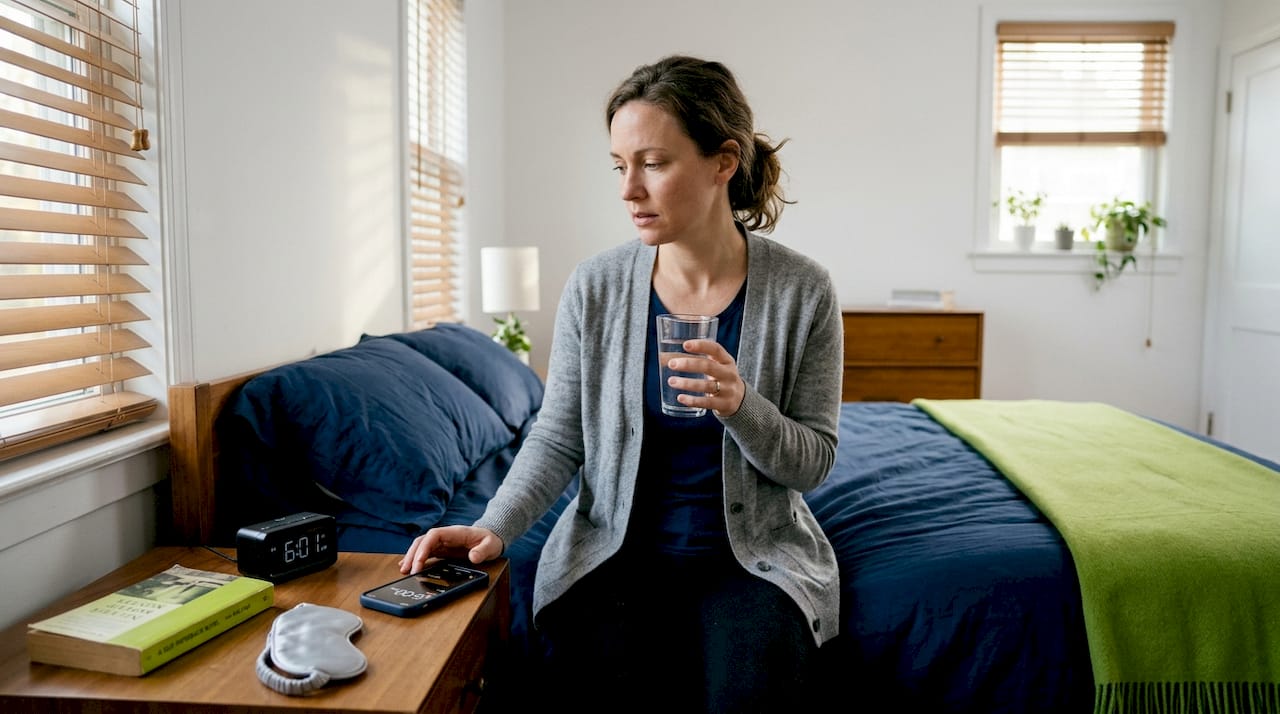
You wake up at 3 a.m. with your heart pounding. You’ve replayed tomorrow’s meeting a dozen times. Your chest feels tight, your thoughts won’t slow down, and you wonder if this is just how life is now. If that sounds familiar, you’re not alone. Anxiety disorders affect millions of American adults, and the good news is that relief isn’t just possible. It’s achievable through a clear, structured process. This guide walks you through proven, evidence-based steps for managing anxiety so you can stop surviving each day and start living it.
Table of Contents
- Understanding anxiety: Why a step-by-step approach matters
- Getting started: Assessment and preparation
- Step-by-step anxiety treatment: Evidence-based strategies
- Personalization and troubleshooting: When treatment needs to adapt
- Tracking progress: How to know if your anxiety treatment is working
- Our perspective: What most anxiety guides miss
- Next steps: Get expert support for your anxiety journey
- Frequently asked questions
Key Takeaways
| Point | Details |
|---|---|
| Start with stepwise care | Breaking anxiety treatment into clear steps ensures a strong foundation for improvement. |
| CBT is the gold standard | Cognitive Behavioral Therapy is highly effective and usually the first recommendation for adults with anxiety. |
| Personalization is essential | Your treatment should always be adjusted for your unique symptoms and how you respond over time. |
| Ongoing monitoring guides progress | Regularly reviewing your symptoms helps you and your provider make informed treatment changes. |
| Help is always available | Professional support can make navigating anxiety recovery safer, faster, and more effective. |
Understanding anxiety: Why a step-by-step approach matters
Now that we’ve set the stage for a personalized approach, let’s explore why methodical, incremental steps work for anxiety treatment.
Anxiety isn’t just everyday stress. Stress is a normal response to a specific challenge, and it fades when the challenge passes. Anxiety, on the other hand, lingers. It shows up without a clear cause, disrupts sleep, strains relationships, and can make routine tasks feel impossible. Generalized Anxiety Disorder (GAD), panic disorder, and social anxiety disorder are distinct conditions. Each one requires its own tailored strategy.
A lot of people believe anxiety can be “snapped out of” with willpower alone, or that a single meditation session will fix months of worry. These myths keep people stuck. What actually works is a structured, step-by-step approach grounded in clinical evidence.
“Recovery from anxiety is a journey, not a straight line. Progress is real, even when it feels slow.”
The most important tool in that journey is Cognitive Behavioral Therapy. CBT is the first-line treatment for anxiety disorders in adults, strongly recommended across clinical guidelines for GAD, panic disorder, social anxiety, and others. It works by identifying distorted thought patterns and gradually replacing them with accurate, balanced thinking.
The stepped care model builds on CBT by organizing treatment into levels of intensity. You start with the least intensive, most accessible interventions and move up only if needed. Here’s why this matters:
- It prevents over-treating mild symptoms with intensive (and costly) options.
- It gives you the chance to build confidence at each stage.
- It keeps treatment proportionate to your actual needs.
- It allows practical anxiety strategies to be applied at the right time and intensity.
Breaking treatment into clear, logical steps removes the guesswork and gives you a roadmap you can actually follow.
Getting started: Assessment and preparation
Understanding why a structured approach works prepares you for the essential first actions. Let’s identify how to get started safely and effectively.
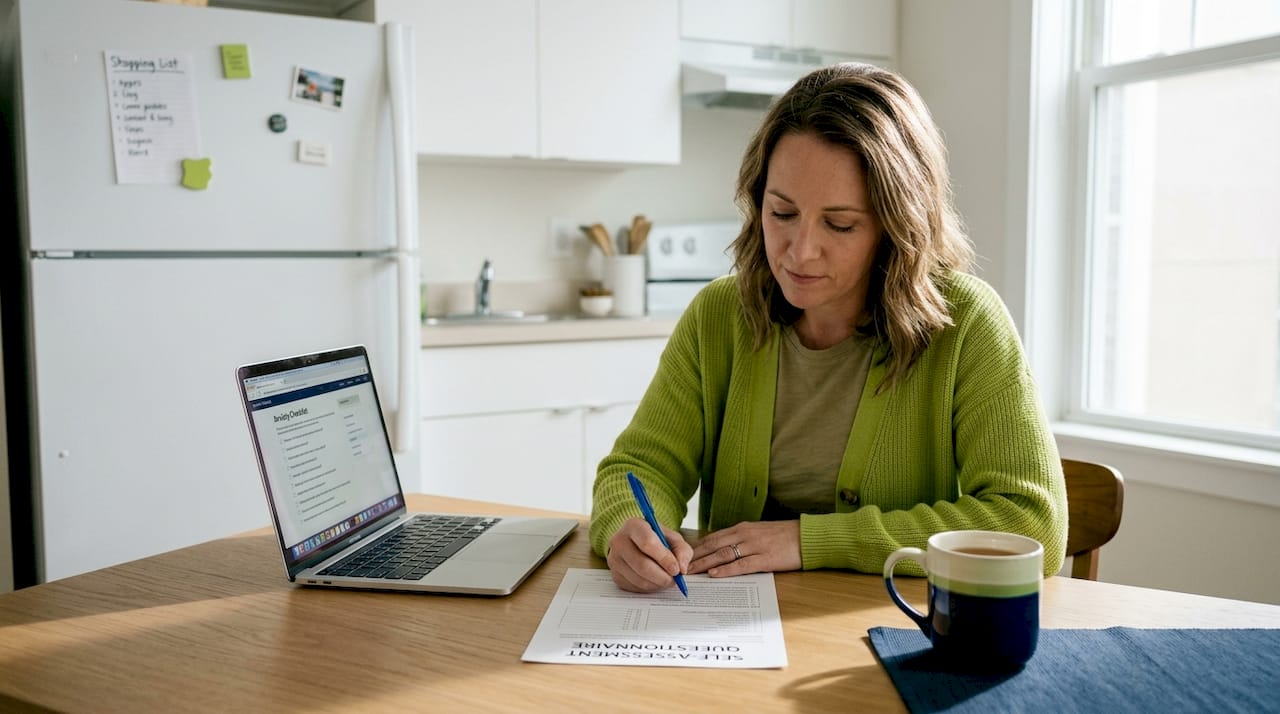
Before any treatment begins, you need a clear picture of what you’re dealing with. Many people skip this step because they assume they already know what’s wrong. But anxiety presents differently in different people, and starting treatment without a proper assessment can waste time or even make symptoms worse.
The stepped care model begins with assessment, psychoeducation (learning about anxiety), and active monitoring. This means tracking your symptoms before committing to a full treatment plan. It sounds simple, but this phase is often what separates people who see lasting results from those who cycle through strategies without relief.
What to bring to your first consultation:
| Item | Why it helps |
|---|---|
| Symptom diary (1-2 weeks) | Shows patterns, triggers, and severity |
| Sleep and energy log | Helps rule out physical contributors |
| List of current medications | Avoids interactions with any new treatments |
| Previous treatment history | Prevents repeating what hasn’t worked |
| Personal goals for treatment | Keeps care aligned with your actual life |
Here’s how to prepare step by step:
- Start a symptom journal. Note when anxiety peaks, what triggered it, and how long it lasted. Even five days of data helps enormously.
- Take a self-assessment for anxiety. Online tools can help you organize your experience before your first appointment.
- Research what anxiety disorders feel like physically. Many people are surprised that tension headaches, digestive issues, and fatigue are common anxiety symptoms.
- Set realistic expectations. Most people notice meaningful improvement within 8 to 16 weeks of structured treatment.
- Book your first professional consultation. A psychiatric provider can confirm your diagnosis and co-create a plan with you.
Pro Tip: Bring a trusted friend or family member to your first appointment. They often notice patterns in your behavior that you’ve normalized or overlooked, and that information can be genuinely useful to your provider.
Step-by-step anxiety treatment: Evidence-based strategies
With your foundation set, it’s time to outline the hands-on steps, the heart of evidence-based anxiety treatment.
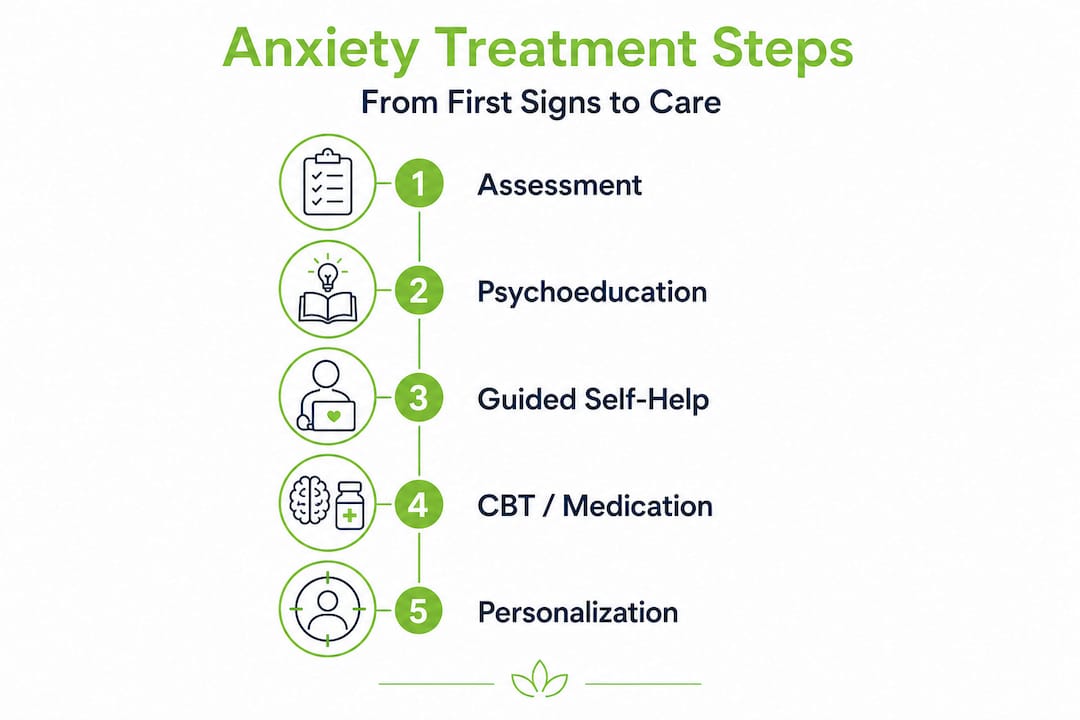
Step 1: Education and active monitoring (Assessment phase)
Before diving into active therapy, you and your provider spend time understanding your anxiety subtype and learning what drives it. This isn’t a waiting room activity. Psychoeducation actively reduces anxiety symptoms in many people by replacing fear of the unknown with knowledge.
Step 2: Low-intensity CBT and self-help
This is where most people begin actual treatment. Low-intensity options include:
- CBT-based workbooks. Books like structured self-help guides teach you to identify and challenge unhelpful thoughts on your own schedule.
- Digital programs and apps. Many apps are built directly on CBT principles and allow you to practice skills between sessions.
- Group psychoeducation sessions. Learning alongside others normalizes your experience and builds community.
- Guided self-help with a counselor. A professional checks in periodically to keep you on track without requiring full weekly therapy sessions.
Step 3: High-intensity CBT and/or medication
If Step 2 doesn’t bring adequate relief, the stepped care model moves to higher-intensity options. This includes individual or group CBT delivered by a trained therapist, and medications such as SSRIs (selective serotonin reuptake inhibitors) when appropriate.
| Approach | Best suited for | Format |
|---|---|---|
| Individual CBT | Moderate to severe anxiety | Weekly 1-on-1 sessions |
| Group CBT | Social anxiety, GAD | Small group, 6-12 sessions |
| SSRIs (e.g., sertraline) | Persistent symptoms, non-response to therapy | Daily medication, monitored by psychiatrist |
| Combined CBT and medication | Complex cases, dual diagnosis | Coordinated care plan |
CBT remains the gold standard for anxiety in adults because it builds skills you keep long after treatment ends. Medication, by contrast, manages symptoms while you build those skills. Neither is a permanent crutch. Both are legitimate tools used by skilled providers.
Understanding the role psychiatrists play in anxiety care is important here. A psychiatrist evaluates whether medication is appropriate, selects the safest option for your situation, and monitors your response over time. This is very different from a primary care doctor prescribing anxiety medication without a mental health evaluation.
Pro Tip: If your anxiety symptoms are significantly affecting your work, relationships, or physical health, go directly to Step 3. There’s no rule that says you must work through every step in sequence if your needs clearly call for a higher level of care. Ask your provider about the key benefits of psychiatric care and whether a full evaluation makes sense for you.
Personalization and troubleshooting: When treatment needs to adapt
Even the best plan sometimes needs tweaking. Here’s how to adjust if your journey doesn’t go as expected.
Not every approach works for every person, and that’s not a failure. It’s just how anxiety treatment works in real life. Some therapies that help one type of anxiety can actually be unhelpful or even counterproductive for another.
For example, EMDR and exposure therapy are not recommended for panic disorder the way they are for trauma. Psychodynamic therapy and mindfulness-based approaches show inconsistent results for social anxiety. Personalizing treatment based on your specific anxiety subtype is not optional. It’s essential.
Warning signs that your current treatment isn’t working:
- Your symptoms haven’t changed after 6 to 8 weeks of consistent effort.
- You’ve completed a full course of therapy but feel just as avoidant as before.
- Your anxiety has shifted to new areas (e.g., health anxiety appearing after work anxiety fades).
- You’re relying heavily on safety behaviors, like always needing a friend present in social situations.
- Sleep disruption and physical symptoms are getting worse, not better.
When these signs appear, it’s time to revisit your plan with your provider. Options at this stage might include adjusting your CBT approach, adding or changing medication, exploring personalized psychiatric care options, or considering whether a more intensive intervention like Transcranial Magnetic Stimulation (TMS) is appropriate.
On the subject of emerging treatments: guidelines consistently favor CBT and established medications as first-line approaches. Newer options like ketamine or MDMA-assisted therapy currently have insufficient evidence for routine anxiety treatment. These may have a future role, but right now, they should not replace proven strategies. You can learn more about TMS therapy’s role in anxiety as a targeted option for specific situations, always guided by a qualified provider.
“The best treatment is the one that fits your specific disorder, your life, and your goals. Rigid protocols help no one.”
Tracking progress: How to know if your anxiety treatment is working
With personalization and troubleshooting in mind, monitoring your journey ensures you stay on track and adapt confidently.
Progress in anxiety treatment isn’t always obvious. Some weeks feel like a breakthrough. Others feel like you’ve gone backward. Knowing how to track improvement objectively helps you avoid both false alarms and missed signals.
📊 Statistic callout: Research supporting the stepped care model emphasizes ongoing monitoring and adaptation based on response, meaning treatment that doesn’t flex when needed isn’t fully effective care.
Here’s a practical approach to tracking your own progress:
- Use a weekly mood and anxiety rating. Score your average anxiety on a scale of 0 to 10 each week. Keep it simple so you’ll actually do it.
- Track avoidance behaviors. Are you avoiding fewer situations than you were a month ago? Reduction in avoidance is one of the clearest signs of real progress.
- Note physical symptom trends. Headaches, muscle tension, and sleep quality often improve before mood does. These are early, encouraging signs.
- Review your goals every four weeks. Look at the personal benchmarks you set at the start. Are you closer to them? Even incremental movement counts.
- Have an honest check-in with your provider every 6 to 8 weeks. Share your tracking data so they can make informed adjustments to your plan.
Don’t overlook small wins. Attending a social event when you wanted to cancel. Catching a catastrophic thought before it spiraled. Sleeping through the night twice in a week. These matter. Recovery builds on moments like these. Exploring anxiety management strategies alongside your formal treatment can reinforce daily progress.
Our perspective: What most anxiety guides miss
Stepping back, here’s what we’ve learned from years of guiding adults through anxiety treatment in real-world settings across North Dallas.
Most online guides treat anxiety treatment like a recipe. Follow these five steps, and you’ll feel better. That framing sounds reassuring, but it can actually set people up for frustration. Real treatment is more layered than that.
What we see most often is this: people make progress through Step 2, hit a rough patch, and assume the whole approach has failed. They abandon their plan and either suffer in silence or chase unproven shortcuts. Neither leads anywhere good.
The truth is, structured templates are starting points, not finished plans. The adults who do best in treatment are the ones who stay engaged with their provider when the plan needs adjusting. They use templates as a scaffold while building something that actually fits their life. You can find detailed guidance on personalized therapy steps for mood and anxiety relief that addresses exactly this kind of flexibility.
The second thing most guides miss is the value of the therapeutic relationship itself. Research consistently shows that the quality of connection between a patient and their provider is one of the strongest predictors of treatment success. This is true for therapy, and it’s true for medication management. Finding a provider you trust isn’t a soft preference. It’s a clinical necessity.
And finally, don’t underestimate the cost of waiting. Anxiety doesn’t usually resolve on its own without intervention. Every month of untreated anxiety strengthens the neural pathways that sustain it. Early, structured treatment is genuinely more effective than delayed treatment. If you’ve been on the fence about getting help, that hesitation is worth examining, perhaps even with a professional.
Next steps: Get expert support for your anxiety journey
As you look to put these steps into practice, support from mental health professionals can make all the difference. Self-directed learning is a great start, but anxiety treatment often requires experienced guidance to get the right fit between strategy and individual need.
At Nortex Psychiatry, we work with adults across North Dallas, including Allen, Frisco, McKinney, and Plano, to build personalized, evidence-based treatment plans that actually match your life. Whether you’re just getting started or you’ve tried other approaches that didn’t stick, we’re here to guide you forward. Learn more about how psychiatrists can help you move through each treatment step with confidence, or take a self-assessment to clarify where you are right now. If standard approaches haven’t fully worked for you, explore whether TMS therapy for anxiety might be an appropriate next option. We offer both in-person and telehealth appointments. Real support is closer than you think.
Frequently asked questions
What is the most effective step-by-step anxiety treatment?
CBT is the most evidence-backed step-by-step treatment for anxiety in adults, recommended across major clinical guidelines for GAD, panic disorder, and social anxiety. It is typically delivered through the stepped care model, starting with lower-intensity options and moving up based on need.
How do I know if I need medication for my anxiety?
Medication is considered when anxiety symptoms remain significant after therapy or are severe enough to interfere with daily functioning. The stepped care model recommends SSRIs at Step 3, always under the guidance of a psychiatric provider.
Is self-help effective for mild anxiety?
Yes. Low-intensity CBT and self-help resources are a clinically recognized starting point for mild anxiety, especially when paired with education and active symptom monitoring.
What if my anxiety doesn’t improve after treatment steps?
If standard steps haven’t produced progress, a provider can personalize your strategy or explore advanced options. Current guidelines prioritize CBT and established medications over unproven approaches like ketamine or MDMA for anxiety.
Are online programs or apps as good as seeing a therapist?
Apps and digital programs can genuinely help for mild anxiety, but CBT delivered by professionals remains the most effective option for moderate to severe cases, where personalization and clinical oversight make a measurable difference.