


Medication management for teens is defined as the ongoing clinical process of prescribing, monitoring, adjusting, and educating adolescents about their medications to support safe, effective treatment of mental health conditions. This process goes well beyond handing a teen a prescription. It accounts for the rapid biological changes of puberty, the psychological push for independence, and the social pressures that make consistent adherence genuinely difficult at this age. Conditions like ADHD, anxiety, depression, and mood disorders are among the most common reasons teens need structured medication support. Understanding what is medication management for teens, and how it differs from adult care, is the first step toward helping your child get real, lasting benefit from their treatment.
What is medication management for teens, and why is it different?
Teen medication management is not a scaled-down version of adult care. Adolescent-specific neurobiological and psychosocial factors affect how medications are absorbed, distributed, and metabolized in ways that simply do not apply to adults or younger children. Puberty triggers shifts in body composition, liver enzyme activity, and hormonal levels that change how a drug behaves at a given dose. What worked at age 13 may be underdosing by age 16.
Beyond biology, the psychosocial picture is equally complex. Teens are actively building their identity, which often means resisting anything that feels like parental control, including taking medication. Peer influence is real. A teenager who feels stigmatized for taking a psychiatric medication at school may quietly stop taking it rather than face questions. These are not character flaws. They are developmentally normal behaviors that any good teen medication guidance plan must account for.
Several factors make adolescent medication adherence uniquely challenging:
- Pharmacokinetic variability: Puberty-related metabolic changes mean dose needs shift over months, not years. A fixed dosage approach does not work.
- Autonomy-seeking behavior: Teens may skip doses as an act of independence, not forgetfulness.
- Stigma and peer pressure: Social identity is fragile at this age. Being “the kid who takes pills” can feel unbearable.
- Forgetfulness: Adolescent brains are still developing executive function, making consistent routines harder to maintain.
- Lack of perceived need: Teens who feel okay on medication may stop taking it, not realizing the medication is why they feel okay.
Pro Tip: When starting a conversation about medication with your teen, frame it around their goals, not your concerns. “This might help you focus during soccer practice” lands better than “You need to take this.”
How do parents and providers monitor teen medications effectively?
Monitoring medication in adolescents is an active, ongoing process, not a set-it-and-forget-it arrangement. Puberty-related metabolic changes require dose adjustments and continuous evaluation for both effectiveness and side effects. A dose that was appropriate six months ago may need recalibration as your teen grows.
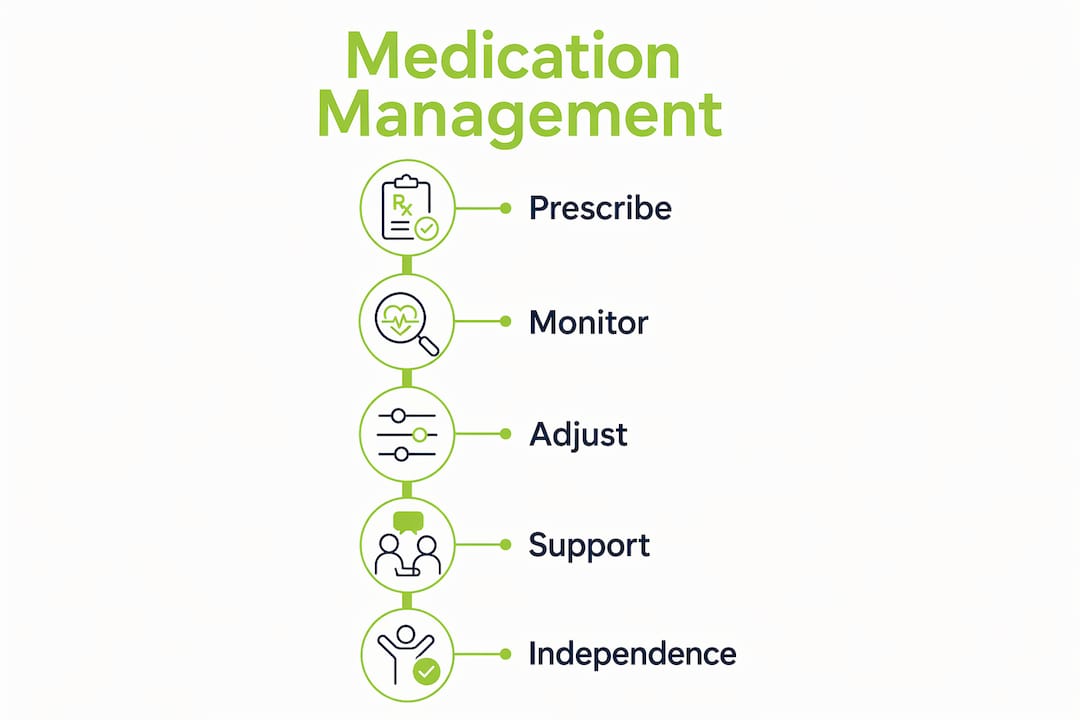
Effective monitoring involves all three parties: the teen, the parent, and the prescribing provider. Teens need to feel heard in these conversations, not just observed. When adolescents have a voice in reporting side effects or describing how they feel, they are more likely to stay engaged with their treatment. Parents serve as the safety net, noticing behavioral changes that a teen might not recognize or report themselves.
Here is a practical framework for ongoing monitoring:
- Schedule regular check-ins with the prescriber. Monthly visits during the first few months of a new medication, then quarterly once stable, give the provider enough data to make informed adjustments.
- Track side effects in writing. Keep a simple log of sleep quality, appetite, mood, and any physical complaints. Patterns become visible over weeks that are invisible day to day.
- Watch for behavioral changes at home and school. Teachers and coaches often notice shifts in attention or mood before parents do. Ask them directly.
- Discuss administration clearly. Make sure your teen understands not just when to take a medication, but why the timing matters. Some medications require food; others affect sleep if taken too late.
- Plan for transitions. Growth spurts, new school years, and increased stress all affect how a medication performs. Build a standing agreement with your provider to reassess at these moments.
The real role of medication in mental wellness is to create a stable enough foundation for therapy and daily functioning to work. Monitoring keeps that foundation solid.
What practical strategies help teens manage medications independently?
Teaching teens about medications is as much about building confidence as it is about building habits. The goal is not permanent parental oversight. It is a gradual, supported transfer of responsibility that matches your teen’s developmental stage. Most adolescent psychiatrists recommend beginning this transition in 10th or 11th grade, when executive function is more developed and the teen is approaching legal adulthood.

Habit stacking increases adherence by 37%, according to research from the University of Rochester Medical Center. Habit stacking means pairing medication with an existing daily behavior, such as brushing teeth or eating breakfast, so the new action piggybacks on an established one. This removes the cognitive load of remembering a separate task.
Technology helps too. Apps like Medisafe improve adherence by around 28% in teens when used consistently. Medisafe provides reminders, refill notifications, and a medication log that both teens and parents can access. Pill organizers remain a low-tech but effective backup, especially for teens who are not yet reliable with their phones.
A few additional strategies that work in practice:
- Supervised independence: Let your teen manage their own non-controlled medications while you retain oversight of stimulants or opioids. Controlled substances require parental supervision to prevent misuse or diversion, even when the teen is otherwise responsible.
- Medication buddies: Peer support increases adherence by over 20%. A trusted friend who knows about the medication and checks in casually adds social accountability without stigma.
- Encourage direct provider communication: Let your teen ask the prescriber questions directly during appointments. This builds ownership and reduces the sense that medication is something being done to them.
- Address stigma openly: Normalize the conversation at home. If your teen hears you speak matter-of-factly about mental health medication, they are less likely to feel shame about it.
Pro Tip: Avoid making medication a battleground. If your teen is consistently refusing, that is clinical information. Bring it to the prescriber rather than escalating at home.
The importance of medication adherence for teens compounds over time. Consistent adherence during adolescence builds the habits and self-awareness that carry into adult mental health care.
How do medication management and mental health outcomes improve together?
The benefits of medication management for teens extend well beyond symptom control. When medications are prescribed thoughtfully, monitored consistently, and adjusted as needed, they create the neurological stability that allows therapy, school, and relationships to function. Medication alone is rarely the complete answer. It is the foundation that makes other interventions possible.
The clinical evidence is direct. Medication treatment lowers substance misuse risk in teens with ADHD and may add up to 13 years of increased lifespan through reduced risk of accidents, substance abuse, and untreated comorbidities. That is not a minor benefit. It reflects how profoundly unmanaged mental health conditions affect a teenager’s long-term trajectory.
“Medication is not a substitute for learning coping skills. It creates the conditions under which those skills can actually be learned.” This framing, common among adolescent psychiatrists, captures why the combination of medication and behavioral support consistently outperforms either approach alone.
| Outcome area | What good medication management produces |
|---|---|
| Academic performance | Improved attention and working memory support classroom learning |
| Social functioning | Reduced impulsivity and mood instability improve peer relationships |
| Substance misuse risk | Proper ADHD medication management lowers misuse risk significantly |
| Emotional regulation | Stabilized mood allows teens to engage with therapy more effectively |
| Long-term mental health | Early, consistent treatment reduces the risk of chronic adult conditions |
Adolescence requires iterative dose titration over months to accommodate biological maturation, rather than a fixed dosage approach. This means the process is dynamic by design. Adjustments are not signs of failure. They are signs that the treatment team is paying attention.
Key takeaways
Effective medication management for teens combines biological awareness, psychosocial support, and gradual independence-building to produce lasting mental health outcomes.
| Point | Details |
|---|---|
| Adolescents need tailored dosing | Puberty-related metabolic changes require ongoing dose adjustments, not a fixed prescription. |
| Monitoring requires all three parties | Teens, parents, and providers each contribute information that the others cannot see alone. |
| Habit stacking improves adherence | Pairing medication with existing daily routines increases adherence by 37% in adolescents. |
| Controlled substances need parental oversight | Even responsible teens should not self-manage stimulants or opioids without supervision. |
| Medication supports, not replaces, therapy | Stable medication creates the conditions for therapy and life skills to take hold. |
What I’ve learned from working with families on teen medication
Parents often come to us carrying a quiet fear: that putting their teenager on psychiatric medication is somehow giving up, or making things worse. We hear this regularly. And we understand it. The decision to medicate a developing brain is not one any thoughtful parent takes lightly.
What we have learned over years of working with adolescents and their families is that the medication itself is rarely the hardest part. The hardest part is the relationship around it. Teens who feel like medication is being imposed on them resist it. Teens who feel like partners in their own care tend to engage with it. That distinction changes everything about outcomes.
We also want to be honest: adjustments are normal. A teen who starts a medication at 14 will likely need a different dose at 16. That is not a problem. That is the process working as it should. Gradual transfer of responsibility from parent to teen, supported by a consistent provider relationship, is what makes the difference between a teenager who manages their mental health confidently and one who abandons treatment the moment they leave home.
If you are feeling uncertain about where to start, or whether medication is even the right path for your teen, that uncertainty is worth exploring with a provider who knows adolescent psychiatry. Not every condition requires medication. And for those that do, the right support makes the process far less daunting than it looks from the outside.
— Felix
How Nortex Psychiatry supports teen medication management
At Nortexpsychiatry, we work with families across Allen, Frisco, McKinney, and Plano to build personalized medication management plans that fit where your teen actually is, developmentally and clinically. Our approach includes thorough evaluations, ongoing monitoring, and clear communication between your teen, your family, and our care team. If you are weighing medication against other options, our TMS vs. medication comparison is a useful starting point. You can also take our mental health self-assessment to help clarify what kind of support your teen may need. We offer both in-person and telehealth appointments, so access is never the barrier.
FAQ
What does medication management for teens include?
Medication management for teens includes prescribing, monitoring for side effects, adjusting doses as the teen grows, and educating both the teen and family about safe, consistent use. It is an ongoing process, not a one-time prescription.
At what age should teens start managing their own medications?
Most providers recommend beginning a gradual transition to self-management in 10th or 11th grade, with full independence typically supported around age 18 when legal autonomy increases. Controlled substances should remain under parental supervision longer.
How can parents improve their teen’s medication adherence?
Habit stacking, clinically validated apps like Medisafe, pill organizers, and peer support are all evidence-based strategies. Creating a routine tied to an existing daily habit increases adherence by 37%, according to University of Rochester Medical Center research.
Is it safe for teens to take psychiatric medications long-term?
For conditions like ADHD, anxiety, and depression, properly managed medication is considered safe and often protective. Research shows that well-managed ADHD medication lowers substance misuse risk and supports long-term health outcomes.
What should I do if my teen refuses to take their medication?
Consistent refusal is clinical information, not a discipline problem. Bring it to your prescriber directly. The solution may involve a different medication, a different formulation, or a deeper conversation about what the teen’s concerns actually are.