


Support systems in mental health are defined as the network of emotional, practical, and therapeutic resources that help individuals manage symptoms, build coping skills, and sustain recovery from conditions like anxiety and depression. The role of support systems in mental health is not peripheral. It is central. The CDC confirms that safe, stable, and nurturing relationships are integral to a public health approach to prevention and recovery. Whether you are managing daily anxiety or working through a depressive episode, the quality and structure of your support network directly shapes how well you cope and how quickly you recover.
How do support systems improve mental health outcomes?
The evidence on this is clear and worth understanding in detail. A 2026 network meta-analysis published in The British Journal of Psychiatry found that internet-based CBT with therapeutic support produced the largest reduction in depressive symptoms compared to care-as-usual, with an effect size of Hedges g = 0.42. That number matters because it places human-guided therapeutic support well above minimal coaching or purely technical formats in measurable impact. The human element is not optional. It is the mechanism.
Digital peer support adds another layer. A systematic review from the University of Manchester found that digital peer support interventions produced a depression SMD of −0.28 and an anxiety SMD of −0.47 in outpatient settings. These are modest but meaningful improvements, particularly when peer support functions as an adjunct to professional care rather than a replacement for it.
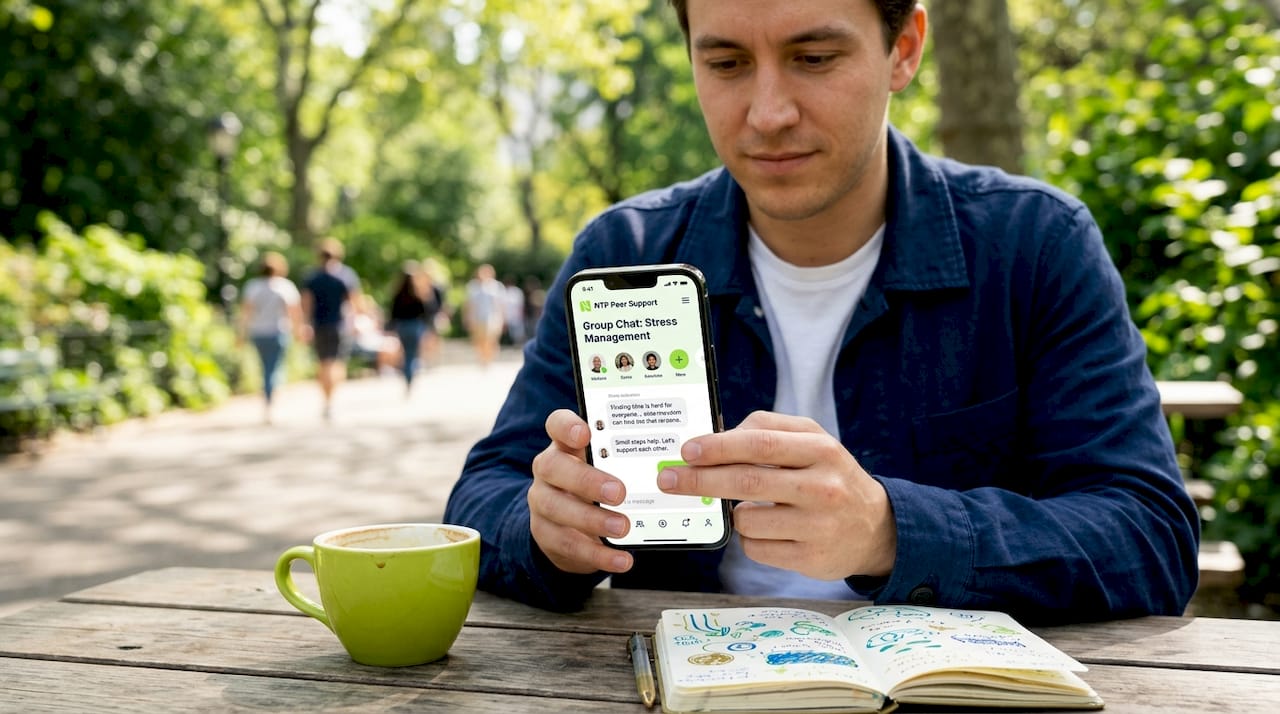
Here is what makes peer support work at a deeper level. Research from BMC Psychology involving 297 participants showed that social identification mediates the relationship between group membership and mental health self-efficacy. In plain terms, feeling that “these are people like me” matters more than how often you post or participate. Belonging, not activity volume, drives the benefit.
The practical takeaway from these three findings is this:
- Therapeutic support (a trained clinician or counselor guiding your progress) produces the strongest outcomes for depression.
- Peer support in digital communities reduces anxiety and depression symptoms and improves functioning when combined with professional care.
- Social identification within support groups builds self-efficacy, which is your confidence in your own ability to cope.
- Technical-only support, such as apps without human contact, shows smaller effects and higher dropout rates.
Pro Tip: If you are using a mental health app or online program, look for one that includes scheduled check-ins with a real person. That single feature significantly changes your likelihood of staying engaged and seeing results.
What types of support systems exist and how do they differ?
Mental health support systems generally fall into three categories: informal, formal, and digital. Each serves a distinct function, and understanding the difference helps you build a network that actually holds.
Informal support includes family, friends, neighbors, and faith communities. This type of support delivers emotional comfort, practical help (rides to appointments, meals during a hard week), and a sense of belonging. It is often the first line of response during a crisis. Its limitation is that informal supporters are not trained clinicians. They can burn out, misread situations, or unintentionally minimize symptoms.
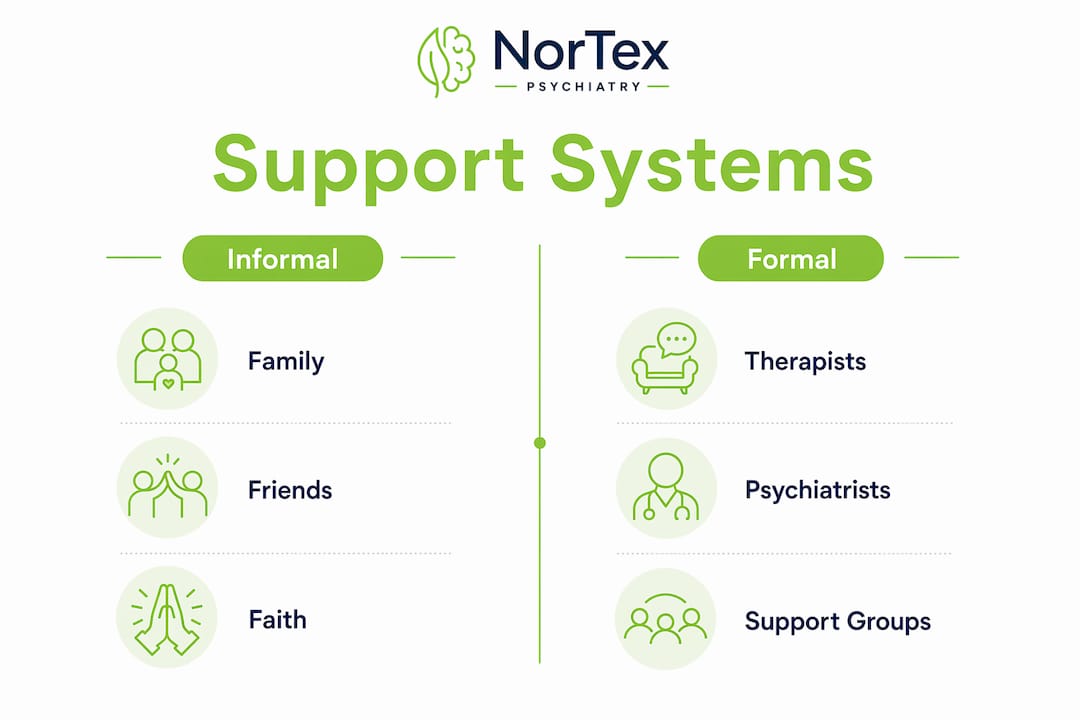
Formal support includes psychiatrists, therapists, peer support specialists, and structured group therapy programs. This category provides therapeutic guidance, evidence-based treatment, and accountability. The benefits of psychiatric care for anxiety and depression are well-documented, and formal support is where symptom management becomes systematic rather than reactive.
Digital support includes online peer communities, telehealth platforms, and mental health apps. This format offers accessibility and anonymity, which lowers the barrier to entry for people who are not yet ready for in-person care. The risk is dropout. Research shows that technical-only digital support has higher dropout rates than formats involving initial human contact, such as a brief screening call before the program begins. That one phone call changes engagement outcomes significantly.
| Support type | Key benefit | Typical use case |
|---|---|---|
| Informal (family, friends) | Emotional comfort and practical aid | Daily coping, crisis response |
| Formal (therapists, psychiatrists) | Evidence-based treatment and accountability | Ongoing symptom management |
| Peer support groups | Shared experience and social identification | Reducing isolation, building confidence |
| Digital platforms with human contact | Accessible, flexible, structured | Between-session support, rural access |
| Technical-only apps | Convenience and self-monitoring | Supplement to other supports only |
Pro Tip: When starting a new digital mental health program, ask whether there is a human intake call or orientation session. If there is not, that program is missing the element most likely to keep you engaged.
How do support systems influence self-efficacy and resilience?
Self-efficacy in mental health refers to your belief that you can manage your symptoms and cope with adversity. Support systems build this belief in ways that go beyond symptom reduction. They change how you see yourself in relation to your condition.
Research from Frontiers in Psychology shows that coordinated social supports across home, school, and community settings buffer trauma symptoms and promote positive developmental outcomes in youth facing adversity. The ecological model behind this finding applies equally to adults. When support is perceived as consistent and available across multiple areas of your life, it functions as a protective layer against the worst effects of stress and trauma.
Social identification plays a specific role here. The BMC Psychology study found that identifying with similar others in a support group predicted stronger mental health self-efficacy, independent of how active a person was in the group. This is a counterintuitive finding. You do not need to be the most vocal member of a support community to benefit. You need to feel that the community reflects your experience.
Beyond identity, supportive environments build resilience through several specific pathways:
- They provide a safe space to practice new coping behaviors without fear of judgment.
- They offer models of recovery, meaning you see others managing similar challenges successfully.
- They create accountability structures that encourage follow-through on treatment plans.
- They reduce the cognitive load of crisis management by giving you a clear person or resource to contact.
Resilience is not a personality trait you either have or do not have. It is built through repeated experience of receiving and using support effectively. The more layers of support you have access to, the more opportunities you have to practice that skill.
How can you build and maintain an effective mental health support system?
Building a support system that actually works requires intentional layering. One type of support is rarely enough. Here is a practical framework we recommend at Nortex Psychiatry:
-
Establish a crisis layer first. Know where to turn at 2 a.m. when everything feels unmanageable. Crisis Text Line connects you with a trained counselor within five minutes, with conversations typically lasting 15 to 45 minutes. NAMI (National Alliance on Mental Illness) also offers a helpline and text support. Having these contacts saved in your phone before you need them is not pessimism. It is preparation.
-
Invest in at least one relational connection. This means one person in your life who knows what you are going through and checks in regularly. It does not need to be a therapist. It can be a trusted friend, a sibling, or a peer from a support group. The ongoing mental health support that relational connections provide is distinct from what clinical care offers. Both matter.
-
Engage with a peer community built around shared identity. Look for groups where people describe experiences similar to yours, whether that is generalized anxiety, major depression, or a specific life circumstance. The quality of identification matters more than the size of the group.
-
Connect with professional care. Peer support and informal networks are most effective when they complement clinical treatment, not when they replace it. A psychiatrist or therapist provides the structured, evidence-based guidance that other support layers cannot.
-
Avoid single-layer dependence. Relying entirely on one person, one app, or one coping strategy creates fragility. When that layer fails or becomes unavailable, the whole system collapses. Redundancy is a feature, not a sign of neediness.
The CDC’s guidance on mental health caring reinforces this layered approach, emphasizing that coordinated support across personal, community, and clinical spheres produces the most durable outcomes.
Key takeaways
Strong, layered support systems are the most reliable predictor of sustained mental health recovery for individuals managing anxiety and depression.
| Point | Details |
|---|---|
| Therapeutic support outperforms technical-only | Human-guided CBT produces the largest symptom reductions; apps alone show higher dropout. |
| Social identification drives peer support benefits | Feeling connected to similar others matters more than how often you engage. |
| Layered support builds resilience | Combining crisis resources, relational connections, and professional care creates durable protection. |
| Initial human contact reduces dropout | A brief intake call before a digital program significantly improves engagement and outcomes. |
| Perceived support buffers adversity | Consistent, cross-context support reduces trauma symptoms and builds long-term coping confidence. |
What we have learned about support systems over time
Working with patients across North Dallas, including those in Frisco, McKinney, and Plano, we have noticed a pattern that the research confirms but does not fully capture. The patients who struggle most are rarely those with the fewest clinical resources. They are often the ones who feel most alone in the process.
What I find most striking is how often people underestimate the importance of that first human contact. A five-minute intake call, a brief check-in from a care coordinator, a peer who reaches out after a missed session. These moments are not administrative. They are clinical. They change whether someone stays engaged or quietly disappears from care.
The research on social identification also shifted how I think about peer support recommendations. I used to focus on finding the most active community, the one with the most posts and members. Now I ask patients a different question: “Do you feel like these people understand what you are going through?” That feeling of recognition is the mechanism. Volume is noise.
The uncomfortable truth about support systems is that building them requires effort at a time when effort feels impossible. Depression and anxiety both erode the motivation to reach out. This is why we recommend starting with the crisis layer and one relational connection. Not ten. Not a full program. One person and one backup resource. That is enough to begin.
If you are working through this in Allen, Texas, or anywhere in the surrounding area, you do not have to figure out the right combination of supports alone. That is exactly the kind of guidance we offer at Nortex Psychiatry.
— Felix
How Nortex Psychiatry supports your mental health network
At Nortex Psychiatry, we work with patients across Allen, Frisco, McKinney, and Plano to build treatment plans that do not exist in isolation. Medication management, psychiatric evaluations, and evidence-based care are most effective when they connect to a broader support structure. Our mood disorder treatment guide walks through personalized steps for relief that account for your existing support network and identify where gaps exist. If you are unsure where to start, our self-assessment tool helps clarify your current needs and guides your first conversation with our team. Both in-person and telehealth options are available, so access is not a barrier.
FAQ
What is the role of support systems in mental health?
Support systems provide the emotional, practical, and therapeutic resources that help individuals manage symptoms and build coping capacity. The CDC identifies safe, stable, and nurturing relationships as central to mental health prevention and recovery.
How does social support affect anxiety and depression?
Digital peer support interventions show a depression SMD of −0.28 and anxiety SMD of −0.47, meaning measurable symptom reduction even in online formats. Therapeutic support with human guidance produces larger effects, particularly for depression.
Is peer support effective on its own?
Peer support is most effective as an adjunct to professional treatment, not as a standalone intervention. It improves engagement and reduces isolation, but it does not replace the structured, evidence-based care that a psychiatrist or therapist provides.
How do I find crisis support immediately?
Crisis Text Line offers free, confidential support 24 hours a day, connecting you with a trained counselor within approximately five minutes. NAMI also provides a helpline and text-based support for individuals in acute distress.
Why does social identification matter more than group activity?
Research with 297 participants found that feeling connected to similar others predicted stronger mental health self-efficacy more reliably than participation volume. Quality of belonging, not quantity of interaction, is the active ingredient in peer support.