

What are the most important mental health tips for parents?
Your own mental health shapes your child’s more than almost anything else in their environment. Parents who manage stress well, communicate openly, and ask for help when they need it raise children who do the same. Here are the core practices we recommend, drawn from evidence and from what we see working in our clinic every day.
- Protect your sleep. Chronic sleep loss worsens anxiety, irritability, and decision-making faster than most parents expect.
- Move your body daily. Even a 20-minute walk lowers cortisol and lifts mood reliably.
- Practice “good enough” parenting. Letting go of perfection reduces burnout without harming your children.
- Talk to your child about feelings. Regular, low-stakes check-ins build the habit before a crisis ever arrives.
- Set boundaries around work. Parenting stress and work stress feed each other; separating them matters.
- Lean on your support network. Isolation compounds every other stressor.
- Recognize warning signs early. In yourself and in your children, catching problems early changes outcomes.
- Seek professional care without shame. Psychiatric support is a tool, not a last resort.
How does a strong parent-child relationship protect mental health?
Strong parent-child connection improves children’s mental health outcomes and reduces behavioral problems. That finding holds across family structures, income levels, and ages. Connection is not a soft concept; it is a protective factor with real clinical weight.
The most effective communication approach we see is deceptively simple: listen first, respond second. When your child shares something difficult, your first job is to reflect what you heard before offering advice or correction. “It sounds like that really frustrated you” does more for the relationship than a quick fix.
“Connection is the best prevention and recovery strategy for mental health and substance use issues.” — Laura, Maryland, via the CDC’s Free Mind for Parents
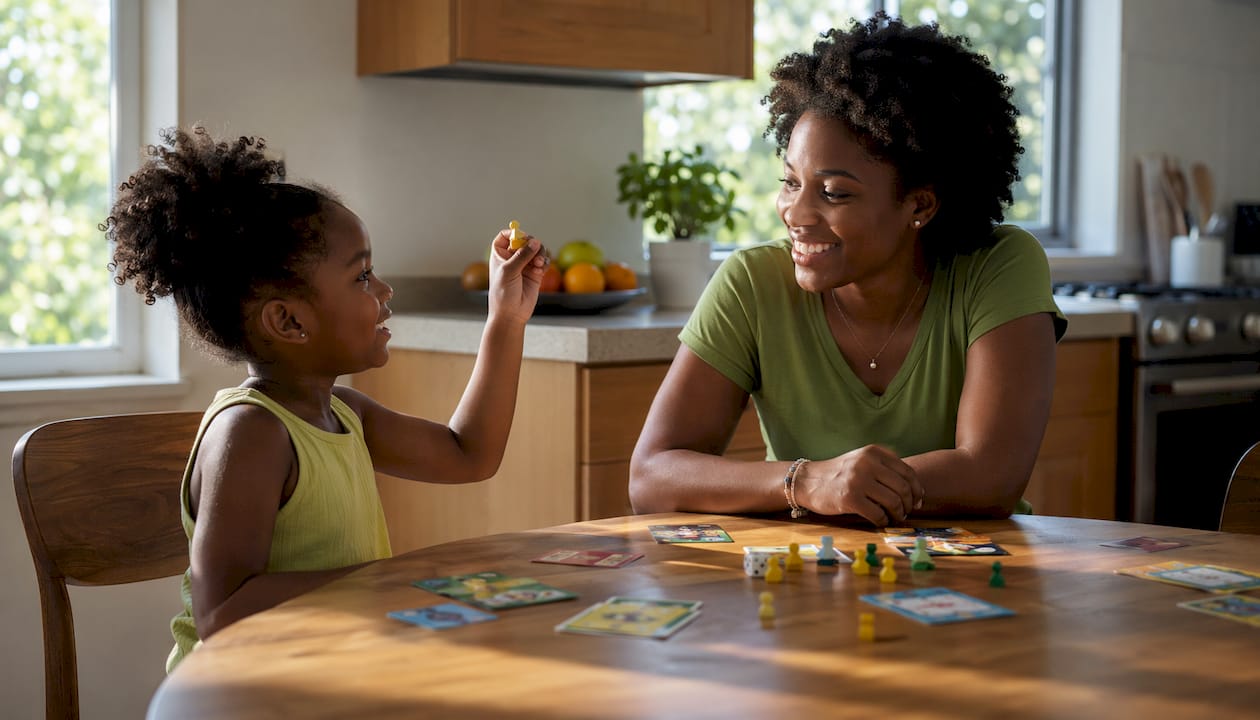
Quality time does not require elaborate plans. Fifteen minutes of undivided attention, phone face-down, asking about their day and actually waiting for the answer, builds more trust than a weekend trip where you are distracted. We often notice that parents underestimate how much their presence alone communicates safety to a child.
Why “good enough” parenting is better than perfect parenting
Parental burnout affects up to 5 million U.S. parents annually, and shame is one of the main reasons it goes unaddressed. Parents who hold themselves to impossible standards tend to isolate rather than ask for help, which makes everything worse.
“Should” thinking is particularly corrosive. “I should be more patient,” “I should have handled that better,” “I should be doing more.” These thoughts feel like motivation but they function more like punishment. Replacing them with “I did my best with what I had today” is not denial. It is accurate.
Flexible thinking also protects against comparison traps. Social media shows you other families’ highlight reels. Your child does not need a parent who performs wellness; they need one who is genuinely present. Imperfect and available beats polished and checked out, every time.
Practical stress management and self-care strategies for parents
Parents who rely primarily on venting to cope with stress often find their distress worsens over time. Problem-focused coping, such as breaking a stressful situation into smaller, manageable steps, tends to produce better emotional regulation. That shift is worth practicing deliberately.
Simple daily habits that consistently reduce parental stress include:
- Mindfulness for 5–10 minutes. Apps like Headspace or Calm lower the barrier to entry.
- Physical activity. The federal guidelines recommend 60 minutes daily for children, and the research supporting movement for adult mood is equally strong.
- Scheduled breaks. Even a 10-minute walk outside resets your nervous system.
- Sleep protection. A consistent bedtime for yourself, not just your children, is self-care.
Pro Tip: Try behavioral activation: when you feel too depleted to do anything restorative, pick the smallest possible version of a positive activity, a two-minute stretch, a cup of tea outside, and do it anyway. The action comes before the motivation, not after.
For more evidence-based strategies, self-care approaches that work are worth exploring in depth.

How to build a home environment that supports your child’s emotional health
Children learn emotional regulation by watching you practice it. When you name your own feelings out loud (“I’m feeling frustrated right now, so I’m going to take a breath”), you give your child a script they can use themselves. Mindfulness training for teens significantly reduces mental distress compared to no training, and the habits that make it effective start at home.
Key practices for supporting children’s mental health at home:
- Maintain consistent daily routines, especially around meals, sleep, and homework.
- Limit recreational screen time and keep devices out of bedrooms at night.
- Encourage your child to name emotions without judgment or immediate problem-solving.
- Acknowledge their strengths before addressing areas for growth.
- Stay curious about their interests, even the ones you do not share.
The goal is not a conflict-free home. It is a home where conflict gets repaired, feelings get named, and your child knows they can come to you with the hard stuff.
When should you seek professional mental health support?
Knowing when to ask for help is one of the most clinically useful skills a parent can develop. The U.S. Preventive Services Task Force recommends routine anxiety screenings for youth ages 8–18 and depression screenings for adolescents ages 12–18. These are not crisis interventions; they are standard preventive care, the same way you schedule a physical.
For parents, warning signs worth taking seriously include persistent fatigue, irritability that feels out of proportion, withdrawing from relationships, and changes in sleep or appetite that last more than two weeks. Approximately 1 in 8 new mothers experience postpartum depressive symptoms, with a disproportionate impact on women of color. Fathers are not exempt; perinatal depression can occur in men during the first year after a child’s birth.
Pro Tip: Telehealth has removed one of the biggest barriers to psychiatric care: scheduling. If getting to an in-person appointment feels impossible, a video visit with a psychiatrist is clinically equivalent for most conditions and far easier to fit into a parent’s day.
Problem-solving therapy and assertiveness training can meaningfully reduce depressive symptoms and parenting stress, including for parents managing complex caregiving situations. Psychiatric care is not a sign that you have failed. It is a sign that you take your family’s health seriously.
How to build and use your support network
Parenting was never designed to be a solo project. We see this clearly in our work: parents who maintain even one or two trusted relationships outside their immediate household handle stress more effectively than those who try to manage everything alone. Social connection reduces the negative effects of stress in ways that individual coping strategies cannot fully replicate.
Practical ways to build that network include joining a parent group through your child’s school, connecting with a faith community, or simply texting a friend when you are having a hard week. You do not need a formal support system. You need people who know what is actually going on in your life. For parents navigating more complex emotional terrain, an emotional regulation guide can offer structured tools to bring into those relationships.
How do you balance work demands with parenting stress?
Work and parenting stress are not separate problems; they amplify each other. Recent data show that among parents, 23.9% had any mental illness and 5.7% had a serious mental illness, figures that reflect how much chronic stress accumulates when work and home demands compete without relief.
The most useful boundary is a transition ritual between work mode and parent mode. It can be as simple as a five-minute walk from your car to the front door, or changing clothes before engaging with your children. The ritual signals to your brain that the context has shifted. Parents who work from home often find this boundary harder to maintain, which is exactly why it requires more deliberate effort, not less.
Key Takeaways
Parenting mental wellness depends on managing your own stress, building genuine connection with your children, and asking for help before problems become crises.
| Point | Details |
|---|---|
| Connection is protective | Strong parent-child relationships reduce behavioral problems and improve children’s mental health outcomes. |
| Burnout is common | Up to 5 million U.S. parents experience burnout annually, often compounded by shame and isolation. |
| Screen early | The U.S. Preventive Services Task Force recommends routine anxiety screenings for youth ages 8 to 18 and depression screenings for adolescents ages 12 to 18. |
| Problem-focused coping works | Breaking stressors into smaller steps produces better emotional regulation than venting alone. |
| Support networks matter | Social connection reduces stress in ways individual coping strategies cannot replace. |
FAQ
What are the most effective mental health tips for parents?
Managing stress through problem-focused coping, maintaining a strong parent-child connection, practicing “good enough” parenting, and seeking professional support when needed are the most evidence-backed approaches. Small daily habits, like consistent sleep and brief mindfulness practice, compound over time.
How do I know if my child needs professional mental health support?
Look for significant changes in behavior, withdrawal from activities they normally enjoy, ongoing sleep difficulties, or persistent sadness lasting more than two weeks. The U.S. Preventive Services Task Force recommends routine anxiety and depression screenings starting at ages 8 and 12 respectively.
How can parents support their own mental health while raising children?
Prioritize sleep, physical activity, and at least one trusted relationship outside your household. If symptoms like persistent fatigue, irritability, or low mood last more than two weeks, consult a psychiatrist. Learning why psychiatric care helps is a practical first step.
Does parental mental health affect children directly?
Yes. Research shows a bidirectional relationship: parental mental health influences child outcomes, and children’s challenges in turn affect parents. Addressing your own mental health is one of the most direct ways to support your child’s.
What is the difference between parental stress and parental burnout?
Stress is situational and typically resolves when the stressor eases. Burnout is chronic exhaustion from sustained caregiving demands, often accompanied by emotional detachment and a sense of ineffectiveness. Burnout usually requires more structured intervention, including professional support, not just rest.