


Compassionate mental health care is defined as the intentional application of empathy, active listening, and practical support to alleviate suffering and promote genuine healing in psychiatric treatment. This is not simply being kind to patients. It is a structured clinical approach, recognized by researchers at Nature Reviews Psychology as a transdiagnostic intervention that measurably reduces symptoms across multiple mental health conditions. Kristin Neff’s foundational work on self-compassion and clinical insights from Sanford Behavioral Health both confirm that compassion, when applied with intention, changes outcomes. Understanding what this looks like in practice, and why it matters, is the first step toward finding care that actually works for you.
What is compassionate mental health care and its core elements?
Compassionate mental health care is built on five concrete therapeutic behaviors, not abstract goodwill. Research published in the Journal of Participatory Medicine identifies these five pillars of therapeutic empathy as: genuine interest in the patient as a person, active listening, understanding the patient’s experience, emotional engagement, and responding directly to expressed needs. Each pillar represents a specific clinical behavior that practitioners can learn, practice, and measure.

The distinction between general care and compassionate care is real and observable. A clinician who completes an intake form efficiently but never makes eye contact, never reflects back what a patient says, and moves quickly to prescribing is delivering care. A clinician who pauses, asks what the past year has actually felt like, and adjusts their approach based on what they hear is delivering compassionate care. The difference is not warmth as a personality trait. It is a set of practiced behaviors that research consistently links to better patient outcomes.
Compassionate care also requires emotional engagement, which means the clinician is genuinely affected by the patient’s experience without becoming overwhelmed by it. This is sometimes called collaborative care in integrated mental health settings, where nurse practitioners and psychotherapists work together to hold both the clinical and human dimensions of a patient’s situation.
Pro Tip: When evaluating a new therapist or psychiatrist, notice whether they reflect your words back to you and ask follow-up questions about your daily life. These are observable signs of active listening, one of the five pillars of therapeutic empathy.
- Interest in you as a person: The clinician asks about your life, not just your symptoms.
- Active listening: They paraphrase or reflect what you say before responding.
- Understanding: They demonstrate they grasp the emotional weight of your experience.
- Emotional engagement: They respond with appropriate affect, not clinical detachment.
- Responsive action: They adjust the care plan based on what you tell them matters to you.
How does compassionate care affect mental health outcomes?
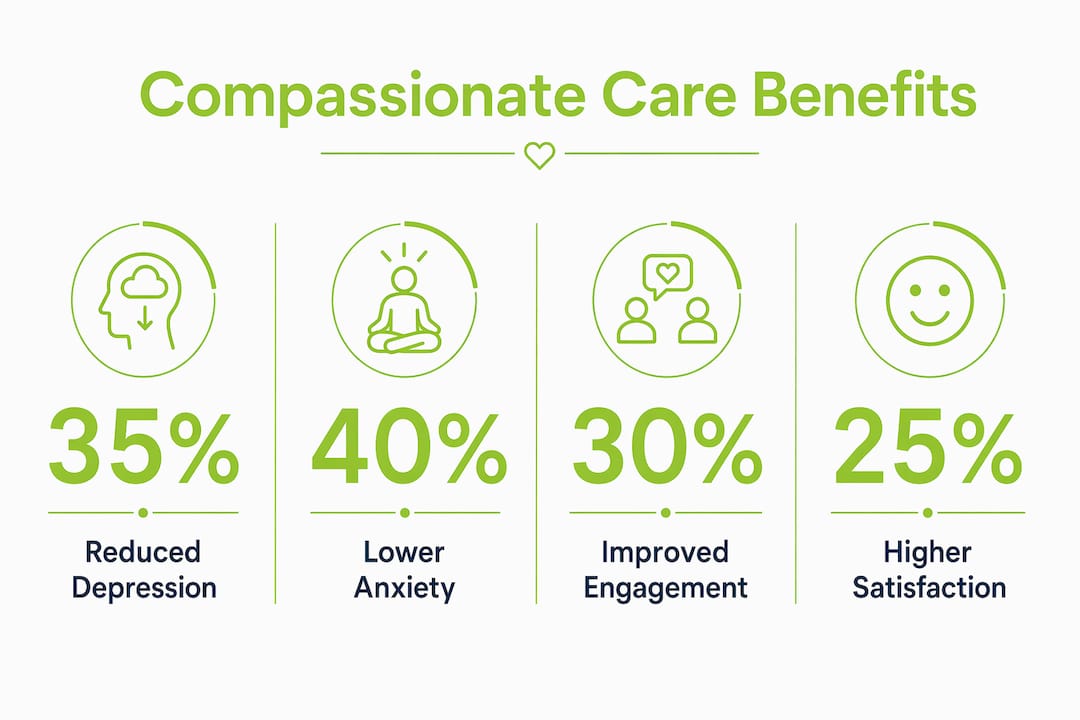
The evidence here is direct. Therapist empathy is statistically linked to reductions in depressive symptoms and substance use, according to systematic meta-analytic reviews. This means that the quality of the human relationship in therapy is not a soft variable. It is a clinical predictor of recovery, comparable in significance to the specific treatment modality used.
Compassion also works across diagnostic categories. Research from Nature Reviews Psychology confirms that compassion as a clinical mechanism buffers physiological stress responses, reduces symptoms of anxiety, depression, PTSD, and psychosis, and supports neuroplasticity. That last point matters. Compassionate care does not just make patients feel better in the moment. It appears to support the brain’s capacity to recover and adapt over time.
“Healing often occurs not through dramatic breakthroughs but through the consistent, steady presence of compassionate care making patients feel seen and hopeful.” — Sanford Behavioral Health
A 2025 meta-analysis in Scientific Reports found that compassion for others yields moderate improvements in psychological, social, and cognitive well-being across diverse populations. Moderate, in research terms, is meaningful. It means the effect is reliable and replicable, not a statistical artifact.
| Study / Source | Key Finding | Clinical Implication |
|---|---|---|
| Nature Reviews Psychology (2025) | Compassion is a transdiagnostic target reducing symptoms across multiple disorders | Applicable to anxiety, depression, PTSD, and more |
| Meta-analytic review on therapist empathy (2025) | Higher empathy linked to reduced depression and substance use | Empathy quality predicts clinical outcomes |
| Scientific Reports meta-analysis (2025) | Compassion for others improves psychological and social well-being | Benefits extend beyond the therapy room |
| Kristin Neff’s self-compassion research | Self-compassion reduces anxiety, stress, and depression | Patients and clinicians both benefit from this practice |
What challenges limit compassionate care in mental health settings?
Compassionate care is not the default in most mental health systems, and the reasons are structural, not personal. A synthesis of 23 studies confirms that time constraints and administrative burden directly reduce the quality of compassionate care, particularly for youth in community settings. When a clinician has 15 minutes per appointment and a full inbox of prior authorizations, the five pillars of therapeutic empathy become difficult to practice consistently.
Approximately 40% of mental health professionals report emotional exhaustion as of late 2025. This figure points to a systemic problem. Compassion fatigue is not a character flaw in individual clinicians. It is a predictable outcome of high caseloads, inadequate institutional support, and the emotional weight of sustained empathic engagement without recovery time built in.
The institutional culture of a practice matters as much as the individual clinician’s intentions. Organizations that provide administrative relief, peer support, and structured self-care time for staff achieve higher sustained compassion among their teams. This is why choosing a practice, not just a provider, is worth your attention. The environment shapes the care.
Pro Tip: Ask a prospective mental health practice how they support their clinical staff. A practice that invests in staff well-being is more likely to deliver consistent, compassionate care to patients over time.
Common barriers to compassionate care in mental health settings include:
- High patient-to-provider ratios that limit session time
- Excessive documentation and insurance-related administrative tasks
- Lack of peer support or clinical supervision for providers
- Institutional cultures that prioritize throughput over therapeutic quality
- Insufficient training in empathy-based clinical techniques
What is self-compassion and how does it connect to care for others?
Self-compassion, as defined by Kristin Neff, consists of three components: self-kindness (treating yourself with the same care you would offer a friend), mindfulness (observing your own pain without over-identifying with it), and common humanity (recognizing that suffering is a shared human experience, not a personal failure). These are not abstract concepts. They are trainable skills with measurable effects on mental health.
Self-compassion practice significantly reduces anxiety, stress, and depression symptoms by improving emotional regulation. People who practice self-compassion show greater resilience and optimism over time. For patients in mental health treatment, this means that learning to be less self-critical is not a luxury. It is part of the clinical work. For clinicians, self-compassion is what makes sustained empathy possible without burning out.
The relationship between self-compassion and compassion for others is bidirectional. Clinicians who practice self-compassion are better equipped to offer genuine empathy without emotional depletion. Patients who develop self-compassion are more receptive to the therapeutic relationship and more likely to engage with ongoing mental health support over time. Both forms of compassion reinforce each other.
| Dimension | Self-compassion | Compassion for others |
|---|---|---|
| Direction | Inward, toward oneself | Outward, toward another person |
| Core components | Self-kindness, mindfulness, common humanity | Empathy, emotional engagement, responsive action |
| Primary benefit | Reduces self-criticism, anxiety, and depression | Improves therapeutic outcomes and social well-being |
| Who benefits directly | The individual practicing it | The person receiving it |
| Overlap | Both reduce suffering and build emotional resilience | Both require mindful awareness of pain without avoidance |
Practical mental health self-care strategies grounded in self-compassion, such as mindful journaling, compassion-focused meditation, and deliberate self-kindness exercises, are accessible entry points for anyone, regardless of whether they are currently in formal treatment.
Key takeaways
Compassionate mental health care is a clinically validated approach built on specific, teachable behaviors that measurably improve outcomes across anxiety, depression, and other mental health conditions.
| Point | Details |
|---|---|
| Compassion is a clinical tool | Therapeutic empathy has five defined pillars that predict recovery, not just patient satisfaction. |
| Research confirms the impact | Meta-analyses link therapist empathy and compassion interventions to reduced depression, anxiety, and substance use. |
| Barriers are structural | Burnout and time constraints affect roughly 40% of providers, making institutional support a patient care issue. |
| Self-compassion supports both parties | Patients and clinicians who practice self-compassion sustain better mental health and stronger therapeutic relationships. |
| Environment shapes care quality | Choosing a practice that supports its staff increases the likelihood of receiving consistent, compassionate treatment. |
Why compassion in mental health care is more than a philosophy
What I have noticed over years of working in psychiatric care is that patients rarely remember the specific medication adjustment that helped them turn a corner. What they remember is the appointment where someone finally listened without rushing. That moment of feeling genuinely seen tends to precede the clinical progress, not follow it.
Compassion is not walking alongside someone while fixing them. It is walking alongside them while they find their own footing. That distinction changes how we structure appointments, how we respond when a patient is not improving, and how we talk about treatment options. The research from Sanford Behavioral Health captures this well: healing is not usually a single breakthrough. It is the accumulation of moments where a patient felt safe enough to be honest.
The challenge is sustaining this in a system that often works against it. We have seen how administrative pressure and high caseloads erode the very behaviors that make care effective. That is why supportive clinical environments are not a bonus feature. They are a clinical necessity. If you are evaluating your current care and something feels transactional or rushed, that feeling is worth paying attention to. You deserve a provider who has both the skill and the space to be present with you.
— Felix
How Nortexpsychiatry delivers compassionate psychiatric care
At Nortexpsychiatry, compassionate care is built into how we practice, not added as an afterthought. Serving patients across Allen, Frisco, McKinney, and Plano, we offer personalized psychiatric evaluations, medication management, and treatment for anxiety, depression, ADHD, and mood disorders, all within a judgment-free environment designed to make you feel heard from the first appointment. For families navigating medication decisions, our teen medication management guide walks through the process with clarity and care. For adults managing anxiety, our compassionate anxiety care approach combines empathy-driven evaluation with evidence-based treatment. In-person and telehealth options are available, so access is never the barrier between you and the support you need.
FAQ
What is the clinical definition of compassionate mental health care?
Compassionate mental health care is the structured application of empathy, active listening, and responsive support in psychiatric treatment, defined by five therapeutic pillars: interest, active listening, understanding, emotional engagement, and responding to patient needs.
Is compassionate care actually effective, or is it just good bedside manner?
It is clinically effective. Meta-analytic reviews confirm that therapist empathy directly reduces depressive symptoms and substance use, and Nature Reviews Psychology classifies compassion as a transdiagnostic clinical mechanism with measurable impact across multiple disorders.
How can I tell if my current provider practices compassionate care?
Look for whether your provider reflects your words back to you, asks about your daily life beyond symptoms, and adjusts their approach based on what you share. These are observable behaviors tied to the five pillars of therapeutic empathy.
What is the difference between self-compassion and compassion in therapy?
Self-compassion is directed inward and involves self-kindness, mindfulness, and recognizing shared humanity. Compassion in therapy is directed outward toward the patient. Both reduce suffering and build resilience, and both are supported by current clinical research.
Why do some mental health providers seem less compassionate than others?
Structural factors, including high caseloads, administrative burden, and lack of institutional support, contribute to compassion fatigue in roughly 40% of mental health professionals. This is a systemic issue, not always a reflection of individual clinician character.