


A psychiatrist is a medical doctor who specializes in diagnosing and treating mental, emotional, and behavioral disorders, making them the most qualified provider when your mental health symptoms require medical evaluation or medication. Unlike counselors or therapists, psychiatrists complete medical school, a residency in psychiatry, and in many cases earn certification through the American Board of Psychiatry and Neurology. That medical training is what sets them apart. When symptoms are severe, persistent, or not responding to talk therapy alone, psychiatric evaluation is not just helpful. It is often the missing piece.
Why see a psychiatrist: the signs that point to an evaluation
Symptoms lasting over two weeks that are worsening or interfering with your ability to work, sleep, or maintain relationships are a clear signal that a psychiatric evaluation is warranted. This threshold matters because it separates a difficult week from a clinical pattern that needs medical attention. Persistent sadness, severe anxiety, panic attacks, intrusive thoughts, or a sense of emotional emptiness that will not lift all fall into this category.
There are other signs that are less obvious but equally important:
- Physical symptoms without a clear medical cause. Chronic headaches, fatigue, gastrointestinal problems, and unexplained pain can all be expressions of a mental health condition, a pattern sometimes called somatization.
- Thoughts of self-harm or suicide. These require immediate psychiatric attention, not a waitlist for a counselor.
- No meaningful progress after counseling. If you have completed six to eight sessions of therapy and your symptoms have not improved, a psychiatrist can evaluate whether a biological component is driving your distress.
- Impairment across multiple areas of life. When your job performance, personal relationships, and basic self-care are all affected, the problem has moved beyond what lifestyle adjustments can address.
- Substance use as a coping mechanism. Using alcohol or other substances to manage anxiety, depression, or sleep problems is a pattern that psychiatrists are specifically trained to address alongside the underlying condition.
Pro Tip: Before your first appointment, keep a two-week symptom log. Note your mood, sleep, appetite, and energy each day. This gives your psychiatrist a concrete picture of your patterns rather than a general impression.
How does psychiatric care differ from therapy or counseling?

The distinction between a psychiatrist and a therapist is one of the most common sources of confusion in mental health care. Understanding it helps you make a more informed decision about who to see first.
| Provider | Training | Can prescribe medication | Primary focus |
|---|---|---|---|
| Psychiatrist | Medical doctor (MD or DO) + residency | Yes | Diagnosis, medication management, complex cases |
| Psychologist | Doctoral degree (PhD or PsyD) | No (in most states) | Psychological testing, psychotherapy |
| Therapist / Counselor | Master’s degree (LCSW, LPC, MFT) | No | Talk therapy, behavioral and emotional support |
Psychiatrists and therapists are partners in integrated care, not competitors. The psychiatrist handles the medical and diagnostic side, including identifying whether a physical illness is mimicking a mental health condition, while the therapist supports the behavioral and emotional work. Many patients benefit from both. A psychiatrist might prescribe an antidepressant that reduces the severity of symptoms enough for therapy to actually take hold. That combination, medication paired with therapy, often produces better outcomes for moderate to severe conditions than either approach alone.
The biopsychosocial model underlies good psychiatric practice. It means your psychiatrist is not just looking at brain chemistry. They are considering your life circumstances, relationships, medical history, and personal values when forming a treatment plan. That breadth is what makes psychiatric care different from simply getting a prescription.
What happens during a first psychiatric evaluation?
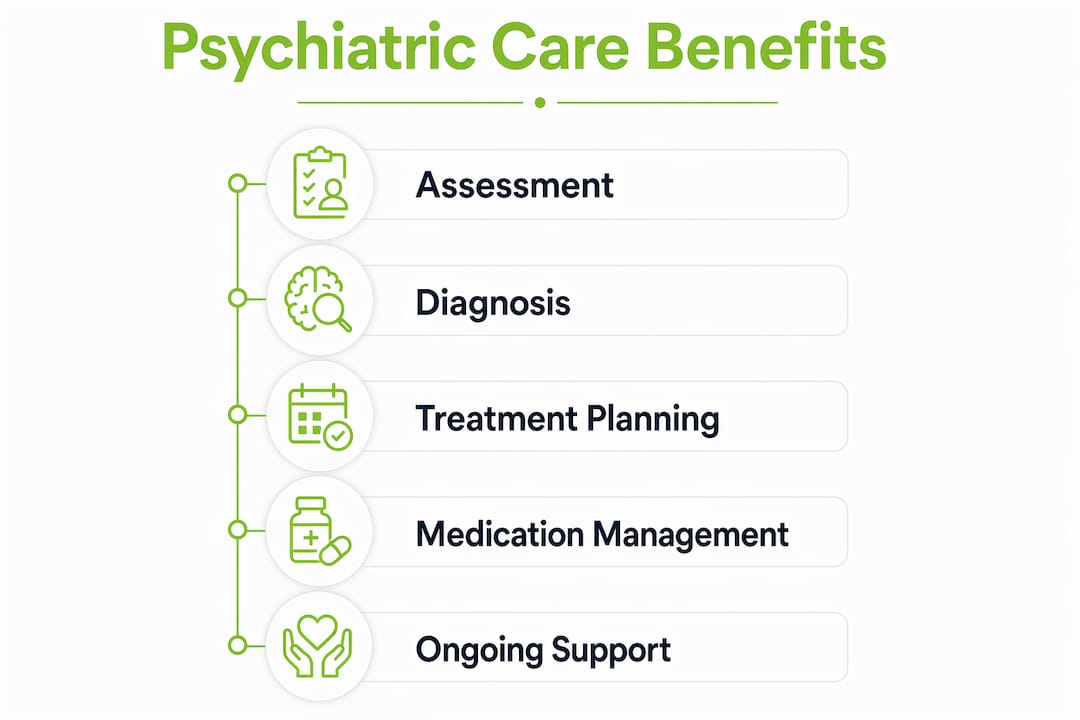
Many people delay seeing a psychiatrist because they do not know what to expect. The reality is far less intimidating than most imagine. A first evaluation typically runs 45 to 60 minutes and follows a structured but conversational format.
Here is what the process generally looks like:
- Symptom history. Your psychiatrist will ask when your symptoms started, how they have changed, and what makes them better or worse. Be as specific as you can.
- Medical and family history. Many mental health conditions have a genetic component. Your psychiatrist will also want to know about any physical health conditions or medications that could be contributing to your symptoms.
- Mental status examination. This is a clinical observation of your appearance, speech, mood, thought process, and cognitive function. It is not a test you pass or fail.
- Discussion of treatment options. This is a conversation, not a prescription pad. Psychiatrists assess the whole patient and respect your autonomy. Medication is one option among several, and you will not be pressured to start anything at the first visit.
- Shared decision-making. The best psychiatric care is collaborative. You leave with a plan you understand and have agreed to, not a set of instructions handed down from above.
Pro Tip: Write down your three most pressing concerns before the appointment. It is easy to forget what matters most once you are in the room. A short list keeps the conversation focused.
How to choose the right psychiatrist for your needs
Finding a qualified psychiatrist is one thing. Finding the right one for you is another. The therapeutic alliance between patient and psychiatrist accounts for up to 30% of treatment success, which means the relationship itself is a clinical variable. That is not a small number.
When evaluating a psychiatrist, consider the following:
- Board certification. There are over 40,000 practicing psychiatrists in the U.S. Confirming that your provider is certified by the American Board of Medical Specialties is a baseline quality check, not an optional one.
- Experience with your specific condition. A psychiatrist who primarily treats schizophrenia and one who specializes in anxiety disorders and ADHD bring different depth to those conditions. Ask directly about their experience.
- Treatment philosophy. Some psychiatrists lean heavily on medication management. Others integrate psychotherapy into their practice. Neither is wrong, but knowing their approach helps you find alignment with your own preferences.
- Communication style. Do they explain their reasoning? Do they ask about your goals? Do you feel heard? These are not soft considerations. They are predictors of whether you will stay engaged in treatment.
- Practical factors. Location, telehealth availability, insurance acceptance, and wait times all affect whether you actually follow through. Nortex Psychiatry, for example, offers both in-person and telehealth appointments across Allen, Frisco, McKinney, and Plano, which removes a significant barrier for many patients.
Treat the first visit as a mutual evaluation. You are interviewing your psychiatrist just as much as they are evaluating you. If the fit is not right, it is reasonable to seek a second opinion.
What are the real benefits of seeing a psychiatrist?
Psychiatric care offers something that therapy alone cannot: medical oversight. A psychiatrist can detect thyroid dysfunction, sleep apnea, or neurological conditions that present as depression or anxiety. Missing those diagnoses means treating the wrong problem for months or years.
“Seeking psychiatric care is not a sign that something is fundamentally wrong with you. It is a proactive, managed approach to a complex health condition.” — Rula Health
Coordinated care between psychiatrists, therapists, and primary care providers consistently improves outcomes and reduces the risk of medication interactions or gaps in treatment. When your psychiatrist communicates with your therapist and your primary care doctor, you get a treatment plan that accounts for your whole health picture, not just one slice of it. For adults managing conditions like major depression, bipolar disorder, or ADHD, that coordination is not a luxury. It is how good care works.
Psychiatric treatment is also deeply personalized. Your psychiatrist considers your biology, your psychology, and your social context when recommending treatment. That is why two people with the same diagnosis may follow very different paths. One may benefit from medication alone. Another may do best with a combination of medication and anxiety-focused psychiatric care. The goal is always to match the treatment to the person, not the person to a protocol.
Key takeaways
Seeing a psychiatrist is the right step when mental health symptoms persist beyond two weeks, impair daily functioning, or fail to improve with therapy alone.
| Point | Details |
|---|---|
| Know the warning signs | Symptoms lasting over two weeks, self-harm thoughts, or no therapy progress all warrant evaluation. |
| Psychiatrists differ from therapists | Only psychiatrists can prescribe medication and rule out physical causes of mental symptoms. |
| First visits are collaborative | Expect a 45 to 60 minute conversation, not a prescription. Medication is never mandatory at the first visit. |
| The relationship matters | Therapeutic alliance accounts for up to 30% of treatment success. Choose a provider you trust. |
| Coordination improves outcomes | Psychiatrists who communicate with your therapist and primary care doctor deliver better, safer care. |
What I have seen in practice
Over the years, one pattern stands out clearly. The people who wait the longest to see a psychiatrist are often the ones who needed that evaluation the earliest. They tried to manage on their own, or they saw a counselor for months without real progress, and by the time they arrived for a psychiatric evaluation, the symptoms had compounded in ways that made treatment more complex.
I want to be direct about something. Seeing a psychiatrist does not mean you are broken or that your problems are beyond ordinary human experience. It means you are taking your health seriously enough to get the right kind of help. That is not weakness. That is good judgment.
What I also notice is how often patients come in with a fixed idea of what they want, usually either “I just want therapy, no medication” or “just give me something to make this stop.” Both positions are understandable. Neither is always right. The most productive first visits are the ones where the patient comes in curious rather than decided. The guide for starting psychiatric treatment we put together for new patients reflects exactly that spirit. Come with your questions. We will work through them together.
Recovery is not a straight line. But having the right medical support makes the path clearer.
— Felix
Ready to take the next step with Nortex Psychiatry?
At Nortex Psychiatry, we provide personalized psychiatric evaluations and individualized treatment plans for adults across Allen, Frisco, McKinney, and Plano. Whether you are managing anxiety, depression, ADHD, or a mood disorder, our approach respects your autonomy and focuses on what actually works for you. We offer both in-person and telehealth appointments to fit your schedule. If you are a parent wondering about options for your teenager, our medication management for teens guide shows exactly how we approach care at every age. When you are ready, we are here.
FAQ
When should you see a psychiatrist instead of a therapist?
See a psychiatrist when your symptoms are severe, have lasted more than two weeks, or have not improved after several sessions of therapy. Psychiatrists can prescribe medication and rule out physical causes that therapists are not trained to address.
Does seeing a psychiatrist mean you will be put on medication?
No. A first psychiatric visit is an evaluation, not a prescription. Psychiatrists discuss all treatment options, including non-pharmacological approaches, and medication is only recommended when clinically appropriate and agreed upon by the patient.
How do you find a psychiatrist who is right for you?
Verify board certification, ask about their experience with your specific condition, and pay attention to whether you feel heard during the first visit. The therapeutic alliance between you and your psychiatrist accounts for up to 30% of treatment success, so fit matters as much as credentials.
What is the difference between a psychiatrist and a psychologist?
A psychiatrist holds a medical degree and can prescribe medication. A psychologist holds a doctoral degree in psychology and focuses primarily on psychotherapy and psychological testing. Both are valuable, and many patients work with both as part of an integrated care plan.
How do you find a psychiatrist for your teen?
Look for a child and adolescent psychiatrist with specific training in that age group, check for telehealth availability to reduce barriers, and involve your teen in the selection process when possible. Nortex Psychiatry serves families across North Dallas and offers resources specifically designed for younger patients and their parents.