


Many adults dealing with anxiety, depression, or ADHD face an early and frustrating question: do I need therapy, medication, or both? The assumption that one option is always better than the other leads a lot of people to either delay treatment or settle for an approach that doesn’t fully meet their needs. The truth is more nuanced. Research shows that the most effective mental health care is personalized, not prescriptive. This guide breaks down what therapy and medication each offer, how they compare across different conditions, and how to think about combining them for the best possible results.
Table of Contents
- What do therapy and medication actually do?
- Comparing therapy, medication, and combination treatment
- Nuances: Comorbid conditions and tailoring your approach
- Long-term impact: What does the evidence really show?
- A psychiatrist’s take: Why the best mental health care rarely picks sides
- Next steps: Find the support that fits your needs
- Frequently asked questions
Key Takeaways
| Point | Details |
|---|---|
| Both treatments help | Therapy and medication each offer unique benefits for anxiety, depression, and ADHD. |
| Combination often best | For many, blending therapy and medication brings the best short-term and sometimes lasting results. |
| Personalization matters | Treatment plans should adapt to your specific diagnosis, symptoms, and life needs. |
| Consider comorbidity | If you have more than one condition, an integrated approach is key to recovery. |
| Monitor long-term outcomes | More research is needed on durability, so regular follow-up and plan adjustments are essential. |
What do therapy and medication actually do?
With an understanding of why one-size-fits-all answers don’t work, let’s clarify what each treatment type actually offers.
Therapy and medication work through completely different mechanisms, and that’s exactly why they’re not interchangeable. Understanding what each one targets helps you make a more informed decision with your provider.
Therapy changes how you think and behave. The most research-supported form is Cognitive Behavioral Therapy, or CBT. CBT helps you identify and challenge negative thought patterns that drive anxiety, depression, and ADHD-related struggles. You also build practical coping skills, problem-solving habits, and strategies for managing daily function. It’s active work, and that’s part of what makes it effective and lasting.
Medication works differently. It changes your brain chemistry directly. Antidepressants like SSRIs (selective serotonin reuptake inhibitors) increase the availability of serotonin to reduce symptoms of depression and anxiety. For ADHD, stimulants like amphetamine salts or methylphenidate increase dopamine and norepinephrine to improve focus and impulse control. Atomoxetine, a non-stimulant ADHD medication, works similarly but without the stimulant profile. Medications often produce noticeable symptom changes faster than therapy, especially for moderate to severe presentations.
Here’s a simple breakdown of when each approach tends to lead:
- CBT is strongly indicated for anxiety disorders, depression, and the behavioral and organizational challenges of ADHD
- Antidepressants are first-line treatments for major depressive disorder and generalized anxiety disorder
- Stimulants and atomoxetine are the primary pharmacological treatments for adult ADHD
- Combined treatment is often recommended when either approach alone isn’t providing full relief
As noted in clinical research, CBT is evidence-based with demonstrated efficacy for psychiatric conditions including depression and anxiety, and it’s commonly used alongside medication in more serious mental health conditions.
“CBT is an evidence-based psychotherapy with demonstrated efficacy for psychiatric conditions including depression and anxiety, and it is used as an adjunct to medication in serious mental disorders.” — National Library of Medicine
It’s also worth knowing that therapy and medication aren’t the only two options. If you’ve ever wondered how talk therapy compares to TMS, that’s a comparison worth exploring as well, particularly if standard approaches haven’t worked for you.
Pro Tip: Before your first appointment, write down the symptoms that bother you most in daily life. Knowing what’s most impairing, whether it’s concentration, mood, or sleep, helps your provider prioritize the right starting point.
Comparing therapy, medication, and combination treatment
Now that you’re clear on what therapy and medication do, here’s how their real-world effectiveness stacks up when used separately or together.
| Approach | Best used for | Time to effect | Key limitation |
|---|---|---|---|
| Therapy (CBT) | Anxiety, mild-moderate depression, ADHD coping skills | 6-16 weeks | Requires commitment; slower onset |
| Medication | Moderate-severe depression, anxiety, core ADHD symptoms | 2-6 weeks | Side effects; doesn’t build coping skills |
| Combination | Complex or comorbid presentations; treatment-resistant cases | Variable | Coordination required; higher cost |
For ADHD specifically, medication is the primary tool for core symptoms like inattention, hyperactivity, and impulsivity. But according to research evaluating CBT alongside pharmacotherapy, adding CBT to medication provides measurable additional benefit over medication alone for at least the short term, approximately a three-month window, though the advantage may narrow over longer follow-up periods. This is meaningful. It tells us that medication handles the neurological side of ADHD while therapy helps you build the organizational and emotional management skills that pills alone cannot teach.

For depression and anxiety, both therapy and medication show similar effectiveness in many studies for mild to moderate presentations. For more severe cases, combination treatment tends to outperform either approach alone.
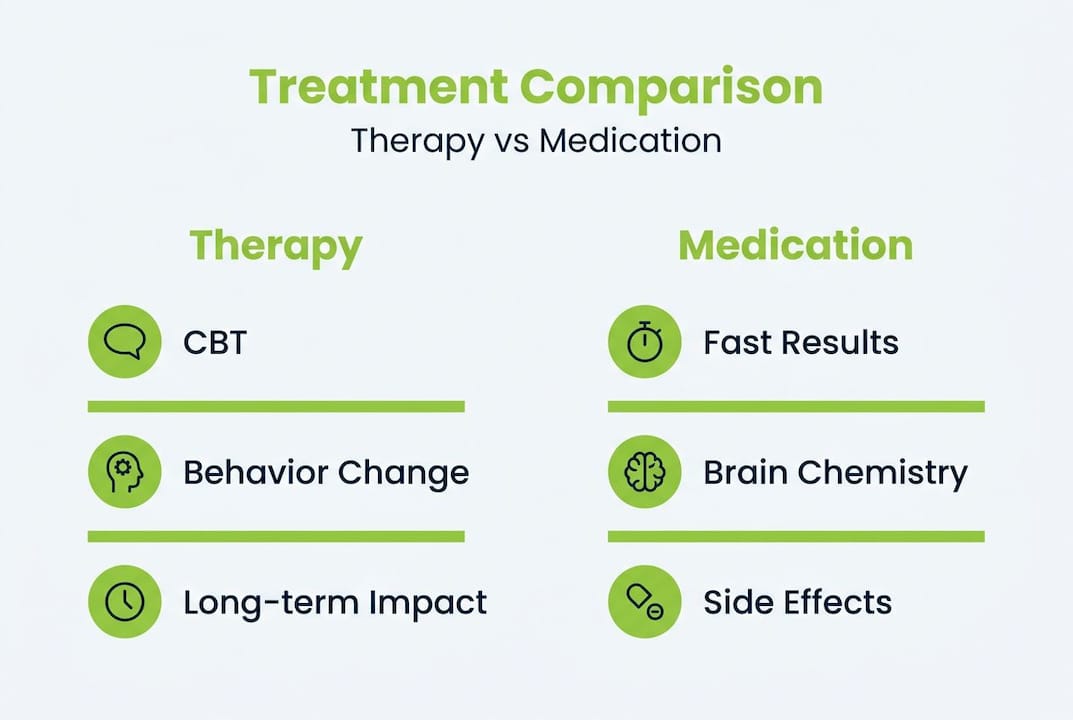
Pros and cons at a glance:
Therapy alone:
- Builds long-term coping skills and resilience
- No medication side effects
- Can address root patterns and triggers
- Slower to take effect; requires active participation
Medication alone:
- Faster symptom relief
- Convenient for people with limited time
- Well-studied for most common conditions
- Doesn’t address behavioral habits or thinking patterns
Combination treatment:
- Often produces stronger and more durable outcomes
- Addresses both brain chemistry and behavior
- Better suited for complex or comorbid conditions
- Requires coordination and may involve higher costs
You can also read about how a TMS vs medication comparison stacks up for those exploring alternatives beyond standard pharmacotherapy. And if ADHD is your primary concern, research specifically on TMS therapy for ADHD is emerging as an interesting area. For practical guidance on managing your medications safely and consistently, reviewing medication management tips can also be helpful.
Nuances: Comorbid conditions and tailoring your approach
But in real life, symptoms and diagnoses often overlap. Here’s how treatment strategies adapt when things aren’t so clear-cut.
One of the biggest mistakes people make is assuming they have a single, isolated condition. In reality, comorbidity is extremely common. Adults with ADHD frequently also experience depression or anxiety. Adults with depression often struggle with concentration and motivation that mimics ADHD. When you have more than one condition, the treatment picture gets more complicated, and more important to get right.
Research specifically examining integrated approaches for adult ADHD with comorbidities makes clear that treating each condition as a separate target doesn’t work as well. Instead, sequencing and combining treatments based on your most impairing and risky symptoms produces better outcomes.
Here’s a practical way to prioritize when you have more than one condition:
- Identify your most disruptive symptom cluster. Is it the inability to focus at work? Persistent low mood? Panic attacks in social situations? Start with what’s creating the most harm to your daily functioning.
- Discuss the diagnostic picture honestly with your provider. Some symptoms of ADHD look like anxiety, and some anxiety symptoms look like ADHD. Accurate diagnosis comes first.
- Sequence treatment strategically. If anxiety is severe and is also worsening ADHD symptoms, treating the anxiety first may improve overall functioning. Your provider should help you map this out.
- Revisit the plan regularly. As one condition improves, the other may shift. Plans need to evolve with you.
- Consider therapy that addresses multiple conditions. CBT protocols exist specifically for comorbid ADHD and anxiety, and some providers specialize in exactly this kind of integrated work.
When conditions overlap, treating just one in isolation often leaves the other unaddressed. Integrated care means designing a plan that accounts for the full picture, not just the loudest symptom.
Pro Tip: When you see a provider for the first time, don’t filter your symptoms. Report everything, including mood, energy, focus, sleep, and relationships. Treatment sequencing depends on a complete picture, and holding back can lead to a plan that only partially fits.
For anxiety specifically, working with a provider trained in integrated anxiety care makes a real difference. And if mood disorders are part of your experience, exploring personalized mood disorder treatments can help you understand what a tailored plan might look like for your situation.
Long-term impact: What does the evidence really show?
You might wonder, do these treatment benefits stick around? The long-term picture is important for lasting change and peace of mind.
Short-term symptom relief is valuable. But most people care about something bigger: will I actually feel better in my day-to-day life, and will those improvements last? This is where the research gets more honest about its own limitations.
| Timeframe | Therapy (CBT) | Medication | Combination |
|---|---|---|---|
| Short-term (0-3 months) | Moderate to strong | Strong for core symptoms | Strongest overall |
| Medium-term (3-12 months) | Good skill retention | Variable; side effects may limit adherence | Good with proper follow-up |
| Long-term (1+ years) | Best durability for anxiety/depression | Needs ongoing management | Most research gaps here |
| Quality of life impact | Strong | Mixed evidence | Best potential |
Here’s something important that many people don’t hear: medication for ADHD core symptoms, including stimulants and atomoxetine, shows strong efficacy for inattention and hyperactivity, but this doesn’t consistently translate into improvements in quality of life. Tolerability also varies significantly from person to person. Symptom reduction and life improvement are not the same thing, and that distinction matters when choosing a long-term plan.
Therapy tends to produce more durable gains for anxiety and depression because it teaches skills you continue using after treatment ends. Medication, by contrast, works while you take it. For many people, that’s fine and appropriate. But for others, especially those who want to eventually reduce reliance on medication, building therapy skills alongside medication from the beginning creates a stronger foundation.
Factors that influence lasting treatment success:
- Consistent follow-through with therapy sessions and homework between appointments
- Medication adherence and regular check-ins with your prescriber
- Early identification and treatment of any comorbid conditions
- Lifestyle factors like sleep, exercise, and stress management
- A strong, trusting relationship with your treatment team
- Willingness to adjust the plan as life circumstances change
For people who have tried medication without lasting success, learning about long-term effects of ketamine therapy is one option worth understanding. Similarly, long-term TMS studies are building an evidence base that may matter for people with treatment-resistant depression.
A psychiatrist’s take: Why the best mental health care rarely picks sides
Stepping back, how do experts actually approach these decisions in the real world?
Here’s an uncomfortable truth that gets lost in most “therapy vs. medication” discussions: framing it as a competition leads people to make worse decisions. We see this regularly. Someone reads that CBT is just as effective as medication for depression, so they decide to try therapy alone for a condition that’s been severe for years. Or someone gets a prescription but never addresses the thought patterns and avoidance behaviors that are keeping them stuck. Both choices are missing something important.
From a clinical standpoint, the question is never really “which one.” It’s “what does this person need right now, and how might that change in six months?” Mental health is not a static target. A plan that works during a stressful life transition may need to be adjusted when things stabilize. A medication that’s effective at 30mg may need a different approach at a different point in life. The most skilled providers don’t follow rigid protocols. They monitor, they adjust, and they plan ahead.
The real advantage of combining therapy and medication isn’t just that you get two treatments instead of one. It’s that each approach shores up the weaknesses of the other. Medication can stabilize mood and concentration enough that therapy becomes more productive. Therapy can build coping skills that reduce reliance on medication over time. Together, they create more flexibility, more resilience, and a better quality of life.
We also want to be honest about the limits of the research. Most clinical trials are conducted over weeks or months, not years. Real life plays out over decades. What works in a controlled study may need significant tailoring when you add in job stress, family dynamics, health changes, and everything else that makes you human. That’s why ongoing partnership with your provider matters more than any single treatment decision.
If you’re trying to figure out whether TMS or medication is a better fit for your situation, that’s a conversation worth having with a provider who knows your full history and is willing to think creatively.
Next steps: Find the support that fits your needs
Ready to move forward? Here’s how you can take proactive steps toward care that addresses your unique needs.
You don’t have to figure this out alone, and you shouldn’t have to guess. At Nortex Psychiatry, we work with adults across Allen, Frisco, McKinney, Plano, and the broader North Dallas area to build treatment plans that are actually personalized, not templated. Whether you’re navigating anxiety, depression, ADHD, or a combination of all three, our team offers evidence-based care including medication management, psychiatric evaluations, and coordinated therapy support. Start by using our self-assessment tool to better understand your symptoms. You can also explore how we approach psychiatrist anxiety care or review our personalized mood disorder guide for practical next steps. Both in-person and telehealth appointments are available to fit your schedule.
Frequently asked questions
How do I know if I should choose therapy, medication, or both?
The decision depends on your specific symptoms, diagnosis, and history. Because CBT and medication both show efficacy for conditions like depression and anxiety, most people benefit most from a personalized plan built collaboratively with a qualified provider.
Does medication work better than therapy for ADHD in adults?
For core ADHD symptoms, medication acts faster and more directly. However, adding CBT to medication provides meaningful short-term benefits on top of what medication alone can achieve.
Can I stop therapy or medication once I feel better?
You should always consult your provider before making changes. Stopping too early can risk relapse or, with certain medications, uncomfortable withdrawal effects that require careful management.
What if I have both ADHD and anxiety or depression?
Integrated care that targets your most disruptive symptoms first is the recommended approach. Comorbid conditions are common in adults, and sequencing treatment thoughtfully produces better outcomes than addressing each condition in isolation.
Does therapy or medication have better long-term results?
Both can help, but the honest answer is that long-term quality of life outcomes remain under-researched. Combining approaches tends to offer the most durability and the broadest improvements across both symptoms and daily functioning.