


Anxiety is one of the most common mental health challenges adults face across North Dallas, yet the path to relief is rarely straightforward. You might wonder: does managing anxiety always mean taking medication? The honest answer is no. Modern psychiatric care has moved well beyond a one-size-fits-all prescription approach. Today, expert guidance centers on building a personalized plan that may or may not include medication, depending on your specific symptoms, history, and life circumstances. This article will walk you through the science behind anxiety medication, the real choices available to you, and how to think clearly about what fits your situation.
Table of Contents
- Why consider medication for anxiety?
- What kinds of anxiety medications are available?
- How are medications and therapy combined for best results?
- Factors to consider when choosing anxiety medication
- A new mindset: rethinking medication for anxiety in modern psychiatric care
- Take your next step toward relief with personalized psychiatric care
- Frequently asked questions
Key Takeaways
| Point | Details |
|---|---|
| Medication works best when tailored | Personalized choices based on symptoms, preferences, and response histories create the best outcomes. |
| SSRIs and SNRIs are first-line | These medications have strong evidence for reducing anxiety with lower risk of dependency. |
| Combining medication and therapy is most effective | Together, they deliver both quick symptom relief and lasting coping skills. |
| Shared decision-making is crucial | Provider and patient partnership leads to safer selections and better satisfaction. |
Why consider medication for anxiety?
If you’ve been struggling with persistent, overwhelming anxiety, medication isn’t a sign of weakness. It’s a clinically grounded tool that works well for many adults when the right match is found. Understanding why medication is recommended begins with the science.
SSRIs and SNRIs reduce anxiety symptoms more effectively than placebo in adults diagnosed with generalized anxiety disorder, with high-certainty evidence supporting this conclusion. SSRIs (selective serotonin reuptake inhibitors) and SNRIs (serotonin-norepinephrine reuptake inhibitors) work by gradually adjusting the brain’s chemical environment, making it easier for you to regulate worry, fear, and the physical sensations that come with anxiety. These aren’t sedatives. They don’t numb you. Used correctly, they help restore a level of calm that lets you engage with life more fully.
One of the most practical reasons medication enters the conversation is function. When anxiety is severe enough to disrupt sleep, work, relationships, or daily tasks, medication can lower the intensity of symptoms to a manageable level. That reduction creates space for therapy to actually take root. Think of it this way: it’s hard to practice new mental skills when your nervous system is running on overdrive. Medication can quiet that overdrive.
Key reasons medication is often recommended include:
- Moderate to severe symptom severity that significantly limits your ability to work or maintain relationships
- Insufficient response to therapy alone after a fair trial period
- Physical symptoms such as chest tightness, trembling, or insomnia that need direct relief
- Co-occurring conditions like depression, which often respond well to the same first-line medications
Working with psychiatrists for anxiety care gives you access to a professional who can assess all of these factors carefully, rather than relying on a general checklist. An evidence-based approach always factors in your unique needs, history, and what you’re comfortable with.
Pro Tip: If you’re unsure whether your anxiety warrants medication, start by tracking your symptoms daily for two weeks. Note how often anxiety interferes with specific activities. This record is incredibly useful when discussing options with your provider. You can also explore managing anxiety strategies as a starting point before or alongside any medication decision.
What kinds of anxiety medications are available?
Understanding your options helps you walk into a psychiatric consultation feeling informed rather than overwhelmed. Anxiety medications are not interchangeable, and each class comes with its own benefits, risks, and ideal use cases.

SSRIs and SNRIs are preferred for longer-term treatment because they avoid the dependency risks associated with older drug classes and provide steady, sustained symptom relief rather than rapid intermittent effects. Here’s a breakdown of the main categories:
| Medication type | How it works | Best for | Main risks | Clinical role |
|---|---|---|---|---|
| SSRIs (e.g., sertraline, escitalopram) | Increases serotonin availability | Long-term daily management | Initial side effects, sexual side effects | First-line, preferred |
| SNRIs (e.g., venlafaxine, duloxetine) | Boosts serotonin and norepinephrine | GAD, social anxiety, physical symptoms | Blood pressure changes, withdrawal if stopped abruptly | First-line, preferred |
| Benzodiazepines (e.g., lorazepam) | Enhances GABA activity for rapid calm | Short-term, acute relief only | Dependency, sedation, cognitive effects | Limited, short-term bridge |
| Buspirone | Acts on serotonin and dopamine receptors | Mild to moderate GAD | Slower onset, dizziness | Second-line option |
| Beta-blockers (e.g., propranolol) | Blocks adrenaline physical symptoms | Situational anxiety (e.g., performance) | Limited evidence for general anxiety | Situational, adjunct |
The most common starting point for adults is an SSRI or SNRI. They require patience because full benefits typically emerge over several weeks, but their safety profile and proven effectiveness make them the gold standard in first-line care. For adults uncertain about choosing therapy or medication, knowing that these medications often work with therapy rather than replacing it is reassuring.
If you’re curious about more innovative options, ketamine therapy for anxiety is an emerging treatment that may be appropriate for some adults who haven’t responded to conventional medications.
Here are the key steps your provider typically follows when selecting a medication:
- Review your full symptom picture, including anxiety type, severity, and duration
- Assess your medical history and any current medications for potential interactions
- Discuss your personal preferences, including concerns about side effects or stigma
- Start with a low dose and adjust gradually based on your response
- Schedule follow-up appointments to track both effectiveness and tolerability
Pro Tip: Ask your provider specifically about the discontinuation process before you start. Knowing how to safely stop a medication if needed gives you confidence and reduces fear around starting treatment.
How are medications and therapy combined for best results?
Here is something many people don’t expect: the combination of medication and therapy typically outperforms either approach used alone. This isn’t just clinical wisdom. It’s backed by solid evidence.
Adults get better outcomes when medication is paired with psychotherapy, particularly when symptoms are moderate to severe or when lasting coping skills are the goal alongside symptom reduction. The reason this combination works so well comes down to what each approach does best.
“Medication reduces the noise so therapy can do the real work. When symptoms are less overwhelming, patients engage more deeply with the skills that create lasting change.” This perspective reflects what experienced clinicians observe consistently in practice: medications lower the barrier, and therapy builds the foundation.
CBT, or cognitive-behavioral therapy, is the gold standard psychological treatment for anxiety. It helps you identify distorted thought patterns, face feared situations gradually, and build a toolkit of coping strategies. But when anxiety is severe, practicing CBT skills can feel impossible. Medication reduces that severity enough to make meaningful therapy participation realistic.
Here’s how outcomes tend to compare across treatment approaches:
| Treatment approach | Short-term symptom relief | Long-term relapse prevention | Best suited for |
|---|---|---|---|
| Medication alone | Strong | Moderate (symptoms may return after stopping) | Severe symptoms needing rapid stabilization |
| Therapy (CBT) alone | Moderate to strong | Strong | Mild to moderate anxiety with coping skill deficits |
| Medication plus therapy | Strong | Strongest | Moderate to severe anxiety, complex presentations |
The benefits of psychiatric care extend well beyond a prescription. A skilled psychiatrist helps you monitor how both medication and therapy are working together, adjusting either as your needs change over time. This ongoing partnership is where real progress happens.
It’s also worth knowing that additional options exist for adults who don’t respond fully to standard treatments. TMS and anxiety relief is one such alternative, using magnetic pulses to stimulate brain regions involved in mood regulation. For the right candidate, these adjunctive approaches add another layer of support without replacing the value of combined medication and therapy.
Key advantages of combining medication with therapy include:
- Faster symptom relief in the early weeks of treatment
- Reduced likelihood of relapse after therapy concludes
- Greater ability to apply therapy skills during high-anxiety moments
- A more flexible treatment plan that can be adjusted as your life changes
- A collaborative relationship with your provider built on shared goals and ongoing review of practical relief strategies
Factors to consider when choosing anxiety medication
The best anxiety medication for you isn’t simply the most prescribed one. It’s the one that fits your body, your lifestyle, and your specific clinical picture. This is where the concept of acceptability becomes just as important as effectiveness.
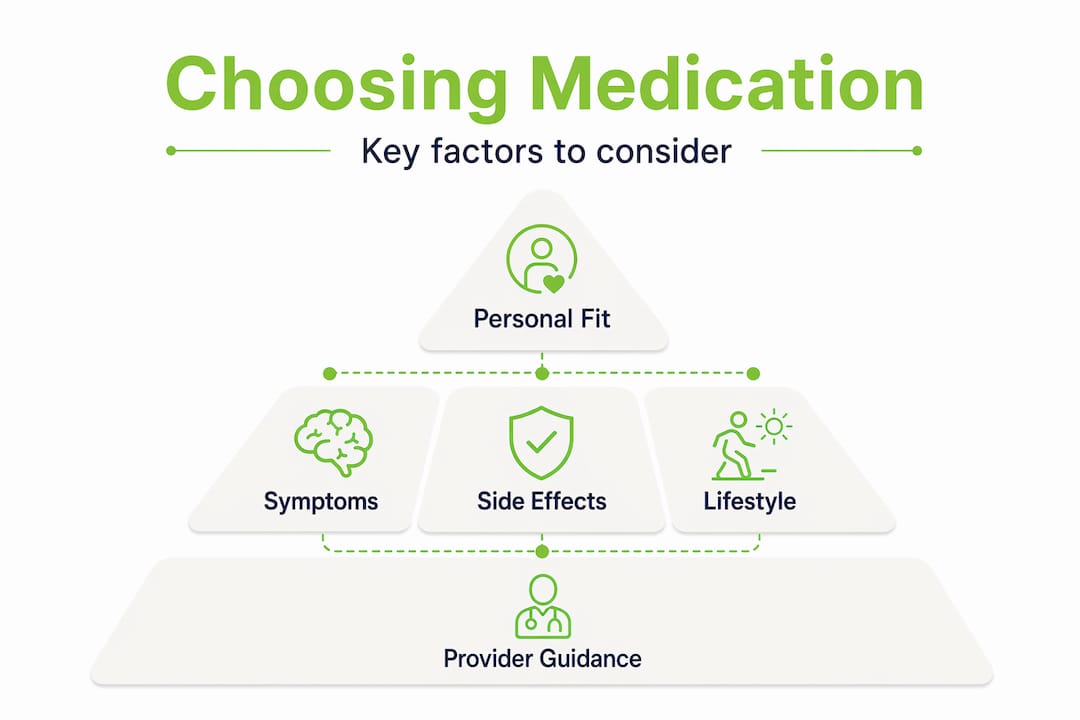
Both efficacy and tolerability matter when comparing anxiolytic medications, because the drug that produces the strongest symptom reduction may not be the one most patients can comfortably stay on. High discontinuation rates tell a real story: a medication that works brilliantly on paper but causes intolerable side effects isn’t truly the right choice for you.
When you and your provider discuss medication options, these are the factors worth exploring carefully:
- Side effect profile: Does this medication commonly cause weight gain, fatigue, sexual dysfunction, or other effects that would significantly affect your quality of life?
- Dosing schedule: Daily medications require consistent habits. If your schedule is unpredictable, this matters.
- Onset of relief: Some people need faster symptom reduction. Others can wait the four to six weeks SSRIs typically take.
- Your history with medications: If you’ve previously tried an SSRI with poor results, a different drug class may be worth exploring first.
- Other health conditions: Cardiovascular conditions, hormonal issues, or chronic pain can influence which medications are both safe and effective for you.
- Your personal values and preferences: Some adults strongly prefer to avoid medication entirely unless absolutely necessary. That preference deserves respect and open discussion.
- Interaction with substances: Alcohol, caffeine, and even some supplements can interact with anxiety medications in ways that matter.
Collaborating with a provider to explore personalized anxiety treatment is the most reliable way to find a plan that actually sticks. Cookie-cutter approaches to medication too often result in unnecessary side effects, poor adherence, and a frustrating cycle of trial and error.
Pro Tip: Before your first appointment, write down every medication you’ve tried before, including supplements and over-the-counter options, along with how each one made you feel. This history saves time and helps your provider make smarter recommendations from the start.
A new mindset: rethinking medication for anxiety in modern psychiatric care
We want to share something that takes years of clinical experience to fully appreciate: medication is not the destination. It’s a bridge.
The adults who make the most meaningful and lasting progress in anxiety treatment are the ones who see medication as one adjustable tool in a much larger set of resources. They don’t put all their hope into a pill, and they don’t dismiss medication out of fear or stigma either. They use it thoughtfully, with ongoing provider support, while also investing in therapy, lifestyle changes, sleep, social connection, and self-awareness.
There’s a common misconception worth naming directly: that needing medication means you’ll need it forever. This simply isn’t true for many people. Medication often serves as a stabilizing foundation during a challenging period. With the right support, many adults successfully taper off medication after maintaining wellness for a sustained period, equipped with the coping skills they built during treatment.
Where we see people struggle most is when they expect medication to do all the work. It won’t. No medication eliminates the need to examine unhelpful thought patterns, address underlying stressors, or build sustainable daily habits. What medication can do is lower the volume of anxiety enough that those efforts feel possible and productive.
The honest conversation about therapy versus medication is not “which one wins.” It’s “what does this person need right now, and how do we adapt that plan as they grow?” Recovery from anxiety is a journey, not a straight line. Medication is most powerful when it’s treated as one adjustable, reviewable piece of a broader plan, rather than a permanent fix or a last resort.
Take your next step toward relief with personalized psychiatric care
Understanding your options is the first step. Getting the right support is what makes the difference. At Nortex Psychiatry, we work with adults across Allen, Frisco, McKinney, Plano, and the wider North Dallas area to build truly individualized treatment plans, whether that means medication, therapy coordination, or both. Our team of experienced psychiatrists for anxiety management takes the time to understand your full picture before making any recommendations. Ready to find out where you stand? Start with our anxiety self-assessment to get a clearer sense of your symptoms and what level of care may benefit you most. From there, scheduling a consultation is simple, with both in-person and telehealth options available to fit your life.
Frequently asked questions
Do I always need medication for anxiety?
Not always. Adjustment-related or mild anxiety often responds well to lifestyle changes and behavioral therapy first, with medication reserved for more severe or persistent symptoms.
How fast do anxiety medications start working?
SSRIs and SNRIs generally take 2 to 6 weeks to reach their full effect; short-acting medications may be used briefly as a bridge but are not recommended for ongoing use.
Are benzodiazepines ever safe for anxiety?
Benzodiazepines may have a limited role in specific short-term situations, but they are not recommended for routine or long-term anxiety management due to dependency risks and significant side effects.
How do I know if medication is helping my anxiety?
Track your daily function, sleep quality, and ability to engage in therapy or normal activities. Both efficacy and tolerability should improve over time; if one is lagging, share that clearly with your provider.
Can I stop my anxiety medication if I feel better?
Never stop abruptly. Most anxiety medications require a gradual tapering process, and your provider should guide that decision based on how long you’ve been on medication and the stability of your symptoms.