


Adjunctive atypical antipsychotics are an evidence-based option when antidepressant treatment alone falls short, but the benefit is modest and comes with real metabolic and neurologic trade-offs. We reach for augmentation after confirming the antidepressant trial itself was adequate in dose and duration, not before. If you go this route, the plan needs monitoring built in from day one, not added later.
TL;DR:
- Augmentation with atypical antipsychotics offers modest benefits, with numbers-needed-to-treat for remission typically ranging from 9 to 19, depending on the agent.
- FDA-approved options include aripiprazole, quetiapine XR, olanzapine/fluoxetine, brexpiprazole, and lumateperone, with lumateperone showing a favorable, weight-neutral safety profile.
- Most trials are short, usually under two months, and functional improvements tend to lag behind symptom relief, while side effects like weight gain and akathisia are common.
- Lower, clinically relevant doses are used for augmentation, with early follow-up within 2 to 4 weeks to monitor side effects and adjust treatment accordingly.
- Heterogeneity in trial populations and limited long-term data mean augmentation is effective for symptoms but not a cure, emphasizing careful patient selection and monitoring.
Table of Contents
- What Does Antipsychotic Augmentation for Depression Actually Mean?
- How Strong Is the Evidence for Augmentation Strategies in Depression?
- Which Antipsychotics Have FDA Approval for Adjunctive Depression Treatment?
- What Doses Are Actually Used, and How Long Before You Know It’s Working?
- Managing the Side Effects Nobody Wants to Talk About
- When Should You Augment Instead of Switching Antidepressants?
- Special Considerations: Older Adults, Pregnancy, and Bipolar Screening
- A Practical Checklist for the First Few Visits
- How Nortex Psychiatry Approaches Augmentation in Practice
- A Clinician’s Honest Take on Augmentation
- Ready to Talk Through Your Options With a Psychiatrist?
- Sources
- FAQ
What Does Antipsychotic Augmentation for Depression Actually Mean?
Antipsychotic augmentation means adding a low dose of an atypical antipsychotic to an antidepressant that has produced only a partial response. It is not a replacement for the antidepressant, and it is not the same dosing used for psychosis or bipolar mania. In our practice, we describe it to patients as turning up the volume on a treatment that is already partly working, rather than starting over with something new.
The evidence base here has matured considerably since the early 2010s. Newer network meta-analyses covering dozens of randomized trials confirm what smaller studies suggested years ago: adding an atypical antipsychotic to an antidepressant improves response and remission rates for major depressive disorder, particularly in patients who have not responded adequately to one or two prior antidepressant trials. The related clinical terms you will see in guidelines and research papers, augmentation strategies, add-on therapy, and adjunctive treatment, all point to the same clinical maneuver.
How Strong Is the Evidence for Augmentation Strategies in Depression?
The evidence is genuinely solid, but it is not a home run. A 2023 network meta-analysis pooling 57 randomized controlled trials found that adjunctive atypical antipsychotics produced statistically significant, clinically meaningful improvements over placebo in depressive symptoms. That is a large body of trial data pointing in the same direction, which matters in a field where many interventions fail to replicate.
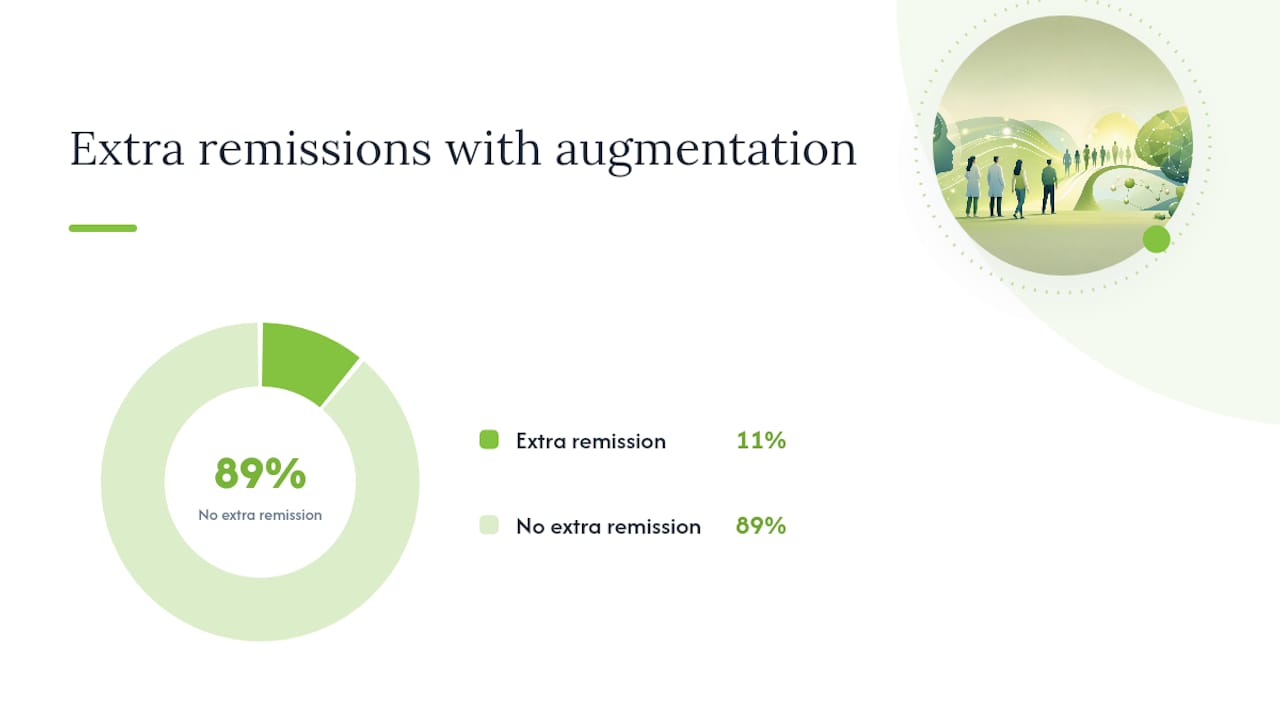
Numbers-needed-to-treat (NNT) for remission across these trials vary depending on the specific agent and dose studied, with some studies reporting reasonable numbers by psychiatric standards. An NNT of 9, for example, means you would need to treat nine patients with the augmentation strategy to achieve one additional remission compared with continuing the antidepressant alone. That is a reasonable NNT by psychiatric standards, roughly comparable to switching antidepressants outright, but it also means most patients will not experience a dramatic transformation.
A separate systematic review and network meta-analysis reached a consistent conclusion: essentially all standard-dose atypical antipsychotics outperformed placebo for treatment-resistant depression on response and remission measures. Risperidone and aripiprazole showed some added benefit on quality-of-life measures in certain analyses, though the effect sizes there were smaller and less consistent than the symptom-scale results.
A meta-analysis published in PLOS Medicine adds an important caveat. Aripiprazole, quetiapine XR, olanzapine/fluoxetine combination, and risperidone all showed small-to-moderate symptomatic benefits, but functional improvement, meaning how patients actually felt they were doing in daily life, lagged behind the symptom-scale gains. Weight gain and akathisia showed up often enough to matter clinically.
Key evidence patterns worth remembering:
- Effect sizes across trials are small-to-moderate, not large. This is augmentation, not a cure.
- Most agents beat placebo consistently for response and remission, but tolerability, not efficacy, is usually what separates one drug from another.
- Trial durations are often short, so long-term durability data is thinner than we would like.
- Functional and quality-of-life gains trail behind symptom reduction in most analyses.
The data in brief: Meta-analytic NNTs for remission with adjunctive atypical antipsychotics generally range from 9 to 19, depending on the agent, a benefit similar in magnitude to switching antidepressants, but achieved without discontinuing the drug that got the patient partway there.
The honest limitation across this literature is heterogeneity. Trial populations differ in how “treatment-resistant” was defined, follow-up periods rarely exceed two months, and most studies were not designed to capture the kind of real-world functional recovery patients actually care about. We take the efficacy signal seriously. We just do not oversell it.
Which Antipsychotics Have FDA Approval for Adjunctive Depression Treatment?
Six atypical antipsychotics dominate this conversation, and knowing which ones carry US Food and Drug Administration approval for adjunctive MDD treatment changes how you counsel patients and how insurance handles the prescription.
FDA-approved for adjunctive treatment of major depressive disorder:
- Aripiprazole — one of the earliest and most studied agents for this indication, typically dosed well below its antipsychotic range.
- Quetiapine XR — approved specifically in its extended-release form for adjunctive use.
- Olanzapine/fluoxetine combination (OFC) — a fixed-dose combination product, distinct from prescribing olanzapine and fluoxetine separately.
- Brexpiprazole — approved as an adjunctive agent with a dosing profile aimed at minimizing akathisia relative to aripiprazole.
- Lumateperone — the newest addition, approved in the United States in 2025 as adjunctive treatment for adults with MDD.
Trial-supported but not FDA-approved for this specific indication:
- Risperidone — solid trial data support its use, and some clinicians reach for it off-label, but it lacks the formal adjunctive-MDD indication the others carry.
- Cariprazine — accumulating trial support, used off-label by some prescribers, without the specific approval.
The approval status is not a minor technicality. It shapes prior authorization requests, influences whether insurers reimburse without a fight, and factors directly into informed consent conversations. When we prescribe an FDA-approved agent for its labeled indication, the conversation with a patient is simpler: this is what the drug is approved to do. When we use risperidone or cariprazine off-label, we say so plainly and explain why the trial evidence still supports the choice for that individual.
Lumateperone’s 2025 approval is worth sitting with for a moment. A 2026 network meta-analysis comparing it against older agents found it ranked favorably on several efficacy endpoints and showed no weight gain versus placebo in pooled analyses. That is a meaningfully different safety signature than several of its predecessors, and it is changing how some clinicians sequence their augmentation choices, especially for patients already carrying cardiometabolic risk.
What Doses Are Actually Used, and How Long Before You Know It’s Working?
Augmentation doses run lower than most patients expect, and lower than the doses used for psychosis or bipolar mania. That gap between “antipsychotic dose” and “augmentation dose” is one of the most common points of confusion in the exam room.
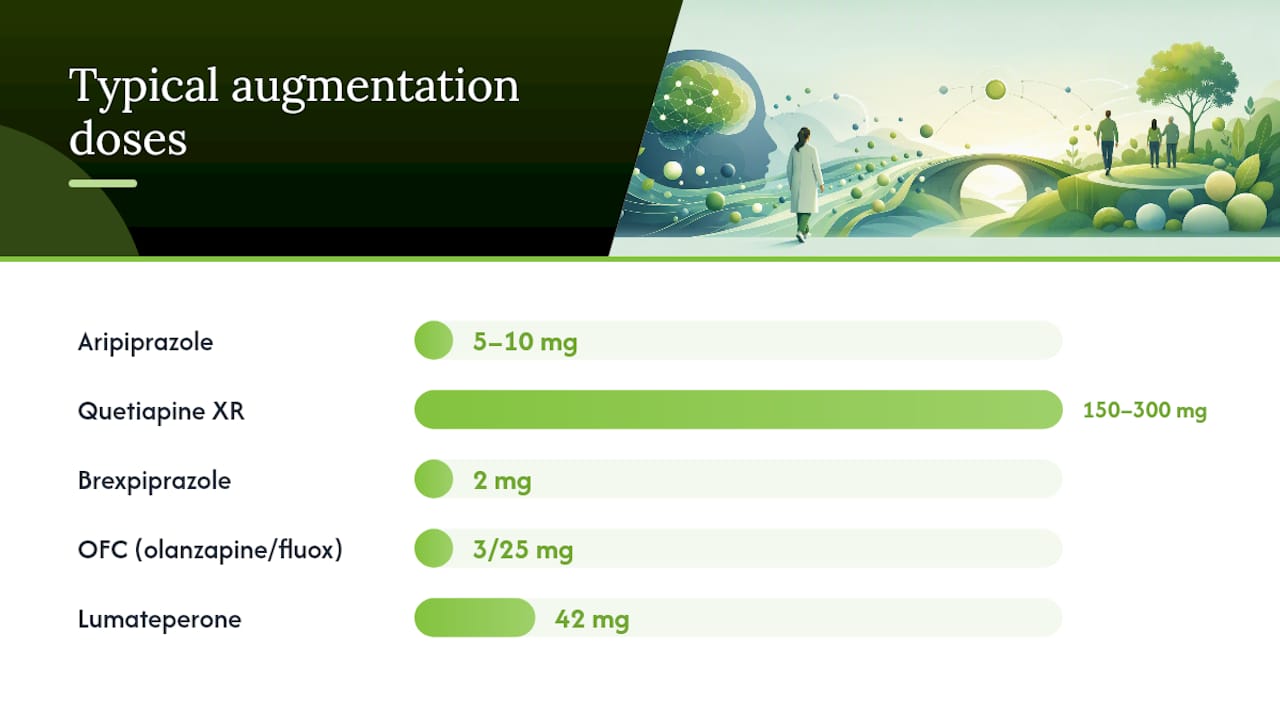
- Aripiprazole typically starts at 2 to 5 milligrams daily, titrating to a target range of 5 to 10 milligrams for most patients, well under the 15 to 30 milligram range used for psychotic disorders.
- Quetiapine XR is usually started at 50 milligrams at bedtime and titrated toward 150 to 300 milligrams, doses that lean sedating and are meaningfully lower than antipsychotic-range dosing.
- Brexpiprazole generally starts at 0.5 to 1 milligram daily, reaching a target of 2 milligrams for most patients.
- OFC is dosed as a fixed combination, commonly starting at olanzapine 3 milligrams/fluoxetine 25 milligrams, adjusted based on response and tolerability.
- Lumateperone is typically dosed at 42 milligrams daily, a single fixed dose in most trials rather than a titrated range.
We check in early, usually within 2 to 4 weeks of starting or adjusting the dose, specifically to catch akathisia, sedation, or early metabolic shifts before they derail the trial. Give the augmentation a genuine 4 to 8 week trial at an adequate dose before deciding whether it is working. If there is no meaningful improvement by then, that is your signal to reconsider, either adjusting the dose, switching agents, or stepping back to a different strategy entirely.
Baseline and interval monitoring is not optional even at low doses: weight and BMI, fasting glucose or A1c, fasting lipids, blood pressure, and a structured screen for abnormal movements such as the Abnormal Involuntary Movement Scale (AIMS).
Pro Tip: Schedule the 2 to 4 week follow-up before the patient leaves your office, not after. Akathisia in particular tends to surface early, and patients who feel unheard about it will often just stop the medication on their own rather than call to report it.
Managing the Side Effects Nobody Wants to Talk About
Every atypical antipsychotic carries some combination of metabolic risk, movement side effects, and sedation, but the specific profile varies enough by agent that it should genuinely drive your choice, not just your monitoring plan.
Weight gain and metabolic disturbance run highest with olanzapine-containing regimens like OFC and moderate with quetiapine XR, while aripiprazole, brexpiprazole, and lumateperone tend to be more weight-neutral. That distinction is not academic. A pooled analysis found lumateperone showed no weight gain versus placebo, a genuinely different profile from older agents in the same drug class.
Akathisia, the restless, can’t-sit-still sensation that patients often describe before they can name it, shows up most often with aripiprazole. It is also one of the most common reasons patients quietly discontinue the medication without calling the office first. Sedation runs the opposite direction: quetiapine XR and olanzapine are the more sedating options, sometimes a feature rather than a bug for patients with significant insomnia, but a problem for anyone needing daytime alertness. Extrapyramidal symptoms (EPS) and prolactin elevation occur less frequently across this drug class than with older typical antipsychotics, but they have not disappeared and deserve a direct question at follow-up, not just a checkbox.
Practical management strategies we rely on:
- For akathisia: lower the dose first, consider a brief course of a beta-blocker such as propranolol, or switch agents if symptoms persist beyond a dose adjustment.
- For sedation: move dosing to bedtime, lower the dose, or switch to a less sedating agent if daytime function suffers.
- For metabolic changes: address weight and lipid shifts early with dietary and activity counseling, and involve endocrinology if glucose or lipid abnormalities persist or worsen despite intervention.
- For persistent EPS: dose reduction is the first move; a switch to a lower-EPS agent is the second.
Even low-dose atypical antipsychotics carry metabolic risk. Baseline labs and ongoing counseling on diet and activity should start at initiation, not after a problem shows up on a follow-up panel.
Tardive dyskinesia is rare with atypical antipsychotics at augmentation doses, but it is not zero, and the risk accumulates with cumulative exposure over months and years. This is the reason long-term augmentation, even when it is working well, calls for periodic reassessment rather than indefinite autopilot refills.
When Should You Augment Instead of Switching Antidepressants?
This is the decision that separates a well-run augmentation strategy from a reflexive one. We think about it in terms of what the patient’s partial response actually looks like, not just whether they feel “better” in a vague sense.
An inadequate response generally means one or two antidepressant trials, each at an adequate dose for an adequate duration (usually 6 to 8 weeks at a therapeutic dose), without full remission. Augmentation tends to make more sense than switching when a patient has had a partial response, meaning real but incomplete improvement, because you are building on something that is already partly working rather than starting from zero again.
Signals that favor augmentation over a straight switch:
- Partial response with lingering core symptoms, particularly anhedonia or persistent low mood despite improved energy or sleep.
- A good tolerability track record on the current antidepressant, where the patient does not want to abandon what progress they have made.
- Specific residual symptom clusters that map onto a particular agent’s strengths, like persistent insomnia favoring a more sedating option such as quetiapine XR.
Agent selection often follows the symptom picture. Anxious, agitated presentations sometimes respond better to agents with a calmer side-effect profile, while significant insomnia can make a sedating option genuinely useful rather than purely a downside. Cardiometabolic comorbidity should steer you toward the more weight-neutral agents when the clinical picture allows it.
| Decision factor | Favors augmentation | Favors switching antidepressants |
|---|---|---|
| Response to current antidepressant | Partial response, some real improvement | No response or worsening |
| Tolerability of current antidepressant | Well tolerated | Poorly tolerated or intolerable side effects |
| Time already invested | Adequate trial completed, some gains | Trial incomplete or inadequate dose/duration |
| Cardiometabolic risk | Favor weight-neutral agents (aripiprazole, brexpiprazole, lumateperone) | Less relevant to this decision |
| Patient preference | Willing to add a medication and monitoring | Prefers simplifying rather than adding |
A shared decision-making conversation should walk through the actual magnitude of benefit, the specific side-effect trade-offs for the agent under discussion, the monitoring burden involved, insurance coverage realities, and, honestly, what the patient themselves is willing to live with. Some patients will accept a modest risk of weight gain in exchange for real relief from anhedonia; others will not, and that is a legitimate clinical variable, not an obstacle to work around.
Special Considerations: Older Adults, Pregnancy, and Bipolar Screening
A few populations need a different calculus before you write the prescription.
Older adults carry higher fall risk with any sedating or blood-pressure-lowering agent, and they tend to be more sensitive to side effects at doses younger patients tolerate easily. Start lower than you would for a younger adult, titrate more slowly, and monitor more closely, particularly for orthostatic changes and cognitive effects.
Bipolar disorder screening matters before you augment, not after. A patient with undiagnosed bipolar depression who gets an antidepressant plus antipsychotic combination without recognition of past hypomanic episodes risks mood destabilization. Ask directly about prior periods of elevated mood, decreased need for sleep, or impulsive behavior before starting augmentation, especially in younger patients or those with a family history of bipolar disorder.
Pregnancy and lactation require specialist input. Data on atypical antipsychotic use in pregnancy is limited and evolving, and the risk-benefit calculation shifts substantially. We loop in reproductive psychiatry or maternal-fetal medicine colleagues rather than navigating that alone.
Cardiometabolic disease is common enough in this patient population that it deserves proactive attention rather than an afterthought. Patients with existing diabetes, dyslipidemia, or cardiovascular disease benefit from weight-neutral agent selection and closer lab monitoring from the outset, coordinating with primary care or endocrinology when metabolic parameters are already borderline.
A Practical Checklist for the First Few Visits
Getting augmentation right is as much about the conversation and the paperwork as it is about the prescription pad.
- Before the visit: ask patients to bring a list of every antidepressant tried, the dose, duration, and reason for discontinuation. This single piece of history often determines whether augmentation or switching is the right call.
- Consent conversation: be direct that benefit is real but modest, and that metabolic and neurologic monitoring is part of the deal, not an optional add-on. Patients respond well to honesty here.
- The 2 to 4 week follow-up: review a symptom scale like the PHQ-9, check vital signs, ask specifically about restlessness, sedation, and adherence, and confirm ordered labs have actually been completed.
- Troubleshooting akathisia: ask about it directly, since patients often describe it as anxiety or agitation rather than naming it. Do not wait for them to volunteer it.
- Insurance friction: for agents requiring prior authorization, document the prior antidepressant trials clearly in the note. That paperwork is usually what gets a denial reversed.
Pro Tip: If a prior authorization gets denied, the fastest fix is usually resubmitting with explicit documentation of two failed antidepressant trials at adequate dose and duration. Vague notes are the most common reason for denial.
How Nortex Psychiatry Approaches Augmentation in Practice
In our own practice, augmentation decisions sit alongside broader options: medication management, TMS, ketamine infusion, and Spravato for genuinely treatment-resistant cases. We build in 2 to 4 week check-ins as standard practice, not an exception. These decisions reflect individualized risk assessment and shared decision-making, weighing each patient’s history, tolerability, and goals against what the evidence actually supports.
A Clinician’s Honest Take on Augmentation
We reach for augmentation more often than we reach for a fourth antidepressant switch, mostly because the evidence for switching yet again after two failed trials is not obviously stronger, and augmentation lets a patient keep whatever partial gains they already have. What we have learned, sometimes the hard way, is that patients tolerate the honest version of this conversation far better than a rosy one. Tell someone upfront that akathisia might show up in the first two weeks, and they call you about it. Skip that conversation, and they just stop the pill.
We also lean toward combining augmentation with procedural options like TMS more than older training might suggest, particularly for patients who are metabolic-risk averse or who have already cycled through several medication trials. Augmentation is a genuinely useful tool. It is not the only tool, and it should never feel like the last resort before giving up.
— Felix
Ready to Talk Through Your Options With a Psychiatrist?
If you have tried one or two antidepressants without full relief, augmentation is one path worth discussing, but it is not the only one. Some mental health practices offer multiple treatment options, including medication management, psychiatric evaluation, TMS therapy, ketamine infusion, and esketamine for treatment-resistant depression, allowing for a broader conversation about care strategies. Unlike a rushed primary care visit, an initial psychiatric evaluation ideally provides real time to review your prior medication trials, doses, and side effects, the history that helps determine whether augmentation, a switch, or a procedural option makes the most sense for you.
Bring a list of every antidepressant you have tried, including doses and how long you stayed on each, along with any lab work from the past year. Follow-up after starting a new plan typically happens within 2 to 4 weeks, in person or by telehealth, to check how you are tolerating treatment and adjust as needed. If you are ready to take the next step, you can start with a psychiatric evaluation and get a plan built around your specific history rather than a generic protocol.
Sources
- Efficacy and safety evidence (Elsevier 2023 network meta-analysis)
- Atypical antipsychotic augmentation for TRD: systematic review and network meta-analysis (2015, PMC)
- Adjunctive atypical antipsychotic treatment for MDD: meta-analysis (PLOS Medicine)
- Efficacy and safety of lumateperone and other atypical antipsychotics: network meta-analysis (2026)
This article is general information, not a substitute for advice from a qualified doctor. Consult a qualified healthcare professional about your own circumstances before acting on anything here.
FAQ
What are the best augmenting agents for depression?
Aripiprazole, quetiapine XR, OFC, brexpiprazole, and lumateperone all have FDA approval for adjunctive MDD treatment, with lumateperone standing out for its weight-neutral profile in recent network meta-analyses. Risperidone has solid trial support but no formal indication for this specific use.
Can stimulants help with depression?
Stimulants are not a standard augmentation strategy for depression and are not part of the FDA-approved adjunctive antipsychotic pathway discussed here; they are occasionally used off-label for specific residual symptoms like low energy, but that decision depends heavily on individual history, including cardiovascular risk and any co-occurring ADHD.
Can treatment-resistant depression be cured?
“Cured” is not a term we use loosely in treatment-resistant depression, but many patients achieve meaningful remission through augmentation, switching strategies, or procedural options like TMS, ketamine, or Spravato, especially when combined with psychotherapy in a multimodal plan.
Is Vyvanse effective in treating treatment-resistant depression?
Vyvanse is not an FDA-approved augmentation agent for depression, and it falls outside the atypical antipsychotic evidence base covered here; any stimulant use for residual depressive symptoms should be discussed individually with your prescriber, since it is not supported by the same network meta-analytic evidence as agents like aripiprazole or quetiapine XR.