


Yes, shortages affecting ADHD stimulant medications are active, and availability varies widely by product, strength, and pharmacy. If your prescription cannot be filled, we recommend three immediate steps: count your remaining doses to know exactly how many days you have left, contact your prescriber today to flag the problem, and call several pharmacies with your exact prescription details in hand. Do not double up doses, borrow medication, or switch on your own.
TL;DR:
- A national shortage differs from a local stockout: another pharmacy may have stock, while the manufacturer and strength can determine availability within the same drug.
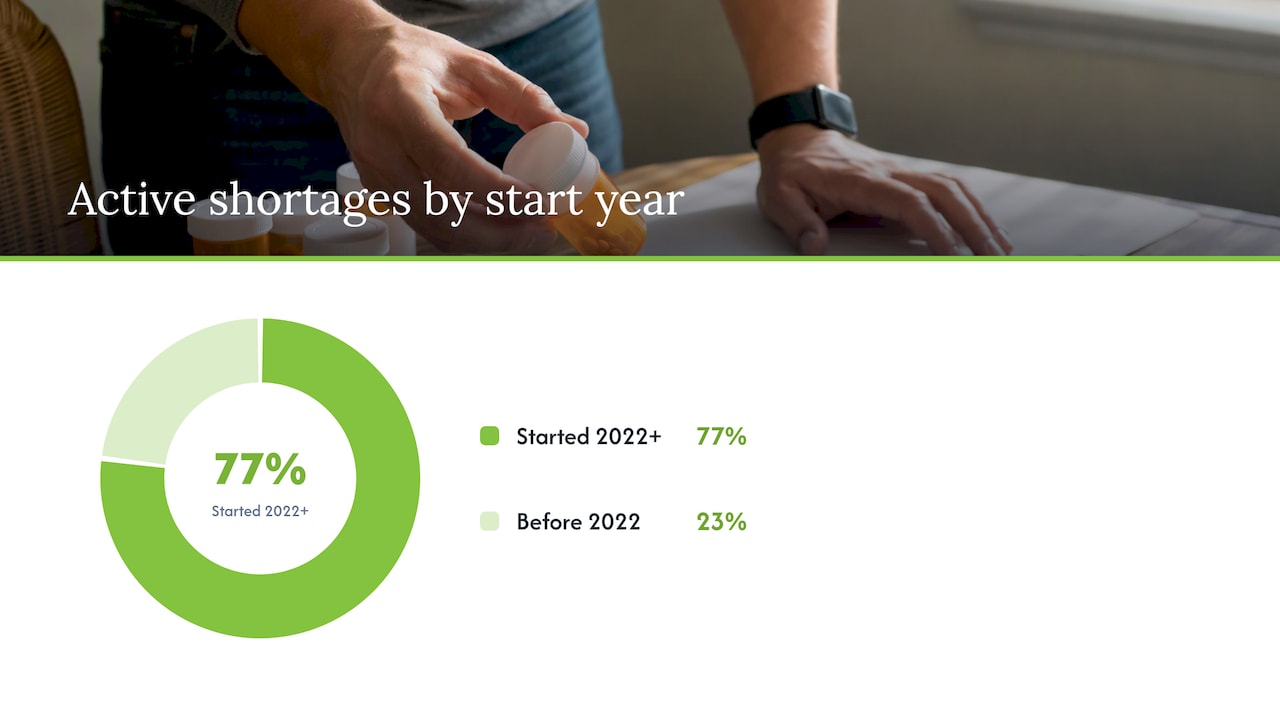
- ASHP reported 223 active shortages nationally in Q1 2026; 15% involved controlled substances, and 77% began in 2022 or later.
- Stimulants are not interchangeable milligram for milligram; any bridge, formulation change, or medication switch needs prescriber guidance and follow up within two to four weeks.
- DEA quota increases do not replenish pharmacy shelves immediately; manufacturing, quality testing, and distribution can take weeks or months before patients see relief.
Table of Contents
- What the Current Supply Picture Looks Like
- Why These Shortages Keep Happening
- If Your Pharmacy Says It’s Out: A 72-Hour Plan
- Talking With Your Prescriber About Substitutions
- Coping Strategies When Stimulants Are Unavailable
- How To Track Availability Reliably
- Telehealth and Refill Coordination
- After a Switch: Monitoring and Returning to Baseline
- How Nortex Psychiatry Coordinates Urgent Medication Care
- The Health Impact of Going Without ADHD Medication
- Long-Term Fixes That Could Prevent Future Shortages
- A Clinician’s View on Timelines and Priorities
- How We Can Help With Urgent Medication Coordination
- FAQ
- Sources
What the Current Supply Picture Looks Like
We want to be direct with you about what “shortage” actually means, because the word gets used loosely. The FDA’s drug shortages database defines a shortage as a situation where national demand for a drug exceeds the supply available to meet it. That is a technical, national-level designation. It is different from your neighborhood pharmacy being out of stock on a Tuesday, which can happen even when a drug is not officially in shortage, simply due to local distribution timing.
This distinction matters because it shapes what you should do next. A national shortage usually means you need a clinician-guided alternative plan. A local stockout often just means another pharmacy nearby has what you need.
The data backs up how uneven this has become. ASHP’s Q1 2026 Drug Shortages Report found that while the total count of active shortages has fallen from a 2024 peak, many of those shortages began back in 2022 and have simply never fully resolved. A MedPage Today summary of the same ASHP data reported 223 active drug shortages nationally, with 15% involving controlled substances, and 77% of active shortages having started in 2022 or later. That is a lot of unfinished business sitting on pharmacy shelves.
What this looks like at the product level can be confusing. ASHP’s detail page for dextroamphetamine extended-release capsules shows that certain Teva strengths were back-ordered while an Amneal-manufactured Dexedrine product remained listed as available. Two versions of what feels like “the same medication” can have completely different availability.
A few things worth keeping in mind:
- A falling national shortage count does not mean fewer patients are affected, since one shortage entry can disrupt a large number of prescriptions at once.
- Availability often depends on manufacturer and strength, not just the drug name.
- Branded and generic versions of the same medication can be in very different supply situations.
Why These Shortages Keep Happening
We have noticed that patients often assume a shortage has one clean cause. In our experience, it is almost always several factors layered together.
Manufacturing problems are a frequent starting point. The FDA’s drug shortages resource points to quality issues at manufacturing sites, production delays, and shortages of the active pharmaceutical ingredient itself as common drivers. These are not quick fixes. A facility that needs to correct a quality problem may need weeks or months before it can resume reliable output.
Distribution adds another layer. Demand has grown, and allocation across pharmacies, wholesalers, and regions does not always track evenly with where patients actually need the medication.
Then there is the regulatory piece, which is where the DEA comes in. Because stimulant medications are controlled substances, manufacturers cannot simply produce more when demand rises. They operate within an aggregate production quota, or APQ, set annually by the DEA. The DEA’s release of the 2026 aggregate production quotas confirmed quotas for Schedule I and II substances and noted that quotas can be adjusted over the course of the year. But raising a quota is not the same as a bottle appearing on a pharmacy shelf the next day.
Statistic: Even when the DEA increases production quotas, the adjustment still has to move through manufacturing, quality testing, and distribution before patients feel the difference, so relief from a quota change usually takes several weeks or months.
A short list of what each agency can and cannot fix quickly:
- The FDA can track, report, and encourage manufacturers to address a shortage, but it cannot force a company to produce more of a controlled substance.
- The DEA can raise or adjust quotas, but manufacturers still need time to ramp up actual production.
- Neither agency controls how quickly your specific pharmacy restocks a specific NDC.
If Your Pharmacy Says It’s Out: A 72-Hour Plan
When a pharmacist tells you a medication is unavailable, the next three days matter. We walk patients through a version of this sequence often enough that it helps to have it written down.
- Assess your supply. Count exactly how many doses you have left and calculate how many days that covers. This number drives everything else.
- Call other pharmacies. Have your exact prescription in front of you: drug name, strength, formulation (immediate release versus extended release), and manufacturer if you know it. If the pharmacist can look up the NDC, that narrows the search faster.
- Message your prescriber. Send a short, specific portal note: which pharmacy told you it was unavailable, what they said about restock timing, and how many days of medication you have left.
- Ask about transfers and partial fills. Some pharmacies can transfer a prescription electronically to a store with stock, and some can offer a partial fill to bridge a few days while the rest is located.
Pro Tip: Call pharmacies in the morning, right after they open. Stock counts and overnight shipments tend to be most accurate before the day’s fills start depleting inventory.
One safety note we cannot soften: never double up doses to compensate for an anticipated gap, and never use a prescription written for someone else, even a family member with the same diagnosis. Stimulant dosing is individualized, and improvising here carries real cardiac and psychiatric risk.
Talking With Your Prescriber About Substitutions
Here is something patients ask us often: “Can’t I just switch to a different stimulant at an equivalent dose?” We understand the instinct, but it is not that simple.
Lisdexamfetamine (the active ingredient in Vyvanse), mixed amphetamine salts, and methylphenidate are not interchangeable milligram for milligram. They differ in how they are absorbed, how long they last, and how they are metabolized. FDA labeling and clinical pharmacology guidance require individualized dosing when moving between these classes, not a simple conversion chart.
What helps your prescriber make a good decision quickly:
- Your history of response to past medications, including what worked and what did not.
- Any side effects you experienced, even mild ones.
- Prior medication trials and why they were stopped.
- Cardiac history, since stimulants affect heart rate and blood pressure.
- Any personal or family history of substance use, which shapes which options are appropriate.
Depending on your situation, a prescriber might suggest a short bridge prescription at a reduced dose, a different formulation or strength of the same medication, or a temporary switch to a non-stimulant option while the shortage resolves. None of these decisions should happen without that conversation.
Pro Tip: Keep a running list of every medication you have tried for ADHD, with start dates, doses, and what changed. It turns a 20 minute appointment into a 5 minute one.
After any switch, we ask patients to track symptoms and side effects for the first two weeks and schedule an early follow-up rather than waiting for the standard interval. Our clinician titration playbook walks through what that monitoring period typically looks like.
Coping Strategies When Stimulants Are Unavailable
While you and your prescriber sort out medication options, there are things you can lean on in the meantime. Non-stimulant medications are worth discussing with your prescriber, though we would rather you have that conversation directly than guess at options here.
Behavioral strategies carry real weight too:
- Protect a consistent sleep schedule, since poor sleep amplifies attention and impulsivity symptoms.
- Break tasks into smaller, written steps rather than relying on memory alone.
- Use a single task app or planner consistently instead of switching between several.
- Ask about temporary school or workplace accommodations if a gap in medication is affecting performance.
If you notice a sharp decline in functioning, missed obligations piling up, or safety concerns like reckless driving, reach out to your clinician promptly rather than waiting for a scheduled visit. Our overview of ADHD treatment options for adults covers how medication and nonpharmacologic approaches fit together more broadly.
How To Track Availability Reliably
Social media posts about shortages spread fast and are not always accurate for your situation. We tell patients to check two sources directly rather than trust a single pharmacy’s claim or an online rumor.
The FDA drug shortages database updates regularly and lists current shortages by product and NDC, along with the reason for each one when known. ASHP’s shortage pages go a layer deeper, often breaking down availability by specific manufacturer and strength, which is the detail that actually matters when you are trying to find your exact prescription.
Statistic: ASHP’s Q1 2026 report found that most of the currently active shortages began in 2022 or later, a reminder that many of these supply problems have been unresolved for years, not weeks.
A few practical habits:
- Ask your pharmacist for the NDC on your prescription label so you can search it directly.
- Ask if the pharmacy chain has an internal inventory lookup across nearby locations.
- Request that the pharmacy contact their wholesaler directly rather than relying only on their own shelf count.
Telehealth and Refill Coordination
Telehealth has become a genuinely useful tool during supply disruptions, though it has real limits for controlled substances. Video or phone visits can handle medication-management check-ins, urgent messages about a pending refill, and coordination between your prescriber and pharmacy, but prescribing rules for controlled substances still depend on state law and, in some cases, require an in-person evaluation.
A few things that speed this process along:
- Ask your pharmacy whether a one-time electronic transfer to another location is possible before assuming you need a new paper prescription.
- Write a portal note that includes the pharmacy’s name, what they told you, and your remaining supply in days.
- If your insurer denies an early refill, ask your prescriber’s office to submit a short note explaining the shortage, since many prior-authorization denials are reversible with documentation.
Our guide to telehealth prescribing rules for ADHD medication walks through what varies by state and what to expect through the end of 2026.
After a Switch: Monitoring and Returning to Baseline
If you and your prescriber do move to a different medication or formulation, give yourselves a clear plan for watching how it goes, not just a vague “let’s see how it works.”
- Keep a brief daily symptom diary noting focus, mood, appetite, and sleep.
- Set a specific follow-up date, ideally within two to four weeks, rather than the standard three-month interval.
- Record exact doses and dates so that if your original medication becomes available again, you and your prescriber can retrace what changed.
If side effects feel difficult to manage, ask for a slower titration rather than pushing through. Our side effect monitoring guide outlines what to watch for in the first one to two weeks after any medication change.
How Nortex Psychiatry Coordinates Urgent Medication Care
We treat a refill disruption as something that needs same-week attention, not a routine renewal. When a patient reaches out about a stimulant shortage, we ask them to bring a current medication list, the name and phone number of the pharmacy that could not fill the prescription, and the date of their last fill. That small amount of preparation lets a telehealth visit move quickly toward a real plan instead of starting from scratch.
Telehealth can help respond faster when a prescription problem comes up suddenly, while still keeping the clinical judgment and safety checks that controlled substance prescribing requires. Our guide to the psychiatrist’s role in ADHD care explains more about how that oversight works in practice.
The Health Impact of Going Without ADHD Medication
We have sat with enough patients through a medication gap to know it is rarely just an inconvenience. Attention and impulse control symptoms tend to return within days of stopping a stimulant, and for many adults that shows up as missed deadlines, strained relationships, or difficulty driving safely.
For students, an abrupt gap can mean falling behind in a way that is hard to recover from mid-semester. For adults managing jobs or caregiving responsibilities, the effects often ripple into sleep, mood, and overall stress levels, since untreated ADHD symptoms rarely stay contained to one part of life.
There is also an emotional layer that is easy to underestimate. Patients tell us the uncertainty itself, not knowing whether next month’s prescription will fill, is its own source of anxiety. That stress can compound the attention difficulties it is layered on top of.
This is part of why we push for early communication rather than waiting until the bottle is empty. A prescriber who knows about a looming gap two weeks out has far more options than one hearing about it the day the pharmacy says no.
Long-Term Fixes That Could Prevent Future Shortages
Patients often ask us whether this will keep happening, and honestly, the structural issues behind these shortages are not quick to resolve. A few changes would meaningfully help.
Manufacturing diversification matters. When only one or two facilities produce a given strength, a single quality issue at one plant can ripple through the entire national supply. More manufacturers producing the same formulations would reduce that fragility.
Quota flexibility within the year, rather than once annually, would let the DEA respond faster to documented shortages instead of waiting for the next scheduled adjustment. Better data sharing between the FDA, DEA, and manufacturers about real-time demand would also help regulators see problems forming before pharmacies run dry.
On the clinical side, broader use of early-warning systems, where pharmacies flag low stock before it hits zero, would give prescribers lead time to plan bridge strategies before patients are left without medication.
None of this changes what you need to do today, but understanding the slow-moving machinery behind these shortages helps explain why patience and proactive planning matter more than waiting for a policy fix.
A Clinician’s View on Timelines and Priorities
We think the most useful thing you can do is adjust your expectations around timing. Quota increases and manufacturing fixes genuinely help, but they move through production and distribution over weeks to months, not days. Chasing one specific brand or manufacturer often costs more time than it saves.
We would rather see you prioritize continuity of care, meaning a working treatment plan with proper monitoring, over waiting for a specific product to reappear. Reach out to your clinician the moment you notice a gap coming, not after the bottle is already empty.
— Felix
How We Can Help With Urgent Medication Coordination
If a shortage has left you without a clear plan, a telehealth visit with our team can help sort through what comes next. We offer medication-management visits that can address a pending refill gap, review your history, and set up short-term monitoring while things stabilize. For patients dealing with treatment-resistant depression or anxiety alongside ADHD, we also provide Transcranial Magnetic Stimulation (TMS) therapy and Spravato therapy as additional options worth discussing with a clinician.
- Telehealth visits can be arranged for urgent medication questions, including refill disruptions.
- Medication history and current symptoms are reviewed to guide safe substitution decisions.
- Early follow-up visits are scheduled after any medication change rather than defaulting to a standard interval.
Any decision about switching, bridging, or adjusting ADHD treatment remains individualized and clinician-led. If you want to talk through your specific situation, you can book a visit with our team to get started.
This article is general information, not a substitute for advice from a qualified doctor. Consult a qualified healthcare professional about your own circumstances before acting on anything here.
FAQ
Will there be a shortage of ADHD medication in 2026?
Shortages affecting certain ADHD stimulant products have remained active into 2026, though severity varies by specific drug, strength, and manufacturer. The ASHP Q1 2026 report found 223 active drug shortages nationally, with 15% involving controlled substances, so checking availability for your exact medication remains the most reliable approach.
What is causing the shortage of ADHD medication?
Manufacturing quality issues, limited active ingredient supply, and distribution bottlenecks are common contributors, according to the FDA’s drug shortages resource. Because ADHD stimulants are controlled substances, production is also capped by DEA aggregate production quotas, which limit how quickly manufacturers can scale up even when demand rises.
What to do if you run out of Vyvanse?
Contact your prescriber as soon as you realize a gap is coming rather than waiting until the medication runs out, and call nearby pharmacies with your exact strength and formulation. Vyvanse, or lisdexamfetamine, is often discussed as an example of a product with variable availability by strength, so your prescriber may discuss a short bridge or a different option while you wait.
Which ADHD medications are not in shortage?
Availability shifts frequently by manufacturer and strength, so there is no fixed list of medications guaranteed to be stable. The FDA drug shortages database and ASHP’s product-level shortage pages are the most current sources for checking your specific prescription.
Sources
- MedPage Today summary of ASHP Q1 2026 drug-shortages data
- DEA releases 2026 aggregate production quotas
- ASHP 2026 Q1 Drug Shortages Report