


ADHD treatment options in 2026 are more varied and better matched to adult needs than at any previous point in psychiatric medicine. An estimated 10–11 million adults in the United States carry an ADHD diagnosis, and the treatment landscape now spans FDA-approved stimulants, novel non-stimulant medications, Cognitive Behavioral Therapy (CBT), and FDA-cleared digital therapeutics. No single approach works for everyone. The most effective plans combine medication, behavioral support, and ongoing monitoring, tailored to your specific symptom profile, lifestyle, and any conditions that run alongside ADHD.
What are the main ADHD medications available in 2026?
Stimulant medications remain the first-line pharmacological treatment for adult ADHD. Stimulants reduce symptoms in 70–80% of adults with an ADHD diagnosis. That response rate is one of the highest for any psychiatric condition, which is why clinicians typically start here.
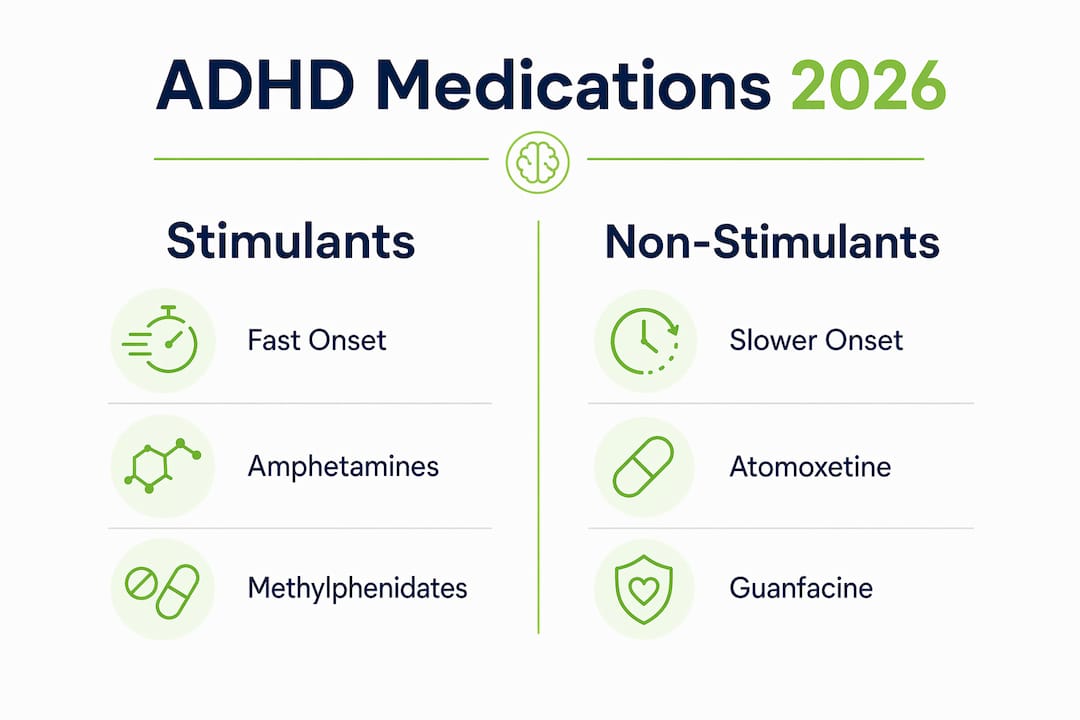
The two main stimulant classes are amphetamines and methylphenidates. Amphetamine-based medications include Vyvanse (lisdexamfetamine) and Adderall XR. Methylphenidate-based options include Concerta and Ritalin LA. Both classes increase dopamine and norepinephrine availability in the brain, improving focus, impulse control, and working memory. The key differences come down to duration, side effect profile, and individual response.

Stimulant medications typically begin showing effects within 3 days. Non-stimulants, by contrast, can take several weeks to reach full effect. That timing difference matters when you are trying to manage work or family responsibilities while adjusting your medication.
In 2026, the FDA approved three new ultra-long-acting stimulants providing 16 or more hours of symptom coverage. That extended window addresses a real gap for adults who need coverage through evening hours for work, parenting, or studying. Two novel non-stimulants targeting histamine and orexin receptors also received approval, expanding options for patients who cannot tolerate stimulants.
Non-stimulant medications worth knowing
Non-stimulants are the right starting point for patients with anxiety, a history of substance use, or cardiovascular concerns. The most established options include:
- Atomoxetine (Strattera): A norepinephrine reuptake inhibitor. Effective for both ADHD and co-occurring anxiety. Takes 4–6 weeks for full effect.
- Viloxazine (Qelbree): A newer non-stimulant with a cleaner side effect profile than atomoxetine for many patients. Also addresses mood symptoms.
- Guanfacine ER (Intuniv): An alpha-2 agonist that reduces impulsivity and emotional reactivity. Often used as an add-on to stimulants.
- Bupropion (Wellbutrin): An off-label option that works well when depression and ADHD overlap.
Combination therapies, such as a stimulant paired with guanfacine ER or low-dose Wellbutrin, can address complex symptom profiles that a single medication does not fully cover.
| Medication class | Onset of effect | Best suited for |
|---|---|---|
| Amphetamines (Vyvanse, Adderall XR) | 1–3 days | Primary ADHD without anxiety |
| Methylphenidates (Concerta, Ritalin LA) | 1–3 days | Primary ADHD, appetite sensitivity |
| Atomoxetine / Viloxazine | 4–6 weeks | ADHD with anxiety or substance use history |
| Guanfacine ER | 2–4 weeks | Emotional dysregulation, add-on use |
| Ultra-long-acting stimulants (2026 approvals) | 1–3 days | Adults needing 16+ hour coverage |
Pro Tip: Keep a simple daily log of your focus, mood, and sleep during the first month on any new medication. That record gives your prescriber concrete data to guide dose adjustments rather than relying on memory alone.
How do behavioral therapies complement medication for adult ADHD?
Medication addresses the neurological side of ADHD. Behavioral therapy addresses the habits, thought patterns, and coping strategies that medication alone cannot build. Multimodal care including both medication and therapy yields the best long-term outcomes in adult ADHD management. That finding holds across multiple research reviews and is the basis for current clinical guidelines.
CBT is the gold standard behavioral treatment for adult ADHD. It targets the executive functioning deficits that medication softens but rarely eliminates: time blindness, task avoidance, emotional dysregulation, and disorganization. A structured CBT program typically runs 12–16 sessions and teaches concrete skills like time-blocking, priority sorting, and cognitive restructuring for negative self-talk.
Beyond CBT, several other approaches add meaningful value:
- ADHD coaching: Practical, goal-focused support between therapy sessions. Coaches help with daily planning, accountability, and habit formation. Not a substitute for therapy, but a strong complement.
- Mindfulness-based interventions: Reduce emotional reactivity and improve sustained attention. Research supports their use as an add-on, particularly for adults who struggle with impulsive decision-making.
- Neurofeedback: Trains brainwave patterns associated with focused attention. Evidence is still developing, but some patients with treatment-resistant attention problems report meaningful benefit.
- Skill-building behavioral therapy: Focuses on specific deficits like working memory, organization, and social communication rather than broad cognitive restructuring.
Coordinating care between psychiatrists and therapists is often complicated by insurance policies. That fragmentation is one of the most common barriers we see in practice. Seeking providers who communicate directly, or practices that offer both services under one roof, reduces that gap significantly.
Pro Tip: When starting CBT alongside a new medication, give each intervention at least 8 weeks before evaluating its impact. Changing both at the same time makes it nearly impossible to know what is actually helping.
What emerging ADHD therapies and digital tools are available in 2026?
The most significant shift in the ADHD treatment landscape in 2026 is the expansion of FDA-cleared digital therapeutics. These are not apps in the consumer wellness sense. FDA-cleared digital therapeutics use adaptive cognitive training to improve attention and working memory, and major insurers now cover them. That coverage change makes them accessible to a much wider group of adults than even two years ago.
Digital therapeutics work by presenting progressively challenging cognitive tasks that train the specific neural circuits involved in attention and impulse control. They are prescribed by a clinician, tracked over time, and adjusted based on performance data. For patients who are wary of medication or who have not achieved full symptom control with medication alone, they offer a meaningful addition to the care plan.
The 2026 non-stimulant approvals targeting histamine and orexin receptors represent a genuinely new mechanism of action. Previous non-stimulants worked primarily on norepinephrine. These newer agents act on wakefulness and arousal pathways, which may explain why some patients who did not respond to atomoxetine or viloxazine show improvement with them.
A few practical points on digital and emerging treatments:
- Coverage varies by insurer and state. Confirm your plan covers prescription digital therapeutics before starting.
- Digital therapeutics require consistent daily use, typically 25–30 minutes per session, to produce measurable results.
- Novel non-stimulants targeting histamine and orexin receptors are still accumulating long-term safety data. Discuss the current evidence base with your prescriber.
- These options fit best as supplements to an existing care plan, not as standalone replacements for established treatments.
You can also read more about therapy options beyond medication for ADHD symptom management if you are weighing non-pharmaceutical approaches.
How do comorbid conditions shape ADHD treatment choices?
Comorbid conditions change the treatment calculus significantly. Roughly half of adults with ADHD also meet criteria for at least one other psychiatric condition, most commonly anxiety, depression, or a substance use disorder. Treating ADHD in isolation when those conditions are present often produces incomplete results.
Here is how we typically think through treatment sequencing when comorbidities are involved:
- ADHD with anxiety: Start with a non-stimulant like atomoxetine or viloxazine. Both address ADHD symptoms without the activation that can worsen anxiety. If stimulants are needed for adequate ADHD control, pair them with an SSRI or guanfacine ER to manage anxiety concurrently. Read more about managing co-occurring anxiety and ADHD together.
- ADHD with depression: Bupropion addresses both conditions and is a reasonable first choice. Alternatively, treat ADHD with a stimulant and depression with an SSRI, monitoring for interaction effects.
- ADHD with substance use history: Non-stimulants are strongly preferred. Properly managed stimulant treatment is generally safe and may actually reduce substance misuse risk in adults with ADHD, but the clinical picture requires careful evaluation before prescribing stimulants in this group.
- ADHD with sleep disorders: Address sleep first. Untreated sleep deprivation mimics and worsens ADHD symptoms, and stimulants taken too late in the day compound the problem.
- ADHD with cardiovascular concerns: Non-stimulants are the default. Stimulants raise heart rate and blood pressure modestly; that effect is manageable for most adults but requires monitoring in those with pre-existing cardiac conditions.
Medication titration in ADHD requires 3–6 months of adjustments and patient tracking to find the optimal dose and minimize side effects. That timeline surprises many patients who expect a quick fix. Setting realistic expectations from the start prevents early dropout from treatments that would have worked given more time.
Pro Tip: Before your next appointment, write down three specific situations where your symptoms caused the most difficulty that week. Concrete examples help your prescriber make better titration decisions than general descriptions like “I still feel scattered.”
Key Takeaways
The best ADHD treatment plans in 2026 combine FDA-approved medication, behavioral therapy, and ongoing monitoring tailored to each adult’s symptom profile and comorbid conditions.
| Point | Details |
|---|---|
| Stimulants remain first-line | Amphetamines and methylphenidates reduce symptoms in 70–80% of adults with ADHD. |
| Non-stimulants fill critical gaps | Atomoxetine, viloxazine, and guanfacine ER are preferred when anxiety or substance use history is present. |
| 2026 brought new options | Ultra-long-acting stimulants and novel non-stimulants targeting histamine and orexin receptors expanded the medication menu. |
| Behavioral therapy is not optional | CBT and ADHD coaching build skills that medication alone cannot provide, improving long-term outcomes. |
| Titration takes time | Expect 3–6 months of dose adjustments before settling on the right medication and dose. |
What I have learned about ADHD treatment after years in practice
The patients who do best with ADHD treatment are rarely the ones who find the right medication quickly. They are the ones who stay engaged through the adjustment period, track their symptoms honestly, and communicate openly with their prescriber. That sounds simple. In practice, it is harder than it sounds, especially when you are already struggling with the executive functioning deficits that make ADHD so disruptive.
One thing I notice consistently: fear of stimulant medications keeps a meaningful number of adults from getting effective treatment. That fear is understandable. The cultural narrative around stimulants is complicated. But the evidence is clear that stimulant medications, properly managed, are safe for most adults and may actually reduce the risk of accidents and substance misuse, not increase it. Addressing that fear directly, early in treatment, changes outcomes.
The other pattern I see is patients who try medication without any behavioral support and then conclude that treatment “did not work.” Medication quiets the noise. Therapy teaches you what to do with the quiet. Both matter. The medication versus therapy question is not really a choice between two options. For most adults, it is a question of sequencing and proportion.
Treatment is not a straight line. There will be weeks where the medication feels off, or where a therapy technique does not click. That is normal. What matters is staying in contact with your care team and adjusting rather than stopping.
— Felix
Nortexpsychiatry supports adults navigating ADHD care in 2026
Nortexpsychiatry works with adults across Allen, Frisco, McKinney, Plano, and the broader North Dallas area who are ready to get serious about ADHD management. Whether you need a first evaluation, a medication adjustment, or a more coordinated plan that brings therapy and psychiatry together, the practice offers both in-person and telehealth appointments. The team specializes in medication management for ADHD and works to match each patient with the right combination of treatments rather than defaulting to a one-size approach. If you are weighing your options, a psychiatric evaluation is the clearest starting point.
FAQ
What is the most effective ADHD medication for adults in 2026?
Stimulant medications, including amphetamine-based options like Vyvanse and methylphenidate-based options like Concerta, remain the most effective pharmacological treatments, reducing symptoms in 70–80% of adults. The right choice depends on your symptom profile, comorbid conditions, and how long you need coverage each day.
How long does it take for ADHD medication to work?
Stimulants typically show effects within 1–3 days. Non-stimulants like atomoxetine and viloxazine take 4–6 weeks to reach full effect, and finding the optimal dose for either class can take 3–6 months of titration.
Can adults manage ADHD without medication?
CBT, ADHD coaching, mindfulness, and FDA-cleared digital therapeutics can meaningfully reduce symptoms. For most adults with moderate to severe ADHD, these approaches work best alongside medication rather than as a complete replacement.
Are stimulant medications safe for adults with a history of substance use?
Properly managed stimulant treatment is generally safe and may reduce substance misuse risk in adults with ADHD. Non-stimulants are typically preferred in this group, but the decision requires a careful clinical evaluation with your prescriber.
What are the newest ADHD treatments approved in 2026?
The FDA approved three ultra-long-acting stimulants providing 16 or more hours of symptom coverage, plus two novel non-stimulants targeting histamine and orexin receptors. FDA-cleared digital therapeutics using adaptive cognitive training are also now covered by major insurers.