


Mirtazapine (brand names Remeron and Remeron SolTab) is a reasonable off-label option for adults with insomnia, particularly when cognitive behavioral therapy for insomnia (CBT-I) has not produced enough relief. The American College of Physicians strongly recommends CBT-I as the first-line treatment for chronic insomnia, and pharmacologic therapy should come only after shared decision-making about risks and benefits. Mirtazapine is not FDA-approved for insomnia, so using it for sleep is an off-label choice that requires careful clinical judgment.
Who may benefit:
- Adults with sleep-onset or sleep-maintenance insomnia who have tried CBT-I without adequate improvement, especially those with comorbid depressed mood or anxiety
Main cautions:
- Off-label use only; watch for next-day grogginess, weight gain, and increased appetite, particularly at higher doses
Key Takeaways
Mirtazapine is an off-label, low-dose option for adults with insomnia when CBT-I has not been sufficient, with the strongest evidence concentrated in the first 6 weeks of treatment.
| Point | Details |
|---|---|
| Off-label status | Mirtazapine is not FDA-approved for insomnia; its use for sleep is entirely off-label. |
| Typical sleep dose | 7.5–15 mg at bedtime; higher doses tend to reduce sedation, not increase it. |
| Evidence window | Meaningful improvement is most consistent at 6 weeks; long-term benefit beyond that is less established. |
| Main side effects | Weight gain, increased appetite, and next-day sedation are the most common tolerability concerns. |
| Nortexpsychiatry approach | We offer psychiatric evaluations and medication management for insomnia, including deprescribing plans, across North Dallas. |
Table of Contents
- How does mirtazapine affect sleep?
- What does the clinical evidence say about mirtazapine for insomnia?
- How do clinicians dose mirtazapine for sleep?
- What benefits can you realistically expect, and when?
- What are the side effects of mirtazapine you should know about?
- Who should not start mirtazapine, and what should you check first?
- How we use mirtazapine in practice at Nortexpsychiatry
- How does mirtazapine compare with other insomnia treatments?
- What should you ask your prescriber before starting mirtazapine?
- How long should you use mirtazapine for insomnia, and how do you stop?
- A clinician’s note on what this actually looks like
- Nortexpsychiatry can help you build a sleep treatment plan that fits
- Sources
- FAQ
How does mirtazapine affect sleep?
Mirtazapine is a noradrenergic and specific serotonergic antidepressant (NaSSA) that works differently from SSRIs. Its sedative properties come primarily from potent blockade of histamine H1 receptors, which produces drowsiness much like a first-generation antihistamine. It also modulates serotonin receptor subtypes (5-HT2A and 5-HT2C blockade) and noradrenergic pathways, which together contribute to its effects on sleep architecture.
Key pharmacological points:
- H1 antihistamine blockade is the dominant driver of sedation, especially at low doses
- 5-HT2A/2C blockade tends to increase slow-wave (deep) sleep and may reduce sleep fragmentation
- Noradrenergic modulation supports mood and arousal regulation, which can indirectly benefit sleep quality
- FDA approval status: Mirtazapine is FDA-approved only for major depressive disorder. Its use for insomnia is entirely off-label, as confirmed in the StatPearls clinical reference
One counterintuitive feature of mirtazapine is its dose-dependent sedation profile. At lower doses (7.5–15 mg), H1 blockade dominates and sedation is pronounced. As the dose rises toward antidepressant range (30–45 mg), noradrenergic activation increases and partially offsets the sedative effect. This means higher doses often produce less sedation, not more, which is why clinicians who prescribe it specifically for sleep tend to stay in the low-dose range.
What does the clinical evidence say about mirtazapine for insomnia?
The evidence base is meaningful but not without limits.
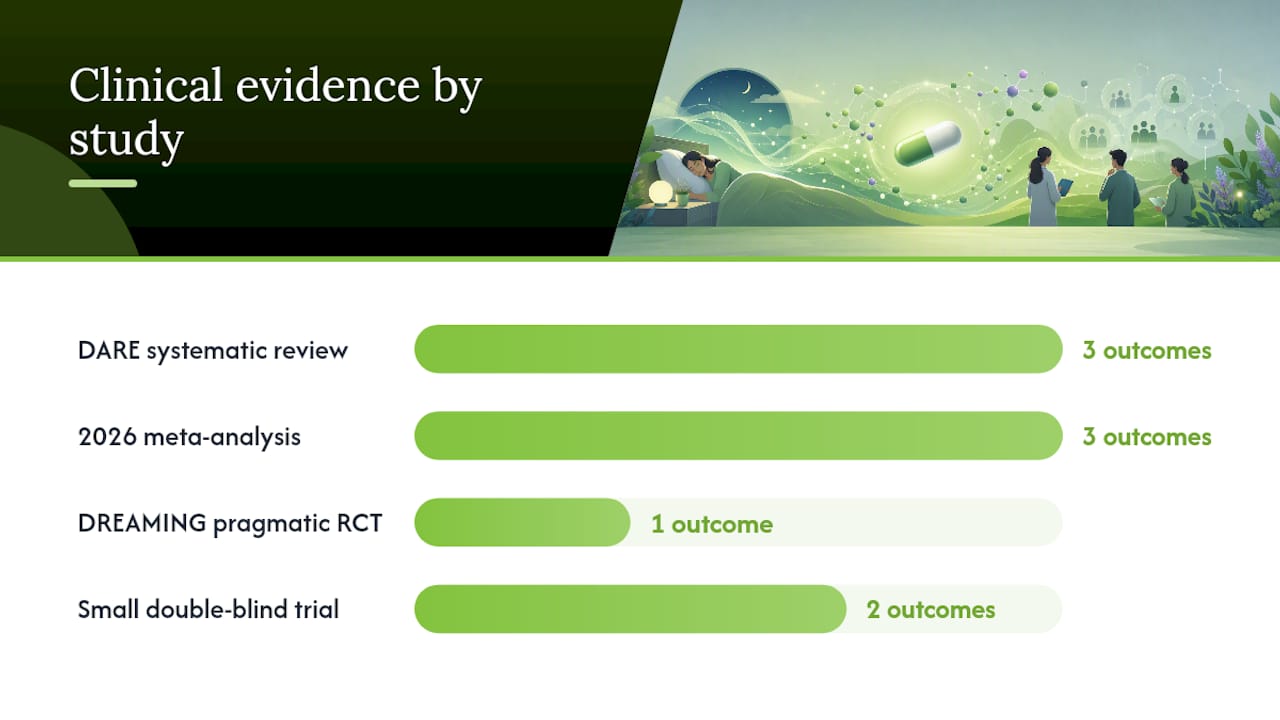
- A quality-assessed DARE/NCBI systematic review found mirtazapine consistently improved sleep efficiency, total sleep time, and subjective sleep quality compared with placebo across multiple trials, though most studies enrolled patients with major depressive disorder rather than primary insomnia
- A 2026 systematic review and meta-analysis comparing agomelatine, mirtazapine, and trazodone found mirtazapine increased total sleep time, slow-wave sleep, and sleep efficiency on polysomnography, with weight gain and sedation as the most common tolerability concerns
- A pragmatic general-practice trial summarized in AFP showed low-dose mirtazapine produced a statistically significant reduction in insomnia severity at 6 weeks, but the benefit was not consistently maintained at later follow-up points
- A small double-blind trial comparing fixed nocturnal dosing versus ascending doses found that a fixed bedtime regimen facilitated earlier sleep onset and longer sleep duration; early somnolence tended to decrease over time
The overall signal is consistent: mirtazapine improves objective and subjective sleep measures in the short term. The limitations are real, though. Most trials enrolled depressed patients, which limits how directly the findings apply to people with primary insomnia. Long-term data beyond 6–8 weeks are sparse, and study endpoints vary enough to make cross-trial comparisons difficult.
| Evidence type | Key finding | Limitation |
|---|---|---|
| DARE systematic review | Improved sleep efficiency, TST, and sleep quality vs. placebo | Mostly depressed samples |
| 2026 meta-analysis (PSG data) | Increased TST, slow-wave sleep, sleep efficiency | Tolerability concerns (weight, sedation) |
| Pragmatic RCT (DREAMING trial) | Significant ISI improvement at 6 weeks | Benefit not sustained at later follow-up |
| Small double-blind dosing trial | Fixed nocturnal dose improved onset and duration | Small sample, short duration |
How do clinicians dose mirtazapine for sleep?
The low-dose strategy is the standard approach when mirtazapine is used specifically for sleep. We generally aim for the lowest effective dose for the shortest duration.
- Starting dose: 7.5–15 mg taken at bedtime is the most commonly used range for sleep; some clinicians start at 3.75–7.5 mg in older adults or those sensitive to sedation
- Dose ceiling for sleep: Doses above 15–30 mg tend to reduce sedative benefit because of increasing noradrenergic activity, so titrating upward to manage insomnia alone is usually counterproductive
- Timing: Take 30–60 minutes before your intended sleep time. Dosing too late in the evening, or too close to an early wake time, increases the risk of morning grogginess because of mirtazapine’s half-life of roughly 20–40 hours
- Monitoring timeline: Reassess within 2–6 weeks. Many patients notice some improvement within the first week, but a fair trial runs to 6 weeks. If there is no meaningful change by then, the plan should be revisited
A retrospective comparative study found that lower final doses in the 7.5–15 mg range corresponded to the highest responder rates for chronic insomnia, which supports staying low rather than escalating.
Pro Tip: If you are waking up groggy, the first adjustment to try is moving the dose 30–60 minutes earlier in the evening, not reducing it. Timing often matters more than dose size for morning sedation.
What benefits can you realistically expect, and when?
Setting realistic expectations matters. Here is a practical timeline based on the available evidence:
- Night 1–3: Sedation is often noticeable immediately because of H1 blockade; many patients fall asleep faster
- Week 1–2: Subjective sleep quality and total sleep time tend to improve; some patients report fewer nighttime awakenings
- Week 2–6: Objective improvements in sleep efficiency and slow-wave sleep become more apparent; this is the window where the strongest clinical signal sits
- Beyond 6 weeks: The AFP pragmatic trial summary found that meaningful improvements were concentrated at the 6-week mark, with limited persistence over 16 weeks in a general-practice population
One thing we notice in practice: sleep metrics often improve before daytime functioning catches up. Patients may report sleeping longer before they feel meaningfully more alert during the day. Fatigue and daytime alertness are less consistently improved than nighttime sleep measures, so it is worth tracking both separately rather than judging the medication only by how you feel at 9 AM.
What are the side effects of mirtazapine you should know about?
Side effects are real and worth discussing honestly before starting.
Common adverse effects:
- Next-day sedation or “hangover” grogginess, especially early in treatment
- Weight gain and increased appetite (among the most consistently reported effects in clinical trials)
- Dizziness, particularly on standing in older adults
- Dry mouth and constipation
Less common but important:
- Nightmares or unusual dreams (case reports exist; less common than with some other agents)
- Worsening mood or emergence of suicidal ideation, particularly in the early weeks of treatment (this is a FDA-labeled warning for all antidepressants in adults under 25)
- Serotonin syndrome when combined with other serotonergic medications (SSRIs, SNRIs, tramadol, triptans)
- Rare but severe allergic reactions, including agranulocytosis (a serious drop in white blood cells)
Monitoring checklist before and during treatment:
- Baseline weight and BMI; recheck at each follow-up
- Daytime sleepiness assessment and fall-risk screen, especially in adults over 65
- Mood and suicidality monitoring at 2 weeks, 4 weeks, and 6 weeks
- Drug interaction review (CYP1A2 and CYP3A4 interactions are relevant)
- Pregnancy and breastfeeding status; mirtazapine crosses the placenta and is present in breast milk, so use in these populations requires careful risk-benefit discussion
The VA/DoD clinical practice guidelines emphasize non-pharmacologic approaches first and flag that some sedating antidepressants carry tolerability concerns that limit their routine use for chronic insomnia. That context is worth keeping in mind.
Who should not start mirtazapine, and what should you check first?
Before prescribing mirtazapine for sleep, a structured pre-prescribing evaluation reduces risk considerably.
Conditions to screen for:
- Obstructive sleep apnea (OSA): sedating agents can worsen respiratory drive during sleep; rule out or treat OSA before adding mirtazapine
- NREM parasomnias (sleepwalking, sleep terrors): sedating medications can occasionally worsen these
- Excessive daytime sleepiness at baseline: adding a sedating agent may compound impairment
- Substance use or alcohol use: CNS depression risk is additive
- Bipolar disorder history: antidepressant monotherapy can precipitate mania or mixed states
- Pregnancy or breastfeeding status
- History of suicidality, especially in adults under 25
Medication interaction screen:
- Other serotonergic agents (SSRIs, SNRIs, MAOIs, tramadol, triptans): serotonin syndrome risk
- CNS depressants (benzodiazepines, opioids, gabapentinoids, alcohol): additive sedation
- CYP1A2 inhibitors or inducers (fluvoxamine, ciprofloxacin, rifampin): can alter mirtazapine blood levels
Population-specific cautions:
- Older adults: fall risk from dizziness and sedation is a genuine concern; start at the lowest dose
- Children and adolescents: mirtazapine for insomnia is not well-studied in pediatric populations; use is not recommended without specialist guidance
- Pregnant or breastfeeding individuals: limited safety data; discuss risks with an obstetrician and psychiatrist together
Red flags that should prompt referral or urgent reassessment:
- Severe daytime sleepiness that impairs driving or work
- Complex sleep behaviors (eating, driving, or other activities while asleep)
- New or worsening suicidal thoughts at any point during treatment
How we use mirtazapine in practice at Nortexpsychiatry
We prefer CBT-I first. That is not a formality. Behavioral treatment for insomnia has the strongest long-term evidence, and we refer patients to CBT-I resources or providers before reaching for any medication. When a patient has genuinely tried CBT-I and still struggles, particularly if there is comorbid low mood or anxiety driving the sleep disruption, low-dose mirtazapine becomes a reasonable conversation.
Our typical approach:
- Start at 7.5 mg at bedtime; sometimes 3.75 mg in older adults or those who are sensitive to sedation
- Set a clear trial period of 4–8 weeks upfront, with a scheduled reassessment
- Use the Insomnia Severity Index (ISI) at baseline and at 6 weeks to track objective change
- Discuss weight and appetite monitoring at the first visit, not as an afterthought
- Plan the taper before the prescription is written; patients respond better when they know the medication is time-limited
Shared decision-making is the core of this. We explain that mirtazapine is off-label for sleep, that the short-term evidence is reasonably good, and that the goal is to use it for the shortest effective period. Patients who understand the plan from the start are more likely to follow through with tapering when the time comes.
Pro Tip: If morning grogginess persists past two weeks, try shifting the dose 30–60 minutes earlier before reducing the dose. Many patients find that timing adjustment alone resolves the hangover effect without losing the sleep benefit.
For patients interested in non-medication options alongside or instead of pharmacotherapy, natural sleep approaches with an evidence base can complement whatever clinical plan you and your prescriber develop.
How does mirtazapine compare with other insomnia treatments?
No single agent is right for everyone. Here is how the main options compare across the dimensions that matter most clinically.
Key comparisons:
- CBT-I: No FDA approval needed; it is the guideline-recommended first-line treatment per both the ACP and VA/DoD. Strong long-term evidence, no drug interactions, no weight gain. Access can be a barrier.
- Sedating antidepressants (mirtazapine/trazodone): Off-label for insomnia; reasonable short-term evidence; trazodone is widely used but the VA/DoD guidelines note it is not suggested for routine chronic insomnia use. Mirtazapine carries more weight-gain risk than trazodone.
- Low-dose doxepin (Silenor): FDA-approved specifically for sleep-maintenance insomnia at 3–6 mg. Tricyclic antidepressant at low dose; approved indication gives it a regulatory edge over mirtazapine for that specific complaint.
- DORA (suvorexant/Belsomra): FDA-approved for both sleep-onset and sleep-maintenance insomnia. Orexin receptor antagonist mechanism; less next-day impairment than many sedating agents; Schedule IV controlled substance.
- Melatonin: Available over the counter; modest evidence for sleep-onset delay and circadian rhythm disorders; generally well-tolerated; not a strong agent for sleep-maintenance insomnia.
- GABAergic hypnotics (zolpidem/zaleplon): FDA-approved; effective short-term; Schedule IV; risk of dependence, complex sleep behaviors, and next-day impairment, particularly in older adults and women
The choice among these depends on your specific sleep complaint, comorbidities, other medications, and how you weigh the trade-offs. Individualized prescribing, not a one-size-fits-all protocol, is what actually works.
What should you ask your prescriber before starting mirtazapine?
Bringing a prepared list to your appointment helps you get more out of a short visit. You can use the Nortexpsychiatry self-assessment tool to document your sleep symptoms and history before you arrive.
Questions to ask your prescriber:
- Is mirtazapine the right choice for my specific type of insomnia, or is there a better-matched option?
- What dose will we start with, and what is the plan if it is not working at 6 weeks?
- What is the deprescribing plan, and how will we taper when the time comes?
- What drug interactions should I watch for given my current medications?
- Have we ruled out obstructive sleep apnea before adding a sedating agent?
- What are the realistic expectations for weight and appetite changes?
What to track at home:
- Sleep diary: time you got into bed, estimated time to fall asleep, number of awakenings, total sleep time, and time you woke up
- Daytime alertness rating (scale of 1–10 each morning)
- Appetite changes and weekly weight
- Mood and any unusual thoughts, particularly in the first 4 weeks
- Any unusual sleep behaviors (eating, walking, or other activity while asleep)
When to contact your prescriber or seek urgent care:
- Severe allergic reaction (rash, swelling, difficulty breathing): go to the emergency room
- New or worsening thoughts of self-harm or suicide: call your prescriber immediately or call/text 988
- Severe daytime impairment that affects driving or work safety
- Complex sleep behaviors (doing things while asleep that you do not remember)
How long should you use mirtazapine for insomnia, and how do you stop?
Short-term use with a planned exit is the standard approach. The AFP pragmatic trial data showed that meaningful improvements were concentrated at 6 weeks, which supports a defined trial rather than open-ended prescribing.
Typical trial structure:
- Trial length: 4–8 weeks with a scheduled reassessment at 6 weeks
- Decision to continue: meaningful improvement in ISI score, tolerable side effects, and no safety concerns
- Decision to stop: no meaningful improvement by 6 weeks, intolerable side effects, or emergence of safety concerns
Tapering guidance:
- If used for more than 2–4 weeks, taper slowly rather than stopping abruptly; abrupt discontinuation can cause rebound insomnia and mood changes
- A common approach is reducing by 3.75–7.5 mg every 1–2 weeks, depending on how long the medication was used and how the patient tolerates each step
- Monitor for rebound insomnia, irritability, and mood shifts during the taper
- Coordinate the taper with your prescriber; do not adjust doses on your own
For patients managing long-term medication plans, the guidance on medication management for chronic conditions covers deprescribing strategies in more detail.
Complex cases, including those with persistent insomnia after multiple medication trials or significant psychiatric comorbidity, benefit from referral to a sleep medicine clinic or psychiatrist for a more thorough evaluation.
A clinician’s note on what this actually looks like
We have had many conversations with patients who come in exhausted, having tried sleep hygiene advice, melatonin, and maybe a short course of a benzodiazepine, and who are still not sleeping. The appeal of mirtazapine in that situation is real. It is sedating, it is not a controlled substance, and for patients with some low-grade depression or anxiety underneath the insomnia, it may address more than one problem at once.

What we try to be honest about is this: the evidence is good for the short term, not the long term. We do not know how well it works beyond 6–8 weeks for most people with primary insomnia, and the weight and appetite effects are not trivial for everyone. The medication works best as a bridge, not a permanent solution, and the behavioral work, whether that is formal CBT-I or structured sleep restriction, is what tends to hold the gains over time.
The patients who do best are the ones who go in with clear expectations, a follow-up appointment already scheduled, and a shared understanding that the plan includes stopping the medication when it has done its job.
Nortexpsychiatry can help you build a sleep treatment plan that fits
Persistent insomnia that has not responded to sleep hygiene or over-the-counter options deserves a proper clinical evaluation, not another round of guessing. At Nortexpsychiatry, we offer psychiatric evaluations and medication management for adults across North Dallas, including Allen, Frisco, McKinney, and Plano, with both in-person and telehealth appointments available.
A first visit covers your full sleep history, current medications, relevant medical and psychiatric history, and a shared decision-making conversation about whether a medication like low-dose mirtazapine, a behavioral referral, or another approach fits your situation. If you are already on a sleep medication and want a deprescribing plan, we build that into the visit too. To understand what a psychiatric evaluation involves and whether it is the right next step for you, the guide to psychiatric evaluations is a good place to start.
Sources
These are the primary references used in this article, each chosen for clinical authority and U.S. applicability:
- Management of Chronic Insomnia Disorder in Adults: A Clinical Practice Guideline From the American College of Physicians
- VA/DOD Clinical Practice Guidelines The Management of Chronic Insomnia Disorder and Obstructive Sleep Apnea (Pocket Card)
- Management of insomnia symptoms in depressed patients treated with agomelatine, mirtazapine and trazodone: A systematic review and meta-analysis
- Mirtazapine and Amitriptyline Are Modestly Effective for Short-Term Improvement of Insomnia in Adults | AFP
This article is general information, not a substitute for advice from a qualified doctor. Consult a qualified healthcare professional about your own circumstances before acting on anything here.
FAQ
Is trazodone or mirtazapine better for sleep?
Both are used off-label for insomnia with comparable short-term effectiveness, but they have different side-effect profiles. Mirtazapine carries more weight-gain risk; trazodone is more likely to cause orthostatic hypotension. The VA/DoD guidelines note that trazodone is not suggested for routine chronic insomnia use, so the choice depends on individual patient factors and should be made with a prescriber.
Which is better for sleep, melatonin or mirtazapine?
Melatonin is appropriate for mild sleep-onset difficulty or circadian rhythm disruption and has a favorable safety profile, but it is not a strong agent for sleep-maintenance insomnia. Mirtazapine produces more robust improvements in total sleep time and sleep efficiency based on clinical trial data, but it carries meaningful side effects including weight gain and sedation that melatonin does not.
How quickly does mirtazapine put you to sleep?
Sedation from mirtazapine is often noticeable within the first one to three nights because of its H1 antihistamine effect. Objective improvements in sleep architecture, including increased slow-wave sleep and sleep efficiency, tend to develop over the first two to six weeks of treatment.
How sedating is 7.5 mg mirtazapine?
At 7.5 mg, H1 receptor blockade dominates and sedation is typically pronounced, often more so than at higher doses. A retrospective study found that the 7.5–15 mg range corresponded to the highest responder rates for insomnia, supporting the low-dose approach when the primary goal is sleep rather than antidepressant effect.