


Knowing how to prepare for therapy is the single most useful thing you can do before your first appointment. Preparation is not about having the right answers or a polished story. It is about arriving with enough clarity to engage honestly, and enough realistic expectation to stay calm when the session feels unfamiliar. A first therapy session, formally called an intake session, is an assessment and a conversation. It is not treatment yet. Understanding that distinction changes everything about how you walk through the door.
What does a first therapy session actually look like?
The intake session is structured differently from regular therapy appointments. Standard follow-up sessions last 45–50 minutes, while intake sessions typically run 60–90 minutes. That extra time accounts for paperwork, confidentiality review, and a detailed personal history.
Your therapist will ask about what brought you in, your background, and what you hope to get from therapy. You will not be expected to solve anything in that first hour. The session is an assessment, not a treatment.
Here is what most intake sessions include:
- Completing or reviewing intake forms and consent documents
- A review of confidentiality and its limits
- Personal and family history questions
- A discussion of your current concerns and symptoms
- Preliminary goal setting for future sessions
Rapport builds over the first 1–3 sessions, and real therapeutic benefits develop over weeks to months. That timeline is not a flaw in the process. It reflects how trust actually works between two people who have just met.
Pro Tip: If you receive intake paperwork before your appointment, fill it out in a quiet moment rather than rushing through it in the waiting room. Your answers will be more accurate and the session will move more smoothly.
How to prepare mentally for therapy before you arrive
Mental and emotional readiness matters more than having a rehearsed narrative. The most common mistake people make is trying to sound coherent and composed. Clients who feel pressure to appear “put together” often hold back the details that would actually help their therapist understand them.

You do not need a diagnosis to start therapy. Expressing a desire for change is enough to make the first session productive. Many adults delay starting because they feel their problems are not serious enough. That reasoning keeps a lot of people stuck longer than necessary.
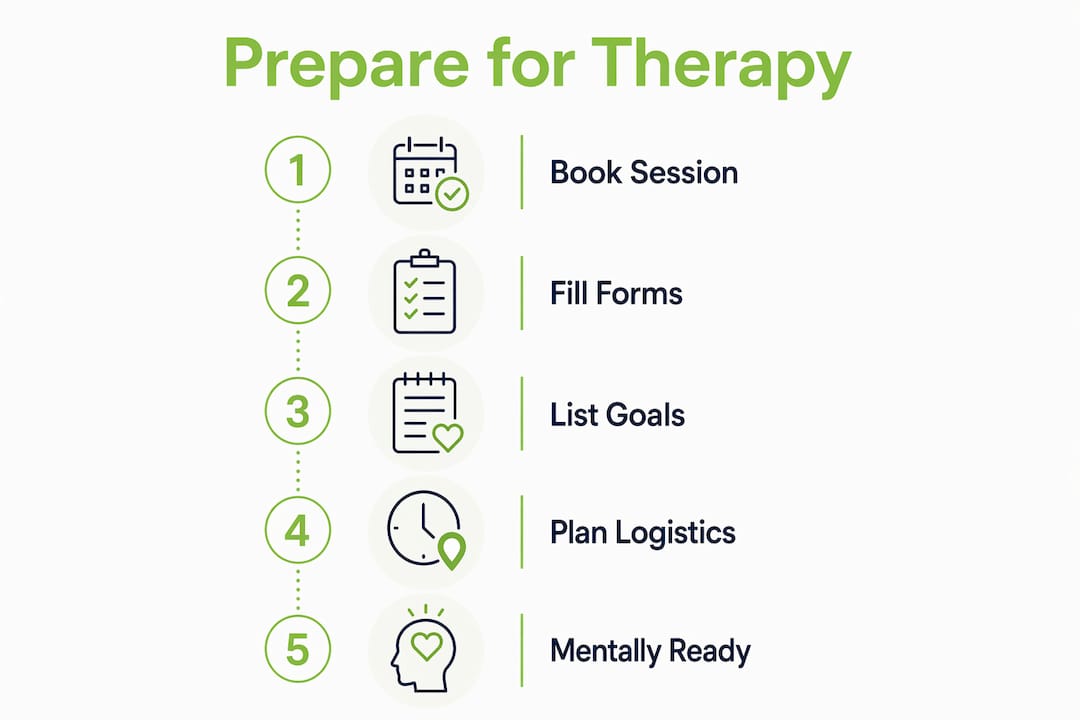
Here are four steps to get mentally ready:
- Acknowledge your nervousness. Feeling anxious before a first therapy session is normal. Naming it to yourself reduces its grip before you even sit down.
- Set one honest intention. Decide on one thing you want your therapist to understand about you by the end of the session. One thing is enough.
- Arrive early and settle. Arriving early and turning off phone notifications before the session improves engagement and lowers anxiety. Five minutes of quiet before you go in makes a real difference.
- Pace your disclosure. Sharing only what feels safe initially builds deeper trust over time. You do not owe your therapist your entire history in the first hour.
Feeling tired or emotionally drained after a session is also normal. Plan for a lighter schedule afterward if you can. Your nervous system has been working hard, even if the conversation felt calm.
Pro Tip: The night before your appointment, write down one or two sentences about why you decided to make this call. Reading them back in the morning can help you stay grounded when nerves kick in.
Practical steps: what to bring to therapy and how to get ready
Practical preparation supports emotional readiness. When the logistics are handled, your mind has more room to be present.
What to bring to your first session
- Your insurance card and a payment method
- A list of current medications, including dosages
- Any intake forms you received in advance, completed
- Notes on 3–5 bullet points covering your main reasons for seeking therapy, key stressors, and what you hope to change
Jotting down 3–5 focused bullet points about your reasons and goals is more useful than writing a full autobiography. It gives your therapist a clear starting point without locking you into a script.
Logistics that matter more than you think
| Situation | What to arrange |
|---|---|
| In-person session | Confirm the address, allow extra travel time, and bring your insurance card |
| Telehealth session | Find a private space, test your audio and video, and close other browser tabs |
| Payment | Know your copay or self-pay rate before you arrive |
| Medication questions | Write down any questions about current prescriptions or new ones |
For telehealth specifically, privacy is the main variable. A parked car, a bedroom with the door closed, or a quiet office all work. What matters is that you feel free to speak without being overheard. Nortexpsychiatry offers both in-person and telehealth options for patients across Allen, Frisco, McKinney, and Plano, so the logistics can fit your actual life.
The first session is also your opportunity to ask your therapist about their approach, experience, and policies. Preparing two or three questions in advance is a good use of the time you have before the appointment.
Common misconceptions about first therapy sessions
The biggest misconception is that the first session is a test. It is not. Therapy is a collaborative process where you set the pace and the goals. Your therapist is not evaluating whether you are a good candidate for help.
A second common fear is that not connecting with a therapist means therapy will not work for you. Naming a sense of mismatch after 2–3 sessions is a healthy form of self-advocacy, not a failure. Therapist fit matters, and finding the right match sometimes takes more than one attempt.
Here are a few other myths worth setting aside:
- You do not need to cry or have an emotional breakdown for the session to count
- You do not need a formal diagnosis before starting
- You do not need to know exactly what is wrong or why you feel the way you do
- Silence in session is not awkward; it is often where the most honest thinking happens
“The strongest predictor of therapeutic success is the quality of the therapist-client alliance, which is built over multiple sessions, not established in the first hour.” The therapeutic alliance is the foundation. Everything else follows from it.
If you feel uncertain after your first session, that is worth naming directly with your therapist. Most therapists welcome that kind of honesty. It is exactly the kind of communication that makes therapy work. You can also read more about managing anxiety before and between sessions if nerves are a significant barrier for you.
The relationship between school-based health programs and bilateral communication research also confirms what we see in adult care: early rapport-building conversations, even brief ones, significantly affect long-term engagement with mental health support.
Key Takeaways
Effective preparation for a first therapy session combines realistic expectations, light practical organization, and the willingness to show up authentically rather than perfectly.
| Point | Details |
|---|---|
| Intake sessions run longer | Expect 60–90 minutes for your first session, not the standard 45–50 minutes. |
| Bullet points beat scripts | Write 3–5 focused notes on your reasons and goals rather than a full personal history. |
| Authenticity outperforms polish | Clients who drop the need to appear composed connect with their therapist faster. |
| Mismatch is normal | Not clicking with a therapist after 2–3 sessions is a signal to advocate for a better fit, not to quit. |
| Alliance drives outcomes | The therapist-client relationship is the strongest predictor of success and builds over multiple sessions. |
What I have learned about preparation after years in psychiatric care
What I have noticed about patients who prepare well
The patients who get the most from their first session are rarely the ones who prepared the most. They are the ones who prepared just enough and then let themselves be honest.
We see this pattern consistently. Someone arrives with three pages of notes and spends the session reading from them. Another person arrives with two sentences and ends up having the most productive intake conversation of their week. The difference is not effort. It is permission. Permission to not have it all figured out.
What I tell patients before a first session is this: your therapist does not need your full story today. They need enough to understand where you are right now and what you are hoping for. That is a much smaller ask than most people realize.
Pacing disclosure is not withholding. It is respecting your own readiness. Effective therapy pacing respects that overwhelming detail too soon can actually increase distress and slow progress. The therapist-client relationship is built incrementally, and that is a feature, not a limitation.
The other thing worth saying plainly: if you leave your first session feeling uncertain, that does not mean it went badly. Uncertainty after a first session often means something real was touched. Give it a few sessions before you draw conclusions. The work takes time to find its shape.
— Felix
Psychiatric care at Nortexpsychiatry for adults ready to take the next step
Starting therapy is one part of a broader picture of mental health care. For many adults in Allen, Frisco, McKinney, and Plano, psychiatric support works alongside therapy to address anxiety, depression, ADHD, and mood disorders more fully. Nortexpsychiatry offers personalized, evidence-based evaluations and medication management in a judgment-free environment, with both in-person and telehealth appointments available.
If you are weighing whether psychiatric care fits your situation, the guide to seeking psychiatric care for adults is a clear starting point. You can also review the benefits of psychiatric care for anxiety and depression to understand what that level of support actually looks like in practice.
FAQ
How long does a first therapy session last?
A first therapy intake session typically lasts 60–90 minutes, longer than standard follow-up sessions, which run 45–50 minutes. The extra time covers paperwork, history gathering, and goal setting.
Do I need a diagnosis before starting therapy?
No diagnosis is required to begin therapy. Expressing a desire for change or improvement is sufficient to make your first session productive.
What should I bring to my first therapy appointment?
Bring your insurance card, a list of current medications with dosages, any completed intake forms, and brief notes covering your main reasons for seeking therapy and what you hope to change.
What if I do not connect with my therapist?
Feeling a mismatch after 2–3 sessions is normal and is a healthy reason to seek a different therapist. It reflects self-advocacy, not failure, and finding the right fit is part of the process.
How do I prepare mentally for my first session?
Arrive a few minutes early, silence your phone, and set one honest intention for what you want your therapist to understand. You do not need a rehearsed story. Authenticity matters more than preparation.