


Mood disorders in teenagers are defined as persistent disruptions in emotional regulation that go well beyond typical adolescent mood swings, including conditions like major depressive disorder, bipolar disorder, and disruptive mood dysregulation disorder. Knowing how to help teens with mood disorders is one of the most pressing challenges parents face today. 40% of US teens report feeling sad or hopeless, which means the odds are real that your family is already affected. That number reflects a genuine public health concern, not just a phase. Your role as a parent is not to fix everything. It is to stay present, stay informed, and connect your teen with the right support.
How to help teens with mood disorders: treatment options that work
The most effective treatment for adolescent mood disorders combines psychotherapy with medication, not one or the other. Combination therapy consistently outperforms either approach used alone for most teens. That finding matters because many parents assume therapy alone is enough, or that medication is a last resort.
Evidence supports three main psychotherapy types for teens: cognitive-behavioral therapy (CBT), interpersonal therapy, and family therapy. CBT teaches teens to identify and reframe distorted thinking patterns. Interpersonal therapy focuses on relationship skills and communication, which are especially relevant during adolescence. Family therapy brings parents into the process directly, which strengthens the support system at home.
Medications most commonly prescribed for teen mood disorders include:
- Selective serotonin reuptake inhibitors (SSRIs): Fluoxetine and escitalopram are FDA-approved for adolescent depression and are typically the first medication option considered.
- Mood stabilizers: Used primarily for bipolar disorder in teens, these require careful monitoring and regular follow-up.
- Antidepressants: Prescribed alongside therapy, not as a standalone fix, and always with close monitoring for side effects in adolescents.
School involvement also matters. Teachers and school counselors can provide academic accommodations, monitor behavioral changes, and flag concerns early. Coordinating with your teen’s school is not optional. It is part of a complete treatment plan.
Pro Tip: Ask your teen’s pediatrician to coordinate directly with the treating therapist or psychiatrist. Shared notes and aligned goals between providers reduce gaps in care and prevent conflicting advice.
How can parents talk with teens about mental health?
The single most effective thing you can do in a conversation about mental health is listen without immediately trying to solve the problem. Therapists and pediatricians consistently emphasize that teens disengage when they feel lectured or judged. Your goal is to keep the door open, not to deliver answers.
Starting the conversation is often the hardest part. A few phrases that work well in practice:
- “I’ve noticed you seem tired lately. I’m not trying to push, but I’m here if you want to talk.”
- “You don’t have to have it figured out. I just want to understand what you’re going through.”
- “I’m not going to get upset. I just want to listen.”
- “What would help you feel supported right now?”
These phrases work because they remove pressure and signal safety. Teens are more likely to open up when they believe the conversation will not spiral into conflict or unsolicited advice.
Silence is not failure. Some teens need days or weeks before they respond to an invitation to talk. Consistency matters more than any single conversation. Check in regularly, keep your tone calm, and resist the urge to fill every quiet moment with questions.
Pro Tip: Try talking side by side rather than face to face. Driving, cooking, or walking together reduces the intensity of direct eye contact and often makes it easier for teens to speak honestly.

What daily support strategies help teens manage mood disorders?
Consistent daily structure is one of the most underrated tools for managing teen mood disorders. The brain regulates mood partly through routine, and disruptions to sleep, meals, and activity levels can amplify symptoms significantly.
Practical strategies to build into your teen’s daily life include:
- Sleep: Teens need 8–10 hours per night. Poor sleep worsens depression and anxiety more than most parents realize. Consistent bedtimes, even on weekends, make a measurable difference.
- Exercise: Regular physical activity reduces depressive symptoms. Even 20–30 minutes of walking three to four times per week has documented benefits.
- Nutrition: Skipping meals or relying on high-sugar foods destabilizes blood sugar and mood. Simple, consistent meals matter more than a perfect diet.
- Social connection: Isolation reinforces depression. Encourage low-pressure social activities, even brief ones, rather than pushing for large social events.
Framing mood disorders as medical conditions, not character flaws, reduces stigma and improves teen willingness to engage in treatment. The way you talk about the diagnosis at home shapes how your teen understands it.
Irritability in teens is often a primary sign of depression, not just typical moodiness. The distinction matters: normal moodiness is short-lived and tied to specific events. Depression-related irritability persists for weeks, interferes with school and friendships, and does not resolve with rest or distraction.
Pro Tip: Keep a simple mood log for two to three weeks before your teen’s next appointment. Note sleep hours, major stressors, and mood shifts. This gives the clinician far more useful information than a 10-minute office visit alone.
How do you collaborate with schools and healthcare providers?
Building a coordinated support network around your teen produces better outcomes than any single intervention. The table below outlines the key roles and what to ask of each.
| Support role | Primary function | What to request |
|---|---|---|
| Pediatrician | Screening, referral, medication oversight | Annual depression screening per AAP guidelines for ages 12+ |
| Psychiatrist | Diagnosis, medication management, treatment planning | Coordinated communication with therapist and school |
| Therapist or counselor | CBT, interpersonal therapy, family therapy | Regular progress updates shared with your consent |
| School counselor | Academic accommodations, daily check-ins | Written accommodation plan, early warning system |
| Family | Emotional support, routine, crisis readiness | Crisis plan with emergency contacts and clear steps |
The American Academy of Pediatrics (AAP) recommends routine depression screenings for all children age 12 and older during annual physical exams. Many parents do not know this is standard practice, so it is worth asking your pediatrician directly if it has been done.
Parental mental health significantly affects teen mood disorder outcomes. When a parent is managing untreated depression or anxiety, the family environment becomes harder to stabilize. Family-focused interventions that address both parent and teen mental health reduce risk more effectively than teen-only treatment. This is not about blame. It is about recognizing that your own mental well-being is part of your teen’s treatment plan.
Privacy is a real consideration. Teens over a certain age have legal rights to confidentiality in therapy. Ask the treating clinician upfront what information will be shared with you and under what circumstances. Understanding these limits builds trust with your teen and prevents misunderstandings later.
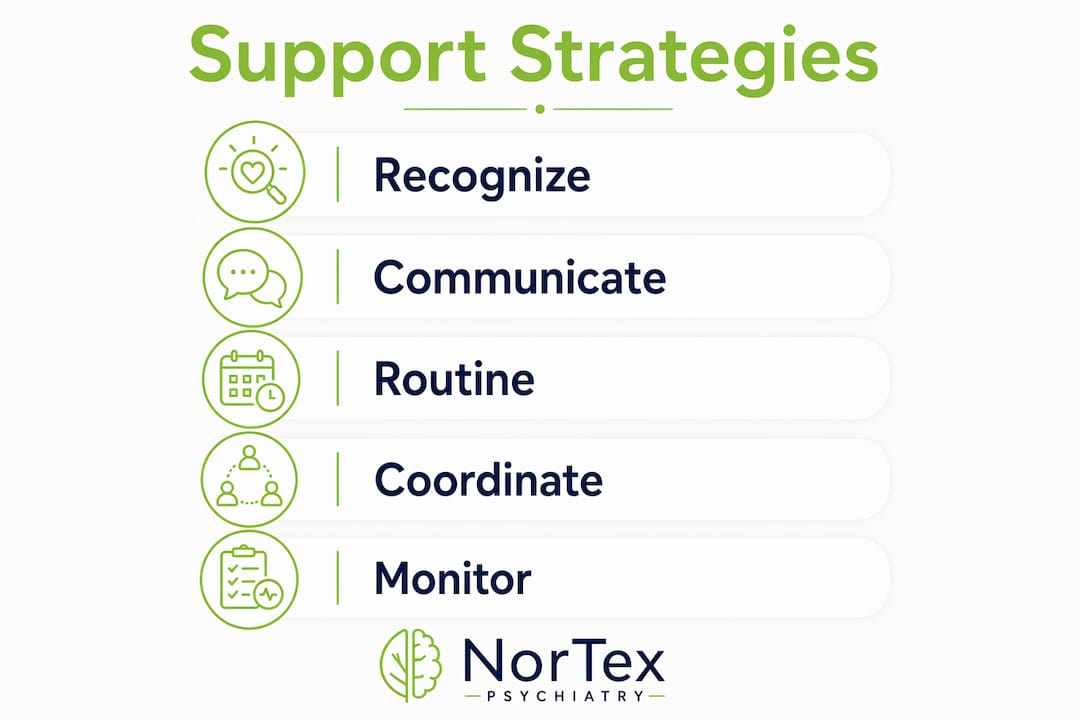
Family support strategies that combine open communication, consistent routines, and professional coordination give teens the strongest foundation for recovery. No single piece works in isolation.
Key Takeaways
Supporting teens with mood disorders requires combining evidence-based treatment, consistent daily structure, open communication, and coordinated care across family, school, and healthcare providers.
| Point | Details |
|---|---|
| Combination therapy works best | Psychotherapy paired with medication outperforms either approach used alone for most teens. |
| Listen before you fix | Teens disengage when parents lecture; open-ended, pressure-free conversations keep communication alive. |
| Daily routine reduces symptoms | Consistent sleep, exercise, and nutrition directly stabilize mood and support treatment outcomes. |
| Irritability signals depression | Persistent irritability lasting weeks and disrupting daily life is a clinical symptom, not typical moodiness. |
| Parental mental health matters | A parent’s untreated mental health condition raises risk for teens; family-focused care addresses both. |
What I’ve learned from working with families navigating teen mood disorders
The parents who come to us are not failing. They are exhausted, worried, and often carrying guilt about things that were never in their control. What I have seen consistently is that the families who do best are not the ones who found the perfect therapist or the right medication on the first try. They are the ones who stayed steady when nothing seemed to be working.
One thing I wish more parents heard early: recovery is not linear. A teen who seems worse after starting therapy is not getting worse because of therapy. Talking about painful things is painful. That discomfort is often a sign the process is working, not breaking down.
The other thing I notice is that parents underestimate how much their own calm communicates. When you can sit with your teen’s distress without panicking or shutting down, you are doing something clinically significant. You are modeling emotional regulation. That is not a small thing.
Teen depression awareness has grown, but stigma still keeps many families from seeking help until a crisis forces their hand. A crisis plan is not pessimistic. It is one of the most practical tools a family can have, and building one before you need it is far easier than building one in the middle of an emergency.
If you are reading this and wondering whether your teen’s symptoms are serious enough to warrant professional evaluation, the answer is almost always yes. Early intervention changes outcomes. Waiting to see if things improve on their own is the one strategy we consistently see backfire.
— Felix
Psychiatric support for teens and families at Nortexpsychiatry
Nortexpsychiatry serves families across Allen, Frisco, McKinney, Plano, and the broader North Dallas area with personalized, evidence-based psychiatric care for teens and adults. If your teen is showing signs of depression, anxiety, or a mood disorder, a formal evaluation is the right first step. Nortexpsychiatry offers both in-person and telehealth appointments, making it easier to get care that fits your schedule. The practice provides medication management for teens alongside therapy coordination and ongoing support. Understanding the benefits of psychiatric care for anxiety and depression can help you decide whether a specialist is the right next step for your family.
FAQ
What are the signs a teen needs professional help for a mood disorder?
Persistent sadness, irritability lasting more than two weeks, withdrawal from friends, declining grades, and changes in sleep or appetite all warrant a professional evaluation. These symptoms go beyond typical teen stress and signal a clinical condition.
How do I talk to my teen about seeing a psychiatrist?
Frame the appointment as a routine health visit, not a punishment or sign of weakness. Explain that a psychiatrist helps the brain work better, the same way a doctor helps a broken bone heal.
Can teen mood disorders be treated without medication?
Psychotherapy alone, particularly CBT, is effective for mild to moderate depression in teens. For moderate to severe cases, combination therapy with medication produces significantly better outcomes.
What should a crisis plan for a teen include?
An effective crisis plan includes emergency contact numbers, a list of warning signs, agreed-upon steps for escalating care, and the location of any medications in the home. Build it with your teen’s treatment team before a crisis occurs.
Does my own mental health affect my teen’s recovery?
Yes. Parental depression and untreated anxiety raise the risk of mood disorders in children and make home environments harder to stabilize. Addressing your own mental health is a direct investment in your teen’s outcome.