
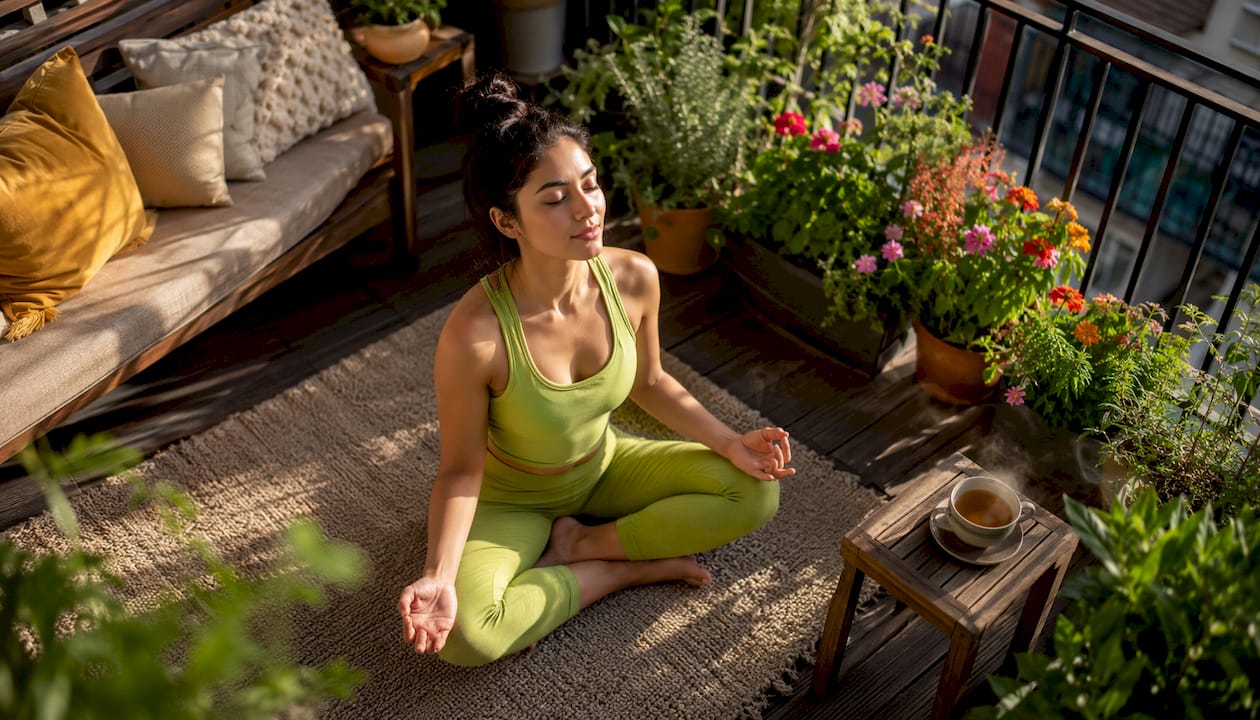
The most effective stress relief techniques combine a short, immediate tool you can use in two minutes with a small daily habit you repeat consistently. When stress hits, your body’s fight-or-flight response floods you with cortisol and adrenaline. The good news is that you can interrupt that cycle right now with five moves:
- Breathe slowly: Inhale for four counts, exhale for six. Ten slow breaths is enough to shift your physiology.
- Ground yourself: Name five things you can see, four you can touch, three you can hear.
- Release muscle tension: Squeeze both fists tight for five seconds, then let go completely.
- Move briefly: Stand up and walk briskly for two minutes, even just to the end of the hallway.
- Reframe the thought: Ask yourself, “Will this matter in a week?” One honest answer often loosens the grip of the moment.
These moves won’t resolve chronic stress on their own. They are designed to interrupt the acute spike so you can think clearly again. Use them at work, in the car, or anywhere you feel overwhelmed.
Table of Contents
- Quick stress relief techniques you can use in under 10 minutes
- Evidence-based relaxation methods worth practicing regularly
- Daily habits that lower your chronic stress load
- How to build a stress-reduction habit that actually sticks
- When everyday stress becomes something that needs clinical care
- Key Takeaways
- What we see in practice
- Useful sources and further reading
- FAQ
Quick stress relief techniques you can use in under 10 minutes
When stress arrives without warning, having a short, practiced sequence matters more than knowing dozens of options. Here are five techniques with simple instructions you can follow under pressure.
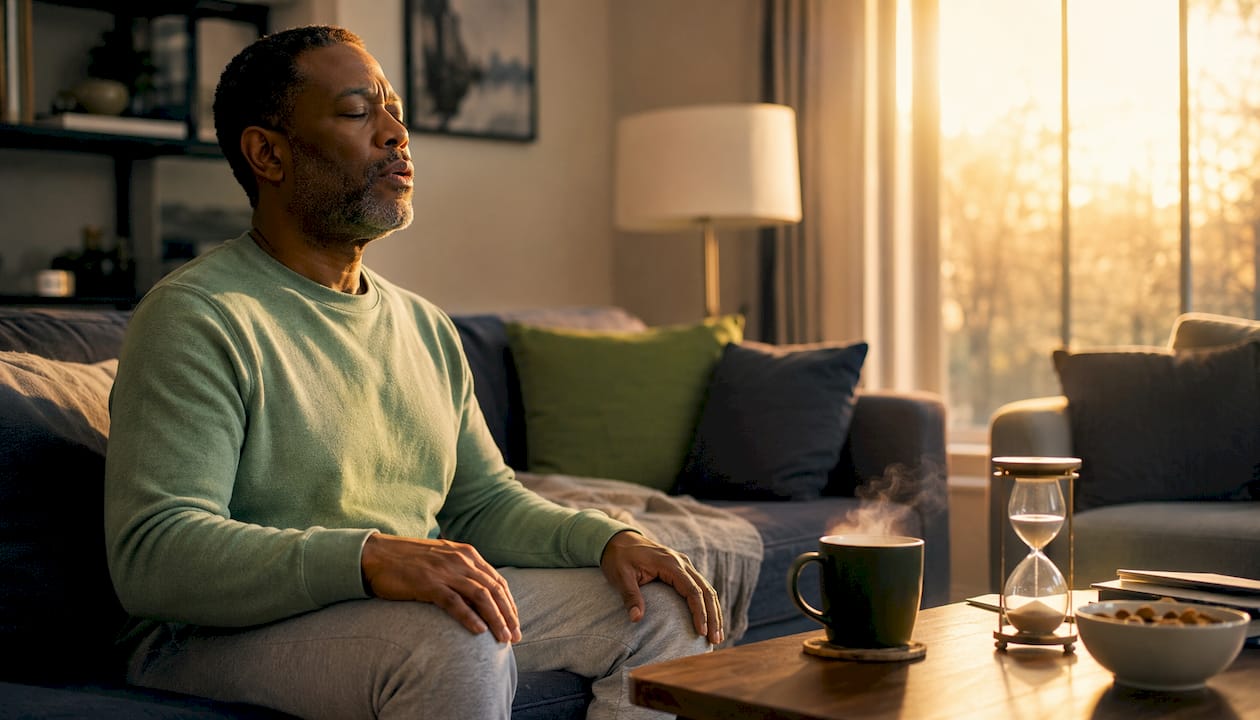
Paced breathing (4–6 minutes)
Sit or stand with your feet flat on the floor. Inhale through your nose for a count of four, hold briefly, then exhale through your mouth for a count of six. Slow, deep breathing has been shown to modestly lower cortisol and blood pressure. Repeat for ten cycles. A simple cue: set a phone timer labeled “breathe” for four minutes and do nothing else during it.
5-4-3-2-1 grounding (2 minutes)
Name five things you see, four you can physically touch, three you hear, two you smell, and one you taste. This technique pulls attention away from anxious thought loops and back to the present moment. It works especially well before a difficult meeting or conversation.
Mini progressive muscle release (3 minutes)
Work from your feet upward. Tense each muscle group for five seconds, then release. Feet, calves, thighs, abdomen, hands, shoulders. The contrast between tension and release is what produces the calming effect. You can do this seated at a desk without anyone noticing.
Brief guided imagery (2 minutes)
Close your eyes and picture a place where you feel calm. A quiet beach, a familiar park, a room you love. Breathwork and imagery reliably trigger the relaxation response, which slows breathing and lowers heart rate. Two minutes is enough to shift your baseline.
Brisk 5-minute walk
Step outside or find a hallway. Walk at a pace that raises your heart rate slightly. Short aerobic activity reduces stress hormones and releases mood-lifting neurotransmitters. This is one of the most underused tools available to anyone, anywhere.
Pro Tip: Quick techniques are best for acute spikes. If you notice you are reaching for these tools more than three or four times a day, that pattern is a signal to look at what is driving the baseline. A short technique interrupts the cycle; it does not fix the source.
Evidence-based relaxation methods worth practicing regularly
Quick techniques handle the moment. These practices, used regularly, shift your baseline over time. Relaxation techniques require consistent practice to produce durable change. Occasional use rarely moves the needle on chronic stress or anxiety.
The underlying mechanism is what Dr. Herbert Benson described as the relaxation response: the physiological opposite of fight-or-flight. Slowing your breath and focusing your attention activates the parasympathetic nervous system, which lowers heart rate, reduces blood pressure, and decreases stress hormone output. Every method below works through some version of this pathway.
| Method | Typical practice dose | Primary target |
|---|---|---|
| Mindfulness / MBSR | 20 min/day, 8-week program | Chronic stress, anxiety, depression |
| Progressive muscle relaxation (PMR) | 15–20 min/day | Acute and chronic anxiety, sleep |
| Guided imagery | 10–15 min/session | Acute stress, pre-procedure anxiety |
| Yoga | 30 min, 2–3x/week | Stress, anxiety, mood |
| Diaphragmatic breathing | 5–10 min/day | Blood pressure, cortisol, acute stress |
| Biofeedback | Sessions with a trained provider | Heart rate variability, anxiety |
Mindfulness-Based Stress Reduction (MBSR) is an eight-week structured program that teaches breathing meditation, body scanning, and gentle yoga. A 2023 randomized controlled trial found that MBSR is comparable to escitalopram for anxiety disorders. That is a meaningful finding for anyone weighing options.
Progressive muscle relaxation (PMR) is straightforward to learn and requires no equipment. Research shows it can reduce anxiety and depression, with positive effects on depression maintained up to 14 weeks after treatment in some studies.
Yoga has a reasonable evidence base for stress and anxiety as an adjunctive therapy. A 2018 study found that participants who practiced gym yoga for 8–16 weeks showed significant decreases in stress and anxiety compared to a control group.
Biofeedback, particularly heart rate variability biofeedback, shows promise for reducing self-reported stress and anxiety, though it typically requires working with a trained provider or a validated wearable device.
Daily habits that lower your chronic stress load
Relaxation methods work better when your baseline is lower. Integrated lifestyle changes often reduce stress as a side effect of improving overall health, without requiring a separate stress program. These five habits are where we recommend starting.
Sleep hygiene
Poor sleep and high stress feed each other directly. Aim for seven to nine hours. Keep a consistent wake time, limit screens an hour before bed, and keep your room cool and dark. The wake time matters more than the bedtime for regulating your body clock.
Regular movement
The CDC recommends building toward 150 minutes of moderate-intensity aerobic activity per week. Breaking that into 20–30 minute sessions is just as effective as longer workouts. A 20-minute walk after dinner counts. You do not need a gym.
A plant-forward diet
Processed foods and blood sugar swings amplify stress reactivity. Prioritizing vegetables, whole grains, lean protein, and healthy fats gives your nervous system steadier fuel. You do not need a perfect diet. Reducing ultra-processed snacks is a reasonable first step.
Limiting alcohol and caffeine
Both disrupt sleep and can worsen anxiety. Alcohol may feel like it relieves stress in the short term, but it interferes with sleep architecture and raises baseline anxiety the following day. Caffeine after 2 PM is worth cutting if you notice sleep problems.
Social connection
Isolation amplifies stress. Regular contact with people you trust, even brief check-ins, buffers the physiological stress response. This does not require large social events. A ten-minute phone call with a friend has real value.
Start here: a simple first-week checklist
- Pick one consistent wake time and hold it for seven days.
- Add one 20–30 minute walk to your daily routine.
- Swap one processed snack for a piece of fruit or a handful of nuts.
- Cut caffeine after 2 PM.
- Text or call one person you trust, once this week.
For lifestyle changes and mental health, small, consistent adjustments tend to compound over weeks, not days. Expect gradual improvement, not an overnight shift.
How to build a stress-reduction habit that actually sticks
Long lists of stress-busting strategies can overwhelm rather than help. Clinicians consistently observe that a short, personalized toolkit with daily repetition outperforms trying many techniques at once. The goal is two or three practices you actually do, not ten you intend to.
A two-week starter plan
Week 1: Choose one breathing technique and one lifestyle habit. Practice the breathing for five minutes each morning. Add a 20-minute walk three times this week. Track both with a simple checkmark in a notebook or phone note.
Week 2: Add one longer relaxation practice (a 10-minute guided imagery or a PMR session) three evenings this week. Keep the breathing and walking going. By day 14, you have a three-part routine that takes under 30 minutes a day.
Habit-stacking cues
Attach new practices to things you already do:
- Breathing exercise right after you pour your morning coffee.
- A two-minute grounding exercise before you open your work laptop.
- PMR or guided imagery as part of your wind-down before bed.
- A brisk walk during your lunch break instead of scrolling.
Pro Tip: When motivation drops, which it will, shrink the practice rather than skipping it. Two minutes of breathing is better than zero. Consistency over weeks matters far more than the length of any single session.
For more on building evidence-based mental health habits, the pattern is the same: small, repeated, and attached to something you already do. You can also explore sustainable stress relief approaches from a wellness perspective to complement clinical guidance.
When everyday stress becomes something that needs clinical care
Self-help techniques are genuinely useful. But there are clear signs that what you are experiencing has moved beyond everyday stress and warrants a conversation with a clinician.
Consider seeking professional help if you notice:
- Symptoms lasting more than two weeks without improvement.
- Significant decline in work, relationships, or daily functioning.
- Sleep or appetite changes that feel out of your control.
- Increasing reliance on alcohol, substances, or other avoidance behaviors.
- Persistent physical symptoms (headaches, chest tightness, GI problems) with no clear medical cause.
- Thoughts of harming yourself or others.
If you are experiencing a mental health crisis right now, contact the 988 Suicide and Crisis Lifeline by calling or texting 988. For emergencies, call 911.
What clinical care can offer
A psychiatric evaluation helps identify whether what you are experiencing is generalized anxiety, depression, a mood disorder, or another condition that responds well to treatment. From there, a psychiatrist can recommend a range of options: structured therapy, medication management, or procedures like Transcranial Magnetic Stimulation (TMS) or Spravato for treatment-resistant depression. These are not last resorts. They are tools that work when self-help alone is not enough.
Telehealth has made access significantly easier. You can complete a psychiatric evaluation from home, which removes one of the most common barriers: finding time to get there. Nortexpsychiatry offers both in-person and telehealth appointments across North Dallas, including Allen, Frisco, McKinney, and Plano.
For a clear picture of when psychiatric care is appropriate, that resource walks through the decision in plain language.
This article is general health information, not professional medical advice. Please consult a qualified clinician for guidance specific to your situation.
Key Takeaways
The most effective approach to stress combines a short, practiced technique for acute moments with consistent daily habits that lower your baseline over time.
| Point | Details |
|---|---|
| Start with two minutes | Ten slow breaths or a brief grounding exercise interrupts the acute stress response immediately. |
| Practice regularly | Relaxation techniques require consistent use to produce lasting change; occasional practice rarely shifts the baseline. |
| Build toward 150 minutes of movement | Breaking weekly activity into 20–30 minute sessions is as effective as longer workouts for stress and mood. |
| Habit-stack, don’t add | Attach new practices to existing routines to improve consistency without adding burden. |
| Know the referral threshold | Symptoms lasting more than two weeks, functional decline, or substance misuse are clear signals to seek clinical care. |
What we see in practice
Most people who come to us have already tried something. They downloaded a meditation app, they read about breathing exercises, they told themselves to worry less. What they often haven’t tried is doing one small thing every single day for three weeks. That gap between knowing and doing is where most stress-management efforts stall.
What actually works, in our experience, is boring in the best way. Five minutes of slow breathing in the morning. A walk at lunch. A consistent bedtime. These are not dramatic interventions. They are small, repeated signals to your nervous system that you are safe. Over time, that accumulates.
We also notice that people sometimes feel embarrassed to seek help, as if needing support means they have failed at managing their own life. That framing is not useful. Stress that has become chronic, or that has crossed into anxiety or depression, is a medical issue. It responds to treatment. Reaching out for a conversation with a psychiatrist is not a last resort. It is often the most efficient move available.
If you are not sure where you stand, a self-assessment is a reasonable first step. We are here when you are ready.
Useful sources and further reading
These are the primary sources used as evidence throughout this article. Each is worth bookmarking if you want to go deeper.
- Harvard Health: Top ways to reduce daily stress — Clinician-written overview of breathing, imagery, and movement as immediate stress tools.
- CDC: Managing Stress — Public health guidance on activity targets, sleep, and lifestyle-based stress reduction.
- NCCIH: Relaxation Techniques — Evidence summary for PMR, guided imagery, breathing, and biofeedback.
- NCCIH: Mind and Body Approaches for Stress and Anxiety — Research digest on MBSR, yoga, meditation, and biofeedback for clinicians and patients.
- Mayo Clinic: Relaxation Techniques — Step-by-step guidance on common relaxation methods and realistic expectations.
- PLOS ONE: Behavioral interventions and stress — Research on how lifestyle changes produce collateral improvements in stress and mood.
- Nortexpsychiatry: How to manage anxiety — Clinical strategies for anxiety that complement the techniques in this article.
FAQ
What are the five most effective stress management techniques?
Paced breathing, progressive muscle relaxation, mindfulness meditation, regular aerobic exercise, and consistent sleep hygiene are the five most consistently supported by evidence across major health authorities including the CDC and Mayo Clinic.
What is the quickest way to relieve stress immediately?
Taking ten slow breaths, with a longer exhale than inhale, is one of the fastest evidence-based options. Harvard Health recommends this as an on-the-spot intervention to trigger the relaxation response within minutes.
How long does it take for stress relief techniques to work?
Quick techniques like breathing and grounding can reduce acute stress within two to five minutes. Longer-term practices like MBSR or regular exercise typically require several weeks of consistent use before you notice a meaningful shift in your baseline stress level.
When should I see a doctor about stress?
Seek professional help when symptoms last more than two weeks, when stress is interfering with work or relationships, or when you are using alcohol or other substances to cope. A psychiatrist can assess whether an underlying condition like anxiety or depression is driving what you are experiencing.