


Not knowing what to expect from your first psychiatric appointment can feel just as overwhelming as the symptoms that led you there. Maybe you’ve been pushing through anxiety for months, or depression has made it harder and harder to get through the day, or ADHD is affecting your work and relationships in ways you can no longer ignore. Whatever brought you here, you deserve clear answers and a path forward. This guide walks you through every stage of starting psychiatric treatment, from recognizing when to seek help to understanding what happens after your first evaluation, so you can take that first step with confidence.
Table of Contents
- Understanding when and why to seek psychiatric treatment
- How to prepare for your first psychiatric appointment
- What happens during a psychiatric evaluation
- Treatment options: what to expect after the evaluation
- A compassionate, evidence-based journey: our perspective
- Connect with compassionate psychiatric care in North Dallas
- Frequently asked questions
Key Takeaways
| Point | Details |
|---|---|
| Early action matters | Seeking help when symptoms persist or risk is present can make a significant difference in outcomes. |
| Preparation reduces stress | Bringing the right information and mentally preparing for your first appointment leads to a smoother start. |
| Evaluation is collaborative | The initial psychiatric evaluation is a guided conversation, not an exam, aimed at building a personalized plan. |
| Treatment options vary | Therapy, medication, or a combination are available, and your plan will match your specific needs. |
| Compassionate care works | A science-based, judgment-free approach helps you progress confidently and comfortably. |
Understanding when and why to seek psychiatric treatment
Many adults in North Dallas wrestle with a question that seems simple but rarely feels that way: “Is what I’m experiencing serious enough to see a psychiatrist?” There’s a meaningful difference between everyday stress and a clinical condition that needs professional support. Stress from a difficult project at work or a family conflict is normal and usually fades when circumstances change. Clinical conditions like persistent anxiety, major depression, or ADHD don’t follow that pattern. They linger, deepen, and begin to interfere with sleep, relationships, work performance, and everyday functioning.
Certain symptoms needing psychiatric care are clear signals that self-care alone isn’t enough. Here are some signs it may be time to schedule an evaluation:
- Feelings of sadness, hopelessness, or emptiness that last more than two weeks
- Persistent worry or fear that feels impossible to control
- Difficulty concentrating, staying organized, or completing tasks despite real effort
- Sleep disruptions tied to racing thoughts or low mood
- Withdrawing from people or activities you used to enjoy
- Using alcohol or substances more frequently to cope
- Thoughts of harming yourself or feeling like others would be better off without you
That last point is the most urgent. NAMI advises getting immediate support when distress is significant and there is concern about putting yourself or others at risk.
Safety first: If you or someone you love is in crisis, do not wait for a scheduled appointment. Call or text 988 (the Suicide and Crisis Lifeline), go to the nearest emergency room, or call 911. For non-emergency concerns, an evaluation with a qualified provider is the right next step.
For everything outside a crisis, the right move is to schedule a psychiatric evaluation rather than continue to manage symptoms alone. Early intervention generally leads to better outcomes. The longer clinical anxiety, depression, or ADHD goes unaddressed, the more entrenched the patterns can become. Reaching out for anxiety care for adults sooner rather than later genuinely makes a difference.
How to prepare for your first psychiatric appointment
Once you decide to seek help, preparing ahead of time can make the experience much smoother and more productive. A first psychiatric visit involves a lot of information sharing. The more organized you are going in, the more useful that session becomes for both you and your provider.
SAMHSA’s “Get Ready to Start Treatment” guidance recommends treating preparation as part of the care process itself, not an afterthought. Here’s what to gather and bring:
| Category | What to include |
|---|---|
| Medical history | Past diagnoses, surgeries, chronic conditions |
| Psychiatric history | Previous therapy or psychiatric treatment, hospitalizations |
| Medications | Current prescriptions, supplements, dosages |
| Insurance and ID | Insurance card, government-issued photo ID |
| Intake forms | Any pre-visit paperwork the clinic sends you |
| Symptom notes | A written summary of what you’ve been experiencing |
| Family history | Mental health conditions in close relatives |
Beyond documents, there are practical and emotional steps worth taking before you walk through the door. A comprehensive evaluation for first visits typically covers your symptoms, psychiatric and medical history, current medications, and safety risks, so thinking through these areas in advance saves time and reduces surprises.
Here’s a simple step-by-step checklist to follow:
- Request your medical records from your primary care physician at least a week before your appointment.
- Write down your symptoms, including when they started, how often they occur, and how they affect your daily life.
- List all medications, including over-the-counter drugs and herbal supplements, with doses and how long you’ve been taking them.
- Complete any intake forms your provider sends in advance. These forms are designed to save you time and give your provider a head start.
- Write down your questions. It’s easy to forget what you wanted to ask once you’re in the room.
- Plan your logistics. Know how to get there, where to park, and arrive 15 minutes early to handle any remaining paperwork.
- Be honest with yourself. The more openly you can share, the better your provider can help.
Preparing for your first session is not just about paperwork. It’s also about giving yourself permission to be open and honest about what you’ve been going through.
Pro Tip: Start a simple symptom journal one to two weeks before your appointment. Jot down your mood, sleep quality, and any notable episodes each day. This brief record gives your psychiatrist real, specific data rather than a general impression, which leads to a more accurate evaluation and a smarter treatment plan. Connecting with evidence-based psychiatric care starts with giving your provider the clearest picture possible.
What happens during a psychiatric evaluation
Walking into your first appointment can feel nerve-wracking, especially if you don’t know what to expect. Here’s something reassuring: a psychiatric evaluation is not a test you pass or fail. It’s a conversation designed to help your provider understand you as a whole person, not just your diagnosis.

A thorough first-visit evaluation typically covers symptoms, psychiatric and medical history, current medications, and safety risks, which together shape a personalized diagnosis and treatment plan. The session usually flows in a structured but conversational way.
Here’s what to expect:
- Opening questions about what’s been bothering you and why you decided to seek care now
- Symptom review exploring mood, sleep, appetite, energy, concentration, and anxiety
- Personal and family history including any past mental health treatment and whether relatives have had similar challenges
- Medication review to understand what you’re currently taking and what has or hasn’t helped before
- Safety assessment asking directly but compassionately about any thoughts of self-harm or harm to others
- Goal setting where you and your provider discuss what you most want to improve
To help set expectations, here’s a side-by-side comparison of what makes a psychiatric evaluation different from a routine medical visit:
| Feature | Psychiatric evaluation | Routine medical appointment |
|---|---|---|
| Typical length | 60 to 90 minutes | 15 to 30 minutes |
| Primary focus | Mental health symptoms, history, goals | Physical health, vitals, medications |
| Communication style | Collaborative and exploratory | Diagnostic and directive |
| Outcome | Personalized mental health treatment plan | Referral, prescription, or follow-up plan |
| Patient role | Active participant in shared decisions | Mostly receptive |
The APA emphasizes shared decision-making throughout psychiatric care, which means your preferences and values matter as much as clinical guidelines. You’re not there to receive orders. You’re there to work with a professional who can guide you toward the approach most likely to help you specifically.
The personalized psychiatric treatment steps that follow your evaluation are shaped directly by what you share in that first conversation. The more you engage, the more tailored your plan will be.
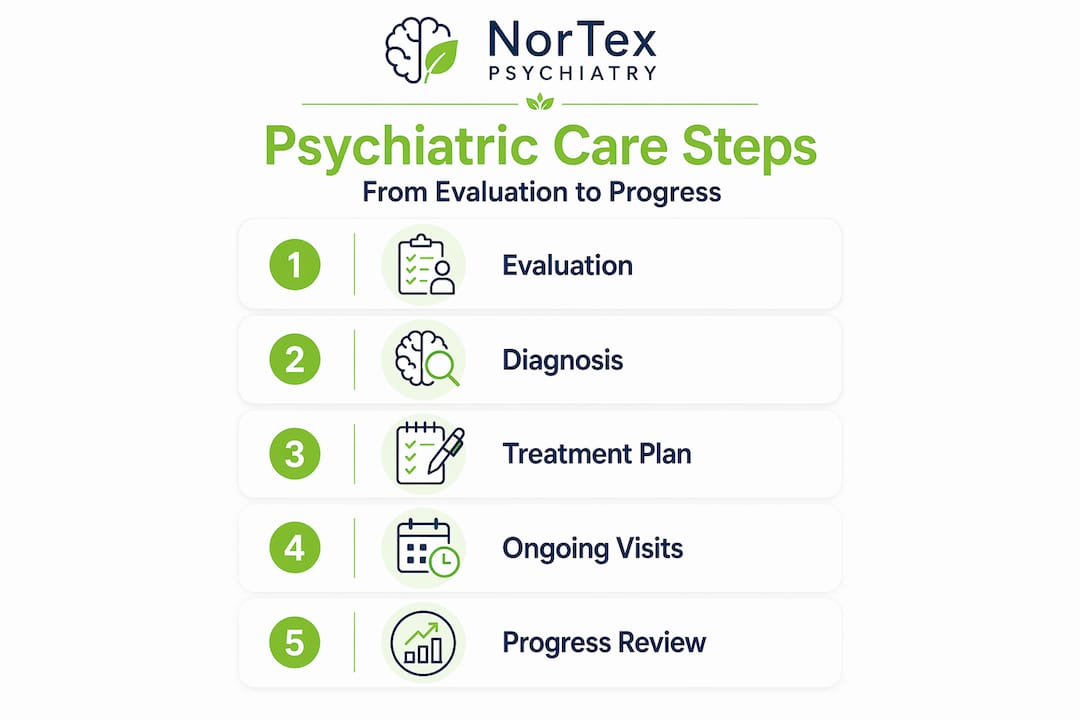
Treatment options: what to expect after the evaluation
After your initial evaluation, your provider will discuss findings and recommend a treatment direction. This is where many people feel a wave of relief: finally, a clear plan. Treatment in psychiatry is rarely one-size-fits-all, and that’s actually good news. It means your plan is built around you.
Psychiatric care after evaluation can include medication management, psychotherapy, or a combination of both. For conditions like moderate to severe depression, generalized anxiety disorder, or ADHD, medication is often an important and effective component. For others, therapy alone or therapy alongside lower-dose medication may be the right fit.
Common treatment pathways include:
- Medication management: Your provider may prescribe an antidepressant, anti-anxiety medication, mood stabilizer, or ADHD medication. You’ll typically schedule follow-up appointments within two to four weeks to assess your response and adjust as needed.
- Therapy referral: Your psychiatrist may recommend working with a therapist for cognitive behavioral therapy (CBT) or another evidence-based talk therapy. In some practices, this happens under the same roof.
- Combined approach: Research consistently shows that combining medication and therapy often produces better outcomes than either alone, particularly for depression and anxiety.
- Lifestyle guidance: Sleep hygiene, exercise, and nutrition frequently come up as part of a whole-person care plan.
Choosing between therapy and medication is a conversation you’ll have with your provider, not a decision you have to figure out alone. And that plan will evolve. Treatment in psychiatry is iterative, meaning if the first approach doesn’t produce the results you want, it gets adjusted. The APA’s guidance on evidence-based care specifically emphasizes prescribing and deprescribing based on how you respond, not on rigid protocols.
Your treatment plan may be adjusted based on:
- How you respond to medication in the first few weeks
- Side effects and how they affect your daily life
- Changes in your symptoms or life circumstances
- Your own feedback and preferences at follow-up visits
- New goals you identify as care progresses
Pro Tip: Honesty is your most powerful tool in treatment. If a medication is causing side effects, tell your provider. If therapy doesn’t feel like the right fit, say so. The fastest path to feeling better is an open, ongoing dialogue with your care team. Providers who offer personalized psychiatric care will always want to know how you’re really doing, not just the version you think they want to hear.
A compassionate, evidence-based journey: our perspective
We want to share something that goes beyond the practical steps above, because we hear it from patients regularly: “I waited too long because I thought it meant something was really wrong with me.” That belief keeps too many capable, hardworking adults in North Dallas from getting support that could genuinely change their lives.
Here is what we believe, and what the evidence supports. Psychiatric care at its best is not impersonal, rushed, or one-dimensional. It’s a collaborative process where your provider listens deeply, adapts over time, and partners with you around goals that actually matter to you. The APA’s framework for evidence-based, shared decision-making exists precisely because good outcomes depend on treating the whole person, not just managing symptoms.
There’s also a geographic reality worth naming. Access to timely, high-quality mental health care is unevenly distributed. People in underserved areas often wait months for an appointment. If you live in Allen, Frisco, McKinney, Plano, or nearby communities, you have access to local providers who understand your lifestyle, your pressures, and your community. That proximity matters. A provider who serves your area is more likely to be available when you need follow-up, more attuned to the specific stressors common in your region, and more accessible for both in-person and telehealth visits.
We also want to address the myth that psychiatric treatment is a sign of weakness or failure. Every patient we see is making a courageous, smart, and often long-overdue decision. Seeking personalized evidence-based psychiatry is no different than seeing a cardiologist for a heart condition or a physical therapist after an injury. Your brain is an organ. When it needs support, getting that support is the responsible choice.
Recovery is a journey, not a straight line. There may be adjustments along the way. But with the right support, most people do feel significantly better. That’s not optimism for its own sake. That’s what the research shows, and what we see every day.
Connect with compassionate psychiatric care in North Dallas
If this guide helped you understand what starting psychiatric care actually looks like, you’re already closer to taking that first step. At Nortex Psychiatry, we walk alongside every patient through exactly the stages described here, from the initial evaluation to building a treatment plan that fits your life. We serve adults and families across Allen, Frisco, McKinney, Plano, and the surrounding North Dallas area, with both in-person and telehealth options to fit your schedule.
Whether you’re navigating transforming anxiety care for the first time or looking for personalized mood disorder relief after years of managing on your own, our team is ready to listen without judgment and guide you toward evidence-based care. You don’t need to have everything figured out before you reach out. That’s what we’re here for. Contact us to schedule your first evaluation and start moving toward feeling like yourself again.
Frequently asked questions
What should I bring to my first psychiatric appointment?
Bring a list of your current medications, prior treatment records, ID, insurance card, and any completed intake forms provided by the clinic. These common prep elements for first visits help your provider conduct a thorough evaluation from the start.
How long does the first psychiatric evaluation take?
The initial appointment usually lasts 60 to 90 minutes to allow for a thorough, comprehensive assessment of your history, symptoms, and goals.
Is medication always prescribed during psychiatric treatment?
Not always. Medication and therapy are often used together, but treatment plans are tailored to individual needs, and some people benefit most from therapy alone, especially for milder conditions.
What if I’m nervous about sharing my personal history?
Many people feel nervous, but psychiatric providers are trained to listen without judgment. Initial evaluations focus on safety, history, and building a treatment plan, and you can share at a pace that feels comfortable.
How soon will I notice results after starting treatment?
Improvement timelines vary by person and condition, but many people begin noticing meaningful changes within a few weeks of starting treatment, especially with consistent follow-up appointments and open communication with their provider.