

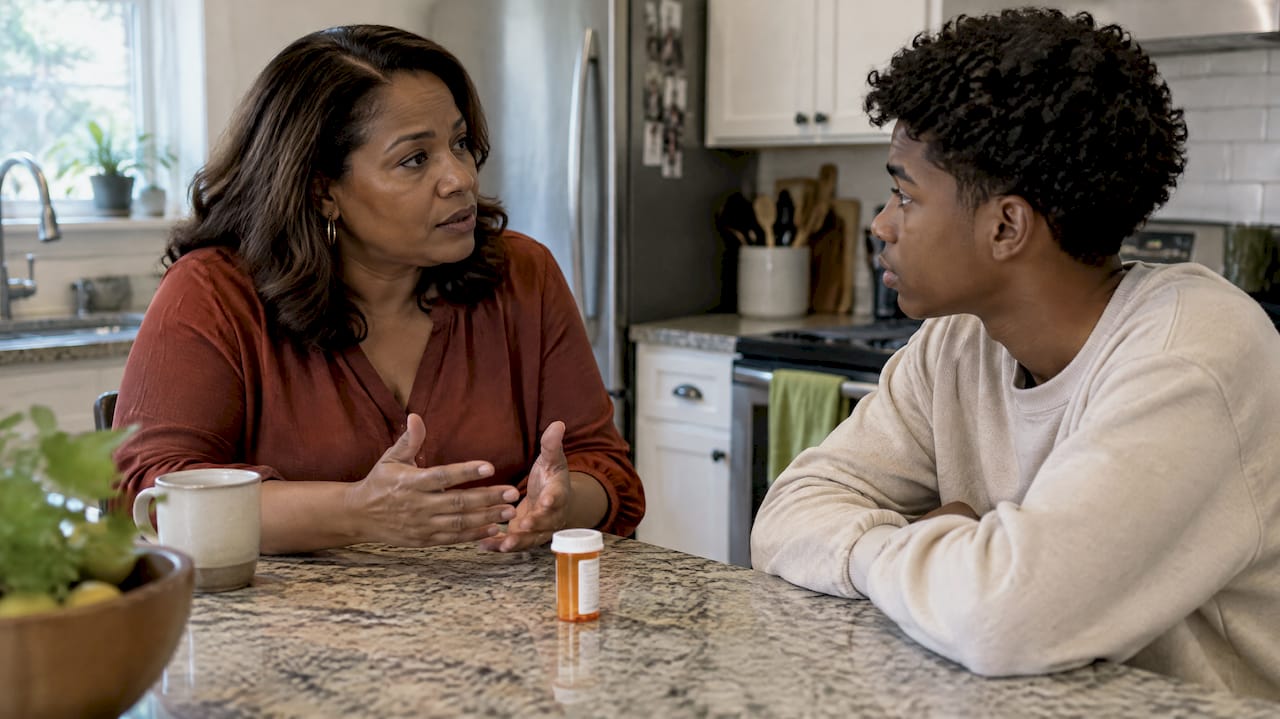
Medication can help a teenager with anxiety, but it is rarely the first or only step. It makes the most sense when anxiety is moderate to severe, when it keeps getting in the way of school, friends or sleep, or when therapy alone has not been enough. In most cases the medication is an SSRI, started low, raised slowly, and watched closely, usually alongside therapy. Below we walk through how we think about that decision, what to expect, and what worries parents most.
We are writing as psychiatrists who sit across from worried parents and worried teenagers. Nobody walks in hoping to start a pill. They walk in tired. So we will try to be plain about what the evidence says and where it runs out.
TL;DR
- A full diagnostic evaluation comes before any prescription. Medication for a teen is not a quick fix for a hard semester.
- SSRIs are the usual first-line medication for adolescent anxiety. Combining one with cognitive behavioral therapy (CBT) often works better than either alone.
- Antidepressants carry an FDA boxed warning about suicidal thoughts in young people, so the first weeks and every dose change need close follow-up.
- Not every anxious teen needs medication. Many do well with therapy and support alone.
- Supplements and over-the-counter products are not a safe shortcut. Talk to the prescriber before your teen takes anything new.
Table of Contents
- When medication is worth considering
- The evaluation comes first
- Which medications are used for teen anxiety
- What starting looks like
- The boxed warning, explained plainly
- Medication works best with therapy
- Over-the-counter and herbal products
- How long will my teen be on it?
- Our perspective
- If medication has not been enough
- FAQ
- Sources
When medication is worth considering
Most anxious teenagers do not need a prescription. Worry before a test, nerves before a presentation, a rough patch after a move: these are part of growing up. The question changes when anxiety becomes the thing organizing the teen’s day.
In our work, these are the patterns that make us talk about medication:
- Your teen is skipping school, or sitting in the nurse’s office most mornings.
- Panic symptoms are frequent: racing heart, trouble breathing, feeling unable to leave the house.
- Sleep has fallen apart, and not just on weekends.
- Therapy has been tried in earnest for a couple of months and the anxiety has barely moved.
- Anxiety is tangled up with low mood, or with attention problems that make everything harder.
Untreated anxiety is not harmless to wait out. The American Academy of Child and Adolescent Psychiatry (AACAP) notes in its parents’ medication guide that untreated anxiety is associated with poorer outcomes later, including depression, substance misuse, suicidal thoughts and difficulty coping. That is not meant to frighten you. It is the reason we do not like to say “let’s just see.”
And the other direction matters too. The same clinical literature is clear that not every teenager with anxiety needs medication, and many are managed well with therapy and supportive care alone. If your teen is on the milder end, we would rather start there.
When it cannot wait
If your teen talks about wanting to hurt themselves, or is so agitated or panicked that they seem out of touch with what is happening, do not book a routine visit. Call 988, go to the nearest emergency department, or call 911. The AACAP’s practice guideline says hospitalization is likely indicated when a young person actively voices intent to harm or has altered mental status, including severe anxiety or agitation. Most families will never be in that situation. Know where the line is anyway.
The evaluation comes first
A prescription should follow a real assessment, not precede it. The same guideline describes a diagnostic evaluation as essential before treating an anxiety disorder. It looks at the symptoms, how often they happen, how severe they are, when they started and how long they have lasted, the distress they cause, how much they interfere with daily life, developmental concerns, and physical signs.
In practice that means a long first visit, and usually time with your teen alone as well as time with you. We ask about school, friends, sleep, caffeine, vaping, screen time, family history, and anything that happened around the time the anxiety grew. We also ask what your teen thinks is going on. Teenagers are often more precise about this than adults expect.
The reason for the care is that anxiety in teens overlaps with other things. Depression, ADHD, trauma, thyroid problems, and substance use can all look like anxiety, or hide behind it. If attention is part of the picture, our page on how teen ADHD is diagnosed explains what that assessment looks like. A teen who is restless and can’t focus is not always anxious, and treating the wrong thing wastes months.
Which medications are used for teen anxiety
SSRIs: the usual starting point
Selective serotonin reuptake inhibitors, or SSRIs, are widely considered first-line medication for pediatric anxiety. The AACAP guideline cites randomized controlled trials showing they reduce symptoms and can bring remission. A review in the journal literature also notes that AACAP recognizes both SSRIs and SNRIs as evidence-based pharmacological options for pediatric anxiety disorders.
They are not fast. Most families hear this with some disappointment. SSRIs build up over weeks, not days, and the first stretch can feel like nothing is happening, or like things are slightly worse before they improve.
SNRIs and the “off-label” question
Serotonin-norepinephrine reuptake inhibitors are the second group you may hear about. Here is something parents are often surprised by: the FDA has formally approved only a small number of medications for specific pediatric anxiety disorders. A 2024 review lists duloxetine and escitalopram for generalized anxiety disorder as examples.
So if a prescriber suggests something that is not FDA-labeled for your teen’s exact diagnosis, that is not unusual. It is common in child and adolescent psychiatry, and it should come with a clear explanation of why that choice and what the evidence is. If you are not getting that explanation, ask for it.
What we are cautious about
Quick-acting sedating medications can look appealing because they work within an hour. We are careful with them in teenagers, and we would want to talk through the reasoning with you before any are considered. For a longer look at how we approach the whole process, see our parent’s guide to medication management for teens.
What starting looks like
The general approach is simple: start low, go slow. Common early side effects of antidepressants can include increased anxiety or agitation, which is why clinicians begin with low, subtherapeutic doses and raise them gradually. It is a little counterintuitive, giving a medication for anxiety that can briefly stir it up. Knowing that ahead of time makes the first two weeks much easier on everyone.
A rough picture of what families see:
| Stage | What usually happens |
|---|---|
| Before starting | Full evaluation, discussion of risks and alternatives, consent from the parent and agreement from the teen |
| First weeks | Low dose, frequent check-ins, watching for side effects such as stomach upset, sleep changes, restlessness or feeling “off” |
| Following weeks | Gradual dose changes based on how your teen is actually doing, not a fixed calendar |
| Ongoing | Regular visits, therapy running alongside, review of whether the medication is still needed |
We deliberately do not give you a number of weeks for how long it takes to feel better, because it varies, and anyone who promises one is guessing. Plan for patience.
For side effects specifically, our article on what to expect from SSRI side effects is written for adults, but the general pattern of early, usually temporary effects applies. Teens are not small adults, though, so please bring any concerns to the prescriber rather than relying on a general page.
The boxed warning, explained plainly
Every parent should know this one. Antidepressants used for anxiety in minors carry an FDA boxed warning about a possible increase in suicidal thoughts and behavior. The AACAP guideline states that this requires careful monitoring by the prescribing clinician, especially at the start of treatment and after dose changes.
What that means in real life:
- We ask directly, at visits, about suicidal thoughts, self-harm, impulsivity and risky behavior. Not in a scary way. As a routine.
- You are part of the monitoring. You see your teen at the breakfast table; we do not.
- Changes that deserve a call the same day: new or sudden agitation, a teen who seems unusually wound up or unable to sleep, talk of death or of being a burden, a sharp shift in behavior.
- If your teen expresses intent to harm themselves, that is a 988 or 911 moment, not a message to the office.
We will say what we say to families: the warning is real, and so is the risk of leaving severe anxiety untreated. Neither one cancels the other. The answer is not avoiding treatment, it is monitoring it well. Do not stop an antidepressant abruptly on your own either, because that can cause its own problems. Call us and we will work out how to taper it safely. Our piece on switching and tapering antidepressants goes into why that matters.
Medication works best with therapy
The research here is consistent. The AACAP guideline says combining CBT with an SSRI is often recommended because it can improve outcomes more than either one alone in many adolescents. AACAP’s family guide to psychiatric medication likewise describes medication as one part of a multi-faceted plan, with ongoing medical assessment and, in most cases, individual or family therapy.
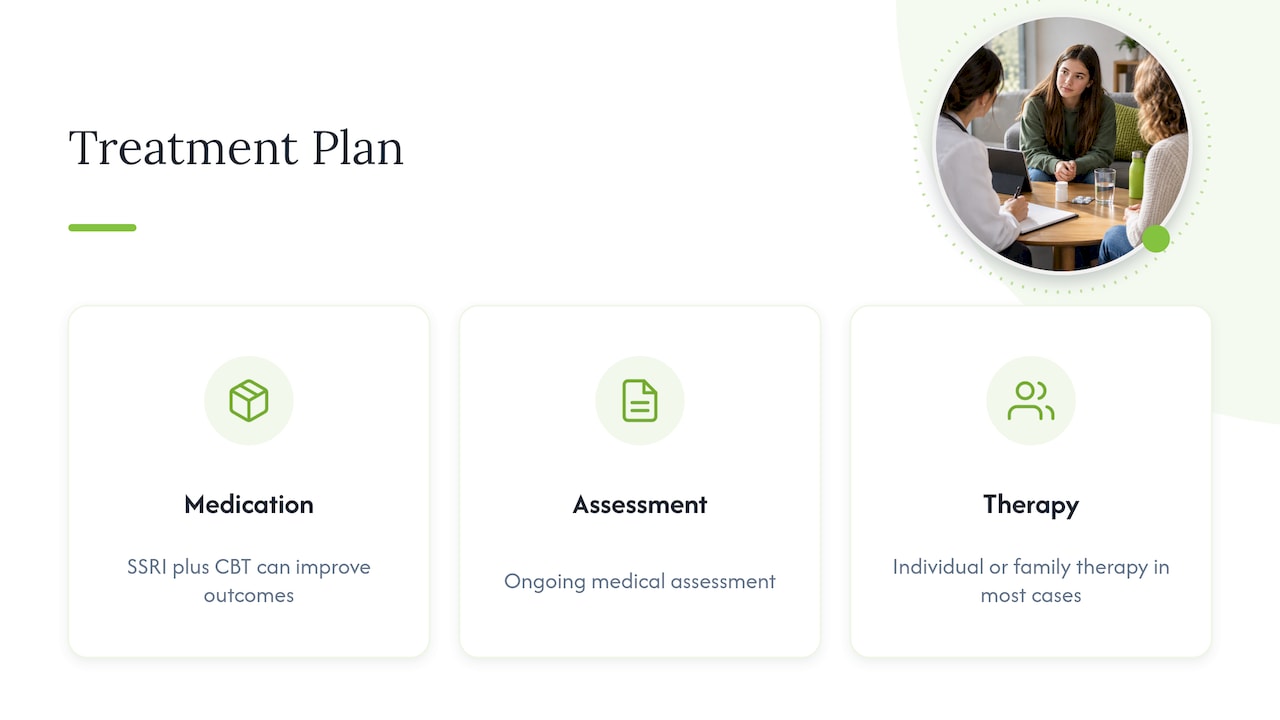
We tend to explain it this way to teens. The medication turns the volume down so that your teen can actually do the skills work: facing avoided situations, noticing anxious thoughts, practicing getting through discomfort. Without the skills, medication can take the edge off but leave the habits of avoidance intact. Without the medication, some teens are too overwhelmed to use the skills at all.
The same logic of layering treatment shows up in other conditions too. This overview of combined CBT and SSRI treatment planning for a different anxiety-related condition shows the same idea of a plan built from several parts rather than a single prescription.
Family involvement counts as well. Parents sometimes accommodate anxiety without meaning to, by writing the school excuse, ordering for the teen at restaurants, or staying up late to reassure. It comes from love. A good treatment plan will gently look at that too, and our guide to helping teens with mood disorders has practical suggestions for what parents can do at home.
Over-the-counter and herbal products
Parents ask us about this constantly, and understandably: it feels gentler to try something from the supplement aisle. Our honest position is cautious. Supplements are not held to the same testing as prescription medicines, strength and purity can differ from bottle to bottle, and some herbal products interact with prescription antidepressants. We could not point to strong evidence that a particular herbal remedy treats adolescent anxiety safely, and we would rather say that than guess.
A few practical rules:
- Tell the prescriber about everything your teen takes, including energy drinks, sleep aids and anything bought online.
- Do not combine a supplement with an SSRI without asking first.
- Caffeine, nicotine and vaping can make anxiety noticeably worse. Reducing them is free and often helps more than people expect.
- Sleep, exercise and regular meals are not a cure, but they change how well everything else works.
How long will my teen be on it?
This is the question we answer with the least certainty. There is no universal timeline. Many teens stay on medication for a period, then we discuss reducing it once things have been stable for a while and therapy skills are in place. Others need it longer.
One caution worth hearing: a 2024 review notes that fewer than half of patients on antidepressants reach long-term remission. That does not mean medication fails. It means recovery is a journey, not a straight line, and some teens need a change of dose, a different medication, or more therapy along the way. If the first medication is not working, that is information, not a verdict.
Our perspective
We have learned that the best outcomes rarely come from the right pill. They come from the right sequence: a careful evaluation, a clear conversation with the teen about what they actually want to change, and a plan the whole family understands. We often notice that teens who feel included in the decision stick with treatment and report side effects honestly. Teens who feel it was done to them do not.
We also see parents carry guilt about considering medication, as if it means they failed. It does not. Anxiety is a medical and developmental condition, not a parenting verdict. We try to say that early, because guilt makes people delay care.
And yes, we are humble about this. Teens differ, the research on young people is thinner than on adults, and we will sometimes change course. That is part of doing this carefully.
— Felix
If medication has not been enough
Some teens and young adults try several approaches and still struggle. Where that happens, we look at the whole picture again: was the diagnosis right, was the dose adequate, was therapy actually happening, is something else going on? Our practice also offers interventional options such as TMS therapy and other treatments for some conditions, and which of them, if any, apply to a given age group and diagnosis is something we would go over at a consultation. These are not first steps for anxiety in teenagers, and we do not want to suggest they are.
If you live in Allen, Frisco, McKinney, Plano or elsewhere in North Dallas and want a conversation about your teen, you can reach us through the Nortex Psychiatry website. We offer in-person and telehealth visits. Bring a list of symptoms, what has been tried, and any school or pediatrician notes. It makes the first visit far more useful.
FAQ
Does my teen have to take medication for anxiety?
No. Many teens improve with therapy, especially CBT, and supportive changes at home and school. Medication enters the conversation when anxiety is moderate to severe or when therapy alone has not been enough. It is always a shared decision.
Are SSRIs safe for teenagers?
SSRIs are the best-studied medication group for adolescent anxiety, and many teens take them without serious trouble. They do carry a boxed warning about increased suicidal thoughts in young people, so close monitoring, particularly in the first weeks and after dose changes, is part of safe prescribing. Any new or worrying behavior should be reported to the prescriber promptly.
How long does anxiety medication take to work?
Usually weeks rather than days, and the early period can include mild side effects or a brief rise in jitteriness. Doses are raised gradually, so you may not know what the medication can do for several weeks. Keep your follow-up visits even if the first stretch feels slow.
Can my teen take supplements instead?
We would not recommend replacing prescribed treatment with supplements, and some can interact with antidepressants. Talk with the prescriber before adding any. A sleep, caffeine and exercise review is a safer place to start.
What should I do if my teen talks about self-harm?
Take it seriously every time. If there is any immediate danger, call 988 or 911, or go to the nearest emergency department. If it is a passing comment and your teen is safe, still contact the prescriber the same day.
Sources
- Clinical Practice Guideline for the Assessment and Treatment of Children and Adolescents with Anxiety Disorders (JAACAP)
- Anxiety Disorders: Parents’ Medication Guide (AACAP)
- Psychiatric Medication for Children and Adolescents Part I: How Medications Are Used (AACAP)
- State of the Evidence for Use of Psychotropic Medications in Children and Adolescents (PMC)
- Current and Future Approaches to Pediatric Anxiety Disorder Treatment (PMC, 2024)