


Yes, telehealth can produce a legitimate adult ADHD diagnosis, but only when a licensed clinician runs a complete evaluation rather than a shortcut. That means a semi-structured interview, collateral history from someone who knows you, validated rating scales, and screening for conditions that mimic ADHD. What it does not mean is a 15-minute video call ending in a same-day stimulant prescription. The American Psychiatric Association has said as much: telepsychiatry matches in-person care when a qualified clinician follows standard diagnostic steps.
TL;DR:
- A valid telehealth ADHD diagnosis requires a comprehensive evaluation, including a detailed interview, collateral history, and validated rating scales, not a quick video call.
- Most assessments span one to three appointments over one to two weeks, with documentation and careful screening for overlapping conditions and medical rule-outs.
- Licensed clinicians can diagnose ADHD and prescribe stimulants only when they follow thorough diagnostic steps and are licensed in the patient’s state.
- Prescribing stimulants remotely demands caution; providers should conduct collateral interviews and review medication monitoring programs before issuing controlled substance prescriptions.
- Red flags for assessment quality include same-day stimulant prescriptions without collateral history, quick diagnoses, or lack of a written report.
Table of Contents
- What Does A Telehealth ADHD Evaluation Actually Look Like?
- Who Can Diagnose ADHD, And What About Prescribing Stimulants?
- What Separates A Quality Assessment From A Rushed One?
- How Do You Choose A Telehealth Provider You Can Trust?
- What Happens After You Get Diagnosed?
- How We Approach Telehealth ADHD Evaluations
- Getting A Telehealth ADHD Evaluation With Nortex Psychiatry
- Sources
- FAQ
What Does A Telehealth ADHD Evaluation Actually Look Like?
Most patients start with paperwork, not a doctor. You will fill out intake forms and often a validated scale like the Adult ADHD Self-Report Scale (ASRS) before your first appointment. These tools flag patterns worth exploring, but they cannot diagnose anything on their own. We have seen patients arrive convinced a high ASRS score means they “have ADHD,” only to learn the scale is a starting point, not a verdict.
From there, a real evaluation moves through a few predictable stages.
- Screening intake. Standardized forms and history questionnaires establish a baseline before the clinical interview begins.
- Comprehensive clinical interview. A licensed provider walks through childhood history, current symptoms, school and work functioning, and rules out overlapping conditions. This often takes one long session or two shorter ones, not a single rushed call.
- Collateral history. A parent, partner, or old report card matters more than most patients expect, since adults tend to underreport or misremember childhood symptoms.
- Written report and plan. You should receive documentation of the findings, not just a verbal “yes, you have ADHD” and a prescription.
Expect the full process, from intake to written report, to span one to three appointments over one to two weeks rather than a single sitting. If a service promises a diagnosis before you have even described your childhood, that is worth questioning.
Who Can Diagnose ADHD, And What About Prescribing Stimulants?
Several types of clinicians can diagnose adult ADHD, and each brings something different to the table.
- Psychiatrists typically carry the deepest training in differential diagnosis and medication management, especially for complex or comorbid cases.
- Psychiatric nurse practitioners and physician assistants often perform full evaluations and manage medication, working under state-specific supervision rules.
- Psychologists can diagnose but generally cannot prescribe, so they usually partner with a prescriber for medication.
- Primary care clinicians increasingly handle straightforward ADHD care, though psychiatrists remain the most trained for comprehensive assessment.
Licensure matters more in telehealth than most patients realize. The clinician must be licensed in the state where you are physically sitting during the visit, not just where the clinic is based.
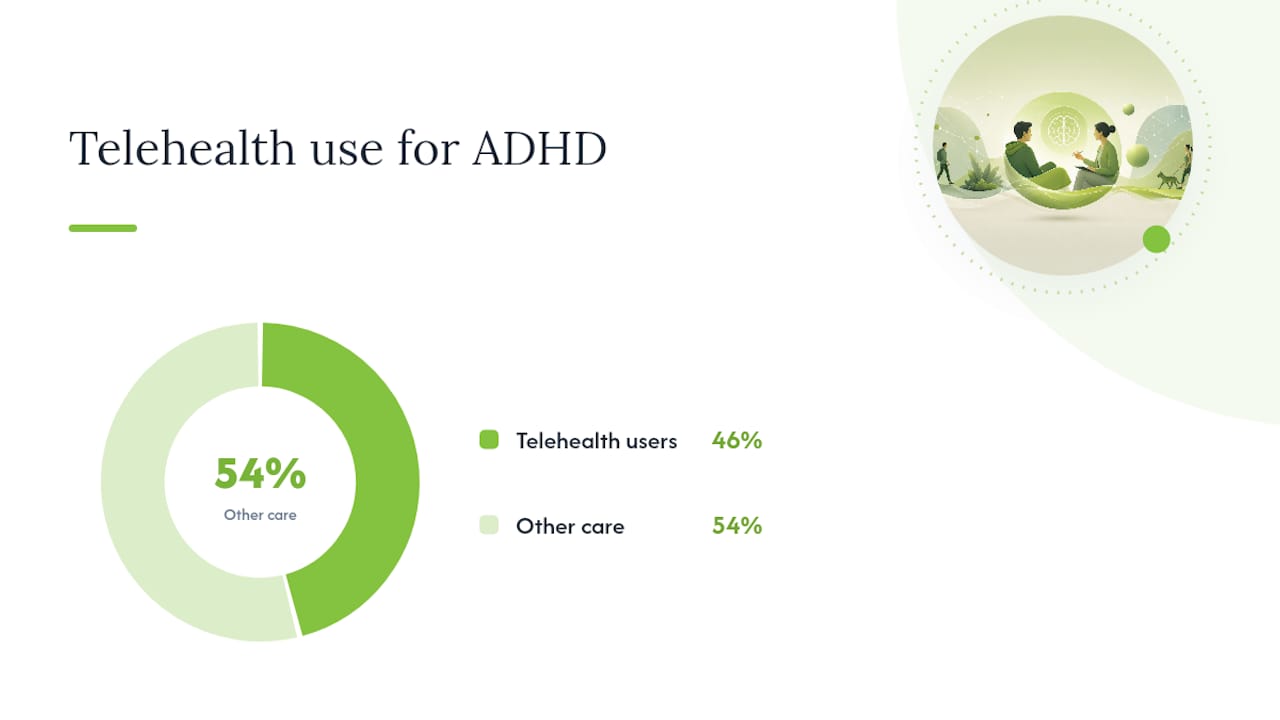
Stimulant prescribing carries extra weight because of controlled substance rules tied to the Ryan Haight Act, which historically required an in-person exam before prescribing controlled substances remotely. Telehealth flexibilities have shifted that landscape, but an expert consensus statement on telepsychiatry and ADHD still urges caution, recommending collateral history and validated scales before prescribing, especially for younger adults with no prior treatment record. Nearly half of adults with an ADHD diagnosis, 46%, report using telehealth for ADHD care, which tells you this is now mainstream, not experimental.
What Separates A Quality Assessment From A Rushed One?
There is no blood test or brain scan for ADHD. The gold standard remains a semi-structured clinical interview supported by collateral information and validated instruments, which is exactly why the interview itself deserves scrutiny.
A defensible telehealth assessment covers:
- A DSM-5-TR based interview tracing symptoms back to childhood and across multiple settings, not just “at work.”
- Validated scales such as the ASRS, CAARS, or DIVA-5 used as supporting evidence, never as a stand-alone diagnostic tool.
- Collateral history from a parent, sibling, or partner whenever possible.
- Screening for depression, anxiety, PTSD, and substance use, since these conditions frequently overlap with or mimic ADHD symptoms.
- Basic medical rule-outs, including thyroid function and sleep apnea, both of which can produce ADHD-like inattention.
Plan on the visit, or combined visits, running roughly two hours or more for a comprehensive workup. Neuropsychological testing is not required for most diagnoses, but it becomes useful when the picture is muddy, such as suspected learning disabilities or borderline cognitive concerns.
Pro Tip: Before your appointment, ask a parent or old friend what your teachers said about you in elementary school. That single conversation often surfaces details you forgot, and it gives your clinician real collateral to work with.
How Do You Choose A Telehealth Provider You Can Trust?
Vetting a provider takes maybe ten minutes and can save you from a diagnosis that does not hold up later.
- Confirm licensure in your state, not just the clinic’s headquarters state.
- Ask about session length. If the answer is under 30 minutes for a first diagnostic visit, that is a warning sign.
- Ask how they gather collateral history. A provider with no process for this is skipping a core diagnostic step.
- Request a written report. You should walk away with documentation, not a verbal impression.
- Ask about follow-up cadence for medication management, including whether they check your state’s prescription drug monitoring program before prescribing stimulants.
Red flags include same-day stimulant prescriptions with no collateral gathering, marketing that promises a “diagnosis in one call,” and no clear plan for ongoing monitoring. Our guide to telepsychiatry platforms walks through more of these distinctions if you want to compare options directly.
Pro Tip: Ask upfront whether the practice bills insurance or requires out-of-pocket payment. Continuity of care matters more than convenience, so factor in whether you can see the same clinician for follow-up visits, not a rotating roster of providers.
What Happens After You Get Diagnosed?
Treatment usually branches into a few combined paths rather than one fixed protocol.
- Medication management, including stimulants or nonstimulants, adjusted over several visits rather than settled in one.
- Psychotherapy or ADHD coaching, often paired with medication for adults juggling work and relationship challenges.
- Ongoing monitoring, including periodic symptom reviews, PDMP checks, and sometimes a controlled-substance agreement if stimulants are involved.
If symptoms do not improve, side effects show up unexpectedly, or a comorbid condition seems to have been missed, that is your cue to seek a second opinion rather than push through. A misdiagnosis discovered a year in is far more disruptive than an extra consultation now.
How We Approach Telehealth ADHD Evaluations
In our practice, we have learned that the video screen does not lower the bar, it just changes the format. We still run a full semi-structured interview, still ask for collateral whenever a patient can provide it, and still document a real treatment plan before anyone leaves with a prescription. We balance access with caution, particularly around stimulants, because we would rather take an extra visit than get a diagnosis wrong. Some patients start on video and later prefer an in-person follow-up, and that flexibility should always be on the table.
— Felix
Getting A Telehealth ADHD Evaluation With Nortex Psychiatry
You can expect a clinician-led evaluation built around thorough standards rather than a shortened intake designed to move you through quickly. Telehealth ADHD evaluations generally include a full clinical interview, collateral history when available, validated scales, and a written plan. Booking typically involves a scheduling call, a comprehensive evaluation appointment, and a follow-up plan that may cover medication management. We also offer treatments like Transcranial Magnetic Stimulation (TMS) therapy for patients dealing with co-occurring depression that has not responded to standard care. If you are ready to get evaluated properly, visit our home page to schedule an appointment.
Sources
This article draws on federal health data, professional guidelines, and peer-reviewed clinical literature rather than marketing claims. Worth reading directly: the CDC’s telehealth and ADHD care data, the APA’s telepsychiatry position, the expert consensus statement on telepsychiatry and ADHD, and the Frontiers in Psychiatry quality assurance standard for adult ADHD assessment. For general context on remote mental health support, MySafeTherapy’s ADHD resource is also a reasonable starting point.
This article is general information, not a substitute for advice from a qualified doctor. Consult a qualified healthcare professional about your own circumstances before acting on anything here.
- Attention-Deficit/Hyperactivity Disorder Diagnosis, Treatment, and Telehealth Use in Adults — National Center for Health Statistics Rapid Surveys System, United States, October–November 2023
- What is telepsychiatry? — American Psychiatric Association
- The adult ADHD assessment quality assurance standard — Frontiers in Psychiatry
FAQ
Can I Get Diagnosed With ADHD Online Using Telehealth?
Yes, provided the clinician runs a full evaluation, including a semi-structured interview, collateral history, and validated scales, rather than a brief symptom checklist.
What Is The 10-3 Rule For ADHD?
There is no established clinical framework called the “10-3 rule” in ADHD diagnostic guidelines, so treat any source claiming otherwise with skepticism and rely on DSM-5-TR criteria instead.
Will A Telehealth Provider Prescribe Adderall?
Some can, but expert consensus guidance urges caution around remote stimulant prescribing, especially for younger adults without a prior treatment history, and typically requires a full evaluation and PDMP check first.
Can You Get Prescribed Stimulants Through A Telehealth ADHD Service?
It depends on the provider’s protocol and your state’s prescribing rules; a legitimate service will require a comprehensive evaluation and documented history before prescribing, not a same-day script.
How Long Does A Proper Telehealth ADHD Evaluation Take?
Plan on roughly two hours or more across one to three appointments, covering the interview, collateral history, and a written report.
Does Nortex Psychiatry Offer Telehealth ADHD Evaluations?
Yes, Nortex Psychiatry provides telehealth ADHD evaluations for patients across North Dallas, including a full clinical interview, collateral gathering when possible, and a documented follow-up plan.