

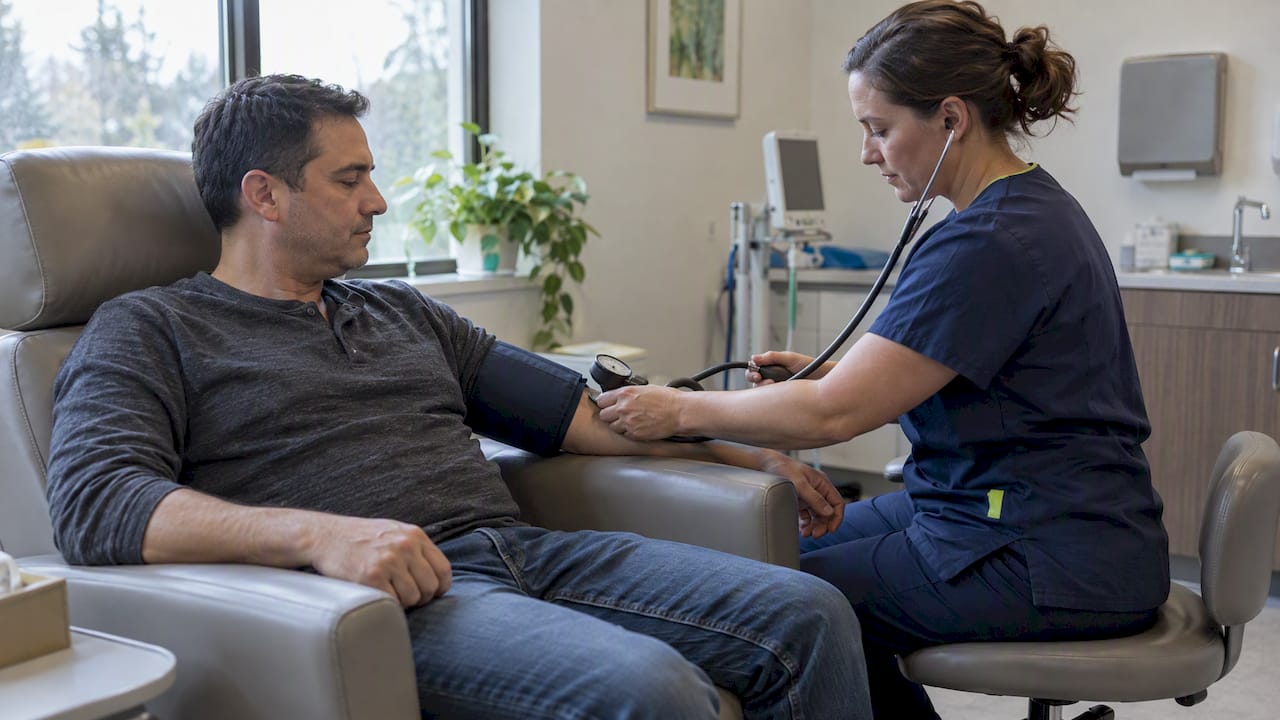
No, you cannot legitimately use Spravato at home. The SPRAVATO REMS requires every dose to be given in a certified healthcare setting, with direct supervision and at least two hours of monitoring afterward. If you are considering this treatment, the next step is simple: talk to a REMS-certified clinic or your prescriber about what a session actually involves.
TL;DR:
- Clinics and pharmacies need REMS certification, patients must enroll, and clinics document vital signs and observations after each session.
- Effects may begin within 40 minutes, while blood pressure can rise later, so clinicians check vital signs throughout at least two hours of observation.
- Patients need a ride home and must avoid driving, machinery, and major decisions for the rest of the day, even when they feel alert.
- Candidates generally have depression unresponsive to at least two oral antidepressants or major depression with acute suicidal ideation; uncontrolled hypertension and active psychosis require caution.
- Compounded ketamine taken at home lacks FDA approval for depression and REMS oversight, while TMS treats depression without medication and does not require REMS monitoring.
Table of Contents
- What the Spravato REMS requires clinics and patients to do
- Why Spravato can’t be taken at home: the safety mechanics behind the rule
- What a Spravato treatment session looks like
- Alternatives to in-clinic Spravato and how they differ
- How to know if you qualify and how to start Spravato safely
- Perspective from Nortex Psychiatry: how we approach Spravato administration
- Our honest take on the home-use question
- Getting started with Spravato therapy at Nortex Psychiatry
- FAQ
- Sources
What the Spravato REMS requires clinics and patients to do
We get this question a lot, and the short answer is that Spravato was never designed to leave a pharmacy shelf and go home with a patient. It is built around a Risk Evaluation and Mitigation Strategy, a program the FDA uses specifically for medications carrying serious safety risks that need restricted distribution and enforced monitoring.
In practice, that means a few things have to happen before a dose ever reaches a patient:
- A clinic or pharmacy must be certified under the REMS before it can order or dispense Spravato at all.
- Patients must be formally enrolled in the REMS program, usually during the first visit, before treatment begins.
- The clinic must submit a Patient Monitoring Form after each session, typically within seven calendar days, documenting vital signs and observation outcomes.
- Spravato is a Schedule III controlled substance, so storage and recordkeeping follow DEA and state rules on top of the REMS itself.
The FDA’s own REMS materials state that Spravato is available only through certified settings, with enrollment and documented monitoring built into every dispensing cycle. That structure is also why a pharmacy cannot ship a dose to your home. The drug is dispensed for a named patient, within a defined time window, for administration on-site, not for someone to carry out the door.
We have had patients ask whether a long-standing relationship with a prescriber might open the door to a take-home allowance. It does not. The REMS does not have a tier for established patients or a lower-risk exception. Every dose, every time, happens in a certified setting. Once you understand that the rule exists to prevent a specific set of risks, rather than to inconvenience you, it tends to make more sense. That is really the heart of the next section.
Why Spravato can’t be taken at home: the safety mechanics behind the rule
Esketamine, the active ingredient in Spravato, produces effects that unfold on a timeline, not all at once. Dissociation and sedation typically begin within the first 40 minutes after the dose and can shift in intensity as the session continues. Blood pressure changes often follow a similar pattern, sometimes peaking after the dissociative effects have already started to ease. That lag is exactly why a single check right after dosing is not enough.
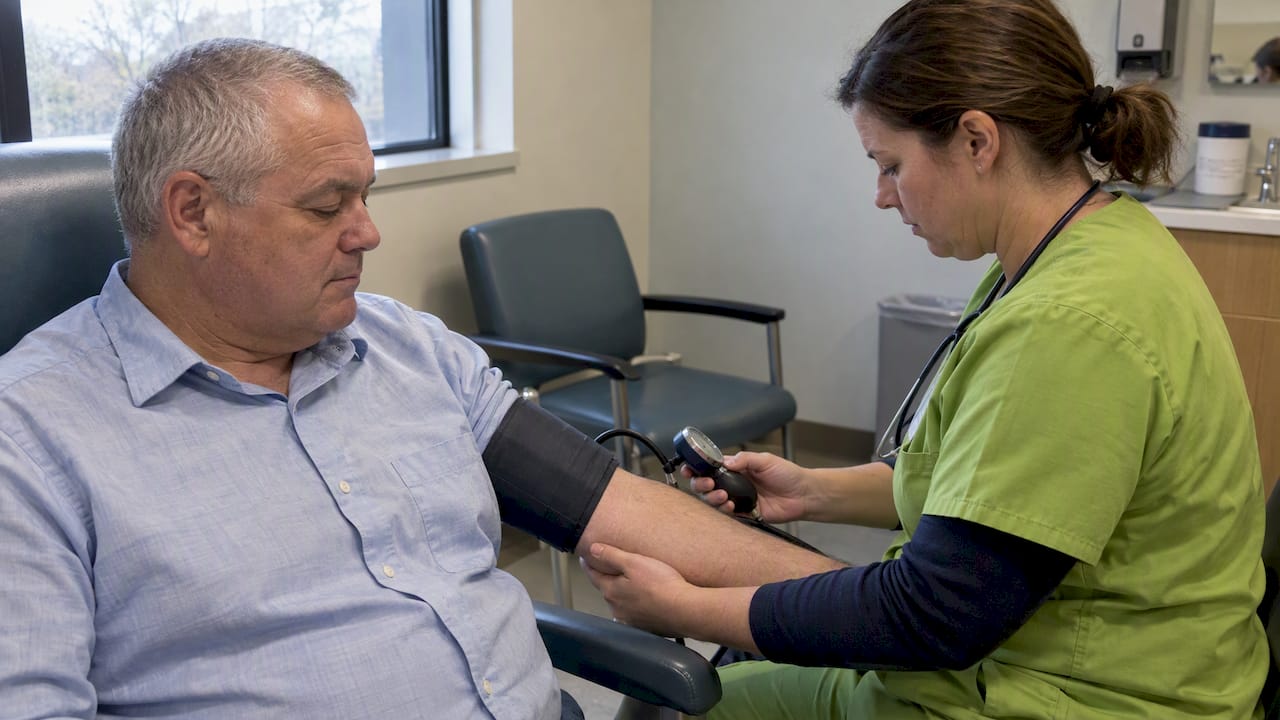
The FDA label calls for monitoring that runs at least two hours past each dose, with vital signs checked at intervals rather than once. That window exists because the people most at risk of a complication are not the ones who feel fine in the first ten minutes. They are the ones whose blood pressure climbs twenty minutes later, after the clinical team has already decided the early signs looked reassuring.
A few things happen during that window that would be hard to replicate at home:
- Staff check blood pressure at set intervals, not just once, since spikes can occur later in the session.
- A clinician is present to respond immediately if sedation, dissociation, or a blood pressure reading crosses a concerning threshold.
- Discharge only happens once vital signs and mental status have returned to a safe baseline, not on a fixed clock.
You will also need to arrange a ride home. Driving, operating machinery, and making major decisions are off the table for the rest of the day, since the lingering effects can outlast how clear-headed you might feel.
Pro Tip: Line up your driver before your appointment, not after. Trying to arrange a ride while you are still coming out of the dissociative effects is harder than it sounds.
What a Spravato treatment session looks like
Patients often tell us the unknowns are the hardest part, more than the medication itself. Knowing roughly what a visit involves tends to settle some of that.
- Check-in and history review. Your clinician reviews your medical history, current medications, and vital signs, and confirms REMS enrollment paperwork if this is an early visit.
- Pre-dose precautions. You are generally asked to avoid eating for a couple of hours beforehand and to skip anything that could interact with sedation, following your clinic’s specific instructions.
- Supervised self-administration. You self-administer the nasal spray under direct observation, following the device instructions for timing between sprays. Dosing typically starts at an induction level, often in the 56 mg to 84 mg range, with adjustments made over subsequent visits based on how you respond.
- Early observation. Staff begin checking blood pressure and watching for dissociation or sedation within the first stretch after dosing.
- Continued monitoring. Vital signs and mental status are reassessed through at least two hours, with standing protocols in place for managing nausea or elevated blood pressure if they come up.
- Discharge check. You are cleared to leave only once your blood pressure, alertness, and overall presentation meet the clinic’s criteria, and only with a ride arranged.
Every clinic structures the small details a little differently, but the shape of the visit, review, dose, observe, confirm you are stable, stays consistent because the REMS requires it. If you want a closer look at how we walk patients through the 2-hour monitoring window, that detail is worth reading before your first visit.
Alternatives to in-clinic Spravato and how they differ
If the idea of a supervised, clinic-based session does not fit what you are looking for, it helps to understand how the alternatives actually compare rather than assuming they are interchangeable.
- Compounded at-home ketamine is not FDA-approved for depression and carries no REMS oversight, which means dosing, purity, and monitoring standards vary by compounding pharmacy rather than following a single federal protocol. Reviews of ketamine research note that evidence quality and safety monitoring differ substantially across these at-home and in-clinic delivery models, and the FDA has issued warning letters to unauthorized ketamine sellers over safety and marketing concerns.
- Clinic-based ketamine infusions are administered intravenously under direct supervision, with a different dosing structure and monitoring approach than Spravato, though they share the same basic premise of needing trained staff on hand during the session.
- TMS (Transcranial Magnetic Stimulation) does not involve a REMS program at all, since it is a non-drug intervention. Its side effect profile looks different too, generally mild scalp discomfort or headache rather than dissociation or blood pressure spikes.
- Oral antidepressants remain the most familiar starting point for many patients and do not require in-office administration, though they typically take weeks to show an effect rather than the faster response some patients see with interventional options.
Cost and coverage vary by approach and by your insurance plan, so it is worth asking any clinic you are considering for a clear breakdown before you commit to a particular path. We walk through how esketamine dosing actually works in more detail if you want to compare the maintenance schedule against other options.
How to know if you qualify and how to start Spravato safely
Spravato is generally considered for adults with treatment-resistant depression, meaning depression that has not responded adequately to at least two different oral antidepressants, or for major depressive disorder with acute suicidal ideation or behavior. Your prescriber will walk through your history to see whether either of those categories fits your situation.
Certain conditions tend to rule it out or require extra caution, including uncontrolled hypertension, active psychosis, pregnancy or breastfeeding, and recent heavy use of CNS depressants. None of these are judgments on you. They reflect how esketamine interacts with those specific states.
If you think you might be a candidate, here is the general path:
- Start with a conversation with your current prescriber about whether your depression history fits the criteria.
- Ask for a referral to a REMS-certified clinic, since not every psychiatric practice is set up to dispense Spravato.
- Complete REMS enrollment paperwork at your first visit.
- Verify your insurance coverage ahead of time, since benefits and prior authorization requirements vary by plan.
- Arrange transportation for every session, not just the first one.
Our full breakdown of REMS requirements covers the enrollment paperwork in more depth if you want to see exactly what to expect.
Perspective from Nortex Psychiatry: how we approach Spravato administration
In our practice, REMS compliance is not a box checked once. Patients go through enrollment at intake, and sessions end with monitoring forms documenting vital signs and the observation period.
From running these sessions regularly, it is clear the two-hour window goes more smoothly when patients know what to expect ahead of time. A quiet room, something to listen to, and permission to simply rest rather than feeling like they need to be “done” early all make a difference. Blood pressure trends across a treatment course matter more than any single reading.
If you are weighing whether this fits your situation, our Spravato therapy page walks through eligibility and what a first visit involves.
Our honest take on the home-use question
Here is where we think the conversation usually goes sideways: people search for “Spravato at home” expecting a loophole, and when they find out there is not one, they sometimes assume the restriction is bureaucratic overcaution. We would push back on that read.
The two-hour monitoring window exists because the risks it catches, a delayed blood pressure spike, a dissociative episode that does not resolve as expected, are exactly the kind that are easy to miss without trained eyes on you. We have watched these checks matter in real time, which is part of why we are not inclined to treat the rule as a formality.
What we would prioritize differently than most explainers on this topic: spend less energy looking for workarounds and more energy picking a clinic whose observation process actually feels thorough rather than rushed. The rule is not going anywhere. How well a given clinic implements it is the part actually worth your attention.
— Felix
Getting started with Spravato therapy at Nortex Psychiatry
If you are ready to explore Spravato, it is offered as part of interventional psychiatry services, following REMS protocols at every step, from enrollment through post-dose monitoring and documentation. Insurance verification support is available before the first session, since prior authorization requirements can take time to sort out.
At a first consult, treatment history is reviewed, the fit of Spravato for your situation is discussed, and what a typical session looks like is explained so there are no surprises on day one.
- REMS enrollment paperwork is handled during intake, not as a separate appointment.
- Insurance is coordinated to clarify coverage before you start.
- Ketamine infusion therapy and TMS are also offered, in case either turns out to be a better fit after your evaluation.
If you want to see eligibility details and book a consult, visit our Spravato therapy page to get started.
This article is general information, not a substitute for advice from a qualified doctor. Consult a qualified healthcare professional about your own circumstances before acting on anything here.
FAQ
Can you do Spravato treatment at home?
No. The FDA label requires administration in a certified healthcare setting with direct supervision and at least two hours of monitoring afterward. Spravato cannot be dispensed for home use or stored at a private residence under the REMS program.
What is an alternative to Spravato?
Options include clinic-administered ketamine infusions, TMS for depression, and standard oral antidepressants, each with a different regulatory status and monitoring approach. TMS does not involve a REMS program since it is not a medication, while compounded at-home ketamine lacks the standardized evidence base and oversight that comes with an FDA-approved, REMS-regulated drug like Spravato.
What disqualifies you from Spravato?
Common exclusions include uncontrolled hypertension, active psychosis, pregnancy or breastfeeding, and recent heavy use of CNS depressants, though a full evaluation by a prescriber determines eligibility case by case. Your psychiatric history also needs to show treatment-resistant depression or major depressive disorder with acute suicidal ideation to meet the typical criteria.
How easy is it to get Spravato?
Access depends on finding a REMS-certified clinic, completing an evaluation, and enrolling in the REMS program, which most patients complete within one or two visits. Insurance coverage and prior authorization timelines vary by plan, so verifying benefits early tends to make the process smoother.
Is it safe to drive after a Spravato session?
No. Patients are instructed not to drive the same day, since dissociative and sedative effects can linger even after you feel mostly back to normal. Arranging a driver ahead of your appointment is part of standard pre-visit planning.
Sources
- SPRAVATO REMS materials — FDA / Janssen REMS PDF
- Risk Evaluation and Mitigation Strategies (REMS) — FDA