


Yes, antidepressants commonly change sleep: some medications make falling asleep harder, others make you sleepy within the hour. In our work, we see both patterns often, and most early disruption settles as mood lifts over several weeks. The first moves worth trying are behavioral, not pharmacological: start with sleep-focused behavioral strategies and talk to your prescriber about timing, dose, or a brief, supervised medication adjustment rather than adjusting things on your own.
TL;DR:
- SSRIs and SNRIs can delay sleep; trials reported somnolence in 54% of mirtazapine patients and 46% of trazodone patients, versus 18% to 19% on placebo.
- Activating medicines often suit morning dosing, while sedating ones are usually taken at night; persistent symptoms after three to four weeks merit prescriber review.
- For chronic insomnia, Cognitive Behavioral Therapy for Insomnia is the recommended first line treatment and often works better over time than medication alone.
- If a short term sleep aid is appropriate, guidelines favor low dose doxepin or dual orexin receptor antagonists over trazodone, diphenhydramine, or antipsychotics.
- Contact a clinician promptly for self harm thoughts, drowsiness that makes driving unsafe, or agitation, rapid heartbeat, sweating, tremor, or confusion while taking serotonergic medicines.
Table of Contents
- Which antidepressants cause insomnia versus sleepiness?
- How antidepressants change sleep physiology over time
- What to do if sleep gets worse on antidepressants
- Safety, interactions, and when to seek urgent help
- How we manage sleep complaints in patients on antidepressants
- Our take on the sleep and antidepressants conversation
- Getting help with sleep and antidepressants at Nortex Psychiatry
- FAQ
- Sources
Which antidepressants cause insomnia versus sleepiness?
We tend to think of antidepressants in two broad camps when it comes to sleep, and knowing which camp your medication falls into helps you set realistic expectations.
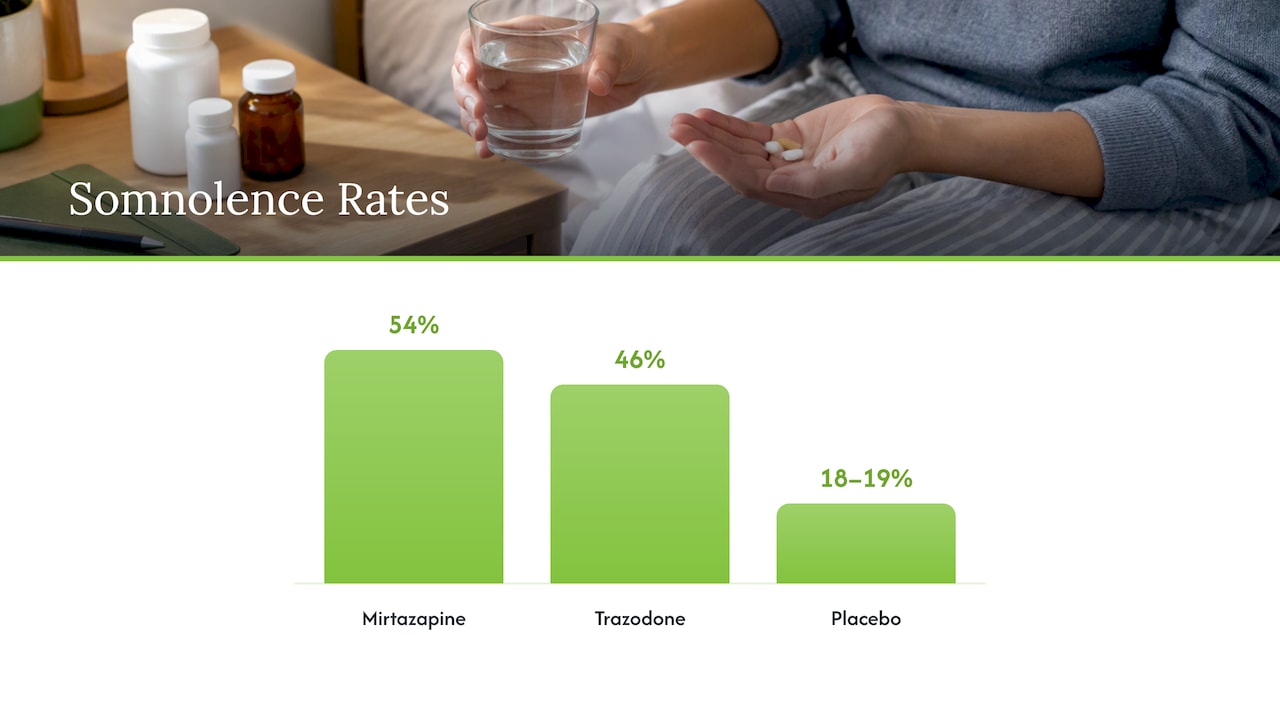
SSRIs and SNRIs are generally more activating. They can delay sleep onset, cause more nighttime awakenings, and leave some patients feeling wired at bedtime, especially in the first few weeks. On the other end, mirtazapine, low-dose doxepin, and trazodone are sedating. A clinical review of antidepressant effects on sleep found somnolence in roughly 54% of patients on mirtazapine and 46% on trazodone, compared with somnolence rates near 18 to 19% on placebo in those same trials. That is a meaningful gap, and it explains why these drugs are sometimes chosen specifically for their sleep-promoting effect, though they can also leave patients groggy the next morning.
Dose matters too. A low dose of a sedating antidepressant often helps sleep without much daytime carryover, while a higher dose can tip into next-day drowsiness. We watch for a few patterns in clinic:
- Trouble falling asleep, racing thoughts at bedtime, or early morning waking usually points to activation.
- Excess daytime drowsiness, trouble waking up, or needing more sleep than usual points to oversedation.
- Either pattern that persists past three to four weeks is worth discussing at your next visit rather than waiting it out indefinitely.
If you are not sure which camp your medication falls into, ask. It changes how we think about timing and what, if anything, we adjust.
How antidepressants change sleep physiology over time
The sleep changes patients notice are not just in their heads. They reflect real shifts in sleep architecture.
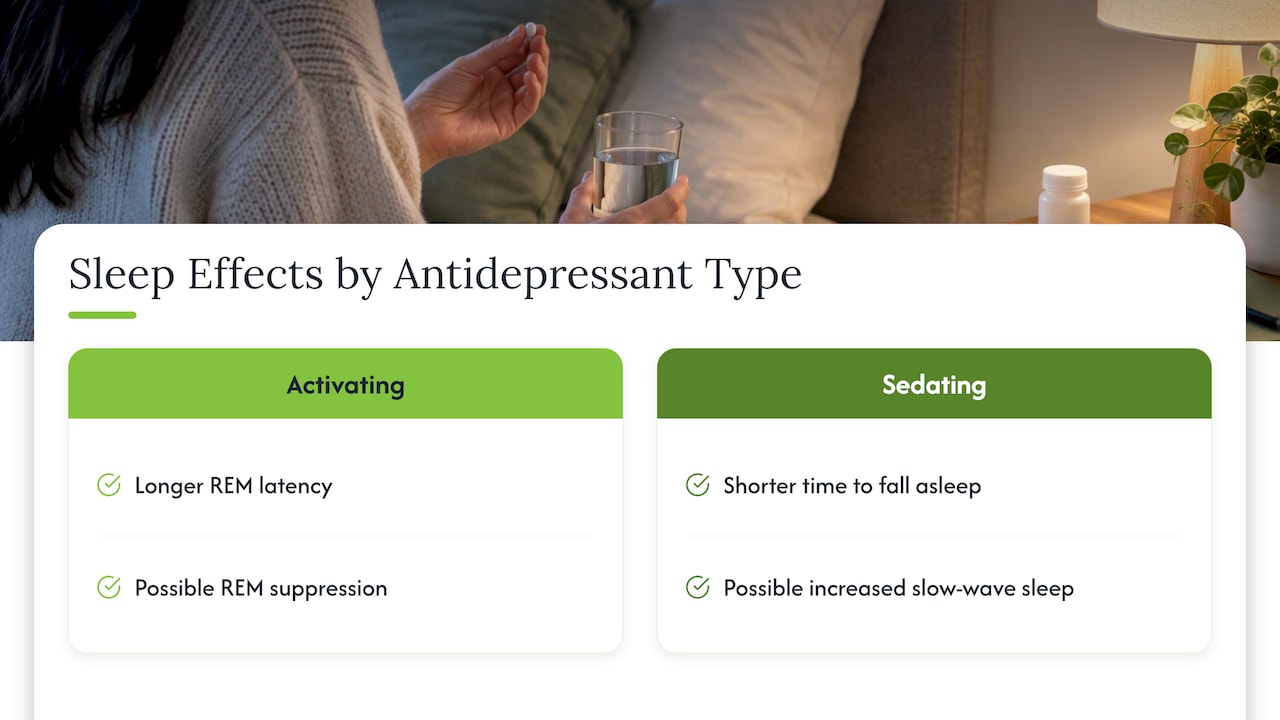
Activating antidepressants, including most SSRIs and SNRIs, tend to increase REM latency, meaning it takes longer to enter REM sleep, and they can suppress REM sleep overall. Sedating antidepressants work differently: they tend to shorten the time it takes to fall asleep and can increase slow-wave sleep, the deep, restorative stage of the sleep cycle, according to the same review of antidepressant sleep effects.
The timeline matters as much as the mechanism. Activation or sedation is usually most noticeable in the first one to four weeks of treatment. For many patients, subjective sleep quality actually improves over subsequent weeks as depressive symptoms ease, since poor sleep is often a symptom of depression itself rather than only a side effect of treatment.
The same review notes that antidepressants can occasionally provoke or worsen specific sleep conditions, including restless legs syndrome, sleep bruxism (teeth grinding), and REM sleep behavior disorder, a condition where the usual muscle paralysis of REM sleep is incomplete. Weight gain associated with some antidepressants can also raise the risk of obstructive sleep apnea over time, which is one more reason ongoing monitoring matters, not just a one-time check at the start of treatment.
What to do if sleep gets worse on antidepressants
We rarely jump to changing a medication the moment sleep gets rocky. Here is the order we typically work through with patients, which lines up with current VA/DoD guidance on chronic insomnia:
- Try consistent sleep hygiene first: a regular wake time, limited screens before bed, and no caffeine after early afternoon. It helps, but it is rarely enough on its own for sleep that has become a real problem.
- Ask about Cognitive Behavioral Therapy for Insomnia, or CBT‑I. It is the recommended first-line treatment for chronic insomnia, delivered by a clinician or through structured digital programs, and it often works better than medication alone over time.
- If a short-term medication adjunct makes sense, guidelines favor low-dose doxepin or newer agents like dual orexin receptor antagonists over routine use of trazodone, diphenhydramine, or antipsychotics for sleep, per the AASM guideline on combining insomnia treatments.
- Talk with your prescriber about timing: activating antidepressants often work better taken in the morning, while sedating ones are usually dosed at night. Our guide on medication management for chronic conditions walks through this in more detail.
Pro Tip: Keep a simple sleep log for two weeks before your next appointment. It gives your prescriber real data instead of a general impression.
Safety, interactions, and when to seek urgent help
Most sleep changes on antidepressants are uncomfortable but not dangerous. A few signs mean you should reach out sooner rather than waiting for your next scheduled visit:
- New or worsening thoughts of self-harm, which FDA prescribing information specifically flags as a risk to monitor, particularly in patients under 25.
- Severe daytime drowsiness that affects driving or operating machinery.
- Symptoms of serotonin syndrome: agitation, rapid heart rate, sweating, tremor, or confusion, especially if you are on more than one serotonergic medication.
Interaction risk is a real part of the conversation, particularly when a sedating sleep aid is layered on top of an existing antidepressant, or when a patient has used or recently stopped an MAOI. This is why we review your full medication list at every visit, not just the one drug you are asking about.
If sleep problems persist despite behavioral treatment and medication adjustment, it is worth asking whether something else is going on, such as obstructive sleep apnea, restless legs syndrome, or REM sleep behavior disorder. A referral for sleep testing is sometimes the next right step rather than another medication trial.
How we manage sleep complaints in patients on antidepressants
In our practice, a sleep complaint on antidepressants usually starts with a careful history: when the sleep change began, what it looks like, and how it relates to mood. From there, we lean on behavioral strategies and CBT‑I referral before reaching for a prescription change, and we review timing and dose before considering a switch.
When a short-term adjunct is reasonable, we choose it deliberately and keep it time-limited, with a clear follow-up plan. Every adjustment includes a safety check, including a review of other medications and a conversation about mood and suicidality. Shared decision-making guides the plan, because you know your daily life better than any chart does.
Our take on the sleep and antidepressants conversation
Here is where we land after years of having this conversation with patients: too much sleep advice treats medication side effects as the whole story, when depression itself is often driving the sleep problem in the first place. Fix the mood, and sleep frequently follows, as a population-based study on SSRIs and sleep quality suggests, with subjective sleep improving over time in many patients who stay on treatment.
The conventional advice to just “wait it out” or reach for an over-the-counter sleep aid misses the better option sitting in plain sight: CBT‑I. It is underused, not because it does not work, but because patients rarely hear about it until they have already tried everything else. We would rather you hear about it in week two than month six.
If you take one thing from this, let it be patience paired with action: give an activating antidepressant a few weeks before judging it, but do not sit quietly through months of poor sleep. Bring it up. That is what follow-up visits are for.
— Felix
Getting help with sleep and antidepressants at Nortex Psychiatry
If sleep problems are making it hard to stick with treatment, you may need help sorting out what is medication, what is depression, and what needs a different approach. Visits often include medication management, evaluation of side effects, and referral pathways for CBT‑I when behavioral treatment is the better first step.
A first visit usually starts with a detailed history of your sleep and mood, followed by a plan that might include timing changes, a brief adjunct, or, for those who have not responded well to standard antidepressants, a conversation about options like Spravato therapy or ketamine therapy. If you already have a prescriber, start the conversation there. If you are looking for a new one in North Dallas, including Allen, Frisco, McKinney, or Plano, you can schedule an evaluation with us to look at your full picture, not just the sleep piece.
This article is general information, not a substitute for advice from a qualified doctor. Consult a qualified healthcare professional about your own circumstances before acting on anything here.
FAQ
Can Lexapro cause permanent insomnia?
Lexapro (escitalopram) can cause insomnia, particularly in the first few weeks, but this is typically transient rather than permanent. FDA prescribing information lists insomnia as a common adverse reaction, and most patients see improvement as treatment continues or after a timing or dose adjustment.
What can I take to help me sleep while on antidepressants?
Behavioral treatment, specifically Cognitive Behavioral Therapy for Insomnia, is the guideline-recommended first step rather than an over-the-counter sleep aid. When a short-term medication adjunct is appropriate, low-dose doxepin is a guideline-preferred option, and any addition should go through your prescriber rather than self-treatment.
How do SSRIs affect sleep?
SSRIs often increase REM latency and can suppress REM sleep, which may show up as trouble falling asleep or more nighttime awakenings early in treatment, according to a clinical review of antidepressant sleep effects. Many patients report improved subjective sleep over subsequent weeks as mood symptoms ease.
Can Prozac affect sleep?
Yes, Prozac (fluoxetine) commonly affects sleep, with insomnia and, less often, somnolence listed among its common side effects in FDA prescribing information. Taking it in the morning is a common strategy if it feels activating at night, though any timing change should be discussed with your prescriber.
How long does antidepressant-related sleep disruption usually last?
Most activation or sedation shows up in the first one to four weeks of treatment and tends to ease as the medication takes full effect. Persistent sleep problems beyond that window are worth raising at your next appointment rather than waiting indefinitely.
Sources
- Effects of Antidepressants on Sleep – PMC (Wichniak et al.)
- VA/DoD Clinical Practice Guideline for Management of Chronic Insomnia (2025)
- PROZAC (fluoxetine) prescribing information — DailyMed