

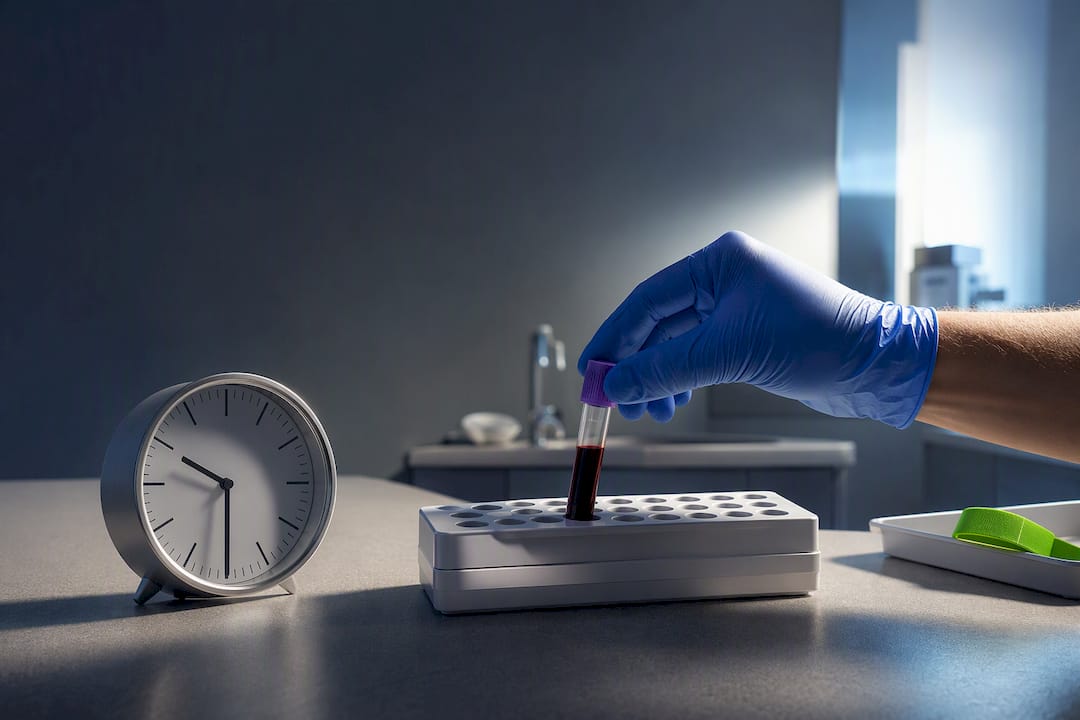
Draw a trough lithium level about 12 hours after the last dose: check during the first 5 to 7 days after initiation and again 5 to 7 days after any dose change, then tailor frequency to renal trend, age, and clinical stability. Immediate rechecks are warranted for renal decline, new interacting medications, dehydration, or neurologic symptoms. We lean on the FDA prescribing information and hospital-level toxicity guidance to anchor this in practice, not habit.
TL;DR:
- Lithium levels should be checked 5 to 7 days after initiation and following any dose change, with rechecks more frequent during acute stabilization.
- Baseline labs must include kidney, electrolyte, thyroid, pregnancy, CBC, calcium, and ECG tests, with follow-up testing based on stability and renal trends.
- Proper trough sampling requires drawing blood approximately 12 hours after the last dose, with exact timing clearly documented to ensure accurate interpretation.
- Levels at or above 1.5 mEq/L pose increased toxicity risk, especially in vulnerable populations like the elderly or dehydrated patients, and should prompt clinical assessment.
- Interacting medications such as NSAIDs, diuretics, ACE inhibitors, and certain antibiotics can elevate lithium levels; a repeat trough test is recommended 5 to 7 days after starting or adjusting these drugs.
Table of Contents
- Concise monitoring schedule you can drop into an order set
- Baseline evaluation and routine labs to order
- Getting the trough draw right so the number means something
- Interpreting lithium levels and recognizing toxicity
- What to do when levels are high or toxicity is suspected
- Interactions and prevention: what to tell patients before something goes wrong
- A sample monitoring plan you can adapt to your workflow
- How we think about lithium monitoring in practice
- Finding lithium care that fits your situation
- Sources
- FAQ
Concise monitoring schedule you can drop into an order set
Lithium monitoring works best as a rhythm, not a single event. In our own scheduling, we think of it in three phases: initiation, titration, and maintenance, each with a different cadence.
Baseline labs come first, before the first pill. From there, the first trough should land 5 to 7 days after starting, and again 5 to 7 days after any dose adjustment. This window matters because lithium takes roughly five half-lives to reach steady state, so checking earlier gives you a number that does not reflect where the level will actually settle, according to the UW Psychiatry monitoring guidance.
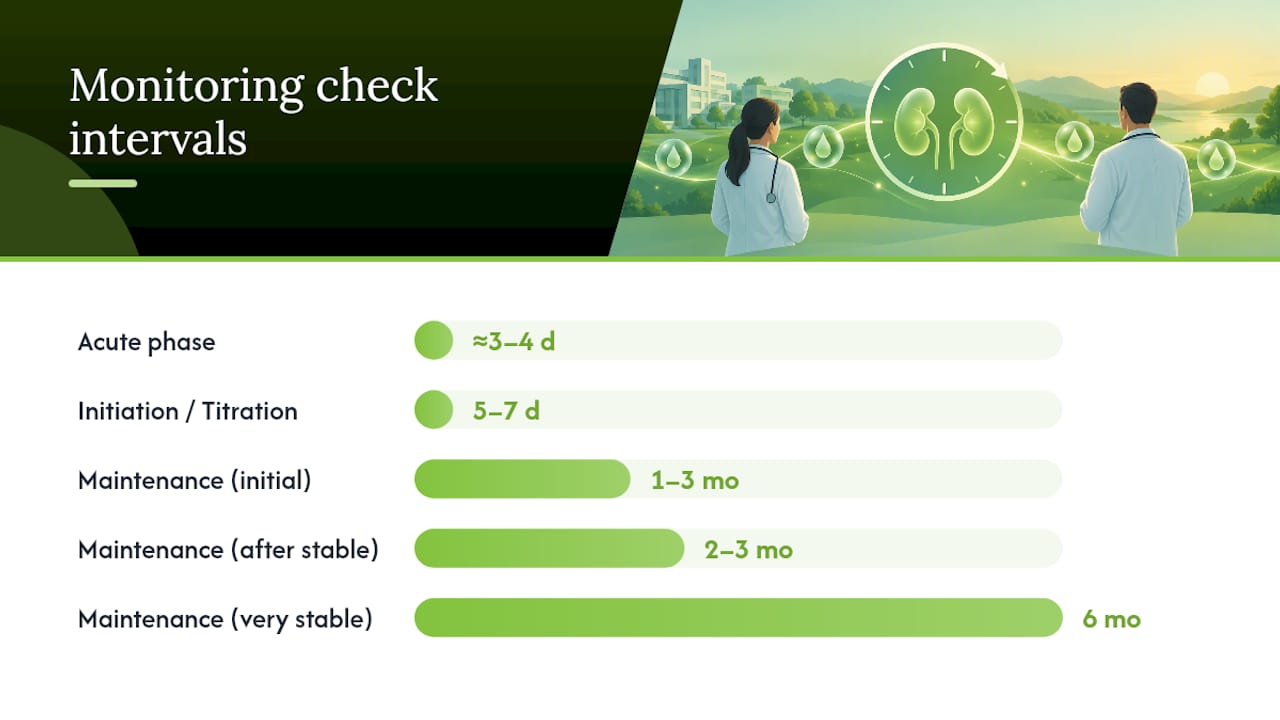
During the acute phase, the FDA label recommends checking levels twice weekly until the patient is stable. Once stable, most patients move to checks every one to three months initially, then every two to three months, and some very stable patients with unchanged renal function can extend the interval to six months.
A few situations should trigger an unscheduled check regardless of where you are in the cadence:
- Starting or adjusting an ACE inhibitor, ARB, diuretic, or NSAID.
- An acute illness with vomiting, diarrhea, or reduced fluid intake.
- Planned surgery or a new pregnancy.
- Any new confusion, tremor, or coordination change.
Toxicity is closely tied to serum concentration, and the FDA label notes that levels at or above 1.5 mEq/L carry meaningfully increased risk, even though maintenance targets usually sit far below that. A number alone never tells the whole story: it needs a clinical exam attached to it.
Baseline evaluation and routine labs to order
Before the first prescription, we want a clear picture of the organs that will be doing the work of clearing lithium and the systems it can quietly affect. The baseline panel is not busywork. Each test earns its place.
- Renal function (serum creatinine, BUN, eGFR): lithium is cleared almost entirely by the kidneys, so this sets your safety margin.
- Electrolytes (sodium, potassium): sodium shifts change how much lithium the kidney reabsorbs, which changes serum levels without any dose change at all.
- Thyroid function (TSH, free T4): lithium can induce hypothyroidism over time, and a baseline value protects you from misattributing a thyroid problem to something else later.
- Pregnancy test: lithium carries known fetal risk considerations, so pregnancy status needs to be established before, not after, the first dose.
- CBC and calcium: lithium can affect white cell counts and parathyroid function, so a baseline reading gives you something to compare against.
- ECG: recommended for patients with cardiac risk factors or those over 40, since lithium can affect cardiac conduction.
Follow-up cadence differs by panel. Renal function and electrolytes are typically rechecked one to four weeks after starting, then every three to twelve months depending on stability, a pattern the Toolbox review on lithium therapeutic drug monitoring lays out in practical detail. Thyroid function is usually checked around three months in, then every three to twelve months.
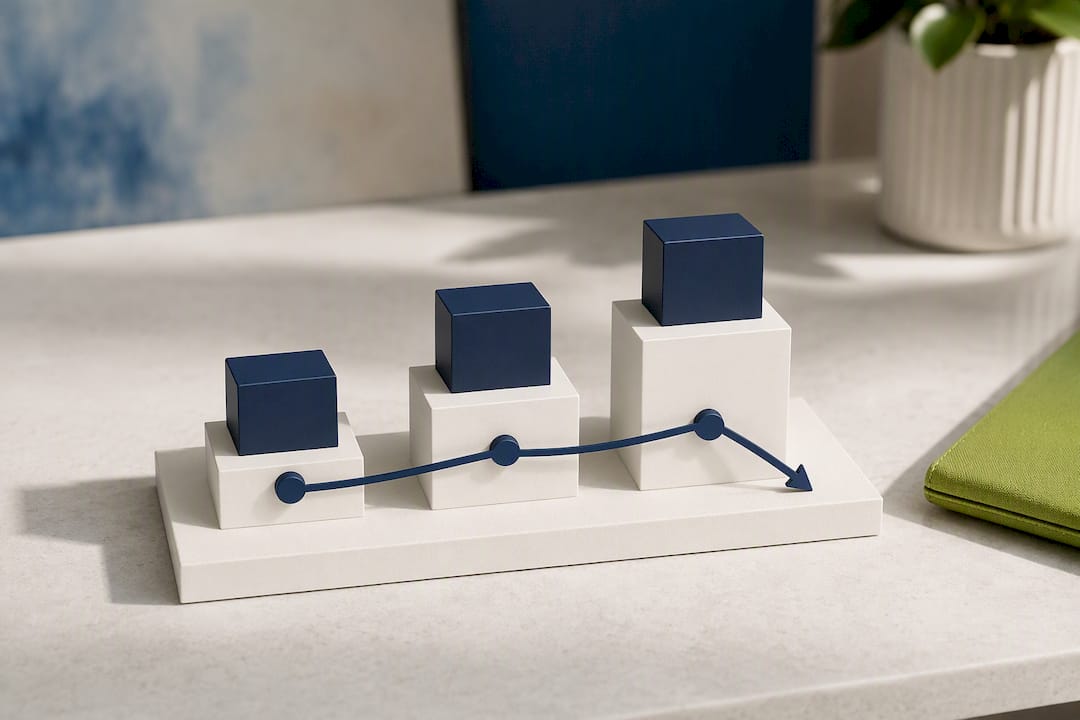
What matters most is not any single value but the direction it is moving. An eGFR that has drifted down over three visits deserves attention even if each individual reading still falls in a technically acceptable range. We have found that clinicians who chart eGFR as a trend line, rather than a series of isolated numbers, catch renal decline earlier than those who only glance at the latest result.
Getting the trough draw right so the number means something
A lithium level is only as useful as the timing behind it. The goal is a trough drawn about 12 hours after the last dose, with an acceptable window of roughly 8 to 14 hours. Draw it too early and the level reads falsely high; draw it too late and it reads falsely low, and either error can lead you to change a dose that did not actually need changing.
When you write the order, specify it plainly: “lithium trough, 12-hour post-dose,” and note in the chart whether the patient takes an immediate-release or extended-release formulation. That single line prevents a lab from processing a random level as though it were a trough, and it prevents the next clinician from misreading the chart.
Specimen handling has its own failure points. Common mistakes include drawing into the wrong tube, drawing at a random time and labeling it as a trough anyway, or losing track of the exact time of the last dose. If the timing was missed, do not adjust the dose based on that number: redraw at the correct interval instead.
Extended-release preparations complicate this further, since they can produce a delayed peak, and after an acute ingestion, levels may still be rising hours after presentation.
Pro Tip: Record the exact clock time of the last dose directly in the order comment, not just in a progress note, so the lab result and the dosing history stay attached to each other.
Interpreting lithium levels and recognizing toxicity
Maintenance targets typically fall between 0.6 and 1.2 mEq/L, with the FDA label noting that acute mania may call for the higher end of that range or slightly above it under close supervision. Older adults generally do better at the lower end, since age-related declines in renal clearance narrow the margin between a therapeutic and a toxic level.
Toxicity tends to cluster by severity, though the boundaries are guidance rather than a guarantee for any individual patient:
- Mild toxicity: nausea, fine tremor, mild gastrointestinal upset.
- Moderate toxicity: confusion, ataxia, coarse tremor, slurred speech.
- Severe toxicity: seizure, significant altered consciousness, coma.
These patterns roughly track rising serum concentrations, but the more important clinical point is that toxicity can appear within a nominally therapeutic range in a sensitive patient, particularly one who is dehydrated, elderly, or experiencing acute renal decline. A serum level in the 1.5 to 2.5 mEq/L range often marks the mild toxicity zone, according to hospital-level toxicity guidance from UCSF, and levels climb in clinical severity from there, though the number is a signal to correlate with the exam, not a verdict on its own.
This is why we treat a single “slightly elevated” reading as information, not as an automatic trigger for a dose cut. A level that is 0.1 above target in a patient who feels well and has stable renal function may simply mean the sample was drawn a little early. A level that is only mildly elevated in a patient who is confused and unsteady on their feet is a different situation entirely, and it deserves a repeat draw and a same-day conversation, not a wait-and-see approach.
What to do when levels are high or toxicity is suspected
When a lithium level comes back elevated, especially alongside symptoms, the sequence of actions matters more than any single step in isolation.
- Hold the dose and reassess the patient’s airway, breathing, and circulation if there is any altered mental status.
- Start intravenous isotonic fluids if the patient appears volume depleted, since dehydration is one of the most common accelerants of a rising level.
- Place the patient on cardiac monitoring if the presentation or history suggests conduction changes.
- Consult nephrology for severe neurologic signs, very high serum concentrations, or evidence of renal failure. UCSF hospital guidance recommends serial serum lithium measurements every 6 hours after an acute ingestion, continuing until the trend turns clearly downward.
- Consider hemodialysis for severe toxicity, markedly elevated levels, or renal failure that limits the kidney’s ability to clear the drug on its own.
- Recheck electrolytes and urine output alongside repeat lithium levels throughout the recovery period, not just the lithium value in isolation.
- Review the medication list for anything that might have precipitated the rise, such as a new ACE inhibitor or a course of NSAIDs.
- Before restarting lithium, confirm the precipitating factor has resolved and that renal function has returned to a safe baseline.
Discharge, when this happens in an inpatient setting, generally waits for both clinical recovery and a lithium level that has come down to a safe range, not just one or the other.
Interactions and prevention: what to tell patients before something goes wrong
Most toxicity events we see did not start with a dosing error. They started with a new medication, an illness, or a change in fluid intake that nobody connected to lithium until the level had already climbed. A short counseling conversation at the start of treatment prevents a lot of these calls later.
- NSAIDs reduce renal clearance of lithium and are one of the most common preventable causes of a rising level.
- ACE inhibitors and ARBs can raise lithium concentrations by altering renal handling of sodium and lithium together.
- Thiazide diuretics increase lithium reabsorption in the kidney, often producing a clinically meaningful rise.
- Some antibiotics, particularly certain classes affecting renal function, can shift levels unpredictably.
- SGLT2 inhibitors may lower lithium levels, the opposite direction from most of the interactions above.
We tell patients directly: skip over-the-counter NSAIDs where you can, keep your salt and fluid intake steady rather than making sudden changes, and call us before starting any new blood pressure medication. If vomiting or diarrhea lasts more than a day, that is also worth a call, not a wait-and-see.
For any interacting medication, the Toolbox guidance recommends a repeat trough about 5 to 7 days after the change, the same window used after any dose adjustment.
Pro Tip: Flag every interacting medication in a dedicated medication-alert field in the chart, not just in a free-text note, so the next prescriber sees it before writing a new order.
A sample monitoring plan you can adapt to your workflow
A written checklist beats memory, especially across a busy caseload. Here is a skeleton worth adapting to your own order sets:
- Initiation: baseline labs complete, first trough at day 5 to 7, twice-weekly troughs while titrating, follow-up visit scheduled at one to three months.
- Maintenance: renal and electrolyte panel every three to twelve months based on stability, thyroid panel on a similar cadence, red-flag triggers documented in the chart for quick reference.
- Inpatient variant: serial lithium levels every 6 to 24 hours after a suspected acute ingestion, versus outpatient PRN checks 5 to 7 days after an interacting medication starts.
- Documentation: consent conversation and pregnancy counseling noted at initiation and revisited whenever a patient’s reproductive plans change.
How we think about lithium monitoring in practice
In our own experience, rigid calendar-based monitoring misses things that a renal trend catches early. We would rather see a patient’s eGFR slope over three visits than treat a single normal creatinine as reassurance on its own. That habit has changed how often we adjust our own check-in schedule, sometimes earlier than the calendar would suggest, sometimes a little later when everything looks steady.
We check in every 2 to 4 weeks during initiation, often by telehealth, specifically to review labs together with the patient rather than just relay a number after the fact. Shared decision-making matters here: a patient who understands why the level matters is more likely to call before a small problem becomes a large one, and that single habit prevents more toxicity events than any lab cadence on its own. We would encourage any clinician reading this to take the sample plan above and bend it to fit their own patient population rather than follow it rigidly.
— Felix
Finding lithium care that fits your situation
If reading through this protocol has you wondering whether lithium is still the right fit for your mood disorder, or whether the monitoring burden feels heavier than the benefit some days, you are not the only one asking that question. We work with adults and families in a North Texas area and build medication plans around what actually works for each patient’s life, not just what looks tidy on paper.
For patients whose mood symptoms have not responded well to lithium or other standard medications, we also offer Transcranial Magnetic Stimulation (TMS) therapy, ketamine therapy, and Spravato therapy for treatment-resistant depression, each available alongside careful lab monitoring and psychiatric follow-up, whether you see us in person or through telehealth. If you or a loved one is managing a mood disorder and want a second opinion on the current treatment plan, schedule a consultation with Nortex Psychiatry to talk through the options together.
Sources
For dosing and boxed warnings, start with the FDA prescribing information for lithium, which covers therapeutic ranges and required monitoring cadence directly from the manufacturer’s approved labeling.
For acute toxicity management, the UCSF hospital handbook on lithium toxicity offers a practical inpatient protocol, including serial draw timing and dialysis criteria. For a broader look at monitoring practice patterns, the PMC review of lithium monitoring is worth a read. For a ready-made outpatient template, the UW Psychiatry monitoring PDF and the Toolbox article on therapeutic drug monitoring both translate the above into checklists suitable for an EHR order set.
This article is general information, not a substitute for advice from a qualified doctor. Consult a qualified healthcare professional about your own circumstances before acting on anything here.
- Lithium prescribing information (FDA label)
- UCSF Hospital Handbook — Lithium toxicity
- Lithium monitoring (UW Psychiatry PDF)
- Toolbox: Lithium therapeutic drug monitoring – Efficacy and safety parameters
FAQ
What should be monitored when taking lithium?
Clinicians should track serum lithium levels, renal function (creatinine, BUN, eGFR), electrolytes, and thyroid function on an ongoing basis. Baseline pregnancy testing, CBC, calcium, and an ECG when cardiac risk factors are present round out the initial workup, per the FDA label.
When should lithium levels be monitored?
Check the first level 5 to 7 days after starting lithium and again 5 to 7 days after any dose change, then twice weekly during the acute phase until stable. Maintenance checks typically follow every one to three months initially, then every two to three months as guided by the Toolbox drug monitoring review.
What labs should I order for lithium monitoring?
Order a lithium trough drawn about 12 hours after the last dose, alongside renal function, electrolytes, and thyroid function tests. Baseline pregnancy testing and periodic CBC and calcium are also part of a complete panel, as outlined in the UW Psychiatry monitoring guidance.
Why does lithium have to be monitored?
Lithium has a narrow margin between an effective dose and a toxic one, and toxicity is closely tied to serum concentration according to the FDA prescribing information. Regular monitoring catches renal decline, drug interactions, and dehydration-driven level changes before they turn into a toxicity event.
How often should stable patients on lithium get bloodwork?
Once a patient has been stable for a while with unchanged renal function, checks can often stretch to every two to three months, and sometimes as far as six months. Any new interacting medication, illness, or dehydration should prompt an earlier recheck regardless of where the patient sits in that cycle.