


ADHD medication titration is the gradual, stepwise process of finding the lowest dose that controls symptoms with side effects you can live with. It is not a single decision but a series of small adjustments, usually made weekly to biweekly for stimulants and over several weeks to months for nonstimulants. The goal is never the highest dose tolerated. It’s the dose that lets a child, teen, or adult function well at school, at work, and at home, without side effects that outweigh the benefit.
TL;DR:
- Most stimulant doses can be adjusted within 4 to 6 weeks, with rapid changes possible in urgent cases, but nonstimulants take several weeks to months for full effect.
- Titration relies on tracking functional improvement, side effects, and stable symptom plateau rather than weight-based calculations, as individual response varies widely.
- Regular use of rating scales, home observations, and vital sign checks guide dose adjustments, with parent and teacher inputs providing essential data.
- Common side effects include appetite suppression and sleep issues, which usually improve over time, while severe symptoms like chest pain require immediate medical attention.
- Titration protocols differ for age groups and comorbidities, with remote management suitable for most monitoring tasks but requiring in-person visits for physical measurements and safety assessments.
Table of Contents
- What ADHD Medication Titration Actually Means
- How Long Does ADHD Medication Titration Take?
- How We Track Whether the Dose Is Working
- Common Side Effects and When to Adjust the Dose
- Titration Looks Different Across Ages and Diagnoses
- Can ADHD Medication Titration Happen by Telehealth?
- What to Track Before Every Titration Visit
- How Nortex Psychiatry Approaches Titration in Practice
- Ready to Start or Adjust Your ADHD Treatment Plan?
- Sources
- FAQ
What ADHD Medication Titration Actually Means
Titration sounds clinical, but in our work it’s really just careful trial and observation. You start at a low dose, watch what happens over several days to a week, and adjust based on what you and your clinician actually see, not on a formula.
We don’t calculate ADHD doses by body weight the way you might expect for, say, a pediatric antibiotic. Response to stimulants and nonstimulants varies enormously from one person to the next, so a mg/kg approach tends to miss the mark more often than it hits it. Two ten-year-olds at the same weight can need very different doses of the same medication. That’s just how this class of medication behaves.
What we’re actually watching for as we titrate:
- Functional improvement: better focus in class, fewer missed deadlines at work, calmer transitions at home
- A plateau where increasing the dose further stops adding benefit
- Side effects that cross the line from mildly annoying to genuinely disruptive
Once we see a plateau, or side effects start to outweigh the gains, we’ve usually found the right dose, or at least the right one for now. Doses often need revisiting as kids grow, as life circumstances shift, or as tolerance builds.
We also try to keep you in the driver’s seat here. If a slightly lower dose that leaves a little residual fidgetiness feels better to your family than a higher dose that flattens your child’s personality, that preference matters. Shared decision-making isn’t a courtesy in ADHD care. It’s part of how we define “working.”
Pro Tip: Keep a simple daily note on your phone, just three or four words per day, about mood, focus, and sleep. When you sit down for a titration visit two weeks later, you’ll have real data instead of a foggy memory of “it was fine, I think.”
How Long Does ADHD Medication Titration Take?
The honest answer depends heavily on which class of medication you’re using, and this is where a lot of families get frustrated with timelines they saw online that don’t match their own experience.
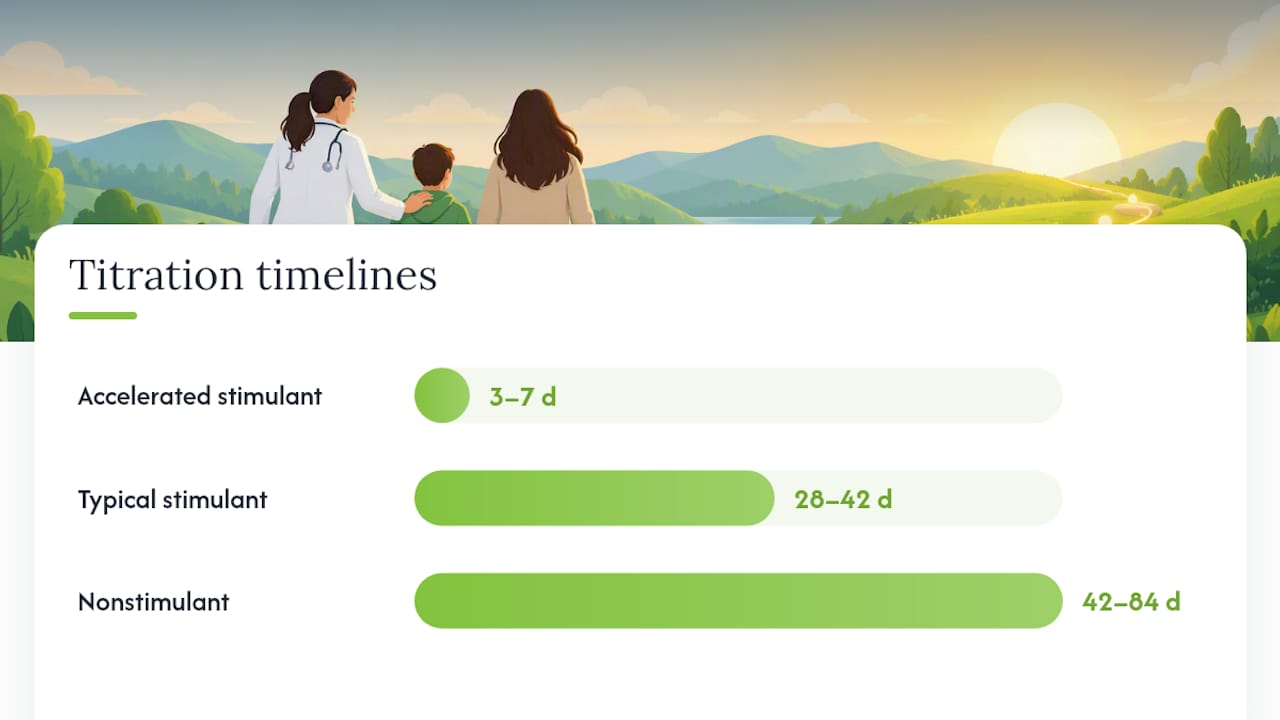
Stimulants move fast because their effects show up almost immediately. The American Academy of Pediatrics notes that stimulant doses can be adjusted on a 7 day basis, and in urgent situations, as quickly as every 3 days, since you and your clinician can see whether a dose is working within a day or two of starting it. Most patients reach an optimal stimulant dose within 4 to 6 weeks of structured adjustments, based on titration protocols derived from the landmark MTA study.
A typical stimulant titration might look like this:
- Week 1 to 2: start at the lowest available dose, assess tolerability and early response
- Week 2 to 4: increase incrementally if benefit is partial and side effects are manageable
- Week 4 to 6: fine-tune timing, formulation, or dose once you’re near the right range
- Beyond week 6: shift to monthly, then quarterly check-ins once stable
Immediate-release stimulants are usually adjusted in steps of about half to double the prior dose, while extended-release formulations move in fixed bead-strength steps built into the product itself. That’s a meaningful difference: with an IR product you have more granular control, while an XR capsule jumps you to the next available strength.
Nonstimulants play by a slower clock entirely. Atomoxetine, guanfacine, and clonidine all require gradual dose increases and, more importantly, weeks to months for full therapeutic effect to show up. We’ve had families expect atomoxetine to behave like a stimulant, and the disappointment in week two is real when nothing has changed yet. It can take 6 to 12 weeks before you see the full benefit, which is why we set that expectation at the start rather than letting you discover it the hard way.
For urgent situations, a compressed 3 to 7 day accelerated protocol exists for stimulants, but that pace trades speed for closer monitoring, and it’s not the default approach for most families.
How We Track Whether the Dose Is Working
Titration decisions shouldn’t be made off a five-minute conversation in an exam room. We rely on structured information gathered between visits, and honestly, the quality of that information often matters more than anything we do in the room.
- Rating scales. Tools like the ADHD-RS-5 or the Vanderbilt Assessment Scale give us a consistent, scored snapshot of symptoms over time, rather than a vague “he seems better.” Teacher versions of these scales are particularly valuable, because teacher ratings often reveal daytime coverage gaps that parents can’t see from home.
- Vitals and growth. We check blood pressure, heart rate, weight, and, in children, height at regular intervals during active titration, per the 2019 AAP clinical practice guideline.
- Home observations. What you log day to day, dose timing, appetite at meals, sleep onset, the specific hour side effects tend to appear, often tells us more than a single office visit ever could.
Functional outcomes carry more weight than symptom counts alone. A child who scores slightly better on a rating scale but is still missing homework isn’t at the right dose yet. That’s a distinction we lean on constantly.
Pro Tip: Ask your child’s teacher for a two-line email update once every couple of weeks during titration. It takes them thirty seconds and gives your clinician information a rating scale alone can’t fully capture.
Common Side Effects and When to Adjust the Dose
Most side effects during titration are dose-dependent, predictable, and manageable without abandoning the medication entirely. The trick is knowing which ones are expected and which ones need a same-day call.
Common, usually manageable effects include:
- Appetite suppression, most noticeable at lunch, often easing somewhat within a few weeks
- Trouble falling asleep, especially with later-day dosing
- Mild headache or stomachache in the first days of a new dose
- Slight increase in heart rate or blood pressure, typically modest
- Emotional flatness or irritability as a dose wears off, sometimes called rebound
Red flags that warrant an immediate call to your clinician rather than waiting for the next scheduled visit:
- Chest pain, fainting, or a racing heart that doesn’t settle
- Signs of mania, psychosis, or new suicidal thoughts
- Severe mood changes that feel out of character, not just “cranky”
For the manageable side effects, our typical playbook is dose reduction, adjusting the timing of the dose, switching to a different delivery formulation, or, if none of that helps, moving to a different medication class entirely. Growth deceleration during stimulant treatment tends to be modest, around 1 centimeter per year on average, and crossing two growth percentile lines is generally the threshold where we sit down and talk about whether a change makes sense. If appetite suppression is the sticking point, we often suggest front-loading calories at breakfast and dinner, since lunch tends to be the hardest meal to get through on a stimulant. For a deeper walkthrough of what to expect and when, our ADHD medication side effect plan covers this in more detail.
Titration Looks Different Across Ages and Diagnoses
There’s no single titration protocol that fits every patient, and age is one of the biggest variables we adjust for.
- Preschoolers. We start lower, increase more slowly, and watch closely for emotional side effects like tearfulness or irritability, which show up more often in this age group than in older kids.
- Adolescents and adults. Higher therapeutic ranges are often reasonable, but we also watch functional outcomes closely and stay alert to misuse risk, particularly with stimulants in a college or high-pressure work setting.
- Comorbid anxiety or tics. These often shift us toward a nonstimulant or a more cautious stimulant pace, since stimulants can occasionally worsen tics or anxious energy in susceptible patients.
- Cardiac history. A personal or family history of cardiac issues changes our baseline workup before we even start titrating, sometimes adding an ECG to the picture.
If you’re weighing whether medication is even the right starting point, our guide on medication versus therapy for ADHD walks through that decision in more depth.
Can ADHD Medication Titration Happen by Telehealth?
Much of ADHD titration translates well to a screen, but not all of it. We’ve built our workflow around that split rather than pretending telehealth can do everything.
What works well remotely: symptom check-ins, collecting rating scales, reviewing side effects, and general medication counseling. A 15 minute video call every week or two during active titration covers most of what needs discussing.
What still needs an in-person visit: baseline vital signs, an ECG when cardiac risk factors are present, and physical growth measurements in children. Hybrid clinics can support most of titration remotely, but safety checks that require hands-on measurement don’t have a virtual substitute yet.
A practical cadence we use: brief weekly telehealth check-ins during the first month, an in-person visit at baseline and again around week 4 to 6 for vitals and growth, then a shift to monthly and eventually quarterly visits once the dose is stable. Documenting each check-in, even a short portal message, keeps the record clear if a dose ever needs revisiting months later.
What to Track Before Every Titration Visit
A titration visit is only as useful as the information you bring to it. Here’s what we ask families to track and what to have ready.
- Daily log. Dose and timing, sleep onset and quality, appetite at each meal, and the specific time of day symptoms or side effects show up.
- Check-in rhythm. Expect brief weekly contact, by phone or patient portal, during the first several weeks, tapering to monthly visits once you’ve stabilized.
- Questions ready to go. Is this still the right formulation? Should we adjust timing rather than dose? Is this side effect expected to fade?
Bringing two weeks of consistent notes to a 15 minute visit turns that visit into an actual decision point instead of a guessing game.
Pro Tip: Take a photo of your daily log before each visit. It’s faster than re-explaining two weeks of history from memory, and your clinician can scan it in seconds.
How Nortex Psychiatry Approaches Titration in Practice
In our practice, a typical stimulant titration runs about 4 to 6 weeks from the first prescription to a stable maintenance dose, with brief check-ins along the way rather than one big leap of faith. We start low, ask you to track the basics we outlined above, and adjust based on what actually shows up in daily life, not just what a rating scale says in isolation.
We share a written side-effect plan with every family at the start of treatment, so you know what’s expected in week one versus what deserves a call. Follow-ups are scheduled before you leave the appointment, not left to chance, and we treat every dose change as a two-way conversation. If something isn’t sitting right with you, that matters as much as the clinical numbers. For adults navigating this alongside other treatment questions, our role of psychiatrists in adult ADHD care piece covers how that relationship typically unfolds over time.
Ready to Start or Adjust Your ADHD Treatment Plan?
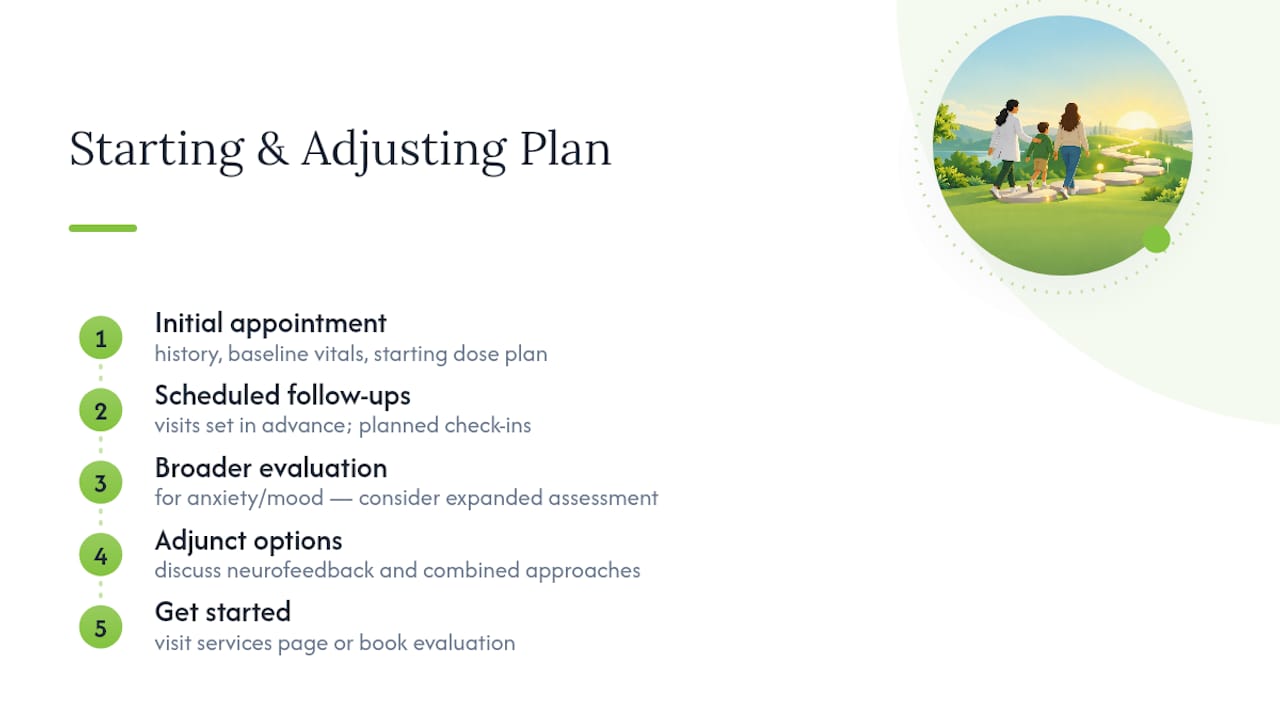
If you’re currently guessing your way through dose changes without much clinician support, or you’re starting ADHD treatment for the first time and want a clearer process than trial and error, Nortex Psychiatry offers structured medication management with both in-person and telehealth follow-up built around exactly the titration rhythm described above. The first appointment typically focuses on history, baseline vitals, and a starting dose plan, with follow-up visits scheduled in advance rather than left open-ended, so you always know when the next check-in happens and what it will cover. Some adults dealing with ADHD alongside anxiety or mood symptoms may benefit from a broader evaluation, and pairing that with adjunct approaches like neurofeedback is worth discussing with your clinician. To get started, visit our medication management and TMS services page or book an evaluation directly through Nortex Psychiatry.
This article is general information, not a substitute for advice from a qualified doctor. Consult a qualified healthcare professional about your own circumstances before acting on anything here.
Sources
- American Academy of Pediatrics clinical materials
- Clinical Practice Guideline for the Diagnosis, Evaluation, and Treatment of ADHD in Children and Adolescents (Pediatrics, 2019)
- MTA and related titration studies (example PubMed entry)
- NCBI clinical/pharmacology references on ADHD medications
FAQ
What Is Titration of ADHD Medication?
Titration is the process of starting an ADHD medication at a low dose and adjusting it gradually, based on symptom response and side effects, until you reach the most effective dose you can tolerate well. For stimulants this usually happens over 4 to 6 weeks; for nonstimulants it can take several weeks to months.
What Is the 1-3-5 Rule for ADHD?
This isn’t a standard clinical term used in ADHD treatment guidelines, and definitions circulating online vary widely without a consistent clinical source. Rather than repeat an unverified rule, we’d point you toward the structured titration schedules described above, which come directly from AAP and guideline-based practice.
What Is the 28-Day Rule for ADHD Medication?
This typically refers to prescribing regulations around controlled substances, since many stimulant ADHD medications are federally controlled and can’t be refilled early or in unlimited quantities without a new prescription. It’s a pharmacy and legal rule rather than a titration guideline, and specifics can vary by state, so check with your prescribing clinician or pharmacy directly.
What Is the Adderall Rebound Effect?
Rebound refers to a temporary worsening of ADHD symptoms, irritability, or mood as a stimulant dose wears off, often in the late afternoon or evening. It’s a known, dose-dependent effect that clinicians typically manage by adjusting dose timing, adding a small booster dose, or switching to a longer-acting formulation.