
Repetitive transcranial magnetic stimulation (rTMS) is an evidence-based, noninvasive treatment that meaningfully reduces depressive symptoms for many adults who have not responded to antidepressant medications. The FDA cleared rTMS for treatment-resistant depression in 2008 following a pivotal multisite trial that demonstrated significant symptom improvement over sham stimulation. If you have tried two or more adequate antidepressant trials without sufficient relief, rTMS is worth a direct conversation with your psychiatrist.
The strongest evidence anchors:
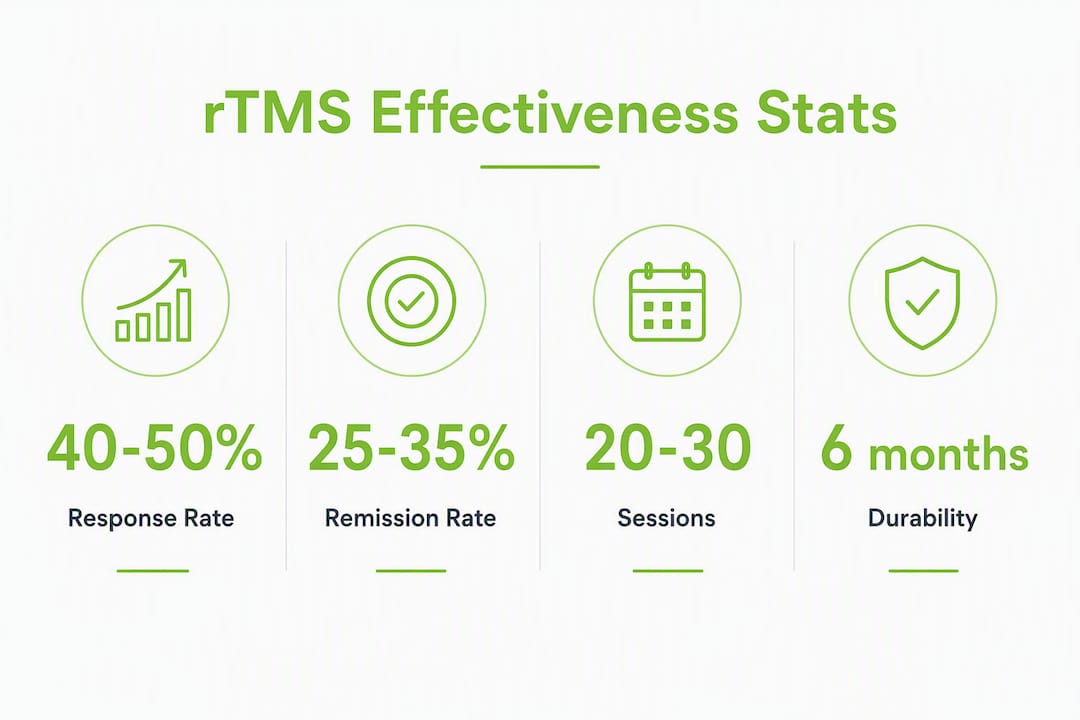
- Meta-analyses report response rates commonly in the 40–50% range and remission in 25–35% across treatment-resistant depression (TRD) cohorts, with variability by protocol.
- Intermittent theta-burst stimulation (iTBS) is non-inferior to standard 10 Hz rTMS and cuts session time from 37.5 minutes to approximately 3 minutes.
- rTMS requires no general anesthesia and carries substantially lower cognitive risk than electroconvulsive therapy (ECT), making it the preferred first brain-stimulation option for most adults.
- Consensus from the Clinical TMS Society, reviewed through April 2024, endorses rTMS safety and efficacy and highlights expanding evidence for faster protocols.
If you meet candidate criteria, the practical next step is a psychiatric evaluation to review your medication history and determine whether rTMS is appropriate for you.
Table of Contents
- How does rTMS work, and what protocols are available?
- What does the clinical evidence say about rTMS effectiveness?
- Who is a good candidate for rTMS?
- What does a full rTMS treatment course look like?
- What are the side effects and risks of rTMS?
- How does rTMS fit into your overall treatment plan?
- U.S.-specific practicalities: FDA status, cost, and choosing a clinic
- Key Takeaways
- What we have learned from rTMS evaluations
- Nortexpsychiatry offers rTMS evaluation in North Dallas
- Useful sources and further reading
- FAQ
How does rTMS work, and what protocols are available?
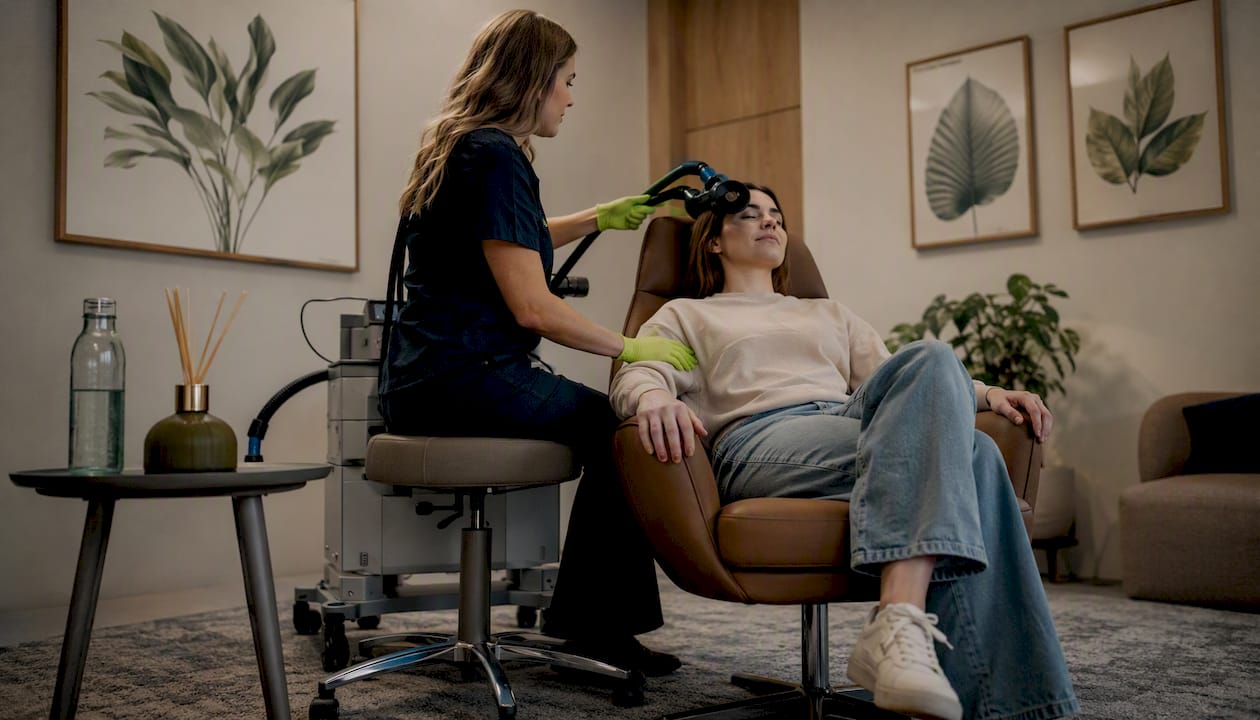
rTMS delivers brief, focused magnetic pulses through a coil placed against your scalp. Those pulses induce small electrical currents in the underlying cortex, modulating neuronal excitability and the activity of connected networks. The primary target for depression is the left dorsolateral prefrontal cortex (DLPFC), a region consistently underactive in major depressive disorder.
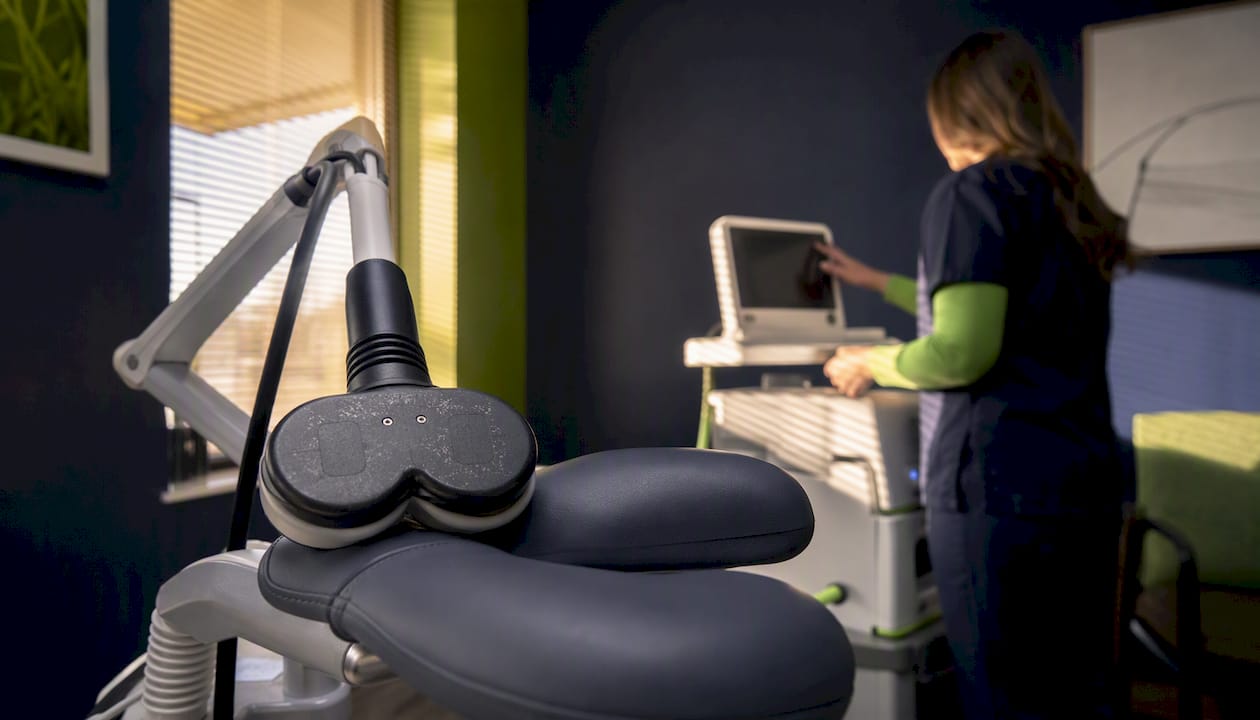
The coil design matters. A figure-8 coil concentrates stimulation in a relatively focal cortical area roughly 2–3 cm deep. Helmet-style or H-coil devices (used in deep TMS, or dTMS) reach somewhat deeper and broader tissue, which changes the stimulation footprint. Neither approach is universally superior; the right choice depends on your clinical profile and what a given clinic offers. You can read a practical overview of device and protocol differences to orient yourself before your evaluation.
The main protocol types in clinical use:
- Standard 10 Hz left DLPFC rTMS: 3,000 pulses per session at 120% of motor threshold, delivered five days per week for 4–6 weeks. Session duration is approximately 37.5 minutes.
- Low-frequency (1 Hz) right DLPFC rTMS: Inhibitory stimulation of the right hemisphere; used less commonly, sometimes in bilateral combinations.
- Intermittent theta-burst stimulation (iTBS): Delivers the equivalent stimulation in roughly 3 minutes per session. Non-inferior to 10 Hz rTMS in large trials and now widely adopted.
- Accelerated or clustered protocols: Multiple sessions per day, compressing a full course into one to two weeks. Promising for faster onset, though scheduling and safety monitoring requirements are more intensive.
A typical session follows a predictable sequence: motor-threshold mapping at the first visit, consistent coil placement at each subsequent session, delivery of stimulation trains with brief pauses between them, and then you walk out and resume your day. No sedation, no recovery room.
Statistic: iTBS delivers equivalent antidepressant stimulation in approximately 3 minutes, compared with 37.5 minutes for standard 10 Hz rTMS, with comparable response and remission outcomes in a multisite non-inferiority trial of approximately 404 participants.
What does the clinical evidence say about rTMS effectiveness?
The evidence base for rTMS is substantial and continues to grow. The 2008 FDA clearance rested on a pivotal randomized controlled trial (n=301) that showed significant symptom reduction versus sham with low dropout due to side effects. Since then, dozens of randomized trials and multiple meta-analyses have refined our understanding of who responds and how durably.
Key findings from major reviews and trials:
- Meta-analyses report response rates commonly in the 40–50% range for TRD populations and remission rates typically in the 25–35% range, reflecting the difficulty of the population being treated.
- The Blumberger iTBS non-inferiority trial (n≈404) confirmed that iTBS matches 10 Hz rTMS on both response and remission, with the practical advantage of dramatically shorter sessions.
- Durability data show that about half of initial responders sustain benefit at 6–12 months without additional maintenance treatment, which is meaningful but not universal.
| Outcome Measure | Typical Range (TRD Populations) | Source Type |
|---|---|---|
| Response rate | 40–50% | Meta-analyses / systematic reviews |
| Remission rate | 25–35% | Meta-analyses / systematic reviews |
| Sustained response at 6–12 months | about half of initial responders | Follow-up cohort data |
| iTBS vs. 10 Hz response equivalence | Non-inferior (large RCT, n≈404) | Randomized controlled trial |
A few honest limitations: most large trials enrolled adults with two or more failed medication trials, so results may not generalize to first-episode depression or more severe, psychotic presentations. Individual response varies considerably, and we cannot yet reliably predict who will respond based on clinical features alone. Neurobiological predictors and imaging-guided targeting are active research areas. For a deeper look at long-term TMS outcomes, the evidence on durability and maintenance is worth reviewing before you set expectations.
Pro Tip: Set realistic expectations before starting. Roughly one in three people with TRD achieves remission, and many more achieve meaningful symptom reduction without full remission. Both outcomes represent real clinical benefit. A thorough baseline assessment with your psychiatrist helps calibrate what success looks like for you specifically.
Who is a good candidate for rTMS?
rTMS is not the right fit for everyone, and a careful pre-treatment evaluation is what separates a productive course from a wasted one. The clearest candidates are adults with major depressive disorder who have not responded adequately to at least one or two antidepressant trials at therapeutic doses and durations. Beyond that core group, rTMS is also worth considering when:
- Medication side effects are intolerable and limiting adherence.
- You prefer to avoid the anesthesia and cognitive risks associated with ECT.
- Comorbid anxiety is present, as some evidence supports benefit for anxiety symptoms alongside depression.
- Pregnancy or medical fragility makes systemic medication changes higher risk.
Comparing rTMS versus medication strategies in detail can help clarify which path fits your situation.
Contraindications to screen for carefully:
- Ferromagnetic implants in or near the head (certain aneurysm clips, cochlear implants, deep brain stimulators in some configurations).
- Active, poorly controlled seizure disorder. Well-controlled epilepsy requires individual risk assessment, not automatic exclusion.
- Intracranial hardware or skull defects near the stimulation site.
- Pregnancy: not an absolute contraindication, but requires a careful risk-benefit discussion.
Many cardiac devices, including most modern pacemakers and defibrillators, are compatible with rTMS when the coil is positioned away from the chest, but each case requires individual review. Unstable medical conditions that would make daily clinic attendance unsafe also warrant deferral.
Pre-treatment workup typically includes:
- Full medication reconciliation, including supplements and over-the-counter drugs that lower seizure threshold.
- Seizure risk assessment and neurological history review.
- Inventory of any implanted hardware, with device specifications if available.
- Baseline symptom rating scales (PHQ-9, MADRS, or similar) to track response objectively.
Pro Tip: Before your evaluation, compile a written list of every antidepressant you have tried, the dose, duration, and reason for stopping. Clinics need this to confirm treatment resistance and to document medical necessity for insurance authorization. A one-page medication history saves significant time.
What does a full rTMS treatment course look like?
The first appointment is a mapping visit. Your clinician identifies your motor cortex by delivering brief pulses and observing the threshold at which your hand or fingers twitch. That threshold, called the motor threshold, sets the stimulation intensity for your entire course, typically calibrated to 120% of that value. Mapping can take up to an hour and uses anatomical methods such as the Beam F3 formula or the 5 cm rule to locate the DLPFC consistently. Subsequent sessions use the established motor threshold so stimulation is individualized to your cortical excitability, not a population average.
Standard course structure:
- Mapping visit (session 1): Motor-threshold determination, coil placement verification, and first stimulation train. Expect 45–60 minutes total.
- Daily treatment sessions (weekdays): Standard 10 Hz protocol runs approximately 37.5 minutes; iTBS runs approximately 3 minutes of active stimulation with brief setup time.
- Duration: 4–6 weeks for a standard course, totaling 20–30 sessions depending on protocol and response.
- Pulse parameters: Approximately 3,000 pulses per session at 120% motor threshold for standard 10 Hz rTMS.
- Accelerated options: Multiple sessions per day, compressing the course into 1–2 weeks. Offered at select clinics with appropriate monitoring capacity.
How soon will you feel better? Most people who respond begin noticing changes in sleep, energy, or mood between weeks two and four. Full antidepressant benefit often continues to develop for several weeks after the course ends. If you reach week four with no change at all, your clinician may discuss protocol adjustments or alternative approaches.
How many sessions do you need? A standard course is 20–30 sessions. Some protocols extend to 36 sessions for partial responders. Maintenance sessions, spaced weekly or monthly after the acute course, are an option for people who respond well but experience early relapse.
No sedation is required, and most people return to work or normal activities immediately after each session. Some clinics recommend caution about driving for the first few visits until you know how you tolerate the procedure.

What are the side effects and risks of rTMS?
rTMS has a favorable safety profile, and that is one of the main reasons it has become a preferred option over ECT for many adults. The most common side effects are local and transient.
Common, manageable side effects:
- Scalp discomfort or pain at the coil site: Usually mild and decreases after the first few sessions. Precise coil positioning and minor adjustments to stimulation parameters help manage this.
- Headache: Reported by a meaningful minority of patients, typically mild and responsive to over-the-counter analgesics taken before or after sessions.
- Brief auditory effects: The device produces a clicking sound during stimulation. Clinics routinely provide ear protection to reduce noise exposure.
- Facial twitching or jaw clenching: Common during stimulation, not harmful, and often diminishes as you habituate.
Rare but serious risks:
- Seizure: The most serious risk, but rare. Guidelines and consensus statements note that the incidence of seizure with rTMS is very low when standard safety screening is followed. Clinics screen carefully for seizure history and medications that lower the threshold.
- Syncope (fainting): Occasionally reported, typically vasovagal in nature and not a direct effect of stimulation.
- Hearing effects: Transient threshold shifts are possible without ear protection; standard clinical practice prevents this.
Cognitive effects compared with ECT: This distinction matters to most patients. rTMS does not require anesthesia and does not induce a seizure. Guidelines note that while ECT has higher efficacy in the most severe cases, rTMS is preferred for tolerability and carries substantially lower cognitive risk. Memory impairment, a well-documented concern with ECT, is not a significant issue with rTMS. For a detailed comparison of rTMS and ECT tolerability, the clinical tradeoffs are worth understanding before you decide.
Statistic: Seizure risk with rTMS is very low under standard safety screening protocols. The Clinical TMS Society consensus, updated through April 2024, confirms the overall safety profile and supports expanding clinical use.
How does rTMS fit into your overall treatment plan?
rTMS works best as part of a coordinated plan, not as a standalone replacement for everything else. Consensus guidance is clear that medication management and psychotherapy should continue during and after rTMS when clinically indicated. Stopping antidepressants abruptly to “try rTMS alone” is rarely the right move and can destabilize mood during the course.
Practical coordination steps:
- Baseline and ongoing measurement: Use a validated rating scale (PHQ-9, MADRS) at the start and every two weeks during treatment. Objective tracking catches early response or non-response before the full course is complete.
- Medication reconciliation: Your prescribing psychiatrist should review all current medications before rTMS begins. Some drugs lower seizure threshold and require dose adjustment or substitution.
- Psychotherapy coordination: Cognitive behavioral therapy (CBT) or other structured therapy can continue during rTMS. Some evidence suggests the combination produces better outcomes than either alone.
- Maintenance planning: For patients who respond well, discuss a maintenance schedule before the acute course ends, not after relapse occurs.
rTMS is used both as augmentation (added to ongoing medication) and occasionally as monotherapy for patients who cannot tolerate any medication. The decision depends on your history, current regimen, and clinical presentation. Combining TMS with other treatments is a practical topic worth reviewing with your care team.
Pro Tip: Ask your rTMS clinic and your outpatient psychiatrist to communicate directly at the start of treatment. A brief shared note at weeks two and four, summarizing symptom ratings and any side effects, prevents the fragmented care that often leads to missed response or delayed protocol adjustments.
U.S.-specific practicalities: FDA status, cost, and choosing a clinic
FDA clearance: rTMS received FDA clearance for treatment-resistant major depressive disorder in 2008. Subsequent clearances have expanded to include additional protocols and indications. Cleared devices are Class II medical devices subject to special controls. The clearance status matters for insurance coverage because most major payers follow FDA-cleared indications when determining medical necessity.
Insurance coverage: Most major commercial insurers and Medicare cover rTMS for TRD when prior authorization criteria are met, typically requiring documentation of two or more failed adequate antidepressant trials. Prior authorization is the most common barrier. Your clinic’s billing team should handle the paperwork, but you should ask directly:
- Which CPT codes will be billed for mapping and treatment sessions?
- What documentation does your insurer require for prior authorization?
- What is the appeals process if the initial request is denied?
Cost without insurance: Out-of-pocket costs for a full rTMS course vary by clinic and region. Costs are not publicly standardized, and clinics vary considerably. Ask for a written estimate before committing.
Provider checklist when evaluating a clinic:
- Is the supervising clinician board-certified in psychiatry with specific rTMS training?
- Which protocols are offered (10 Hz, iTBS, accelerated)?
- What mapping method is used (Beam F3, neuronavigation, or 5 cm rule)?
- Is maintenance treatment available after the acute course?
- Does the clinic have dedicated billing support for prior authorization and appeals?
Practical logistics: Plan for daily weekday appointments for 4–6 weeks. Most sessions are short enough to fit around a work schedule, particularly with iTBS. No recovery time is needed after sessions, though some people prefer to schedule sessions early in the day. If you drive yourself, confirm with your clinic whether any caution is advised for the first few visits.
For neurostimulation context beyond rTMS, the comparison of TENS versus EMS modalities illustrates how different electrical and magnetic stimulation approaches serve different clinical goals.
Key Takeaways
rTMS is an FDA-cleared, evidence-based treatment for treatment-resistant depression that produces response in roughly 40–50% of patients and remission in 25–35%, with a safety profile that makes it a practical first brain-stimulation option for most adults.
| Point | Details |
|---|---|
| Response and remission rates | Meta-analyses report response commonly in the 40–50% range and remission in the 25–35% range among TRD patients. |
| Protocol options | Standard 10 Hz rTMS (37.5 min/session) and iTBS (~3 min/session) are both FDA-cleared and clinically equivalent in efficacy. |
| Durability | Roughly about half of initial responders sustain benefit at 6–12 months; maintenance sessions reduce relapse risk. |
| Safety vs. ECT | rTMS requires no anesthesia and carries substantially lower cognitive risk than ECT; seizure risk is very low under standard screening. |
| Nortexpsychiatry | Nortexpsychiatry offers TMS therapy evaluation and coordination in North Dallas, with in-person and telehealth intake options. |
What we have learned from rTMS evaluations
We want to be direct with you about something we see regularly in our work: the patients who benefit most from rTMS are not necessarily the ones with the most severe depression. They are the ones who come in with a clear picture of what they have already tried, realistic expectations about what rTMS can and cannot do, and a willingness to stay engaged with the full treatment plan, including medication and therapy, throughout the course.
The conventional framing of rTMS as a “last resort” after everything else has failed is, in our view, too narrow. For some adults, rTMS belongs earlier in the treatment sequence, particularly when medication side effects are limiting quality of life or when a patient has strong reasons to avoid systemic pharmacotherapy. The evidence supports this. Response rates in the 40–50% range are not trivial for a population that has already failed multiple treatments.
What we find underappreciated is the importance of the mapping visit and the ongoing symptom monitoring. Clinics that rush through motor-threshold determination or skip standardized rating scales at weeks two and four miss the early signals that would allow protocol adjustments before the full course is complete. The procedure itself is straightforward. The clinical judgment around it is where outcomes are actually shaped.
We also notice that patients who understand the durability data, roughly half of responders sustain benefit at six months without maintenance, are better prepared to plan for what comes after the acute course. Recovery from treatment-resistant depression is not a straight line, and rTMS is one important tool in a longer process.
Nortexpsychiatry offers rTMS evaluation in North Dallas
For adults in Allen, Frisco, McKinney, Plano, and surrounding North Dallas communities, Nortexpsychiatry provides psychiatric evaluations specifically designed to determine whether TMS therapy is appropriate for your situation. The evaluation covers your full medication history, prior treatment response, contraindication screening, and a frank conversation about what the evidence suggests for your specific profile.
We handle prior authorization support and insurance verification as part of the intake process, which removes one of the most common friction points for patients pursuing rTMS. Both in-person and telehealth intake appointments are available, so the initial evaluation can fit your schedule.
If you are ready to find out whether rTMS is a realistic option for you, schedule a psychiatric evaluation with Nortexpsychiatry. You can also review our depression treatment guide for adults in North Dallas to understand how we coordinate care from evaluation through maintenance. No referral is required to book an initial consultation.
This article provides general clinical information and does not constitute medical advice. Please consult a qualified psychiatrist to determine whether rTMS is appropriate for your individual situation.
Useful sources and further reading
The sources below represent the primary evidence and regulatory foundation for rTMS in depression. Bringing relevant summaries to your evaluation appointment helps your clinician understand your baseline and prior treatment history.
- Treating Depression With Repetitive Transcranial Magnetic Stimulation: A Clinician’s Guide (PubMed) — A current clinical synthesis covering stimulation parameters, patient selection, and emerging protocols.
- Repetitive TMS for Treatment-Resistant Depression: Recent Critical Advances — (PMC) — Covers the pivotal FDA-clearance trial, iTBS non-inferiority data, and protocol evolution.
- Regulatory Clearance and Approval of TMS Protocols for Psychiatric Disorders — (PMC) — Summarizes response/remission ranges across meta-analyses and durability follow-up data.
- Clinical TMS Protocols — (NCBI Bookshelf) — Step-by-step procedural guidance on motor-threshold mapping and coil placement methods.
- Brain Stimulation Therapies (NIMH) — National Institute of Mental Health overview of FDA-authorized brain stimulation treatments, including rTMS.
FAQ
What is the success rate of TMS for depression?
Meta-analyses report response rates of roughly 40–50% and remission rates of 25–35% in treatment-resistant depression populations, with variability depending on protocol and patient selection.
How many sessions of rTMS do you typically need?
A standard course runs 20–30 sessions delivered daily on weekdays over 4–6 weeks. Some partial responders extend to 36 sessions, and maintenance sessions may follow for those who respond well.
Does TMS give you energy?
Improved energy and motivation are among the earlier changes many patients report, often emerging in weeks two to four of treatment, before full mood improvement. This reflects the DLPFC’s role in regulating motivation and executive function, though individual experience varies.
Can TMS cause depression?
rTMS is not known to cause or worsen depression when delivered according to established protocols. Low-frequency stimulation of the left DLPFC is theoretically inhibitory, which is why protocol selection matters; standard clinical protocols are designed to be excitatory to the left hemisphere and are not associated with depressive induction in the evidence base.
How does rTMS compare with ECT for depression?
ECT generally has higher efficacy in the most severe or psychotic presentations, but rTMS is preferred by many patients because it requires no anesthesia and carries substantially lower risk of cognitive side effects, particularly memory impairment. Most adults with treatment-resistant depression are offered rTMS before ECT is considered.
Recommended
- TMS Therapy vs. Medication: Which One Wins in Treating Depression? – Nortex Psychiatry
- How Effective Is TMS Therapy for Treatment-Resistant Depression? – Nortex Psychiatry
- TMS Therapy vs. ECT: What’s the Difference? – Nortex Psychiatry
- Can TMS Therapy Prevent Depression Relapse? What Experts Say – Nortex Psychiatry