


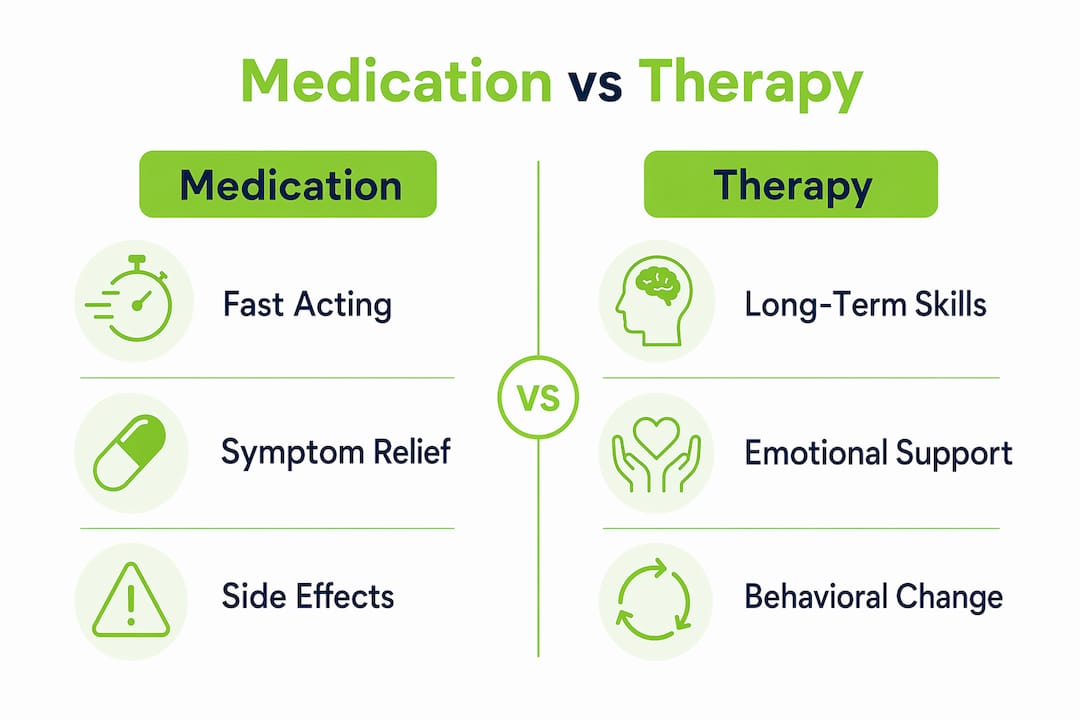
Medication and therapy are the two primary ADHD treatment options for adults, each targeting symptoms through different mechanisms and timelines. Medication, primarily psychostimulants like methylphenidate and amphetamines, delivers the fastest, most reliable short-term symptom reduction. Cognitive behavioral therapy (CBT), the most evidence-supported psychological approach, builds coping skills and organizational strategies that medication alone cannot provide. Understanding the difference between these approaches, and when to combine them, is the most practical step you can take toward managing adult ADHD effectively.
How effective is medication vs therapy for ADHD in adults?
Medication is the strongest, most reliable short-term treatment for adult ADHD, according to a 2026 umbrella review highlighted by ScienceDaily. That finding matters because it sets realistic expectations: if you start medication and notice meaningful symptom relief within weeks, that is the treatment working as intended. Therapy, particularly CBT, also carries strong evidence for adults, though its benefits tend to build more gradually over months rather than days.
The distinction is not about which approach is better in absolute terms. It is about what each one does well. Medication reduces the neurobiological noise of ADHD quickly, making it easier to focus, follow through, and regulate impulses. CBT then works on the behavioral patterns and thought habits that have built up over years of unmanaged symptoms. Both address real problems. They just address them at different speeds and through different pathways.

For adults who have spent years struggling with disorganization, missed deadlines, or strained relationships, this distinction is worth sitting with. Medication may help you feel clearer within a week. Rebuilding the habits and self-perception that ADHD has disrupted takes longer, and that is where therapy earns its place.
What does ADHD medication actually do, and what are the risks?
Psychostimulants and atomoxetine are the first-line pharmacological treatments for adult ADHD, with stimulants generally preferred and atomoxetine used when stimulants are not tolerated or appropriate. Methylphenidate and amphetamine-based medications increase dopamine and norepinephrine availability in the prefrontal cortex, which directly improves attention, working memory, and impulse control. Most adults notice a meaningful difference within the first few days of a therapeutic dose.
Dosing, however, is not simply a matter of more being better. Research from Technology Networks shows that amphetamines plateau in effectiveness above 50 mg per day in adults, with adverse effects increasing beyond that threshold. This means pushing past the therapeutic window does not improve outcomes. It only increases the risk of side effects like elevated heart rate, appetite suppression, sleep disruption, and anxiety.
The table below summarizes the most common medication side effects and how they are typically managed:
| Side effect | Management approach |
|---|---|
| Appetite suppression | Take medication after breakfast; monitor weight regularly |
| Sleep disruption | Use shorter-acting formulations; avoid late afternoon dosing |
| Elevated heart rate | Monitor cardiovascular status; consider non-stimulant alternatives |
| Anxiety or irritability | Adjust dose; consider switching formulations or to atomoxetine |
| Mood changes | Reassess diagnosis; evaluate for comorbid mood disorders |
Clinicians optimize ADHD medication by titrating within therapeutic windows and switching formulations when efficacy plateaus, rather than simply increasing doses beyond recommended levels. If your current dose is not working as well as it once did, the answer is usually a conversation with your prescriber about formulation or timing, not a higher number on the prescription.
Pro Tip: If you are experiencing medication side effects ADHD patients commonly report, such as poor sleep or reduced appetite, track them in a simple daily log for two weeks before your next appointment. Specific patterns help your prescriber make targeted adjustments rather than guessing.
How does CBT help adults with ADHD beyond what medication provides?
CBT adapted for adult ADHD targets the skills that medication cannot directly teach: organization, time management, emotional regulation, and the internal dialogue that shapes how you respond to setbacks. CBT addresses coping and emotional regulation in ways that sustain long-term functional improvement, particularly for adults whose ADHD has affected their careers, relationships, or self-esteem. The therapy does not just reduce symptoms. It changes how you operate.
A structured CBT program for adult ADHD typically covers several core areas:
- Time awareness and planning. Adults with ADHD often underestimate how long tasks take and overcommit. CBT teaches concrete planning tools, including time-blocking and backward scheduling from deadlines.
- Organizational systems. This includes building external structure through tools like calendars, task lists, and environmental cues that reduce reliance on working memory.
- Emotional regulation. ADHD in adults frequently involves emotional dysregulation, including frustration intolerance and rejection sensitivity. CBT provides techniques to interrupt reactive patterns before they escalate.
- Cognitive restructuring. Many adults with ADHD carry years of internalized criticism. CBT works on reframing unhelpful beliefs about capability and self-worth.
- Relapse prevention. Therapy explicitly prepares you for periods when symptoms intensify, such as during high-stress transitions, so you have a plan rather than reverting to old patterns.
Beyond CBT, other therapy alternatives for ADHD include ADHD coaching, which focuses on accountability and goal-setting rather than clinical symptom treatment, and mindfulness-based approaches that improve attention regulation over time. These are not replacements for CBT or medication but can serve as useful complements, particularly for adults who want ongoing support between clinical appointments. Understanding executive function in adult ADHD can also help you recognize which specific skill gaps therapy should target first.
Pro Tip: When asking whether therapy is effective for ADHD, look for a therapist who has specific training in adult ADHD rather than general CBT. The adaptations matter. Standard CBT protocols are not always designed for the attention and memory challenges that make traditional talk therapy harder for adults with ADHD.
Medication vs therapy for ADHD: a side-by-side comparison
The most useful way to think about this comparison is not as a competition but as a division of labor. Medication and therapy address complementary aspects of adult ADHD: medication alleviates neurobiological symptoms quickly, while therapy targets behavior patterns for long-term functional gains. The combined pharmacological and psychological approach is what most evidence supports as the most effective overall strategy.
| Dimension | Medication | CBT and therapy |
|---|---|---|
| Speed of effect | Days to weeks | Weeks to months |
| Primary target | Neurobiological symptoms (attention, impulse control) | Behavioral patterns, skills, and emotional regulation |
| Side effect risk | Moderate (cardiovascular, sleep, appetite) | Minimal |
| Sustainability | Requires ongoing use for continued benefit | Skills persist after treatment ends |
| Best suited for | Rapid symptom relief, high symptom burden | Long-term functioning, comorbid anxiety or depression |
| Combination value | Reduces cognitive load, enabling therapy engagement | Prevents relapse when medication is reduced or stopped |
Adults often start with medication to reduce cognitive load, which then enables engagement with therapy and coaching to promote sustained behavioral change. This sequencing makes clinical sense. When ADHD symptoms are severe, sitting through a therapy session and retaining what was discussed is genuinely difficult. Medication can lower that barrier enough for therapy to take hold.
Personal preferences and comorbidities also shape the decision. If you have a history of substance use, certain stimulant medications carry additional considerations. If anxiety is a significant part of your picture, therapy may need to come first or run alongside medication from the start. There is no single correct path, and a good prescriber will help you think through the options based on your specific situation. You can also explore a broader look at choosing between therapy and medication to inform that conversation.
When should adults consider stopping or changing their ADHD treatment?
Stopping or changing ADHD treatment is a clinical decision, not something to do unilaterally. The American Society of Clinical Psychopharmacology (ASCP) published a 2026 consensus statement identifying the specific conditions under which deprescribing stimulant medications is appropriate for adults:
- The original diagnosis was incorrect or no longer supported by current assessment
- The medication is producing no measurable benefit after adequate dose titration
- Adverse effects are significant and not manageable through dose or formulation changes
- There is evidence of misuse or diversion of the medication
Deprescribing, when warranted, should be a structured reassessment rather than an abrupt stop. Tapering allows your system to adjust and gives you and your provider time to evaluate whether symptoms return and at what severity. Therapy plays a particularly important role during this period because the skills you have built provide a buffer against symptom rebound.
Adults with ADHD who also have a substance use disorder face a more complex picture. Research published in BMJ Mental Health found that this group is nearly twice as likely to discontinue ADHD medication compared to those without a co-occurring substance use disorder. That elevated discontinuation rate matters because untreated ADHD symptoms can increase the risk of relapse in substance use recovery. Structured therapy support becomes especially critical in this population, both to maintain ADHD management and to address the underlying behavioral patterns that connect the two conditions.
Regular reassessment is not a sign that treatment has failed. It is how good psychiatric care works. Treatment goals shift as your life changes, and what worked at 35 may need adjustment at 45.
Key takeaways
Medication delivers the fastest symptom relief for adult ADHD, but combining it with CBT produces the most durable outcomes across both symptom control and daily functioning.
| Point | Details |
|---|---|
| Medication is first-line | Methylphenidate, amphetamines, and atomoxetine are the primary pharmacological options for adult ADHD. |
| Dosing has a ceiling | Amphetamines plateau in effectiveness above 50 mg per day; more medication increases side effects without added benefit. |
| CBT builds lasting skills | Cognitive behavioral therapy targets organization, emotional regulation, and relapse prevention that medication alone cannot address. |
| Combined treatment works best | Starting with medication to reduce symptom burden, then adding therapy, produces the strongest long-term outcomes. |
| Deprescribing requires structure | The ASCP recommends stopping stimulants only under specific clinical conditions, with therapy support during any transition. |
What we have learned from working with adults on this decision
Medication vs therapy for ADHD is a question we hear often, and the framing itself sometimes creates unnecessary pressure. Adults come in having already decided one approach is right and the other is wrong, usually based on something they read or a previous experience that did not go well. What we have found, working with patients across North Dallas, is that the most useful shift is moving from “which one” to “in what order and combination.”
Medication tends to be the right starting point for most adults with moderate to severe symptoms. Not because therapy is less important, but because severe ADHD symptoms make it genuinely hard to engage with skill-building work. Once the neurobiological noise quiets down, therapy becomes far more productive. We have seen adults who tried CBT first, struggled to retain anything between sessions, and then found it transformative once medication was part of the picture.
That said, medication is not a permanent requirement for everyone. Some adults use it intensively during high-demand periods and taper during lower-stress phases. Others find that after two or three years of solid CBT work, their skills are strong enough that they want to reassess their medication needs. Both paths are valid. What matters is that the decision is made with a provider who knows your history, not in response to a bad week or a side effect that could be managed differently.
The one thing we would push back on is the idea that medication is a shortcut and therapy is the “real” work. They are different tools. Neither one is more legitimate than the other.
— Felix
Explore personalized ADHD care at Nortex Psychiatry
At Nortex Psychiatry, we work with adults across Allen, Frisco, McKinney, and Plano who are trying to figure out the right approach for their specific situation. That means a thorough evaluation before any treatment recommendation, not a one-size-fits-all protocol. Our services include medication management, CBT-informed support, and access to newer treatment options. If you are weighing your options and want a clear-eyed comparison of what is available, our TMS vs. medication comparison is a good place to start. We also offer telehealth appointments, so getting a second opinion or starting an evaluation does not require rearranging your schedule. Reach out when you are ready.
FAQ
What is the most effective treatment for adult ADHD?
Medication, particularly psychostimulants like methylphenidate and amphetamines, produces the strongest short-term symptom reduction for adult ADHD. Combining medication with CBT delivers the best long-term outcomes across both symptom control and daily functioning.
Is therapy alone enough to manage adult ADHD?
CBT is strongly supported by evidence for adult ADHD and can produce meaningful improvements in organization, emotional regulation, and daily functioning. For adults with moderate to severe symptoms, therapy alone is often less effective than a combined approach with medication.
What are the most common medication side effects in adults with ADHD?
The most frequently reported effects of ADHD medication in adults include appetite suppression, sleep disruption, elevated heart rate, and mood changes. Most side effects are manageable through dose adjustment or switching formulations rather than stopping medication entirely.
When is it appropriate to stop ADHD medication?
The ASCP consensus identifies four appropriate conditions for stopping stimulant medication: incorrect diagnosis, no measurable benefit, significant adverse effects, or evidence of misuse. Stopping should be a structured, provider-guided process rather than an abrupt decision.
Can adults with ADHD and substance use disorder safely take stimulant medication?
Adults with both ADHD and a substance use disorder can take stimulant medication, but they are at significantly higher risk of discontinuing treatment. Structured therapy support alongside medication is especially important in this population to maintain treatment adherence and address overlapping behavioral patterns.