


When a family member struggles with their mental health, the ripple effects touch everyone in the home. Parents often wonder whether psychiatric care is only meant for the person showing symptoms, and that misunderstanding delays real help. Understanding why psychiatric care for families matters goes far beyond one diagnosis or one appointment. It means recognizing that family relationships shape how people heal, how they cope, and whether treatment actually sticks over time. This guide explains the evidence, the practical steps, and what families in North Texas and beyond can do right now.
Table of Contents
- Key takeaways
- How family dynamics shape psychiatric outcomes
- Benefits of structured family psychiatric care
- Challenges families face in psychiatric care
- Practical ways parents can support family mental health
- My perspective on family psychiatric care
- How Nortexpsychiatry supports your family
- FAQ
Key takeaways
| Point | Details |
|---|---|
| Family shapes recovery | The home environment directly influences whether psychiatric treatment succeeds or fails. |
| Prevention starts at home | Addressing family distress can prevent up to 40% of severe youth mental health problems. |
| Structured interventions work | Family psychoeducation and therapy reduce relapse rates, hospitalizations, and caregiver burden. |
| Barriers are real but manageable | Stigma, caregiver exhaustion, and confidentiality fears are common obstacles with known solutions. |
| Parents are active participants | Attending sessions, building routines, and learning communication skills directly improve outcomes. |
How family dynamics shape psychiatric outcomes
Mental health does not happen in a vacuum. The relationships inside your home, the way conflict gets handled, the emotional tone at the dinner table, all of these shape how your child or partner experiences stress and whether they develop the resilience to manage it.
Research consistently shows that children of parents with mental illness are 1.5 to 3 times more likely to develop psychiatric disorders themselves, with absolute risk ranging from 17% to 55% depending on the parental diagnosis. That is not a reason for guilt. It is a reason for awareness, and for getting support early.
On the other side of that equation, a stable and communicative family environment acts as a genuine buffer against mental illness. Children who grow up in homes where emotions are named, disagreements are resolved calmly, and adults seek help when they need it develop stronger coping skills. They are less likely to internalize distress or act it out. The importance of family mental health is not a soft concept. It is backed by decades of outcome data.
Negative family dynamics have the opposite effect. Ongoing conflict, emotional unavailability, or exposure to untreated parental depression or anxiety creates chronic stress for every person in the household. That stress compounds over time. When we talk about how psychiatric care helps families, we are really talking about interrupting those patterns before they cause lasting harm.
Here is what the evidence points to most clearly:
- Children exposed to hostile parenting or unresolved partner conflict face significantly higher rates of anxiety, depression, and conduct disorders
- Families where one parent has untreated depression often show elevated rates of emotional dysregulation in children across all age groups
- Addressing parental distress and hostile family dynamics can prevent up to 40% of severe, persistent youth mental health problems
- Positive family support serves as one of the strongest predictors of treatment success for adolescents with mood and anxiety disorders
The takeaway is straightforward. When we support the family, we improve conditions for every individual within it.
Benefits of structured family psychiatric care
Knowing that family matters is one thing. Understanding what structured family psychiatric interventions actually look like, and what the evidence says about them, gives you something concrete to work with.
Family therapy creates a structured, safe space where communication patterns can be examined without blame. A psychiatrist or therapist facilitates conversations that would otherwise spiral into defensiveness or silence. Over time, families learn to express needs clearly, set healthy limits, and understand each other’s experiences with greater accuracy.
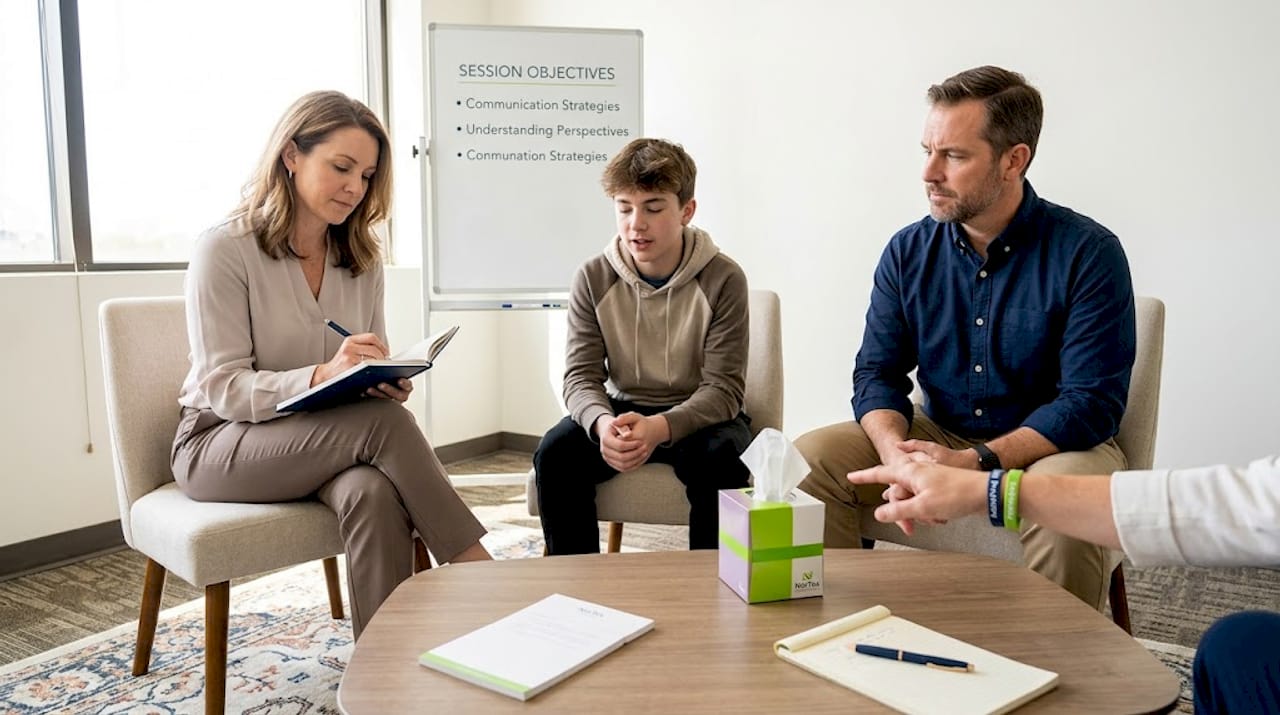
Family psychoeducation takes a different but complementary approach. Rather than focusing on conflict resolution in the moment, it builds understanding. Families learn what a diagnosis actually means, how symptoms appear day to day, and how their responses, both helpful and unhelpful, affect the person receiving treatment. This knowledge reduces stigma and supports earlier help seeking when new challenges arise.
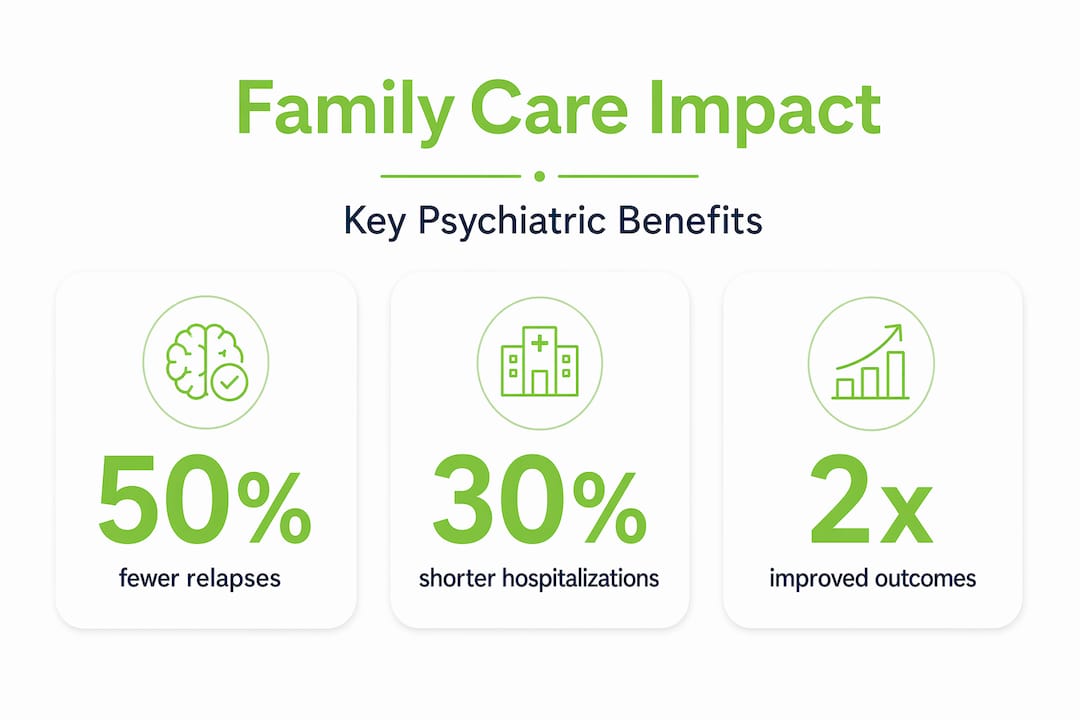
The evidence behind these approaches is strong. Structured family psychoeducation reduces relapse rates, inpatient stays, and caregiver burden while improving quality of life and social functioning. It is internationally recommended for psychotic disorders and increasingly applied to mood and anxiety conditions as well.
Here is a quick comparison of the two most common family psychiatric approaches:
| Approach | Primary focus | Best suited for |
|---|---|---|
| Family therapy | Communication, conflict, and relationship patterns | Families with active relational tension or breakdown |
| Family psychoeducation | Education, stigma reduction, and coping skills | Families supporting a member with a chronic psychiatric condition |
Both approaches share one core principle. As treatment specialists note, the goal is increasing family awareness and problem-solving rather than assigning blame to any individual. That reframe alone tends to reduce defensive resistance and bring families into the process more willingly.
Other therapy modalities used in family psychiatric care include:
- Cognitive behavioral family therapy, which targets negative thought patterns shared across the family system
- Attachment-based approaches, particularly useful when parent-child relationships have been strained by illness
- Multifamily group therapy, which connects several families in a shared educational and support format
- Crisis intervention models that give families a clear plan when symptoms escalate
Pro Tip: If your loved one is resistant to therapy, ask the provider about psychoeducation groups instead. They feel less clinical, carry less stigma, and often open the door to more direct treatment down the road.
Challenges families face in psychiatric care
Understanding the benefits of psychiatric treatment for families is helpful. But if we ignore the real obstacles families face in accessing and maintaining that care, we set unrealistic expectations. Most families run into at least one of these challenges, and knowing they are common makes them easier to work through.
-
Stigma and shame. Many parents worry that seeking psychiatric help signals failure. Cultural backgrounds sometimes reinforce the idea that family problems stay private. This delays care and allows symptoms to worsen before anyone reaches out.
-
Confidentiality concerns. When an adult family member is receiving treatment, there are legal limits on what providers can share with the rest of the family. This can leave parents or partners feeling shut out, frustrated, or unable to help effectively.
-
Caregiver exhaustion. Family caregivers experience high emotional strain, and when that strain goes unaddressed, it can contribute to caregiver depression and isolation. You cannot sustain support for someone else if your own mental health is deteriorating.
-
Fragmented care systems. Psychiatrists, therapists, schools, and pediatricians often operate in silos. Families trying to coordinate care across multiple providers face confusion, duplicated effort, and gaps in communication that slow progress.
-
Patient reluctance. Sometimes the person who most needs care resists it. Parents are then left navigating how to be supportive without enabling avoidance or pushing so hard that they damage the relationship.
These are not rare exceptions. They are the norm. Involving families in psychiatric care creates alignment that helps sustain recovery, but it requires the support system around the family to function well too.
Pro Tip: Ask your provider directly: “What is your process for keeping the family informed within appropriate limits?” A good psychiatric practice will have a clear answer and will actively build family communication into the care plan.
Practical ways parents can support family mental health
Once you understand the value of mental health for families, the next question is what you can actually do. Here are specific steps that make a measurable difference:
-
Attend family therapy sessions or psychoeducation workshops. Even one or two sessions can shift how you interpret your loved one’s behavior and how you respond to it. Your presence communicates that you take this seriously.
-
Learn healthy communication skills. Phrases like “I notice” instead of “You always” and asking questions instead of making assumptions reduce escalation during difficult conversations. These are learnable skills, not personality traits.
-
Build supportive home routines. Consistent sleep times, shared meals, and predictable schedules reduce overall stress load for everyone in the house. Mental health stabilizes more easily in structured environments.
-
Normalize talking about emotions. Open family conversations reduce stigma and encourage earlier help seeking. When children see adults naming and managing their own feelings, they learn to do the same.
-
Create a crisis plan together. Know the warning signs that mean your loved one needs more support. Have the contact information for your psychiatric provider accessible. Decide in advance who makes calls and what the steps are, so that a moment of crisis is not also a moment of confusion.
-
Take care of your own mental health. Caregiver involvement reduces the isolation that often leads to relapse, but only when the caregiver is also receiving adequate support. Seek your own counseling or support group if you are carrying significant stress.
When families approach care as a shared process rather than something happening to one person, outcomes improve across the board. The key benefits of psychiatric care are most fully realized when the people closest to the patient are engaged and informed.
My perspective on family psychiatric care
I have seen what happens when families are kept out of the treatment process. The patient improves during appointments, then returns to an environment that reinforces the same patterns that contributed to their struggles in the first place. Progress stalls. Relapse happens. Everyone feels confused about why.
What I have learned over time is that long-term recovery requires changing family communication patterns, not just individual symptoms. Treatment is not about finding the broken person in the household and fixing them in isolation. It is about helping the entire system function better, with more honesty, more patience, and more shared understanding.
The families who do best are not the ones with the least conflict. They are the ones willing to sit in a room together and say hard things with some structure and support around them. Engagement, not perfection, is what moves the needle.
Recovery is not a straight line. But when families are genuinely involved, the setbacks are shorter and the forward movement is more sustained. That is not a platitude. That is what we observe, consistently, in practice.
— Felix
How Nortexpsychiatry supports your family
At Nortexpsychiatry, we work with individuals and families across Allen, Frisco, McKinney, Plano, and the surrounding North Dallas area. We know that the most effective psychiatric care does not stop at one person’s chart. It accounts for the people that person goes home to every day.
Whether you are seeking support for a child, a partner, or yourself, our team offers personalized evaluations, medication management, and coordinated care that fits your family’s situation. We see patients in person and through telehealth, which makes it easier to stay consistent even during busy or difficult weeks.
If mood disorders, anxiety, or depression are affecting your family, explore our mood disorder treatment guide for a detailed look at the personalized steps we take toward real relief. For families supporting an adult member, our approach to anxiety care for adults outlines how we build individualized plans that account for the full picture. Reach out to schedule an assessment. We are here to help your family move forward, together.
FAQ
Why does psychiatric care benefit the whole family?
Psychiatric care helps the whole family because mental health symptoms affect communication, relationships, and daily functioning for everyone in the household. When one person receives treatment and the family is involved in that process, outcomes improve for all members.
How can parents support a child in psychiatric treatment?
Parents can attend family therapy sessions, learn communication skills, build consistent home routines, and work with the provider to create a shared understanding of the child’s diagnosis and care plan.
What is family psychoeducation and does it work?
Family psychoeducation is a structured program that teaches families about a loved one’s diagnosis, symptoms, and treatment options. Research shows it reduces relapse rates and caregiver burden while improving social functioning and quality of life.
What should families do when a loved one refuses psychiatric help?
Start by learning about the condition yourself and maintaining open, non-pressuring conversations. Consulting a provider individually can help you understand how to approach the situation and when professional intervention may be needed.
How does caregiver stress affect family mental health outcomes?
Unsupported caregivers are at real risk of depression and isolation, which in turn reduces the quality of support they can offer. Seeking your own mental health support as a caregiver directly benefits the person you are caring for.