


Most adult ADHD evaluations are focused visits, while fuller evaluations that pull in several sources or formal testing can take longer. We move through several stages: intake and clinical interview, rating scales, collateral information, a physical and medical screen, and sometimes neuropsychological testing. Your age, how quickly records arrive, and any need for extended testing set the pace.
TL;DR:
- Clinicians assess whether symptoms began before age 12, lasted at least six months, and appeared in two or more settings through interviews and rating scales.
- Children’s evaluations often require a parent interview, teacher questionnaires, and school records, so missing responses can stretch the process across several visits or weeks.
- Neuropsychological testing is not needed for most diagnoses, but uncertain cases may require four to six hours for administration, scoring, and interpretation.
- Request school records and prior reports before booking, and arrange consent for teacher, parent, or partner input to avoid delays waiting for outside information.
Table of Contents
- What makes up an ADHD evaluation, and why each part takes time
- How long each type of evaluation usually runs
- Inside a single visit: the phases, in order
- What lengthens or shortens the process
- How to prepare so the evaluation moves faster
- What happens after the evaluation
- Why we would rather take the extra hour
- Booking an ADHD evaluation with us
- FAQ
- Sources
What makes up an ADHD evaluation, and why each part takes time
There is no single test for ADHD. The National Institute of Mental Health describes a comprehensive evaluation as a review of medical, psychiatric, and social history, standardized behavior rating scales, and clinical interviews, with a physical exam sometimes used to rule out medical mimics. In our work, that is why an honest evaluation cannot be rushed into a quick script. Each piece answers a different question.
- Intake and clinical interview. We walk through your symptom history, when it began, and how it shows up at home, at work or school, and in relationships. This is usually the longest single block of time.
- Standardized rating scales. Symptom checklists tied to diagnostic criteria give us a consistent way to measure what you describe. Under NIMH diagnostic guidance, symptoms must have been present before age 12, lasted at least 6 months, and appeared in two or more settings.
- Collateral information. Old report cards, a parent, a partner, or a teacher help confirm that the pattern is long-standing and not new.
- Medical and physical screening. Vision, hearing, thyroid function, and sleep can all produce attention problems that look like ADHD. MedlinePlus lists a physical exam, history review, checklists, interviews, and screening for co-occurring conditions among the usual steps.
- Neuropsychological testing, only when needed. This is a separate, longer process that measures things like working memory and processing speed. It is not required for most diagnoses, and we reserve it for cases where the picture is unclear.
Where does the time go? Mostly into untangling overlap. Anxiety, depression, and sleep problems can mimic or mask ADHD, and sorting them apart is a real part of the work.
How long each type of evaluation usually runs
Your most likely timeline depends largely on your age and how complicated the picture is. These are typical ranges from our experience, not guarantees.
- Adults. Many clinician-led evaluations take a focused amount of time. When collateral collection is built in, plan for a longer process, or for a short follow-up contact once a partner or parent has returned their questionnaire. Our page on adult ADHD diagnosis in North Dallas walks through what that longer visit looks like.
- Children and teens. The pathway usually involves several contacts: a parent interview, teacher questionnaires, and school records. These are often spread across multiple visits or a few weeks, because we depend on other people to send information back. For teens, we have outlined how this can sometimes be done in one or two visits when records are ready.
- Complex or uncertain cases. If the diagnosis is not clear after the interview, neuropsychological testing may be added. The Centers for Medicare & Medicaid Services notes that psychological and neuropsychological testing typically takes four to six hours, including administration, scoring, and interpretation. That is often split across more than one session.
A practical way to place yourself: if you are an adult with a clear history and a partner or parent willing to answer questions, you are probably in the first bracket. If you are a parent seeking an evaluation for a child, expect the second. If you have a long history of mixed symptoms, prior inconclusive testing, or learning concerns, plan for the third.
Who performs the evaluation also matters. According to the CDC, psychiatrists, psychologists, pediatricians, and primary care providers can all make the diagnosis, so the depth of the process varies with the clinician you see.
Inside a single visit: the phases, in order
Knowing the shape of the appointment helps you plan childcare, transportation, or time off work. Here is how it generally unfolds when you book with us.
- Triage or phone screening. We collect basic history, confirm what brings you in, and explain which forms and records to gather beforehand.
- Main clinical interview. This covers current symptoms, developmental history, school or work performance, medical history, and how things look day to day. We pay close attention to onset before age 12 and to whether symptoms show up in more than one setting.
- Rating scales and questionnaires. Some are completed before the visit, some in the room, and some by the people who know you, on their own schedule.
- Collateral work. A family member’s or teacher’s input may be gathered at the visit, by phone, or in a separate step. If it happens separately, the full evaluation can stretch over days or weeks.
- Next steps before you leave. We tell you what is still outstanding, whether testing is recommended, and when we expect to have an answer.
If on-site testing is part of the plan, administration, scoring, and interpretation are all counted as testing time. For billing, the CMS guidance linked above says that when testing is spread across several days, the time should be combined and reported on the final date of service. That documentation requirement is one reason testing appointments are scheduled more deliberately than a standard visit.
What lengthens or shortens the process
Some of this is in your control, and some is not. These are the factors we see most often.
- Collateral delays. Waiting on school records, teacher responses, or prior testing can add days or weeks. Clinicians often need old report cards or a parent or partner to confirm symptoms existed before age 12, and NIMH notes that having these materials upfront speeds things up.
- Co-occurring conditions. Anxiety, depression, and sleep problems require extra time to separate from ADHD. A published review points out that ruling out comorbidities is often as important as identifying ADHD itself. Our guide to anxiety versus ADHD covers what to bring when both are possible.
- Type of evaluator. Psychiatrists and psychologists may differ in how deep they go and in whether they do testing themselves or refer it out.
- Insurance and documentation. Time-coded testing needs careful records. The Medicare local coverage determination asks for the reason for testing, the tests given, and the time involved, and wants medical necessity documented if testing runs past eight hours. Cost questions are covered in our page on ADHD testing costs in North Dallas.
Testing time to plan around: Psychological and neuropsychological testing typically takes four to six hours, counting administration, scoring, and interpretation. That is time on top of, or instead of, a standard interview visit.
How to prepare so the evaluation moves faster
Preparation is the one place where you can meaningfully shorten the timeline. In our experience, an organized folder saves more time than anything we do on our end.
- Gather records. Bring copies of school records, prior psychological reports, your medication history, and any IEP or 504 plans if you have them.
- Line up your people. Write down names and contact details for teachers, coaches, a parent, or a partner who can describe you or your child, and make sure they are expecting a call or form.
- Get permissions in place. We can only contact others once you have given consent, so sorting that out early prevents a stall.
- Finish the forms. Complete any rating scales or medical history forms the clinic sends before the visit, not in the waiting room.
- Prepare for telehealth if that is your route. Set up a quiet room, check your internet connection, and scan records so they can be shared. Ask how collateral will be collected remotely. Our overview of what a legitimate telehealth ADHD evaluation looks like explains what to expect from that format.
Pro Tip: Ask your former school district or pediatrician for records well before your appointment, since these requests are often the slowest step.
What happens after the evaluation
The written report is what turns a conversation into something you can use. We generally include the following.
- A clear conclusion. Either a diagnosis or a note that ADHD was considered and ruled out, with the symptom summary behind it.
- The evidence used. Rating scales, collateral input, and relevant history are listed so the reasoning is transparent.
- Presentation and severity. We describe which pattern fits best and how much it affects daily life.
- Recommendations. These may include medication management, behavioral strategies, skills coaching, or further testing.
Timing varies with how many pieces had to come together. When everything is gathered at the visit, we can often talk through findings quickly and schedule a treatment planning appointment soon after. If we recommend additional testing or a specialist referral, that extends the timeline by however long the next step takes to schedule.
If you need accommodations, the report is usually what you hand to a school, a college disability office, or an employer. Administrative review on their end can take additional time, so it helps to ask what they require before you ask us for a letter.
Sometimes a diagnosis also changes the way people close to you understand your behavior. If strain with a partner is part of the picture, resources like this conflict-resolution guide can be a useful companion to treatment, though it is no substitute for clinical care.
Why we would rather take the extra hour
In our work, we have learned that speed is rarely what patients regret. The ones who struggle later are usually the people who received a quick label without anyone checking sleep, anxiety, or the history behind the symptoms. Taking the time to get the picture right can help protect you from a prolonged course of the wrong treatment.
The bottleneck we see most is not the appointment itself. It is records. A school file that takes a while to arrive can delay a diagnosis more than any amount of clinic scheduling. If you remember one thing, make it this: request your records before you book, not after.
We offer both telehealth and in-person pathways, which can make it easier to collect input from a parent, partner, or teacher who cannot come to the office. And we would rather tell you honestly that something needs another visit than hand you a conclusion we are not sure about.
— Felix
Booking an ADHD evaluation with us
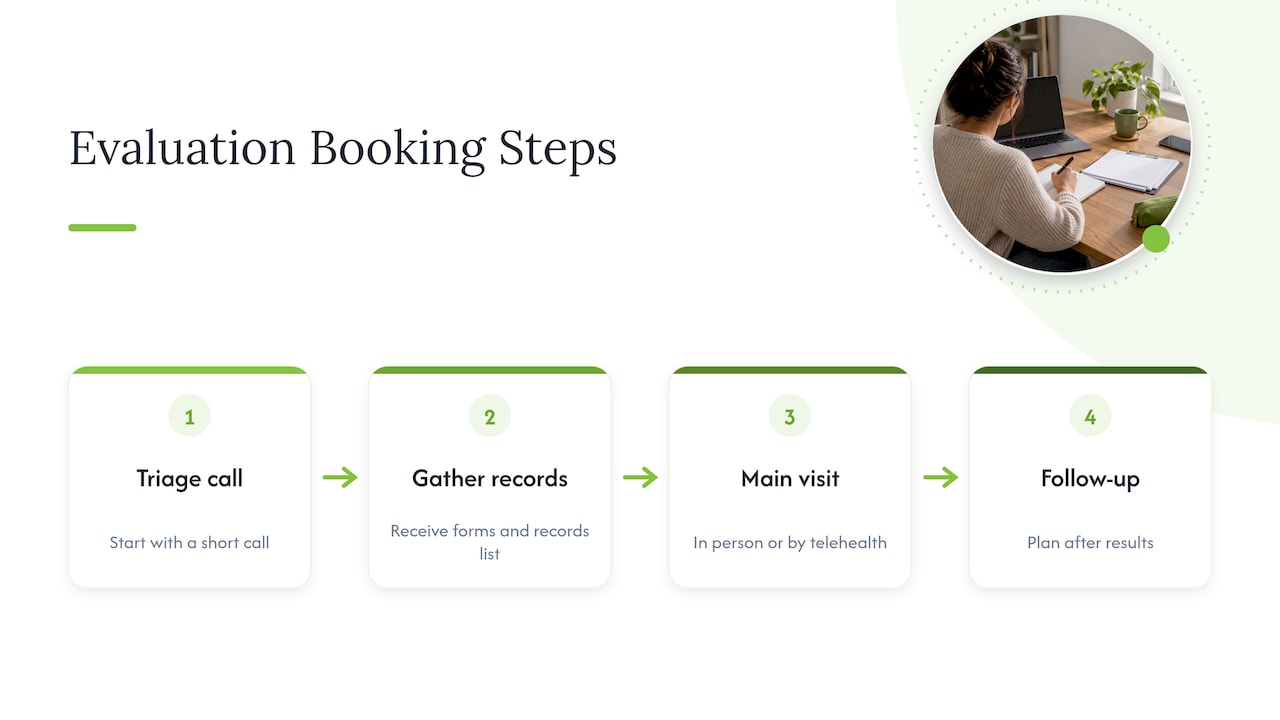
When you are ready, we make the first step simple. You start with a short triage call, receive your forms and a list of records to gather, and schedule the main visit in person or by telehealth. We then plan follow-up once we have your results. Our page on the advantages of psychiatric evaluations shows what that looks like in practice. Please check your insurance coverage and fees before the visit. To get started, contact our team at Nortex Psychiatry and tell us what you are hoping to figure out.
This article is general information, not a substitute for advice from a qualified doctor. Consult a qualified healthcare professional about your own circumstances before acting on anything here.
FAQ
What is attention-deficit/hyperactivity disorder (ADHD)?
ADHD is a neurodevelopmental condition marked by ongoing patterns of inattention, hyperactivity, and impulsivity that interfere with daily life. It is typically diagnosed in childhood but can be identified in adulthood, as MedlinePlus Magazine explains. Diagnosis rests on symptoms, history, and behavior across settings.
How long does an ADHD evaluation take?
Many adult clinical visits are focused, and fuller evaluations with collateral input take longer. Testing-based evaluations can add four to six hours, per the CMS billing guidance. Children’s evaluations often stretch across several contacts.
Can one appointment diagnose ADHD?
Sometimes, when your history is clear and records or collateral are ready. A single visit can include the interview and rating scales, but many people need follow-up for outside input. There is no single diagnostic test, so the clinician combines several sources.
How does ADHD affect sleep?
Many people with ADHD have trouble winding down or keeping a steady sleep schedule, and poor sleep can also mimic attention symptoms. For that reason, we screen sleep as part of the evaluation and treat it as something to sort out, not assume.
How can I support someone getting evaluated?
Offer to provide your own observations, help gather old school or medical records, and attend if invited. Collateral from someone who knows the person well often makes the evaluation faster and more accurate.
Sources
- Attention-Deficit/Hyperactivity Disorder: What You Need to Know – National Institute of Mental Health (NIMH)
- Nimh
- ADHD Screening: MedlinePlus Medical Test
- Article – Billing and Coding: Psychological and Neuropsychological Tests (A57780)
- Pmc