


The standard outpatient ketamine infusion protocol calls for 0.5 mg/kg given intravenously over about 40 minutes, a regimen that dose-ranging trial data support as effective for depression. Most patients complete a series of these infusions, often twice weekly for several weeks, to build and hold the benefit. Before any of that starts, we screen carefully and monitor closely throughout the visit.
TL;DR:
- The common outpatient ketamine dosage is 0.5 mg/kg given over 40 minutes, with twice-weekly infusions during a four-week induction to maintain antidepressant effects.
- Patients with pregnancy, uncontrolled hypertension, severe cardiovascular or respiratory issues, active psychosis, or substance use disorders should delay or avoid treatment.
- Infusions usually last about two and a half hours from arrival to discharge, requiring careful pre-infusion screening and post-infusion monitoring for side effects.
- Most patients experience short-term relief lasting 3 to 7 days, with repeated infusions needed to extend benefits, and response varies by individual.
- Safety measures include continuous vital sign monitoring, and infusion is paused or stopped if blood pressure, heart rate, or respiratory issues become unsafe.
Table of Contents
- The dosing and scheduling evidence behind the protocol
- Pre-infusion screening and who should not receive this treatment
- What a typical infusion day actually looks like
- Side effects, safety checks, and when we stop an infusion
- How maintenance dosing gets scheduled after induction
- How fast it works and how long the relief tends to last
- Our approach to protocol design at Nortex Psychiatry
- Scheduling a consultation for ketamine therapy
- Sources
- FAQ
The dosing and scheduling evidence behind the protocol
We did not arrive at 0.5 mg/kg by guesswork. Dose-ranging randomized trials tested several doses against an active placebo and found that 0.5 mg/kg and 1.0 mg/kg produced meaningfully better antidepressant response, while lower doses generally did not separate from placebo. That is why 0.5 mg/kg over 40 minutes has become the common starting point in outpatient psychiatric clinics, though your clinician may adjust it based on how you respond and tolerate the medication.
A single infusion rarely holds. Randomized trial data on repeated dosing show that twice-weekly infusions during an induction phase sustain the antidepressant effect better than a one-off session, and twice-weekly appears to work about as well as more frequent dosing.
A few practical points shape how we apply this:
- The 0.5 mg/kg starting dose is the most widely used and evidence-supported regimen for outpatient depression treatment.
- Induction courses commonly run twice weekly for around four weeks, totaling roughly eight infusions.
- Clinicians sometimes calculate dose using ideal body weight rather than actual weight in patients with a higher BMI, largely to manage cardiovascular load.
Pre-infusion screening and who should not receive this treatment
Not everyone is a candidate, and we would rather find that out before you are in the chair with an IV in your arm. Screening guidance for IV ketamine protocols identifies several conditions that rule out or delay treatment until they are addressed.
- Pregnancy is a contraindication, so a pregnancy test is standard for anyone who could be pregnant.
- Poorly controlled hypertension or significant cardiovascular or respiratory disease needs to be stabilized first.
- Active psychosis and active substance use disorder are also contraindications, since ketamine can worsen either.
Before your first infusion, expect a urine drug screen, baseline vitals, and a full psychiatric assessment. We also review your current medications for stability, since abrupt changes around the time of treatment can complicate the picture, and we walk through informed consent so you understand the risks and what a session actually involves before you sign anything. For a deeper look at how infusions compare with other delivery routes, our guide to ketamine delivery methods covers that ground.
What a typical infusion day actually looks like
Patients often ask us to walk them through the day step by step, so here is roughly how it goes.
- Arrive having followed any fasting or medication instructions given at your prior visit, and bring someone who can drive you home afterward.
- A nurse places an IV and records baseline vitals, and you may complete a brief mood measure such as the PHQ-9 before starting.
- The infusion runs over about 40 minutes, with vitals and a quick dissociation check every 10 to 15 minutes.
- Once the infusion ends, monitoring continues, with checks around the 80-minute mark as dissociative effects typically ease.
- A final assessment near 120 minutes confirms your vitals have returned toward baseline, your thinking has cleared, and you are steady enough to be discharged.
Pro Tip: Plan for your infusion appointment to take close to two and a half hours from arrival to discharge, even though the medication itself only runs for 40 minutes.
Our own preparation guide covers what to eat, wear, and bring in more detail. The short version: come rested, arrange your ride ahead of time, and do not plan to drive, operate machinery, or make major decisions for the rest of that day.
Side effects, safety checks, and when we stop an infusion
Most patients tolerate ketamine infusions well, but side effects during the session are common and expected rather than alarming. Dissociation (a floaty, dreamlike sense of detachment) is the most frequent, along with mild sedation, nausea, and a temporary rise in blood pressure or heart rate.
Transient blood pressure elevation and dissociation are the most commonly reported acute effects, and monitoring studies describe checking vitals every 10 to 15 minutes during infusion and continuing observation for up to 120 minutes afterward specifically because of this pattern.
We slow or stop an infusion when we see:
- A marked rise in blood pressure or heart rate beyond what we consider safe for you individually.
- Signs of poor perfusion, such as chest discomfort or visible distress.
- Respiratory symptoms of any kind.
- Severe agitation, or simply your own request to pause or stop.
If something comes up, the usual response is to slow the infusion rate, give it time, and reassess before deciding whether to continue.
How maintenance dosing gets scheduled after induction
Once you finish the initial induction course, the schedule loosens. Most patients move from twice-weekly infusions to something spaced out, often weekly at first and then monthly, depending on how well the benefit holds between sessions.
- We use symptom measures and a clinical conversation at each visit to decide whether to space infusions further apart or bring them closer together.
- If depressive symptoms start creeping back sooner than expected, that is usually the signal to tighten the interval rather than wait it out.
- Maintenance infusions typically run alongside your existing antidepressant medication and any psychotherapy you are already doing, not as a replacement for either.
Our scheduling guide goes into more detail on how that spacing decision actually gets made over time.
How fast it works and how long the relief tends to last
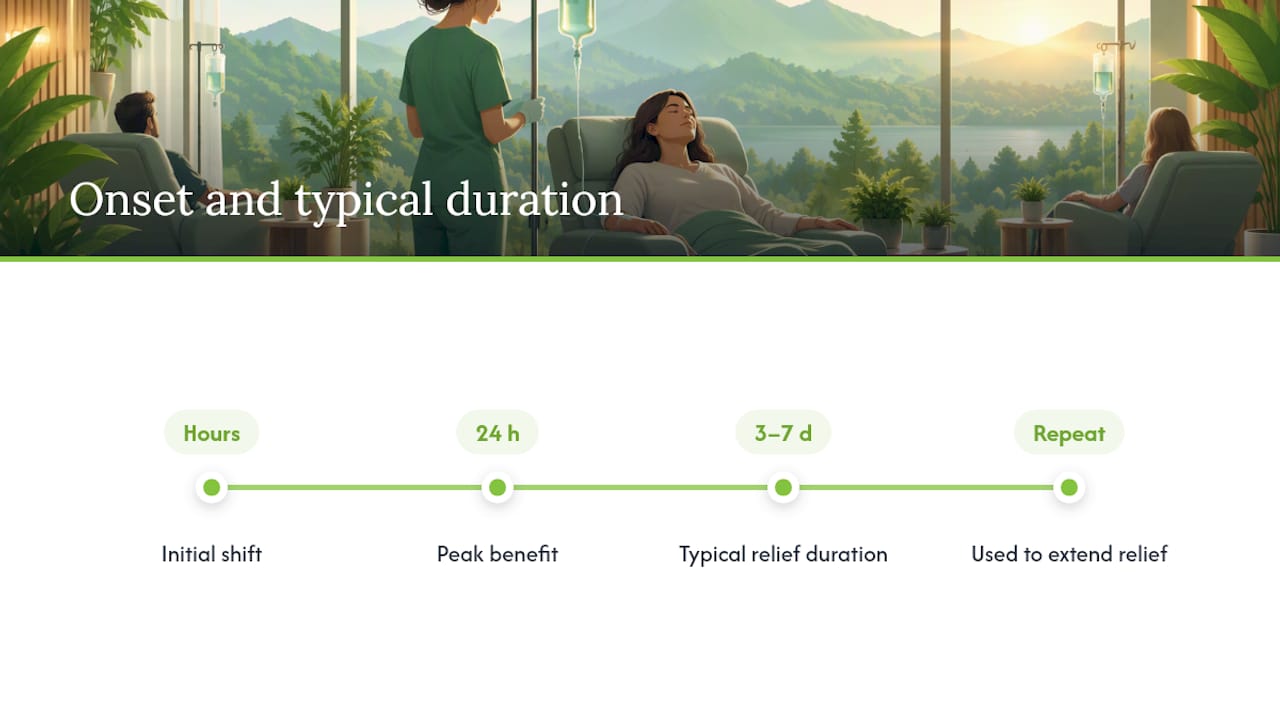
Many patients notice something shift within hours of an infusion, with benefit commonly peaking around 24 hours and lasting somewhere between 3 and 7 days after a single session, according to guideline-level reviews. That is exactly why repeated infusions exist: to stretch a short-lived lift into something more durable. Response varies quite a bit from one person to the next, and long-term data on repeated courses is still thinner than we would like, which is part of why ongoing follow-up and adjunctive care matter as much as the infusion itself. Our overview of ketamine’s evidence in treatment-resistant depression goes deeper into what the research does and does not yet show.
Our approach to protocol design at Nortex Psychiatry
We built our ketamine program around the same principle that runs through the rest of our practice: the protocol should fit you, not the other way around. That means individualized dosing decisions, careful pre-treatment screening, and vital sign monitoring that does not get rushed because the schedule is busy. We treat the induction phase as a starting point for a conversation, not a fixed prescription, and we adjust based on how you actually respond session to session. Safety and shared decision making guide every step, from the first screening call through discharge criteria on treatment day.
— Felix
Scheduling a consultation for ketamine therapy
If you have tried standard antidepressants without enough relief, or you are dealing with a mood disorder that has not responded the way you hoped, an initial consult is where we figure out whether this protocol makes sense for you. That visit covers your history, current medications, and any conditions that might rule out infusion therapy, along with a plain conversation about what the induction schedule would look like for your situation.
Getting started is straightforward:
- Book a consultation through our ketamine therapy page, where you can also see how the program is structured.
- Expect some paperwork and possibly lab work or a drug screen before your first infusion is scheduled.
- Arrange transportation ahead of time, since you will need someone to drive you home after each session.
- Ask about insurance during your consult. Coverage for ketamine infusions varies, and our insurance guide walks through what to check before you commit.
Sources
- Double-blind, dose-ranging IV ketamine trial (PMC6447473)
- Phase 2 randomized trial on repeated IV ketamine dosing (AJP 2016)
This article is general information, not a substitute for advice from a qualified doctor. Consult a qualified healthcare professional about your own circumstances before acting on anything here.
FAQ
How quickly does a ketamine infusion start working?
Many patients notice a shift within hours, with effects commonly peaking around 24 hours after the infusion. Benefit from a single session tends to fade within 3 to 7 days, which is why repeated infusions are used.
Can I drive myself home after a ketamine infusion?
No, you should not drive yourself. Dissociative effects can linger past discharge, so plan to have someone drive you home and avoid operating machinery for the rest of that day.
Will my blood pressure be monitored during the infusion?
Yes, vitals including blood pressure are checked every 10 to 15 minutes during the infusion and periodically for up to two hours afterward, since transient blood pressure elevation is one of the more common acute effects.
Is ketamine infusion safe during pregnancy?
No. Pregnancy is considered a contraindication for IV ketamine protocols, and screening guidance recommends ruling it out before treatment begins.
How many infusions are typically needed before I see results?
Induction courses commonly run twice weekly for about four weeks, and randomized trial data show this schedule sustains benefit better than a single session, though individual response varies.