


Maintenance TMS can lower relapse risk for people who responded to acute treatment, particularly if you’ve had treatment-resistant depression or multiple prior episodes. A systematic review of maintenance protocols found real relapse-prevention benefit, though studies vary widely in how they deliver it. The MAINT-R randomized trial backs this up directly, showing rTMS held its own against lithium for relapse prevention in treatment-resistant depression, with fewer side effects. A 2026 Dutch-Flemish consensus statement now recommends individualized maintenance plans rather than a one-size protocol.
You’re probably in this article because acute TMS worked for you, or for someone you love, and now you’re wondering what comes next. That’s a fair question, and not one with a single right answer. Here’s who tends to benefit most from ongoing TMS maintenance sessions:
- You have treatment-resistant depression that didn’t respond well to two or more medication trials.
- You’ve had three or more depressive episodes over your lifetime.
- Your acute TMS course improved symptoms but didn’t get you to full remission.
- You noticed symptoms creeping back within the first few months after finishing acute treatment.
Pro Tip: If your mood started slipping within six to eight weeks of finishing acute TMS, don’t wait for a full relapse to bring it up with your provider. Early intervention with a booster course is usually easier and shorter than starting over from scratch.
Key Takeaways
Maintenance TMS reduces relapse risk for people who responded to acute treatment, and works best as an individualized plan rather than a fixed, indefinite schedule.
| Point | Details |
|---|---|
| Evidence supports maintenance | Systematic reviews and the MAINT-R trial show reduced relapse risk with maintenance rTMS, comparable to lithium but with fewer side effects. |
| Best candidates are specific | Treatment-resistant depression, three or more prior episodes, and incomplete remission are the strongest indicators for maintenance. |
| Protocols vary widely | Single-session, clustered, tapering, and retreatment approaches are all used, with clustering gaining more support. |
| Monitoring matters | Regular mood scale check-ins catch early relapse signs, especially around the five-month post-acute window. |
| Nortexpsychiatry builds individualized plans | The clinic coordinates maintenance scheduling with medication management and offers telehealth follow-up to reduce visit burden. |
Table of Contents
- What TMS Maintenance Actually Means
- What the Evidence Actually Shows About Relapse Prevention
- Common TMS Maintenance Protocols You’ll Encounter
- Who Is Most Likely to Benefit From Maintenance
- How TMS Compares With Other Relapse-Prevention Options
- Safety, Side Effects, and What Monitoring Looks Like
- How Clinicians Decide on a Maintenance Plan
- Cost, Insurance, and What to Ask Your Provider
- How Nortexpsychiatry Structures Maintenance TMS Care
- Ready to Talk About Whether Maintenance TMS Fits Your Situation?
- Sources
- FAQ
What TMS Maintenance Actually Means
Maintenance TMS refers to periodic, lower-frequency sessions delivered after you’ve completed and responded to an acute course, with the specific goal of keeping you in remission. It’s a different animal from tapering, and different again from retreatment, though clinics sometimes use the terms loosely enough to confuse patients.
Tapering describes the gradual reduction in session frequency right at the end of your acute course, easing you off treatment rather than stopping abruptly. Think of it as a landing, not a destination. Maintenance, by contrast, is an ongoing plan, sometimes lasting many months, built around the idea that your brain needs periodic reinforcement to hold onto the gains from acute treatment. Retreatment is different still: it’s essentially restarting a shortened acute-style course after symptoms have already returned, rather than trying to prevent that return in the first place.
We find patients often assume “maintenance” means committing to TMS forever. It doesn’t have to. The Dutch-Flemish consensus statement is explicit about this: the goal is finding the fewest sessions needed to hold remission, not defaulting to indefinite treatment because that feels safer.
| Approach | Typical timing | Session frequency | Main clinical goal |
|---|---|---|---|
| Acute treatment | Initial course | Daily sessions, 5 days/week for 4 weeks | Achieve remission or response |
| Tapering | End of acute course | Gradually spaced sessions over 1–3 weeks | Smooth transition off daily treatment |
| Maintenance | Starts 1 week to 1 month post-acute | Single sessions every 2–4 weeks, or monthly clusters | Prevent relapse over the long term |
| Retreatment | After symptom recurrence | Shortened acute-style course | Regain response after relapse |
What the Evidence Actually Shows About Relapse Prevention
The honest answer here is: maintenance TMS helps, but the studies backing it up are a mixed bag, and you should know that going in. A 2023-2024 systematic review covering 14 studies found maintenance protocols meaningfully reduce relapse risk in people who responded to acute treatment. But the same review flagged a real problem: protocols across these studies were wildly inconsistent in frequency, target, and duration, which makes it hard to say definitively “do X and you’ll get Y outcome.”
One finding stood out to us. The review noted that relapse risk climbs noticeably around the five-month mark after acute treatment ends, and that maintenance schedules delivering only one or two sessions per month were often not enough to hold that line. That’s a meaningful detail if you’re the kind of patient who wants to space visits out as much as possible. Spacing sessions too far apart isn’t automatically better.
The strongest piece of evidence we have is the MAINT-R randomized clinical trial, which enrolled 75 people with treatment-resistant depression and compared low-frequency maintenance rTMS directly against lithium over 24 weeks. Relapse numbers came out similar between the two groups, about seven in each arm. What differed sharply was tolerability: only 3 adverse events in the rTMS group compared with 16 in the lithium group. That’s a meaningful signal if medication side effects have been part of your struggle.
Where the evidence is thin: most studies are small, follow-up periods rarely extend beyond six months to a year, and there’s no global consensus on the “right” maintenance frequency. The Dutch-Flemish consensus drew on 22 studies and expert survey input specifically because head-to-head trial data remains limited. Treat any specific number you see (including the ones in this article) as a reasonable estimate from the best available data, not a guarantee.
Common TMS Maintenance Protocols You’ll Encounter
In practice, maintenance TMS tends to fall into a handful of recognizable patterns. None of them is universally “correct,” and the right one for you depends on how you responded to acute treatment, how far you live from a clinic, and how your symptoms have behaved historically.
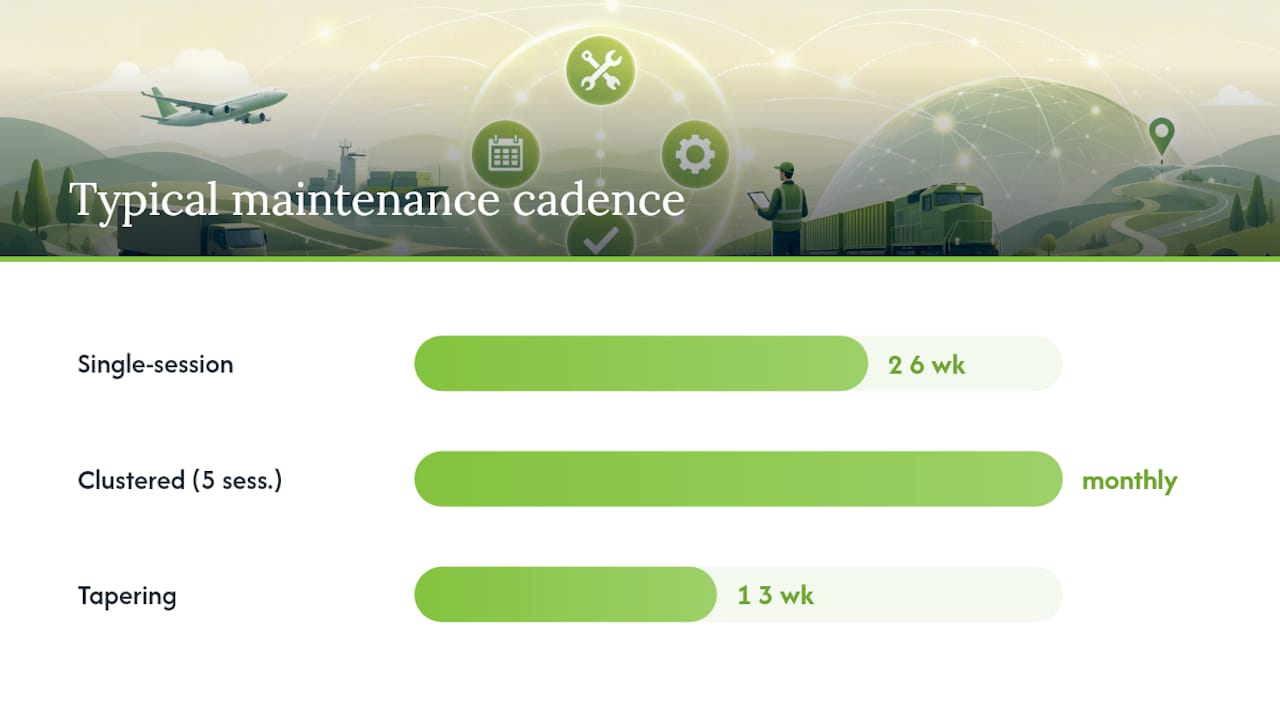
- Single-session maintenance: one TMS session every two to four weeks, often the first thing clinics try because it’s simple to schedule.
- Clustered maintenance: multiple sessions, often five, condensed into two to five days, repeated monthly. RANZCP guidance describes this as a practical alternative delivered every three to six weeks.
- Tapering-to-maintenance: a gradual step-down from daily acute sessions into a spaced maintenance rhythm, often used as a bridge rather than a standalone plan.
- Rescue or retreatment protocols: holding off on scheduled maintenance altogether and instead restarting a short acute-style course only if symptoms return. Clinical commentary on retreatment strategies notes this often works with fewer sessions than the original course required.
Timing matters more than most patients expect. Studies reviewed by researchers show maintenance typically starts anywhere from one week to one month after finishing acute treatment, and a four-week gap is common in clinical practice. That window gives your response time to stabilize before you commit to an ongoing schedule, and it lines up with when relapse risk starts becoming more relevant.
On the technical side, most of the maintenance evidence we have comes from high-frequency stimulation over the left dorsolateral prefrontal cortex, the same target used in standard acute protocols. Low-frequency right-sided stimulation shows up in some studies too, particularly the MAINT-R trial. Neither approach has a clear edge established by head-to-head research, and we don’t recommend any specific device brand over another. The choice tends to hinge on what protocol your clinic already delivers well.
| Protocol type | Typical schedule | Starting point after acute course |
|---|---|---|
| Single-session | Every 2–4 weeks | 1 week to 1 month |
| Clustered | 5 sessions over 2–5 days, repeated monthly | 1 week to 1 month |
| Tapering | Spaced sessions over 1–3 weeks | Immediately following acute course |
| Rescue/retreatment | Short acute-style course on relapse | Triggered by symptom return |
For more on how the underlying stimulation parameters and devices work, our breakdown of TMS machines and techniques covers that ground in more depth.
Who Is Most Likely to Benefit From Maintenance
Not everyone who finishes acute TMS needs a maintenance plan. Some people respond, stay well for years, and never look back. But certain patterns in your history raise the odds that ongoing sessions will pay off.
- Treatment-resistant depression, meaning you’ve tried two or more adequate medication trials without lasting relief.
- Three or more lifetime depressive episodes, a pattern that generally predicts higher recurrence risk regardless of treatment type.
- Incomplete remission after your acute TMS course. You improved, but you’re not fully symptom-free.
- Early post-acute worsening, where mood symptoms start returning within the first two to three months of finishing treatment.
- Poor tolerance of maintenance medications like lithium, where side effects have made long-term adherence difficult.
On the flip side, certain factors call for caution or a different plan altogether. A history of seizures, metal implants near the treatment site, or unstable medical conditions are standard contraindications for any TMS course, acute or maintenance. If you’re pregnant, very young, or managing complex comorbid conditions, the evidence base for maintenance TMS specifically gets thin fast, and decisions in these situations should be individualized with your psychiatrist rather than driven by general guidelines. Our guide on TMS efficacy for treatment-resistant depression goes deeper into candidacy criteria for acute treatment, most of which carries over here.
How TMS Compares With Other Relapse-Prevention Options
Maintenance TMS isn’t the only tool for keeping depression from coming back. Medication, psychotherapy, ECT, and ketamine all have roles here, and the honest answer is that the best choice often depends on what you’ve already tried and how you tolerated it.
The clearest head-to-head comparison we have is the MAINT-R trial pitting low-frequency rTMS against lithium. Relapse rates came out roughly equal, but the tolerability gap was stark, with far fewer adverse events in the rTMS arm. That doesn’t mean lithium is a poor choice; for many people it works well and monitoring is straightforward. It does mean rTMS deserves serious consideration if medication side effects are the reason you’re looking at alternatives in the first place.
- Medication (lithium, antidepressants): effective for many, but requires ongoing blood monitoring in some cases and carries a higher burden of systemic side effects.
- Psychotherapy: no device-related side effects at all, though evidence for it as a standalone relapse-prevention strategy after acute TMS specifically is limited.
- ECT: often highly effective for severe or treatment-resistant cases, but comes with more pronounced cognitive side effects, particularly around memory.
- Ketamine: can work quickly, but logistics around dosing frequency and monitoring for misuse potential add complexity that maintenance TMS doesn’t carry.
In practice, these options aren’t always either/or. Many patients combine maintenance TMS with a lower medication dose or ongoing therapy, rather than relying on a single approach. Our side-by-side comparison of TMS and medication walks through that tradeoff in more detail if you’re weighing both.
Safety, Side Effects, and What Monitoring Looks Like
TMS maintenance carries a favorable safety profile overall, but “favorable” doesn’t mean risk-free, and knowing what to expect helps you flag problems early rather than white-knuckling through them.
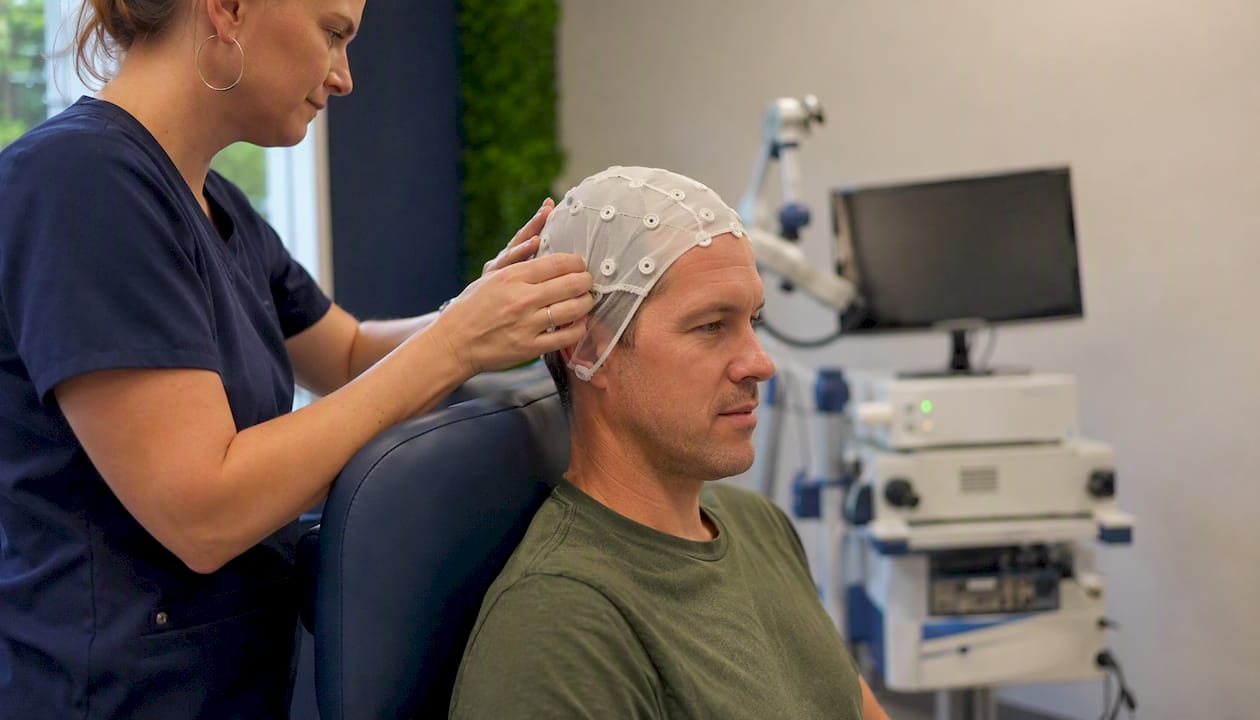
The most common side effects are mild: scalp discomfort at the treatment site and headache, both of which usually ease within the first few sessions and rarely require you to stop treatment. Seizure risk exists but is rare, and it’s the reason clinics screen carefully for seizure history before starting any TMS course, acute or maintenance. The MAINT-R trial recorded only 3 adverse events across the rTMS group over 24 weeks, a useful data point when you’re weighing the risk profile against medication alternatives.
Monitoring during maintenance typically follows a fairly predictable rhythm in outpatient clinics:
- Validated mood scales (like the PHQ-9 or a comparable depression rating tool) administered at regular intervals, often monthly.
- Check-ins to catch early symptom recurrence before it becomes a full relapse, especially important given that relapse risk tends to climb around the five-month mark.
- A plan for what triggers a course adjustment, whether that’s adding sessions, shortening the interval, or moving toward retreatment.
Before starting maintenance, your provider should complete a baseline seizure risk screen, review your current medications for interactions, and confirm no new contraindications have developed since your acute course. If you’re also managing a co-occurring substance use concern, coordinating that care matters too; resources like substance use treatment facility listings can help when that kind of coordination is needed alongside psychiatric care.
How Clinicians Decide on a Maintenance Plan
Choosing a maintenance schedule isn’t a formula you plug numbers into. It’s a conversation, built around your specific history and what’s realistic for your life. Here’s roughly how that conversation tends to unfold:
- Assess relapse risk. Your clinician looks at how many prior episodes you’ve had, how you responded to acute TMS, and whether remission was full or partial.
- Review your response pattern. Did symptoms improve steadily, or did they plateau partway through? That pattern often predicts how much reinforcement you’ll need going forward.
- Factor in your preferences and logistics. Some patients strongly prefer fewer visits even if it means slightly higher relapse risk; others want maximum protection and don’t mind the extra trips. Both are valid starting points.
- Check for comorbidities. Anxiety, substance use, or unstable medical conditions can all shift the calculus toward more conservative monitoring.
- Set stopping or spacing criteria upfront. Sustained remission over a defined period, often several months, alongside stable scale scores, is a common signal to space sessions out further or stop altogether.
Questions worth bringing to that conversation: How will we know if maintenance is working? What does a “good enough” response look like before we consider spacing out sessions? What’s the plan if symptoms start returning between visits? A clinician who welcomes these questions is one you can trust to adjust the plan as you go, rather than defaulting to a rigid schedule because it’s easier to manage.
Cost, Insurance, and What to Ask Your Provider
Maintenance TMS involves real logistical and financial considerations, and it’s worth walking into that conversation informed rather than surprised partway through treatment.
Insurance coverage for maintenance sessions varies considerably by plan, and many insurers require preauthorization before approving ongoing sessions beyond the initial acute course. Don’t assume coverage carries over automatically just because your acute course was approved; ask specifically about maintenance authorization before you commit to a schedule.
- Ask whether preauthorization is required for maintenance sessions separately from acute treatment.
- Ask about the expected length of each maintenance visit, since single sessions typically run shorter than acute daily appointments.
- Ask whether clustered scheduling is available to reduce the number of separate trips you need to make.
- Ask how maintenance TMS will be coordinated with your existing medication management, especially if you’re seeing a separate prescriber.
Transportation and time burden deserve real weight in this decision. If you’re driving 30 or 40 minutes each way for a single 20-minute session, clustering multiple sessions into one or two visits per month can meaningfully cut down the total time cost without giving up the clinical benefit.
How Nortexpsychiatry Structures Maintenance TMS Care
We built our approach around a simple idea: maintenance shouldn’t be an afterthought bolted onto the end of your acute course. It should be planned from the start, and adjusted as we learn how you actually respond.
Here’s roughly how that plays out in our clinic:
- We establish a clear baseline before acute treatment even begins, including symptom scores and history of prior episodes, so we have something concrete to measure maintenance decisions against later.
- After your acute course, we schedule structured follow-up rather than leaving the next step vague, checking in specifically to catch early signs of symptom return.
- We walk through maintenance options with you directly, weighing single-session versus clustered schedules against your logistics and preferences, rather than defaulting to one protocol for every patient.
- We coordinate maintenance scheduling with your medication management so the two aren’t happening in silos.
- We offer telehealth options for certain follow-up check-ins, which can reduce the total number of in-person trips required.
Pro Tip: If commute time is your biggest barrier to sticking with maintenance, ask about clustering sessions into a single week each month rather than spreading them out. It keeps the clinical benefit intact while cutting down how often you need to show up.
A Clinician’s View on What Maintenance Really Requires
In our experience, the patients who do best with maintenance TMS aren’t the ones who commit to the most aggressive schedule. They’re the ones who stay in the loop with their provider and adjust course when something shifts. We’ve seen people space sessions out successfully after six months of stability, and we’ve seen others need to tighten the schedule back up after a stressful life event triggered early symptom return. Neither outcome is a failure. It’s just what depression recurrence tends to look like in practice, and the literature backs that unpredictability up more than it offers a clean formula.
What we push back on is the assumption that maintenance means an indefinite commitment. The research doesn’t support that framing, and neither does our clinical experience. The goal is always the lowest-burden schedule that keeps you well, not the longest one available.
Ready to Talk About Whether Maintenance TMS Fits Your Situation?
If you’ve completed acute TMS and you’re wondering what comes next, or you’re still early in exploring treatment options for treatment-resistant depression, Nortexpsychiatry can walk through that decision with you directly rather than leaving you to guess at a generic protocol. Unlike a one-size approach some larger centers default to, we build maintenance plans around your actual response pattern and your logistics, with telehealth options available for North Dallas patients who want to cut down on drive time for follow-up check-ins.
A first evaluation typically covers your treatment history, current symptom levels, and a realistic look at whether maintenance, retreatment, or a different approach entirely makes the most sense for you. If you’re ready to have that conversation, you can schedule a psychiatric evaluation and start mapping out a plan that fits your actual life, not a template.
Sources
For readers who want to go straight to the primary literature, these are the core sources behind this guide, ranked roughly by evidence strength. Randomized controlled trials like MAINT-R carry the strongest weight because they compare treatments head-to-head. Systematic reviews synthesize many smaller studies but inherit their inconsistencies. Consensus statements reflect expert agreement where trial data is still limited.
- Investigating the Role of Maintenance TMS Protocols for Major Depression: Systematic Review and Future Perspectives for Personalized Interventions
- Consensus statement on the maintenance treatment of depression with rTMS in the Netherlands and Belgium
This article is general information, not a substitute for advice from a qualified doctor. Consult a qualified healthcare professional about your own circumstances before acting on anything here.
FAQ
How often do you need TMS maintenance?
Most maintenance schedules involve a single session every two to four weeks, or clustered sessions of about five treatments over two to five days repeated monthly, though the right frequency depends on your relapse risk and response history.
What is the controversy with TMS?
The main debate centers on maintenance protocols specifically, since systematic reviews show significant inconsistency across studies in session frequency, target site, and duration, making it hard to pin down one universally “correct” approach.
Is there a downside to TMS treatment?
TMS carries a favorable safety profile compared with many medications, but it can cause scalp discomfort and headache, and it requires seizure screening beforehand since seizure is a rare but real risk.
Do you have to do TMS therapy forever?
No. The Dutch-Flemish consensus statement specifically recommends against defaulting to indefinite treatment, instead advising clinicians to find the fewest sessions needed to keep you in remission, with stopping or spacing decisions based on sustained symptom stability.
Recommended
- How Long Should You Continue TMS Therapy? A Complete Treatment Timeline Guide – Nortex Psychiatry
- Does TMS Therapy Have Long-Term Benefits? – Nortex Psychiatry
- Can TMS Therapy Prevent Depression Relapse? What Experts Say – Nortex Psychiatry
- TMS Tech Talk: Exploring Machines and Techniques – Nortex Psychiatry