


Medication is not a cure, and it was never meant to be. Yet the role of medication in mental wellness is frequently misunderstood — dismissed by some as a crutch, overpraised by others as a complete solution. The truth sits somewhere more nuanced, and that nuance matters if you are trying to make a sound decision about your own care. Whether you are weighing starting a prescription for the first time or wondering whether what you are taking is actually helping, this guide will give you a grounded, honest picture of how medication fits into mental health care and what it can realistically do for you.
Table of Contents
- Key takeaways
- The role of medication in mental wellness: how it works in the brain
- Conditions medication treats and how treatment gets personalized
- Benefits and realistic limits of psychiatric medication
- Integrating medication with therapy and lifestyle
- Addressing common fears about mental health medication
- My honest take after years of this work
- How Nortexpsychiatry can support your medication plan
- FAQ
Key takeaways
| Point | Details |
|---|---|
| Medication manages, not cures | Psychiatric medications reduce symptom intensity to support functioning, not eliminate mental illness permanently. |
| Personalized treatment matters | Symptom profile, medical history, and even genetic factors shape which medication works best for you. |
| Combination care outperforms either alone | Research shows medication paired with therapy produces better outcomes than medication or therapy used separately. |
| Side effects are manageable with communication | Staying in close contact with your prescriber reduces the risk of discontinuing before the medication has time to work. |
| Addressing fears is part of treatment | Concerns about personality changes or dependency are common, and a good provider will address them openly with you. |
The role of medication in mental wellness: how it works in the brain
To understand what medication can do for you, you need to understand what it is actually targeting. Psychiatric medications work by modifying how specific chemical messengers in the brain communicate across nerve cells. These messengers, known as neurotransmitters, include serotonin, dopamine, norepinephrine, GABA, and glutamate. Each plays a role in regulating mood, motivation, fear responses, concentration, and emotional stability.
Psychiatric drug categories target different neurotransmitter systems depending on the condition being treated. A selective serotonin reuptake inhibitor, or SSRI, works differently from a benzodiazepine or a stimulant. That is why there is no single psychiatric medication that works for everyone, or for everything.
Here is a brief breakdown of the major drug categories:
- Antidepressants (SSRIs, SNRIs, tricyclics): Primarily target serotonin and norepinephrine; used for depression, anxiety, PTSD, and OCD
- Antipsychotics (first and second generation): Modulate dopamine and serotonin pathways; used in schizophrenia, bipolar disorder, and severe depression
- Mood stabilizers (lithium, valproate, lamotrigine): Regulate excitatory and inhibitory signaling; primarily used in bipolar disorder
- Anxiolytics (benzodiazepines, buspirone): Enhance GABA activity to reduce acute anxiety; prescribed with caution due to dependency risk
- Stimulants (amphetamines, methylphenidate): Increase dopamine and norepinephrine availability; most commonly used in ADHD
The FDA has approved over 30 psychiatric drugs across these five categories. None of them cure mental illness. What they do is reduce the symptom burden so your brain can function closer to its natural baseline. Think of it less like fixing a broken machine and more like clearing enough static that you can finally hear the signal.
Pro Tip: If a medication does not seem to be working, ask your provider about pharmacogenomic testing. Your body’s cytochrome P450 enzyme variants can significantly affect how you metabolize certain drugs, and a simple test can guide a more precise medication choice.
| Drug Class | Primary Neurotransmitters Targeted | Common Conditions Treated |
|---|---|---|
| SSRIs / SNRIs | Serotonin, norepinephrine | Depression, anxiety, PTSD |
| Antipsychotics | Dopamine, serotonin | Schizophrenia, bipolar disorder |
| Mood stabilizers | GABA, glutamate | Bipolar disorder, seizures |
| Anxiolytics | GABA | Generalized anxiety, panic disorder |
| Stimulants | Dopamine, norepinephrine | ADHD, narcolepsy |
Conditions medication treats and how treatment gets personalized
Medication is not appropriate for every mental health situation, but for certain conditions, it is often a significant part of recovery. The conditions where we most frequently see clear psychiatric medication benefits include:
- Major depressive disorder: Antidepressants remain a frontline treatment, often alongside therapy
- Anxiety disorders (generalized, social, panic): SSRIs, SNRIs, and in some cases short-term anxiolytics
- Bipolar disorder: Mood stabilizers, sometimes combined with atypical antipsychotics
- Schizophrenia and psychotic disorders: Antipsychotics, including long-acting injectable options for those with difficulty maintaining a daily pill regimen
- ADHD: Stimulants and non-stimulant alternatives like atomoxetine
- PTSD: SSRIs plus adjunct medications targeting nightmares or hyperarousal
What makes medication selection genuinely complex is that two people with the same diagnosis can respond very differently to the same drug. Your prescriber considers your full symptom profile, your medical history, other medications you take, and how your body processes drugs. Off-label prescribing is also common. For example, certain antidepressants are frequently prescribed for pain conditions or sleep disruption because the research supports their use beyond the original indication.
Pro Tip: Keep a simple symptom journal during the first few weeks on a new medication. It gives your provider concrete data rather than general impressions, which makes adjustments far more accurate.
Ongoing assessment matters more than the initial prescription decision. Mental health conditions evolve over time, and so do medication needs. Regular check-ins with your prescriber are not optional. They are where the fine-tuning happens.
Benefits and realistic limits of psychiatric medication
The medication effects on emotional wellbeing can be meaningful. For many people, the right medication reduces the severity of symptoms enough to make daily functioning possible again. For others, it provides just enough relief to engage more productively in therapy. The importance of meds in mental health often comes down to this: they lower the floor so you are not in crisis, and that creates room for everything else to work.

But setting realistic expectations matters. Antidepressants, for instance, typically take two to six weeks to produce noticeable effects. Some people go through two or three different medications before finding the right fit. That process can feel discouraging. It is also completely normal.
There are real risks worth knowing:
- Antidepressants carry a suicidal ideation warning for individuals 24 and younger, particularly in the first weeks or after a dose change. Monitoring during this window is not optional.
- Benzodiazepines carry dependency risk with extended use. They work fast, which makes them appealing, but they are generally not a long-term solution for anxiety.
- Some antipsychotics carry metabolic side effects including weight gain and blood sugar changes that require monitoring.
Research from Frontiers in Psychiatry found that treatment adherence often matters more to outcomes than the dose itself. Patients with significant functional impairment are more likely to discontinue early, not because the medication fails, but because daily life makes consistency hard. The same research highlights that early provider contact and education around what to expect significantly reduce that dropout.
Pro Tip: If a side effect is making you consider stopping, call your provider before you do. Many side effects peak in the first two weeks and then settle. Stopping abruptly can cause withdrawal symptoms and set your progress back significantly.
Integrating medication with therapy and lifestyle
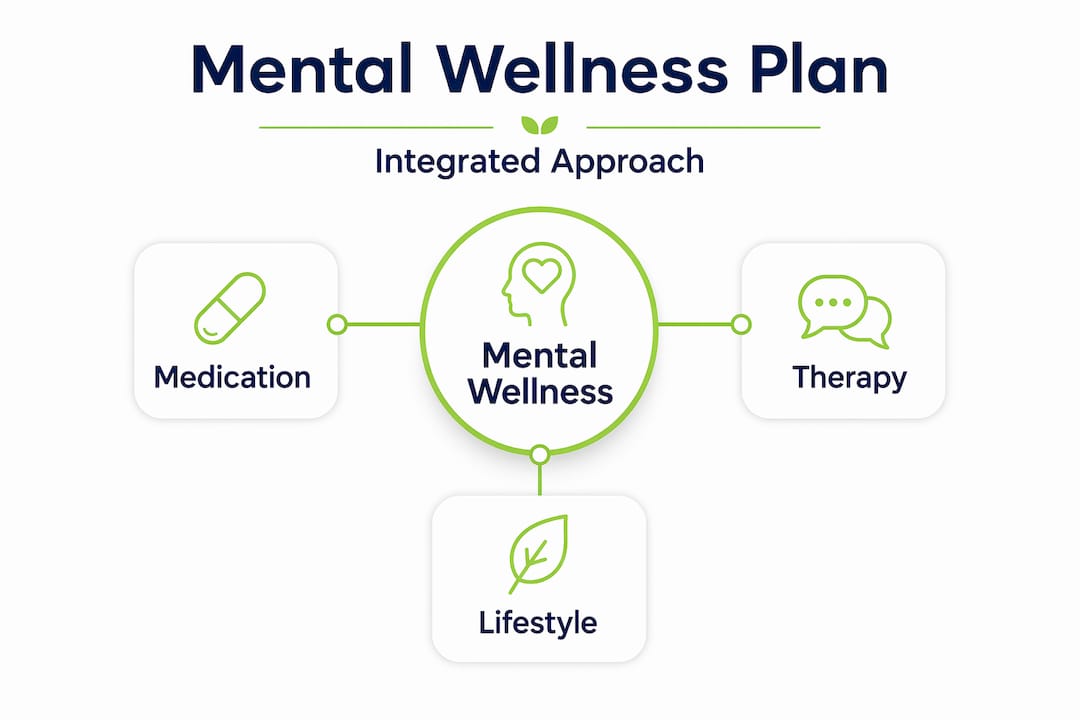
Medication creates a foundation. Therapy builds on it. That is not a metaphor. It is how the clinical evidence actually describes how the two work together, and it is the most accurate framing we have.
Research consistently shows that the combination of medication and therapy outperforms either approach used in isolation for depression and anxiety. Here is a practical way to think about why.
- Medication reduces symptom intensity enough that you can show up to therapy without being in survival mode. If every session is spent just trying to regulate acute distress, there is little bandwidth for learning.
- Therapy builds skills that medication cannot provide, including cognitive restructuring, distress tolerance, boundary-setting, and processing past trauma. These are learned capabilities. They do not come in a pill.
- Sleep, nutrition, and exercise actively influence the same neurotransmitter systems your medication is targeting. Regular aerobic exercise, for example, has measurable effects on serotonin and dopamine. Poor sleep directly undermines antidepressant effectiveness.
- Social connection reduces cortisol and activates reward pathways. Medication alone cannot replicate the neurological benefit of genuine, supportive human contact.
- Consistency across all three areas (medication, therapy, lifestyle) produces the most durable outcomes over time.
You can learn more about how these elements interact when you look at therapy vs. medication decisions and how they can complement each other rather than compete.
Patients who think of medication as the entire plan tend to be disappointed. Patients who see it as one well-chosen piece of a larger picture tend to do better and stay better.
Addressing common fears about mental health medication
Fear and stigma still follow psychiatric medication, even as awareness around mental health has grown. These fears are worth addressing directly, because they often prevent people from getting help that would genuinely change their lives.
“Will medication change my personality?”
This is the most common concern we hear. The honest answer, backed by clinical evidence, is that medication does not change who you are. It reduces the symptoms that are distorting who you are. Unmanaged depression flattens motivation and distorts thinking. Unmanaged anxiety makes you avoidant and hypervigilant. Medication helps those symptoms step back so your actual personality can show up more clearly.
- Feeling emotionally “dulled” is a legitimate side effect worth reporting, not accepting
- Personality shift concerns should always be raised with your prescriber immediately
- Medication is adjusted or changed when the side effect profile is not acceptable to you
“Will I be on this forever?”
Some conditions benefit from long-term medication use. Others require it only through a specific period. Someone going through a single major depressive episode may only need six to twelve months of medication. Someone with bipolar I disorder is likely to benefit from ongoing mood stabilization indefinitely. These are not failures of the medication or of you. They reflect the nature of the underlying condition.
“What if the first one doesn’t work?”
Non-response to one medication does not mean non-response to all of them. The mechanism differs across drug classes and even within them. Finding the right fit is a medical process, not a verdict on your condition.
Pro Tip: Before your next appointment, write down two or three specific questions about your medication. Providers can address fears much more effectively when they know exactly what you are worried about.
My honest take after years of this work
I have watched medication genuinely change the trajectory of people’s lives. Not because it fixed everything, but because it gave them enough stability to start doing the things that actually build a life. Sleep that works. Concentration that holds. Enough emotional room to sit through a therapy session without shutting down completely.
I have also seen the fear patients bring in. The worry that a prescription means something is seriously, permanently wrong. The concern that they are somehow giving up by accepting help from a pill. I try to be honest about what we do and do not know, while also being clear about what the evidence shows.
What I have learned, again and again, is that medication is neither the whole answer nor something to fear. The impact of drugs on mental health is real, and so are the limits. The patients who do best are the ones who stay engaged with their care, speak up when something is not working, and see medication as one part of a larger, personalized approach rather than a final answer.
The goal of psychiatric medication has never been to change you. It has always been to help you find your way back to yourself.
— Felix
How Nortexpsychiatry can support your medication plan
At Nortexpsychiatry, we know that starting or adjusting psychiatric medication brings up a lot of questions. We work with adults across Allen, Frisco, McKinney, Plano, and surrounding North Dallas communities to build individualized treatment plans that integrate medication, therapy, and lifestyle guidance. Every plan is monitored closely, adjusted when needed, and designed around you, not a template.
If you are weighing your options, our TMS vs. medication comparison is a useful starting point for understanding how different treatment paths compare. For those dealing with mood disorders specifically, our personalized mood disorder guide walks through treatment options in detail. Whether you are just getting started or trying to get more out of a plan that is not quite working, we are ready to help you take the next step with real clinical support.
FAQ
What is the role of medication in mental wellness?
Medication reduces the intensity of psychiatric symptoms such as depression, anxiety, and mood instability, creating the stability needed to engage with therapy and daily functioning. It manages symptoms rather than curing the underlying condition.
How does medication aid mental wellness alongside therapy?
Medication paired with therapy produces better outcomes than either alone, particularly for depression and anxiety. Medication lowers symptom load while therapy builds the coping skills and insight that medication cannot provide.
What are the risks of psychiatric medication?
Risks vary by drug class and individual. Antidepressants carry a monitoring warning for younger adults in early treatment, benzodiazepines carry dependency risk with long-term use, and some antipsychotics affect metabolism. Regular communication with your provider is the best way to manage these risks.
Will psychiatric medication change my personality?
No. Medication reduces symptoms that are interfering with your natural self. If you feel emotionally blunted or unlike yourself, that is a side effect worth discussing with your prescriber, not an outcome to accept.
How long does it take for psychiatric medication to work?
Most antidepressants take two to six weeks to produce noticeable effects. Some people require dose adjustments or a different medication before finding what works. Staying in contact with your provider during this window significantly improves outcomes.