


Anxiety is one of the most common mental health challenges adults face, yet one of the most misunderstood when it comes to treatment. Many people assume that seeing a psychiatrist simply means walking out with a prescription. That assumption leaves a lot of people underserved. Psychiatrists are medical doctors trained in both the biological and psychological dimensions of mental health, which means they can do far more than manage medications. They can diagnose specific anxiety disorders, coordinate or deliver therapy, and build treatment plans that adapt as your needs change. Understanding what they actually offer can be the turning point in finally getting your anxiety under control.
Table of Contents
- What psychiatrists actually do for anxiety treatment
- Personalized treatment planning: Medications, therapy, or both?
- Cognitive behavioral therapy (CBT): The gold standard led by psychiatrists
- Addressing treatment-resistant and complex anxiety cases
- Why psychiatrist-guided anxiety care is essential: A practitioner’s view
- Expert psychiatric care in North Dallas: Your next step
- Frequently asked questions
Key Takeaways
| Point | Details |
|---|---|
| Psychiatrists treat anxiety holistically | They diagnose, rule out physical issues, and deliver or coordinate medication and therapy for comprehensive care. |
| CBT is highly effective | Psychiatrists may recommend cognitive behavioral therapy, often as effective as medication and supported by strong research. |
| Advanced options for tough cases | For treatment-resistant anxiety, psychiatrists provide solutions like TMS or medication adjustments unavailable from non-medical providers. |
| Personalized plans improve outcomes | Individualized combinations of medication, therapy, and support are key to lasting anxiety relief. |
What psychiatrists actually do for anxiety treatment
A lot of people are surprised to learn just how much ground a psychiatrist covers in a single evaluation. They are not simply checking boxes before writing a prescription. Psychiatrists are medical doctors specialized in diagnosing mental health conditions, including anxiety disorders in adults, and they perform comprehensive assessments to identify specific anxiety types such as generalized anxiety disorder (GAD), panic disorder, and social anxiety, while also ruling out medical causes.
That last part matters more than most people realize. Thyroid disorders, heart arrhythmias, and even certain vitamin deficiencies can mimic or worsen anxiety symptoms. A psychiatrist is uniquely positioned to evaluate those possibilities because of their medical training, something a therapist or psychologist cannot do on their own.
Here is how a psychiatric evaluation for anxiety typically unfolds:
- Review of symptoms and their timeline: When did the anxiety start? Is it constant or triggered by specific situations?
- Medical history and lab work: Ruling out physical conditions that could be driving or worsening symptoms.
- Assessment of co-occurring conditions: Depression, ADHD, and substance use often travel alongside anxiety.
- Identification of the specific anxiety disorder: GAD, panic disorder, social anxiety disorder, and OCD all respond to different treatment approaches.
- Evaluation of previous treatments: What has been tried before, and why did it work or fall short?
“Psychiatric assessment goes beyond asking how you feel. It is a systematic process of understanding the full picture, medically and psychologically, so that nothing gets missed.” This kind of thorough evaluation is what sets psychiatric care apart from a quick check-in with a general practitioner.
It also helps to understand how psychiatrists differ from other mental health professionals. The table below breaks it down clearly.
| Provider | Can prescribe medication | Provides therapy | Medical training |
|---|---|---|---|
| Psychiatrist | Yes | Yes (many do) | Yes (MD or DO) |
| Psychologist | No (in most states) | Yes | No (PhD or PsyD) |
| Licensed therapist | No | Yes | No |
| Primary care doctor | Yes | Rarely | Yes |
For adults dealing with anxiety that has not responded to basic interventions, or anxiety that seems tangled up with physical health issues, starting with a psychiatrist gives you the most complete starting point. Some psychiatrists also offer TMS therapy for anxiety, which is a non-medication option worth knowing about if you are exploring all your choices.
Personalized treatment planning: Medications, therapy, or both?
With a psychiatrist’s diagnosis in hand, the next step is crafting a treatment plan tailored to your unique symptoms and lifestyle. This is where the real value of psychiatric care shows up. There is no single formula for treating anxiety, and a good psychiatrist will not treat you like there is.

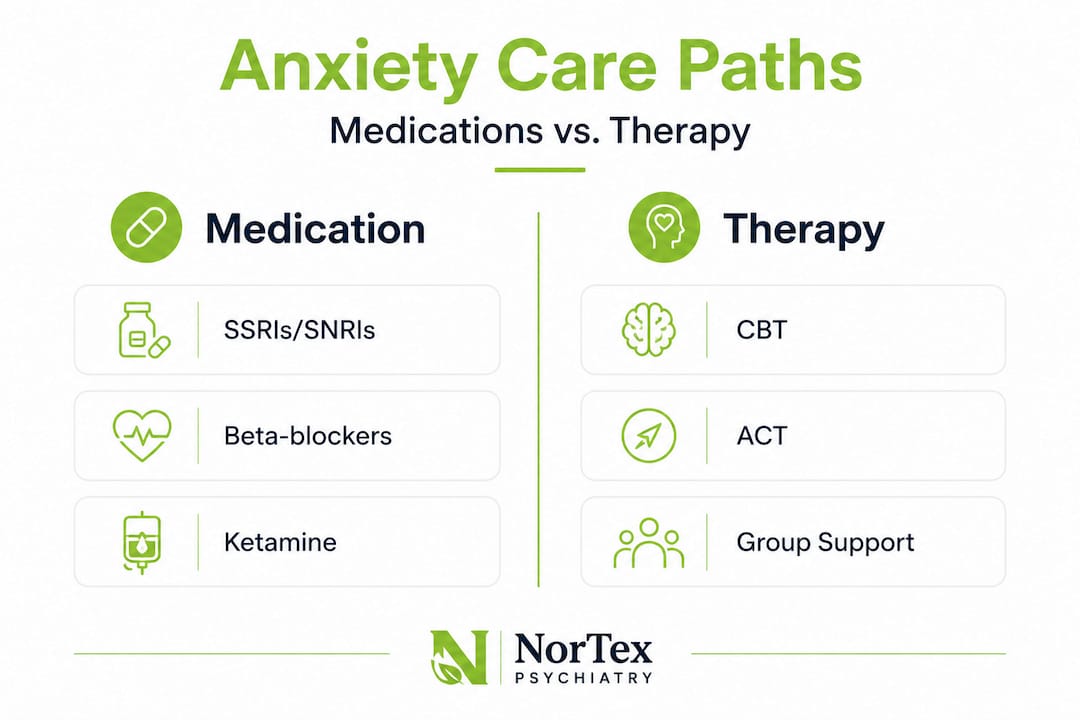
Many psychiatrists provide psychotherapy, particularly cognitive behavioral therapy (CBT), exposure therapy, or acceptance and commitment therapy (ACT), or they coordinate with therapists for integrated care. This means your psychiatric provider is not just handing you a referral and stepping back. They are actively involved in shaping how therapy and medication work together.
When it comes to medications, psychiatrists consider far more than just “what drug treats anxiety.” They weigh:
- Symptom severity and duration: Mild situational anxiety may not need medication at all.
- Specific anxiety disorder type: SSRIs are first-line for GAD and social anxiety, while benzodiazepines may be used short-term for acute panic.
- Your medical history and other medications: Drug interactions and existing health conditions shape every prescribing decision.
- Your personal preferences and concerns: Some people are strongly opposed to medication, and a good psychiatrist respects that while still giving honest guidance.
- Previous treatment responses: If an SSRI did not work before, that history changes the next recommendation.
The table below gives a quick overview of common treatment approaches and when they tend to be used.
| Treatment type | Best suited for | Typical timeline |
|---|---|---|
| SSRIs or SNRIs | GAD, social anxiety, panic disorder | 4 to 8 weeks to take effect |
| CBT | Most anxiety disorders | 12 to 20 sessions |
| Exposure therapy | Phobias, OCD, panic disorder | Varies by severity |
| ACT | Generalized and chronic anxiety | 8 to 16 sessions |
| Combination (med + therapy) | Moderate to severe anxiety | Ongoing, adjusted over time |
Pro Tip: If you have tried therapy before and felt like it was not working, it may be worth asking a psychiatrist whether the type of therapy matched your specific anxiety disorder. Not all therapy approaches work equally well for all anxiety types.
For adults dealing with social anxiety in particular, newer options like ketamine therapy for social anxiety are being studied and used in clinical settings, offering an alternative for those who have not found relief through standard approaches.
Cognitive behavioral therapy (CBT): The gold standard led by psychiatrists
When considering therapy, CBT stands out as the most rigorously studied and often psychiatrist-endorsed approach for anxiety. CBT works by helping you identify and challenge distorted thought patterns, then gradually change the behaviors those thoughts drive. It sounds straightforward, but the process requires skill and structure to be effective.
The research behind CBT is compelling. CBT is the gold standard psychotherapy with large effect sizes (Hedges’ g approximately 1.0 to 1.6 post-treatment), and it is superior or equivalent to medication alone in many studies. For context, an effect size of 1.0 or higher is considered large in clinical research. That is a meaningful outcome.
What makes CBT particularly valuable in a psychiatric setting is the ability to combine it with medication management when needed. A psychiatrist can monitor how both interventions are working together, adjust the medication if it is interfering with therapy progress, and course-correct if symptoms are not improving at the expected pace.
Here is what psychiatrist-led or coordinated CBT typically looks like for anxiety:
- Psychoeducation: Learning how anxiety works in the brain and body, which reduces fear of the symptoms themselves.
- Cognitive restructuring: Identifying automatic negative thoughts and testing whether they are accurate.
- Behavioral experiments: Gradually testing feared situations to gather real evidence against anxiety-driven predictions.
- Exposure work: Facing avoided situations in a structured, supported way to reduce their power over time.
- Relapse prevention: Building a toolkit of skills so you can manage future anxiety flare-ups independently.
Some adults do well with CBT alone, especially when their anxiety is moderate and not complicated by other conditions. Others need medication to lower the baseline level of anxiety enough to engage fully in therapy. That is not a failure. It is just how anxiety works for some people, and a psychiatrist can help you figure out which path fits your situation.
Addressing treatment-resistant and complex anxiety cases
While most anxiety responds to standard treatment, some people face tougher challenges. If you have tried multiple medications or rounds of therapy without meaningful relief, you are not alone, and you are not out of options.
For treatment-resistant anxiety, psychiatrists reassess the diagnosis, switch or augment medications (for example, adding pregabalin or low-dose antipsychotics), or introduce advanced therapies like Transcranial Magnetic Stimulation (TMS). TMS uses targeted magnetic pulses to stimulate specific brain regions involved in mood and anxiety regulation. It is non-invasive, does not require anesthesia, and has a growing body of evidence supporting its use.
When standard treatments fall short, here is how a psychiatrist typically approaches the situation:
- Diagnostic reassessment: Sometimes what looks like GAD is actually a trauma-related condition, a mood disorder, or even a medical issue that was missed initially.
- Medication augmentation: Adding a second medication to boost the effect of the first, rather than starting over entirely.
- Switching medication classes: Moving from an SSRI to an SNRI, or exploring buspirone, beta-blockers, or other options.
- Advanced therapies: TMS, ketamine infusions, or intensive outpatient programs for complex cases.
- Coordinated care: Bringing in specialists such as neurologists or sleep medicine doctors when co-occurring conditions are complicating the picture.
Pro Tip: If you have been told your anxiety is “treatment-resistant,” ask your psychiatrist specifically whether your original diagnosis has been revisited recently. Misdiagnosis is more common than people expect, and getting the right label changes everything about the treatment approach.
For adults dealing with both anxiety and depression that have not responded to standard care, ketamine for treatment-resistant cases is one option that has shown real promise. Similarly, learning about TMS for resistant depression can open doors for people who feel stuck.
Ongoing psychiatric oversight is especially important in complex cases. It is not just about trying new treatments. It is about having someone with the medical knowledge to interpret how your body and mind are responding, and to make adjustments before small problems become bigger ones.
Why psychiatrist-guided anxiety care is essential: A practitioner’s view
Here is something that rarely gets said plainly: most people with anxiety are underserved not because good treatments do not exist, but because they never get access to someone who can see the full picture.
A therapist can do excellent CBT work. A primary care doctor can prescribe an SSRI. But neither of them can do both, and neither of them can pivot between the two based on what your brain and body are telling them week to week. That is the gap that psychiatric care fills, and it is a significant one.
Psychiatrists provide medical expertise essential for adults with severe or medication-needing anxiety, enabling personalized plans that integrate pharmacology with evidence-based therapy for optimal management. That integration is not just convenient. For people with complex or treatment-resistant anxiety, it can be the difference between years of struggling and finally making progress.
We also think the ongoing relationship matters more than people expect. Anxiety treatment is not a one-time event. It is a process that shifts as your life changes, as stressors evolve, and as your brain responds to treatment over time. A psychiatrist who knows your history, your patterns, and your goals can make much more precise decisions than someone seeing you for the first time.
CBT often outperforms medication alone long-term, but psychiatrists’ ability to manage medications makes them central for complex cases, comorbidities, or when rapid symptom control is needed. The honest truth is that neither therapy nor medication is universally superior. What matters is having someone who can read your specific situation and recommend the right combination at the right time.
We believe anxiety care works best when it is not siloed. When the person managing your medication is also tracking your therapy progress, asking the right questions, and adjusting the plan as you grow, that is when people start to feel genuinely better.
Expert psychiatric care in North Dallas: Your next step
If you are an adult in the North Dallas area dealing with anxiety that feels unmanageable or has not responded to previous treatment, Nortex Psychiatry offers the kind of personalized, evidence-based care this article describes. We serve patients across Allen, Frisco, McKinney, Plano, and surrounding communities, with both in-person and telehealth appointments available to fit your schedule.
Our team provides comprehensive psychiatric evaluations, medication management, and coordination of evidence-based therapies. For those who need more than standard options, we also offer advanced treatments. If you are weighing your choices, our guide on TMS therapy vs. medication options is a good place to start. You deserve care that is built around you, not a one-size-fits-all approach. Reach out to us and let’s figure out the right path forward together.
Frequently asked questions
What is the difference between a psychiatrist and a psychologist for anxiety treatment?
Psychiatrists are medical doctors who can prescribe medication and provide psychotherapy, while psychologists primarily focus on therapy and cannot prescribe medication in most states.
When should I see a psychiatrist for my anxiety?
If your anxiety is severe, disrupting daily life, or not improving with therapy alone, a psychiatrist can offer both medical expertise and personalized plans that combine pharmacology with evidence-based therapy.
Can psychiatrists help if standard anxiety treatments fail?
Yes. For treatment-resistant anxiety, psychiatrists can reassess your diagnosis, adjust or augment medications, and recommend advanced options like TMS or ketamine therapy.
Is therapy alone as effective as medication for anxiety?
For many anxiety disorders, yes. CBT shows large effect sizes (Hedges’ g approximately 1.0 to 1.6) and is superior or equivalent to medication alone in multiple studies, though the right approach depends on your specific situation.
Recommended
- TMS Therapy for Anxiety: Can It Really Help? – Nortex Psychiatry
- Does Ketamine Therapy Work for Generalized Anxiety Disorder (GAD)? | Expert Insights – Nortex Psychiatry
- Can Ketamine Therapy Help with Social Anxiety? What Patients Should Know – Nortex Psychiatry
- Power Duo: How Ketamine-Assisted Psychotherapy Maximizes Results – Nortex Psychiatry