


For most nursing mothers, taking an antidepressant while breastfeeding is considered safe, and treating maternal depression is generally the priority. The CDC notes that the benefits of treating a mother’s mental health typically outweigh the small risks tied to medication exposure through milk, and ACOG and LactMed guidance point the same direction. Treatment decisions still need to be individualized, with some monitoring of the infant along the way.
TL;DR:
- Breastfeeding mothers generally have low to very low infant exposure to antidepressants, with sertraline and paroxetine showing the safest profiles and undetectable serum levels in most infants.
- A relative infant dose below 10% is often considered lower-risk, but actual infant serum levels provide the most accurate assessment of exposure.
- Untreated postpartum depression can cause significant long-term risks for mother and child, emphasizing the importance of maintaining maternal mental health through medication when necessary.
- Timing medication doses around feeds can slightly reduce infant exposure but is usually a minor benefit compared to overall adherence to prescribed schedules.
- Monitoring infant feeding, weight gain, sleep, and mood symptoms during maternal treatment is simple and essential, especially for preterm or medically fragile infants.
Table of Contents
- How antidepressants get into breast milk and how exposure is measured
- Infant exposure and reported effects: what studies and reviews show
- Which antidepressants have the strongest safety record during lactation
- Risks of untreated maternal depression compared with medication exposure
- How clinicians make the decision and what monitoring looks like
- Practical steps for breastfeeding mothers taking antidepressants
- Potential long-term developmental effects of antidepressant exposure via breastfeeding
- Considerations for dosing timing relative to breastfeeding to minimize infant exposure
- Alternative non-pharmacological treatments for postpartum depression compatible with breastfeeding
- A clinician’s view on treating depression while breastfeeding
- Getting support from Nortex Psychiatry for postpartum mental health
- Sources
- FAQ
How antidepressants get into breast milk and how exposure is measured
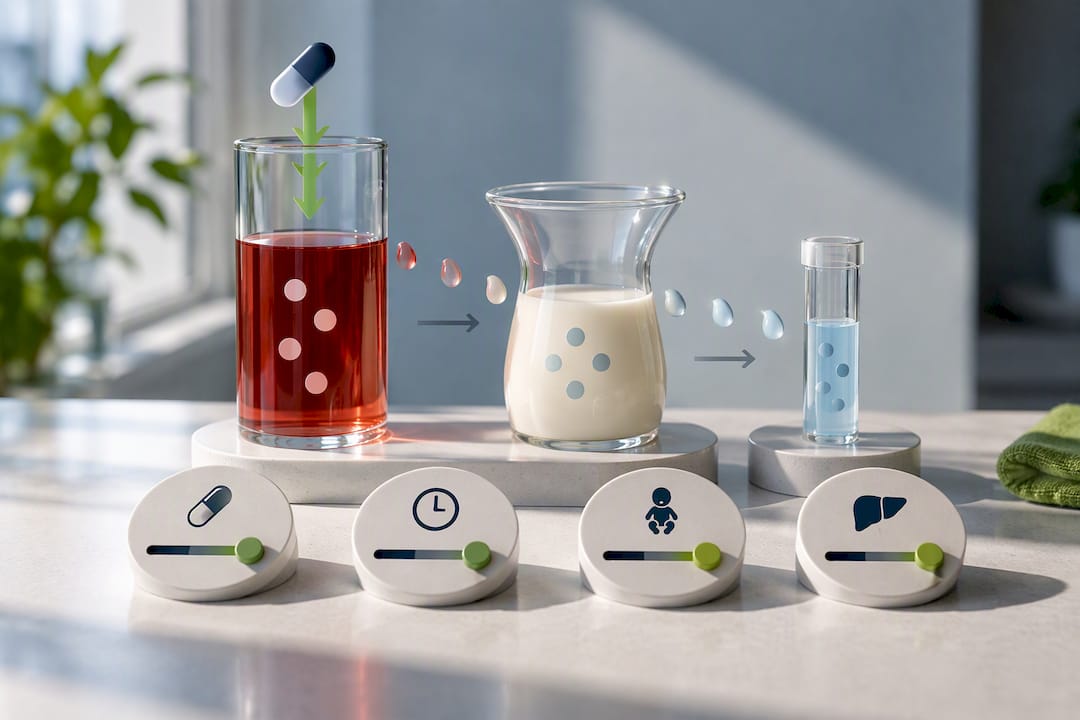
We know this part raises the most questions, so let’s slow down here. When you take an antidepressant, a portion of it moves from your bloodstream into your milk. How much depends on a few measurable factors, and understanding them helps make sense of why some medications get recommended more often than others.
Three terms come up again and again in this conversation:
- Milk/plasma ratio (M/P) compares the drug concentration in breast milk to the concentration in maternal blood at the same time.
- Absolute infant dose (AID) estimates the actual amount of drug an infant receives through milk, usually in milligrams per kilogram per day.
- Relative infant dose (RID) expresses that dose as a percentage of the mother’s own weight-adjusted dose, and it’s the figure most clinicians lean on.
It doesn’t account for a drug’s specific properties, an infant’s ability to metabolize it, or the difference between a full-term newborn and one born early.
A relative infant dose under 10% is the threshold many clinicians use to flag a medication as lower-risk, though pharmacokinetic reviews caution that RID alone should not substitute for watching the baby.
Several things shift exposure up or down: the maternal dose itself, the timing of feeds relative to when the medication peaks in your blood, whether the infant was born preterm, and how efficiently your own body clears the drug. In our work, we’ve found that the most useful piece of information isn’t any calculated ratio. It’s a measured infant serum level, when one is available, because that tells you what’s actually reaching the baby rather than what a formula predicts.
Infant exposure and reported effects: what studies and reviews show
This is usually where worry peaks, and we understand why. You want to know not just what’s theoretically possible, but what has actually been observed in real infants.
The evidence here is reassuring more often than it is alarming. A 2011 clinical review concluded that infant exposure to antidepressants through breast milk tends to be low to very low across most agents studied, and that breastfeeding does not need to be avoided when maternal treatment is medically indicated. A later pooled update reinforced this, finding that newer antidepressants transfer into milk in small amounts and have not been linked to serious adverse events in the infants studied.
When effects are reported, they tend to cluster around a small set of non-specific signs:
- Mild irritability or fussiness.
- Changes in sleep patterns, either more or less than expected.
- Subtle feeding changes, such as reduced interest at the breast.
- Rare reports of developmental concerns, which are difficult to separate from many other influences on a growing infant.
It matters to separate these lactation-related findings from a different body of research: exposure during the third trimester of pregnancy. Some of the stronger signals for infant adaptation symptoms (jitteriness, respiratory changes shortly after birth) come from in-utero exposure, not from breastfeeding itself. That distinction gets blurred in casual conversation, but it’s an important one when you’re weighing your own postpartum decision.
Sertraline and paroxetine typically produce low or undetectable infant serum levels, according to paired mother-infant pharmacokinetic studies, which is part of why they show up so often in prescribing guidance.
One population-level finding worth naming honestly: some cohort data suggest mothers who take antidepressants late in pregnancy may be somewhat less likely to start or continue breastfeeding after delivery. This is confounded by the underlying illness itself, since depression can independently affect a mother’s confidence and capacity to breastfeed, so it isn’t evidence that the medication itself discourages breastfeeding.
We’d also flag a group that deserves extra caution: preterm or medically fragile infants. Their livers and kidneys are still maturing, so a dose that would be trivial for a full-term baby can accumulate differently in a baby born early or one with other medical complexity. This is where we lean harder on direct monitoring rather than general reassurance.
Which antidepressants have the strongest safety record during lactation
No medication is universally “the” answer, but the evidence does point toward some clearer preferences.
Sertraline and paroxetine come up most consistently as first-line choices. Both are associated with low relative infant doses and, in most studied infants, undetectable or very low serum levels. They’ve also been used and studied for a long time, which gives clinicians more comfort in patterns across large numbers of mother-infant pairs rather than a handful of case reports.
Citalopram and fluoxetine sit in a more nuanced spot. LactMed’s fluoxetine monograph documents higher breastmilk concentrations and detectable infant serum norfluoxetine, fluoxetine’s active metabolite, along with scattered case reports of infant adverse events. That doesn’t rule fluoxetine out. If it’s the medication that already controls your symptoms, it may still be reasonable, just with closer attention to the infant, particularly in the newborn period.
A few other categories worth a brief mention:
- SNRIs such as venlafaxine have less accumulated lactation data than the SSRIs above, though what exists hasn’t raised major alarms.
- Bupropion is used less often in this context and carries some theoretical concern around seizure threshold, so it’s typically a secondary option.
- Tricyclic antidepressants are older and generally well characterized, with nortriptyline in particular showing low milk transfer in the data we have.
Pro Tip: If an antidepressant controlled your symptoms during pregnancy, staying on it after delivery is often the more cautious move: switching medications postpartum introduces a real risk of relapse without necessarily lowering infant exposure by much.
We say this often to patients who feel pressure to switch to “the safest one” after birth. Consistency in what’s already working usually beats chasing a marginally lower number on a chart.
Risks of untreated maternal depression compared with medication exposure
It helps to hold both sides of this at once, because the conversation about medication safety can quietly erase the other risk in the room: what happens when depression goes untreated.
Untreated postpartum depression carries its own well-documented costs:
- Disrupted mother-infant bonding and attachment.
- Reduced capacity for daily caregiving tasks, from feeding routines to safe sleep practices.
- Associations with longer-term emotional and behavioral difficulties in children.
- Elevated risk of self-harm or suicide in the mother, which is among the most serious outcomes in perinatal care.
Guidance from the CDC is fairly direct on this point: necessary psychiatric medications shouldn’t be stopped solely because a mother is breastfeeding. The clinical reasoning is straightforward once you sit with it. A mother who is stabilized and functioning is generally better positioned to breastfeed successfully, respond to her infant’s cues, and sustain the relationship long term than one who is symptomatic and struggling.
Remission isn’t just a personal relief, though it certainly is that. It also tends to support the very breastfeeding goals that prompt so much of this worry in the first place.
How clinicians make the decision and what monitoring looks like
There’s rarely a single right answer here. What we’re actually doing, in practice, is weighing a handful of factors together rather than applying one rule.
- Severity and history: how serious the depression is now, and what worked (or didn’t) in the past.
- Infant health: whether the baby is full-term and healthy, or preterm with additional medical needs.
- Dosing and timing: which medication, at what dose, and how it lines up with your feeding schedule.
- Breastfeeding goals: how important continued breastfeeding is to you and your family.
From there, monitoring is usually simple and low-burden rather than intensive. A short checklist we tend to walk through with patients:
- Watch feeding patterns: is the baby nursing with normal interest and effort?
- Track sleep: unusual excessive sleepiness or, conversely, marked unsettledness both deserve a mention at the next visit.
- Confirm steady weight gain at routine pediatric checks.
- Note any new irritability, tremor, or change in muscle tone.
Pro Tip: Bring your pediatrician into the loop early, even before you notice a problem: a baseline conversation makes it much easier to tell what’s a normal newborn phase and what’s worth a closer look.
Specialist input is worth seeking when the picture gets more complicated: a perinatal psychiatrist for treatment-resistant depression, a lactation consultant if feeding itself becomes difficult, or neonatology involvement when the infant was born early or has an existing medical condition.
Practical steps for breastfeeding mothers taking antidepressants
Once you’ve made a plan with your clinician, a few practical habits make it easier to carry out.
- Tell every provider involved (your psychiatrist, your OB or midwife, and your pediatrician) the exact medication, dose, and timing you’re on, along with anything you took during pregnancy.
- Mention any infant issues you’ve noticed, even minor ones, since patterns matter more than isolated moments.
- Skip “pumping and dumping” in most cases: it doesn’t clear medication from your system any faster and rarely changes infant exposure in a meaningful way. It can occasionally help if you need temporary relief from engorgement during a dose adjustment, but it isn’t a safety measure.
- Loop in a lactation consultant early if breastfeeding itself feels difficult. Medication concerns and latch or supply concerns are separate problems, and it’s easier to solve them one at a time.
- If your baby was in the NICU or born preterm, coordinate specifically with neonatology before and after starting or adjusting a medication, since exposure that’s negligible for a full-term infant can be different for one who is still catching up developmentally.
Potential long-term developmental effects of antidepressant exposure via breastfeeding
This is the question we hear from mothers who are otherwise ready to move forward but want reassurance about years down the road, not just the newborn period.
The honest answer is that the long-term data are reassuring but still limited compared to what we know about short-term exposure. Existing reviews have not identified a consistent pattern of developmental harm tied specifically to breastfeeding while on an antidepressant, as opposed to exposure during pregnancy, which has been studied more heavily and separately. Most of the infant effects that do get reported are transient signs in the early months, not lasting developmental changes.
We’d rather be candid about the limits of the evidence than overstate certainty in either direction. What we can say is that the studies we do have, spanning multiple SSRIs, have not turned up a clear developmental red flag attributable to lactational exposure. That’s different from a guarantee, and it’s part of why ongoing pediatric follow-up matters even after the newborn period ends.
Considerations for dosing timing relative to breastfeeding to minimize infant exposure
Some mothers ask whether timing feeds around medication doses can lower exposure further, and the honest answer is: modestly, sometimes, but it’s rarely the deciding factor.
For medications with a shorter half-life, taking the dose right after a feeding, or right before the infant’s longest stretch of sleep, can slightly reduce the amount present in milk at the next feed. This isn’t necessary for every medication or every mother, and it shouldn’t become a source of anxiety if your schedule doesn’t allow for precise timing. In our work, we treat timing adjustments as a refinement, not a requirement. Consistency in taking the medication as prescribed matters more than optimizing the clock around it.
If timing feels worth exploring for your specific medication and routine, it’s a reasonable thing to raise directly with your prescriber, who can tell you whether the drug’s half-life makes timing meaningfully useful at all.
Alternative non-pharmacological treatments for postpartum depression compatible with breastfeeding
Medication isn’t the only path, and for some mothers, especially those with mild to moderate symptoms, it may not be the first one.
Talk therapy, particularly cognitive behavioral therapy and interpersonal therapy, has a long track record in postpartum depression and carries no implications for milk or infant exposure at all. Peer support groups and structured postpartum programs can meaningfully ease the isolation that often deepens depressive symptoms. Sleep support, whether through a partner, family member, or scheduled help overnight, addresses one of the most consistent aggravators of postpartum mood symptoms. Exercise, even in short, low-intensity forms, has modest but real evidence behind it for mild depression.
For moderate to severe depression, though, therapy and lifestyle measures alone are often not enough, and that’s where the conversation about medication or other clinical interventions, including options like TMS therapy for postpartum depression, tends to reenter the picture. These paths aren’t mutually exclusive. Many mothers do both at once.
A clinician’s view on treating depression while breastfeeding
We’ve sat across from enough mothers wrestling with this decision to notice a pattern: the guilt often outweighs the actual risk. You’re trying to do right by your baby and by yourself at the same time, and those two goals rarely conflict as much as the worry suggests.
Our stance is straightforward. Remission matters. A mother who feels stable is more present, more able to respond to her infant, and more able to sustain breastfeeding if that’s her goal. Shared decision-making, weighing your history, your baby’s health, and your own priorities, produces better outcomes than a rigid rule applied the same way to everyone.
If you’re weighing this decision now, know that support exists, and that asking for it is not a failure. It’s the same guidance we’d give a colleague, a neighbor, or a family member.
— Felix
Getting support from Nortex Psychiatry for postpartum mental health
If you’re navigating this decision without a clear answer from your current provider, Nortex Psychiatry offers postpartum depression treatment built around individualized care rather than a one-size-fits-all protocol. These teams often work through medication management with attention to lactation considerations and may offer telehealth visits to help fit care into busy schedules.
For mothers whose depression hasn’t responded well to standard antidepressants, we also offer TMS therapy, a non-medication option worth discussing with your prescriber, and ketamine therapy for treatment-resistant cases, both of which come with their own separate conversations about compatibility with breastfeeding.
If you’re in crisis or having thoughts of harming yourself, please contact emergency services or a crisis line right away rather than waiting for a scheduled appointment. For everything short of that, you can reach our team through our website to talk through whether medication management, therapy, or a combination fits your situation best.
This article is general information, not a substitute for advice from a qualified doctor. Consult a qualified healthcare professional about your own circumstances before acting on anything here.
Sources
- Postpartum Depression | Breastfeeding special circumstances — CDC
- Fluoxetine — Drugs and Lactation Database (LactMed®)
FAQ
Is Zoloft or Lexapro better for breastfeeding?
Sertraline (Zoloft) has more lactation-specific data behind it than escitalopram (Lexapro) and is one of the more commonly recommended options, with generally low or undetectable infant serum levels reported in pharmacokinetic studies. That doesn’t make escitalopram unsafe, and the better choice often depends on what has worked for you before.
What is the rule of 3 breastfeeding?
This isn’t a standardized clinical guideline referenced in the major sources on antidepressant safety during lactation, and definitions of it vary informally among sources. If you’ve encountered this phrase, it’s worth asking your prescriber or lactation consultant directly what specific concept they mean.
Can taking SSRIs while breastfeeding increase the risk of autism in babies?
Current evidence on antidepressant exposure through breast milk has not established a link to autism, and clinical reviews describe infant exposure through lactation as generally low. Much of the research raising developmental questions concerns exposure during pregnancy, not breastfeeding, and the two should not be conflated.
Can antidepressants cause breast milk supply issues?
Most antidepressants have little documented effect on milk supply, though individual responses can vary, and some mothers report changes worth discussing with a lactation consultant. If you notice a drop in supply after starting or changing a medication, it’s worth raising with your prescriber rather than assuming it’s unrelated.