


Benzodiazepine dependence is a physical adaptation that happens when your body gets used to the drug, and it is different from addiction, though the two can overlap. If you take one of these medications regularly, the single most important thing you can do is avoid stopping on your own. Talk with your prescriber first, because a supervised taper is safer than quitting cold. Seizures, trouble breathing, or severe confusion after stopping are emergencies and need immediate care.
TL;DR:
- Most withdrawal symptoms, such as rebound anxiety, insomnia, and jitteriness, can last for weeks or even months, especially in higher-risk groups like women and older adults.
- Abrupt cessation or self-directed dose reduction can trigger severe reactions, including seizures or trouble breathing, making supervision essential during tapering.
- Combining benzodiazepines with alcohol or opioids significantly raises the risk of respiratory depression and overdose, requiring careful disclosure and avoidance unless explicitly approved.
- Dependence develops over weeks to months of regular use due to GABA receptor adaptation, with short-acting and higher-dose medications accelerating this process.
- Long-term use can cause cognitive fog and emotional flatness, which may improve gradually after tapering but still impact quality of life.
Table of Contents
- Recognizing the Signs and Symptoms of Withdrawal
- How Dependence Develops and Who Is Most at Risk
- Risks of Combining Benzodiazepines With Other Substances
- Dependence Versus Benzodiazepine Use Disorder: What Clinicians Look For
- Practical Steps for Tapering Off Benzodiazepines Safely
- Special Populations Who Need a Modified Approach
- When to Seek Immediate Help
- Psychological Effects and Cognitive Impact of Long-Term Use
- What Happens When Dependence Goes Untreated
- Staying Off Benzodiazepines After a Successful Taper
- Medication Interactions Beyond Alcohol and Opioids
- The Role of Therapy and Support in Recovery
- How We Approach Assessment and Tapering
- How Nortex Psychiatry Can Help You Move Forward
- Sources
- FAQ
Recognizing the Signs and Symptoms of Withdrawal
In our work with patients who have been on benzodiazepines for months or years, we find that withdrawal often looks a lot like the anxiety or insomnia the medication was originally treating. That overlap is part of what makes this tricky, and it is exactly why we walk through it carefully with each patient rather than assuming the worst symptom is always the “real” one.
Acute withdrawal tends to show up within hours to days after a dose reduction or missed dose, depending on how long the drug stays active in the body. Common features include:
- Rebound anxiety that feels sharper than the anxiety you started with
- Insomnia, sometimes with vivid or unsettling dreams
- Tremor, muscle tension, or a wired, jittery feeling
- Nausea, sweating, or a racing heartbeat
- Heightened sensitivity to light, sound, or touch
For some patients, symptoms fade within a couple of weeks. For others, a protracted withdrawal phase can stretch on for months, with waves of anxiety, sleep disruption, or cognitive fog that come and go rather than resolving in a straight line. The FDA’s boxed warning update notes that withdrawal symptoms can persist for many months in some patients, and that certain groups, including women, older adults, and people with other mental health conditions, appear to carry higher risk.
A substantial share of patients in FDA’s own review of adverse event reports experienced withdrawal symptoms lasting well beyond the typical acute window, according to that same safety communication. That kind of duration matters because it changes how a taper should be paced.
The clinical implication is straightforward but easy to miss in the moment: if your anxiety or insomnia gets worse after a dose change, that is not necessarily proof the medication was working and now you need more. It may be withdrawal, and the right response is usually to slow the taper, not abandon it. If you notice these symptoms, call your prescriber rather than adjusting the dose yourself. Stopping abruptly, even after a missed refill, can trigger a more severe reaction than a planned reduction ever would.
How Dependence Develops and Who Is Most at Risk
Benzodiazepines work by enhancing the effect of GABA, the brain’s main calming neurotransmitter. With regular use, the brain adjusts its own GABA receptor activity to compensate, a process that is a normal, expected part of how these medications work rather than a sign of misuse.
Timelines vary quite a bit from patient to patient. Some people notice early tolerance, needing a bit more to get the same effect, within days to a few weeks of daily use. For most patients, meaningful physical dependence tends to build over weeks to months of regular dosing, though the exact point differs depending on the drug and the person.
A few factors seem to speed this along:
- Short-acting agents like alprazolam, which clear the body faster and can produce sharper peaks and troughs
- Higher daily doses, which push the adaptation process along more quickly
- Older age, since metabolism slows and sensitivity to these drugs increases
- Co-occurring conditions such as chronic anxiety, insomnia, or trauma-related disorders
- Concurrent alcohol or opioid use, which compounds central nervous system depression
This is part of why we do not use a one-size-fits-all approach. A 30-year-old on a low dose of a long-acting benzodiazepine for a few weeks is in a very different position than a 70-year-old who has been on a short-acting one for years. Individualized assessment is not just a courtesy, it is how you avoid both under-treating withdrawal risk and over-restricting someone who may taper comfortably.
Risks of Combining Benzodiazepines With Other Substances
The most dangerous scenario we see is not the benzodiazepine alone. It is the benzodiazepine combined with alcohol or opioids, because all three suppress breathing, and stacking them multiplies that effect rather than simply adding to it.
The numbers back this up. In CDC’s MMWR analysis of 2010 data, alcohol was involved in about 27.2% of benzodiazepine-related emergency department visits. That is more than one in four visits involving a drug interaction that is often preventable simply by disclosing alcohol use to a prescriber.
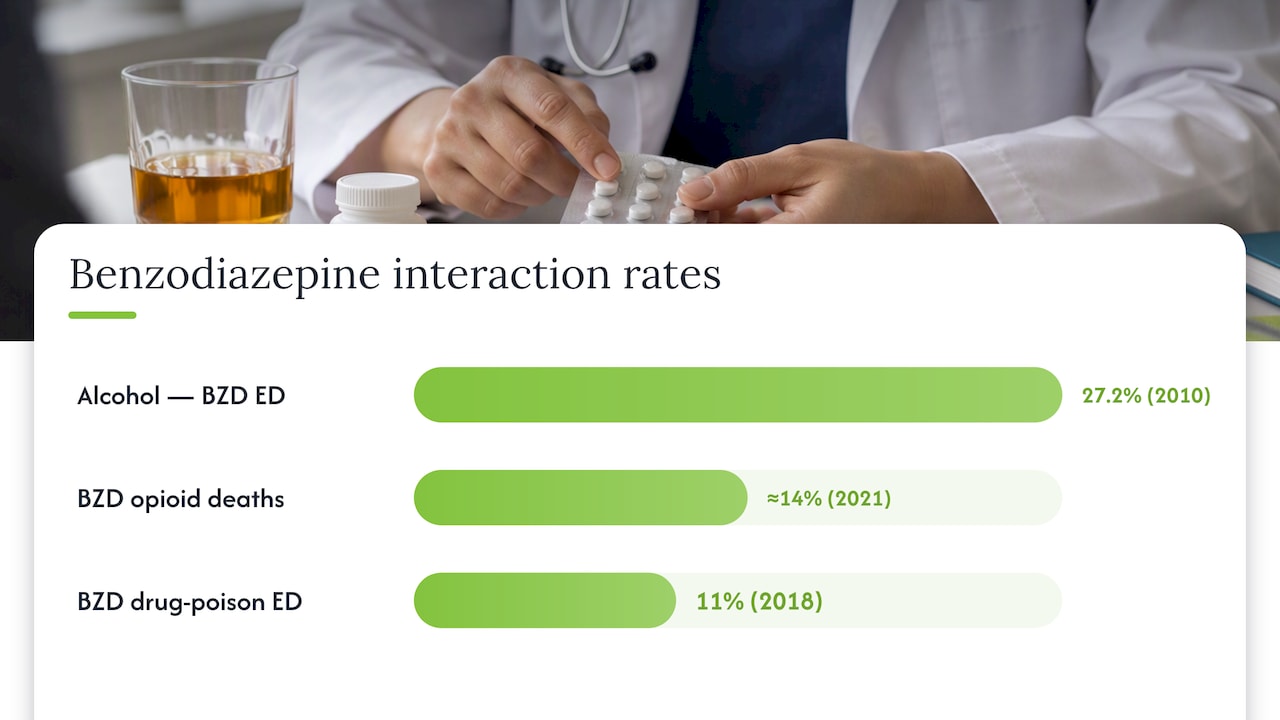
The opioid side of this is just as serious. NIDA’s overview reports that benzodiazepines were detected in nearly 14% of opioid-involved overdose deaths in 2021, reflecting how often the two are prescribed together, sometimes without either prescriber knowing about the other medication. A separate CDC analysis of 2018 emergency department data found benzodiazepines present in 11% of drug-poisoning ED visits, frequently as part of a polydrug combination rather than a solo overdose.
A few practical steps lower this risk substantially:
- Tell every prescriber about every medication and substance you use, including alcohol
- Avoid combining benzodiazepines with opioids, sleep aids, or alcohol unless your prescriber has specifically approved it
- Ask about non-benzodiazepine options if you are also managing chronic pain with opioids
- Keep naloxone accessible if you or someone in your household uses opioids alongside a benzodiazepine
None of this is about assigning blame. It is about making sure the people prescribing your medications actually have the full picture.
Dependence Versus Benzodiazepine Use Disorder: What Clinicians Look For
Physical dependence and benzodiazepine use disorder are not the same thing, and getting that distinction right shapes everything about treatment. Dependence means your body has adapted to the drug and will react if it is stopped abruptly. It can happen to anyone taking the medication as prescribed, for a legitimate reason, at a normal dose.
Substance use disorder is different. It involves a pattern, under DSM-5 criteria, that includes things like using more than intended, unsuccessful efforts to cut down, cravings, and continued use despite harm.
When we assess a patient, we are looking at:
- Current dose and how long they have been taking it
- Whether daily functioning, work, or relationships have been affected
- Any pattern of using more than prescribed or running out early
- Co-occurring alcohol or other substance use
- Prior withdrawal experiences, including any seizures
That assessment determines the path forward. A patient with straightforward physical dependence and no misuse pattern usually does well with a standard outpatient taper. A patient showing signs of use disorder often needs referral to addiction medicine alongside, or instead of, a simple taper.
Practical Steps for Tapering Off Benzodiazepines Safely
The ASAM/Joint Clinical Practice Guideline on benzodiazepine tapering is built around a simple premise: physical dependence is an expected outcome of regular use, not a failure of the patient or the prescriber, and stopping abruptly should be avoided. The guideline pushes for individualized plans over any single universal schedule, which lines up with what we see in practice.
A 2015 clinical review on managing benzodiazepine misuse and dependence outlines an approach that most tapers still follow today, adjusted for the individual patient:
- Start with a full medication reconciliation, confirming the current dose, dosing schedule, and how long the patient has been on it.
- Decide whether to taper the current benzodiazepine directly or first convert to an equivalent dose of a longer-acting agent, which some patients tolerate with steadier, less jarring symptom control.
- Reduce the dose gradually, often by small percentage decrements every one to two weeks, adjusting the pace based on how the patient responds.
- Slow the reduction rate further for patients with higher baseline doses, longer duration of use, or prior withdrawal complications.
- Reassess at each step, watching for rebound anxiety, insomnia, or physical symptoms that suggest the pace needs to change.
- Build in adjuncts as needed, since tapering alone does not always address the anxiety or sleep problems the medication was treating in the first place.
Cognitive behavioral therapy has a reasonable evidence base for helping with the anxiety and insomnia that often surface during a taper, and treating any underlying depression or anxiety disorder alongside the taper tends to improve outcomes. Some clinicians use adjunct medications, such as certain antidepressants or, in select cases, anticonvulsants, to ease specific symptoms during the process, though the evidence for these approaches is more limited than for the taper itself and they are used selectively rather than routinely.
Pro Tip: Keep a simple daily log of mood, sleep, and any physical symptoms during your taper. It gives your prescriber real data to adjust the pace instead of guesswork based on memory alone.
For patients who struggle significantly with tapering, particularly those with a co-occurring substance use disorder, maintenance therapy or referral to an addiction medicine specialist may be the safer long-term path rather than pushing toward complete discontinuation on a fixed timeline.
One more note on safety: flumazenil, a benzodiazepine antagonist, is sometimes used in emergency settings for overdose reversal, but it carries a real risk of triggering seizures in someone who is physically dependent, and it is not a tool for routine outpatient tapering. This is a hospital-level intervention, not something to expect or request in a standard taper plan.
Special Populations Who Need a Modified Approach
Some patients need a slower pace and closer supervision from the start. In older adults, deprescribing benzodiazepines is often a priority because these medications raise the risk of falls, fractures, and cognitive decline, and even a modest dose can have an outsized effect.
Pregnancy and breastfeeding call for specialist input rather than a standard protocol, since the risks of continued use have to be weighed against the risks of withdrawal for both parent and baby. This is a conversation for a psychiatrist or maternal-fetal medicine specialist, not a decision to make alone.
Patients with a history of seizures, or those on high doses for a long time, often need a slower taper and sometimes inpatient monitoring, since their withdrawal risk is meaningfully higher. And when someone is also managing opioid use or heavy alcohol use, integrated addiction care alongside the taper tends to produce better, safer outcomes than treating the benzodiazepine in isolation.
When to Seek Immediate Help
Seizures, trouble breathing, severe confusion, or hallucinations after stopping or reducing a benzodiazepine are emergencies. Call 911 or go to the nearest emergency department.
If you are simply thinking about stopping or changing your dose, call your prescriber first and schedule a visit rather than adjusting anything on your own.
For that appointment, it helps to bring:
- A current list of all medications and doses, including anything prescribed elsewhere
- A rough timeline of when you started the benzodiazepine and any changes since
- Notes on any prior attempts to stop and what happened
Primary care, psychiatry, and addiction medicine can all help coordinate this, and emergency care is always appropriate for the red flags above.
Psychological Effects and Cognitive Impact of Long-Term Use
Long-term benzodiazepine use can leave a mark beyond the physical dependence itself. Patients often describe a kind of mental fog, slower recall, and difficulty concentrating that builds gradually enough that it is easy to attribute to aging, stress, or the underlying anxiety disorder rather than the medication.
Some of this cognitive blunting improves after tapering, though not always completely or quickly, and the recovery timeline varies a lot from person to person. Emotional flatness is another pattern we see, where patients describe feeling less reactive to both good and bad experiences than they used to, which can be unsettling in its own way even when it is not causing obvious harm.
There is also a psychological layer tied to the dependence itself. Many patients feel a quiet anxiety about missing a dose or running low on medication that has nothing to do with their original diagnosis. That anxiety is a real and understandable response to physical dependence, not evidence of a personal failing, and naming it clearly tends to reduce the shame that keeps some patients from bringing it up with their prescriber at all.
What Happens When Dependence Goes Untreated
Left unaddressed, benzodiazepine dependence tends to make the original problem worse over time rather than better. Tolerance can push patients toward higher doses just to maintain the same effect, and that escalation raises both withdrawal severity and overdose risk if the medication is ever stopped or missed.
We also see a pattern where the anxiety or insomnia the medication was meant to treat becomes harder to distinguish from the dependence itself, and in some patients, mood symptoms like depression intensify over months or years of continuous use. Sleep quality can decline even while the person is still taking the medication as prescribed, since long-term use tends to alter normal sleep architecture rather than genuinely resolve insomnia.
None of this is a reason to panic if you are currently on a benzodiazepine and it is working for you. It is a reason to have an honest, periodic conversation with your prescriber about whether the current plan still makes sense, rather than letting a short-term prescription quietly become a years-long one without anyone revisiting it.
Staying Off Benzodiazepines After a Successful Taper
Completing a taper is a real accomplishment, and it is also not always the end of the story. Relapse risk tends to be highest in the weeks right after the last dose, when sleep and anxiety symptoms can still be settling.
A few strategies genuinely help:
- Keep any therapy or coping skills you built during the taper going for at least a few months afterward, not just until symptoms improve
- Identify your specific triggers, whether that is stress, poor sleep, or a return of the original anxiety symptoms, and have a plan for each
- Stay connected to your prescriber with periodic check-ins rather than disappearing once the taper is done
- Address sleep directly with non-benzodiazepine tools, since insomnia is one of the more common reasons people are tempted to restart
If symptoms do return, the honest move is to call your prescriber rather than reaching for an old prescription or someone else’s medication. A setback is not the same as a relapse, and how it is handled in the first few days often determines which one it becomes.
Medication Interactions Beyond Alcohol and Opioids
Alcohol and opioids get most of the attention, but they are not the only medications that interact meaningfully with benzodiazepines. Other sedating drugs, including certain antihistamines, muscle relaxants, and some sleep aids, can compound drowsiness and impair coordination even without the more severe respiratory risk seen with opioids.
Certain antidepressants and antifungal medications can also slow how quickly the body clears some benzodiazepines, which effectively increases the dose you are getting without any change to the prescription itself. This is exactly why medication reconciliation at every visit matters, not just when a benzodiazepine is first prescribed.
If you are on a benzodiazepine and your prescriber adds a new medication for an unrelated issue, it is worth asking directly whether there is any interaction, rather than assuming it was already checked. Pharmacists are also a good resource here, since they often catch interactions that get missed when care is split across multiple prescribers.
The Role of Therapy and Support in Recovery
Medication tapering addresses the physical side of dependence, but it rarely resolves the anxiety, insomnia, or stress that led to the prescription in the first place. Cognitive behavioral therapy has a reasonable track record for helping patients manage both anxiety and insomnia without relying on a benzodiazepine, and it tends to work well as a companion to, rather than a replacement for, the taper itself.
Support does not have to be limited to formal therapy. Patients who involve a partner, family member, or close friend in the process, even just to know what to expect and watch for warning signs, often report feeling less alone in a process that can otherwise feel isolating. Peer support groups focused on prescription medication dependence can also help normalize what is a fairly common experience, even though it rarely gets discussed openly.
We tend to think of therapy less as an add-on and more as the piece that makes the taper sustainable. Getting off the medication is one goal. Staying off it, and feeling reasonably well in the process, usually depends on having somewhere to put the anxiety once the medication is no longer absorbing it.
How We Approach Assessment and Tapering
In our work, we build every taper plan around the individual, not a fixed template. A first visit typically includes a full history, a complete medication list, and screening for other risk factors like alcohol use or prior withdrawal complications.
From there, we set a pacing plan and a safety plan together with the patient, using both in-person and telehealth follow-up to check progress along the way. Most patients taper successfully with steady support. Those with higher-risk profiles are referred to specialist or inpatient care when that is the safer route.
— Felix
How Nortex Psychiatry Can Help You Move Forward
If you are on a benzodiazepine and wondering whether it is time to talk about tapering, or you simply want a second opinion on your current plan, that conversation is worth having with a psychiatrist who has the time to build a plan specific to you. We offer coordinated outpatient care, including:
- Medication management with regular follow-up to track how a taper is going
- Telehealth visits for patients who need flexibility around work or family schedules
- Coordination with addiction services when a case calls for more specialized support
Appointments start with a full history and medication review, so you and your psychiatrist can build a realistic plan from that first visit rather than guessing. You can also explore how psychiatric care for anxiety and depression fits alongside a taper, or look into non-benzodiazepine options like mirtazapine for insomnia as part of that discussion. To get started, visit our Transcranial Magnetic Stimulation (TMS) therapy page or reach out through our home page to request an appointment.
This article is general information, not a substitute for advice from a qualified doctor. Consult a qualified healthcare professional about your own circumstances before acting on anything here.
Sources
- FDA requiring Boxed Warning updated to improve safe use of benzodiazepine drug class
- Alcohol Involvement in Opioid Pain Reliever and Benzodiazepine Drug Abuse–Related Emergency Department Visits and Drug-Related Deaths — United States, 2010
- Management of benzodiazepine misuse and dependence
- Benzodiazepines and Opioids | National Institute on Drug Abuse (NIDA)
- Prevalences of and characteristics associated with single- and polydrug-involved U.S. Emergency Department Visits in 2018
FAQ
What is benzodiazepine dependence?
Benzodiazepine dependence is a physical adaptation that develops with regular use, where the body has adjusted to the drug’s presence and reacts if it is stopped abruptly. It is different from addiction, though the two can occur together, and it can happen even when the medication is taken exactly as prescribed.
What does benzodiazepine addiction look like?
Addiction, or benzodiazepine use disorder, involves patterns like using more than prescribed, cravings, unsuccessful attempts to cut down, and continued use despite harm to work, relationships, or health. This is distinct from physical dependence alone, which can exist without any of those behavioral patterns.
How long does it take to develop benzodiazepine dependence?
Timelines vary by person and by drug, but meaningful physical dependence commonly develops over weeks to months of regular use, with some patients noticing early tolerance within days to a few weeks. Short-acting agents and higher doses tend to speed this process along, according to the FDA’s safety review.
When does benzo belly start?
Gastrointestinal symptoms during withdrawal, sometimes described informally as “benzo belly,” can appear alongside other acute withdrawal symptoms like nausea and tremor, typically within the same early withdrawal window of hours to days after a dose reduction. Definitions and timing vary between patients, and persistent gastrointestinal symptoms are worth discussing with a prescriber rather than assuming they will resolve on their own.