


A mood disorder in youth means the sadness, irritability, or emotional swings have become intense, persistent, and are getting in the way of school, friendships, or family life, not just an off week. If what you’re seeing has lasted two weeks or more and is changing how your teen functions, the next step is a professional evaluation, not a wait-and-see approach. SAMHSA, the CDC, and NIMH all track this closely, and clinics like Nortex Psychiatry exist specifically to catch it early.
Key Takeaways
Recognizing a mood disorder in youth early, and acting on it through professional evaluation, meaningfully reduces the risk of academic decline, substance use, and prolonged impairment.
| Point | Details |
|---|---|
| Duration and function matter most | Symptoms lasting two weeks or more and interfering with school or home life signal a possible mood disorder. |
| Irritability often replaces sadness | Teens frequently show anger, somatic complaints, or withdrawal instead of stated sadness. |
| Prevalence is substantial | About 20.1% of adolescents aged 12 to 17 had a major depressive episode in the past year. |
| Evaluation is multi-source | Clinicians combine interviews, collateral reports, and tools like the PHQ-A to reach a diagnosis. |
| Nortex Psychiatry offers full-continuum care | Evaluation, medication management, telehealth, and advanced options like TMS or Spravato are available under one practice. |
Table of Contents
- What Separates Normal Teen Moodiness from a Mood Disorder
- The Common Mood Disorders You’re Likely to See
- How Mood Disorders Actually Show Up in Teens
- Who’s at Higher Risk, and What Tends to Come Along With It
- How Clinicians Evaluate a Teen for a Mood Disorder
- What Actually Helps: Treatments and Supports Worth Knowing
- What to Do in the Next 24 to 72 Hours
- When to Get Help Immediately
- A Practicing Psychiatrist’s Note to Parents and Educators
- How Nortex Psychiatry Supports Families Through This
- Sources
- FAQ
What Separates Normal Teen Moodiness from a Mood Disorder
A mood disorder is defined less by how a teen feels on a given day and more by how long it lasts, how intense it gets, and whether it interferes with daily functioning. CHOP’s clinical guidance puts it plainly: intensity and persistence, not the occasional slammed door, are what separate a disorder from typical adolescence.
Watch for:
- Symptoms lasting two weeks or longer without letup
- Mood swings disproportionate to the actual situation
- Withdrawal from friends, sports, or activities they used to enjoy
- Grades slipping noticeably, or school refusal
- Sleep or appetite changes that persist beyond a rough patch
- Comments about feeling worthless, hopeless, or wanting to disappear
Pro Tip: Keep a simple log of what you notice and when. A pattern spanning three weeks tells a doctor far more than one bad Tuesday.
The Common Mood Disorders You’re Likely to See
Most youth mood problems fall into a handful of recognizable categories, and Stanford Children’s Health outlines them clearly.
- Major depressive disorder (MDD): Persistent sadness or irritability, loss of interest, and functional decline lasting at least two weeks; the most commonly diagnosed mood disorder in adolescents.
- Persistent depressive disorder (dysthymia): A lower-grade, chronic depressed mood lasting a year or more in youth, often mistaken for personality rather than illness.
- Bipolar I and II: Distinct episodes of mania or hypomania alongside depressive episodes, usually emerging in mid to late adolescence.
- Disruptive mood dysregulation disorder (DMDD): Chronic irritability with frequent, severe temper outbursts starting before age 10, often confused with bipolar disorder in kids, though the mechanisms differ.
- Premenstrual dysphoric disorder (PMDD): Severe mood symptoms tied to the menstrual cycle in adolescent girls, distinct from typical PMS in severity.
- Substance or medical-induced mood disorder: Mood symptoms triggered by substance use, thyroid disease, or another medical condition, which is why a physical workup matters.
Because ADHD, anxiety, and thyroid issues can all mimic these, differential diagnosis by a trained clinician is not optional. It is the whole point of an evaluation.
How Mood Disorders Actually Show Up in Teens

Teens rarely walk up and say “I’m depressed.” Instead, clinicians consistently see irritability, physical complaints, and quiet withdrawal standing in for what looks like classic adult sadness. Anger at the dinner table is often depression wearing a different mask.
Emotional signs:
- Irritability or anger that feels out of proportion
- Hopelessness or excessive guilt
- Sudden tearfulness or emotional numbness
Behavioral signs:
- Withdrawing from friends and family
- Dropping activities they once loved
- Risk-taking or new substance use
Somatic signs:
- Frequent headaches or stomachaches with no medical cause
- Fatigue despite adequate sleep
- Changes in appetite or weight
Academic signs:
- Falling grades or missed assignments
- School refusal or frequent nurse visits
- Trouble concentrating that teachers notice before parents do
If you want a structured way to check in, three questions borrowed from the adolescent screening tool PHQ-A (adapted from the PHQ-9) work well:
- Over the last two weeks, how often have you felt down, depressed, or hopeless?
- How often have you had little interest or pleasure in doing things you usually enjoy?
- Have you had thoughts that you’d be better off dead, or of hurting yourself?
A “yes” on that third question, in any form, moves you straight to urgent evaluation.
Who’s at Higher Risk, and What Tends to Come Along With It
Family history of depression or bipolar disorder is the single strongest predictor, and it compounds with trauma, chronic illness, identity-related stress, and early substance use.
- Genetic loading (parent or sibling with a mood disorder)
- History of trauma, abuse, or major loss
- Chronic medical illness
- LGBTQ+ identity stress without family support
- Early alcohol or drug use
Mood disorders rarely travel alone. Research on the National Comorbidity Survey Adolescent Supplement found anxiety disorders affecting 31.9% of adolescents and mood disorders affecting about 14.3%, with heavy overlap between the two. NIMH data puts major depressive episodes at roughly 20.1% of 12 to 17 year olds in a given year, about 5.0 million teens, with higher rates among girls.
How Clinicians Evaluate a Teen for a Mood Disorder
A proper evaluation is never a single conversation. It’s a multi-source process combining direct interview, collateral history from parents and teachers, and standardized screening.
- Start with the pediatrician for a baseline physical workup, ruling out thyroid or other medical causes.
- Ask the school counselor for behavioral and academic observations.
- Get a referral to a psychiatrist or psychiatric nurse practitioner for a full evaluation.
- Bring documentation: a symptom timeline, report cards, and any relevant family history.
Clinicians commonly use the PHQ-A or adolescent-adapted PHQ-9 as a starting screen, then build a fuller diagnostic picture from there. Both in-person visits and telehealth appointments work for this process, and telehealth has made it considerably easier for busy families to get a teen seen without missing a full school day.
What Actually Helps: Treatments and Supports Worth Knowing
For most adolescent mood disorders, psychotherapy and medication, alone or combined, remain first-line, according to the Merck Manual. School involvement and family participation aren’t optional extras. They’re part of what makes treatment stick.
- Cognitive behavioral therapy (CBT) or dialectical behavior therapy (DBT): First-line psychotherapy for depression and mood dysregulation.
- Family therapy: Especially useful when conflict at home is amplifying symptoms.
- SSRIs: Often considered when symptoms are moderate to severe or therapy alone isn’t enough; requires careful monitoring in youth.
- Combined care: Therapy plus medication tends to outperform either alone in more severe cases.
- School accommodations: A 504 plan or IEP can reduce academic pressure while a teen stabilizes.
- Safety planning: A written plan for what to do if suicidal thoughts arise, developed with the treatment team.
For teens whose depression doesn’t respond to standard treatment, advanced options like TMS, ketamine, or Spravato exist, but these are referral-only decisions made with a specialist after first-line treatments have been tried.
Pro Tip: Ask any prescriber how they plan to monitor side effects in the first four to six weeks. That answer tells you a lot about the quality of care your teen will get.
What to Do in the Next 24 to 72 Hours
You don’t need a diagnosis to start helping. You need three things: a real conversation, a written record, and one phone call.
- Sit down without distractions and ask directly how they’re feeling, without rushing to fix it.
- Write down what you’ve noticed: dates, specific behaviors, how severe they seemed.
- Contact the school counselor and your pediatrician the same week, not “eventually.”
- Use open, non-judgmental phrasing: “I’ve noticed you seem really down lately. Can we talk about it?”
- Avoid minimizing language like “everyone feels that way sometimes.”
- Respect their privacy where you can, but safety always overrides privacy.
When to Get Help Immediately
Some situations don’t allow for a wait-and-see approach. Call 911 or the 988 Suicide and Crisis Lifeline right away if your teen:
- Has expressed a suicide plan or attempt, or active intent to harm themselves
- Shows severe agitation, confusion, or signs of psychosis
- Can’t care for basic needs like eating, sleeping, or personal safety
Schools have emergency protocols for this too. Ask your counselor what theirs is, before you need it.
A Practicing Psychiatrist’s Note to Parents and Educators
In our work, the pattern we see most often isn’t sadness, it’s irritability that everyone assumed was “just being a teenager.” Waiting for a kid to look sad before taking action is one of the most common and costly mistakes families make. By the time sadness is obvious, the impairment has often been building for months.
The reassuring part: these conditions are highly treatable, and early evaluation shortens the road considerably. Collaboration between families, schools, and clinicians tends to matter more than any single treatment choice.
How Nortex Psychiatry Supports Families Through This
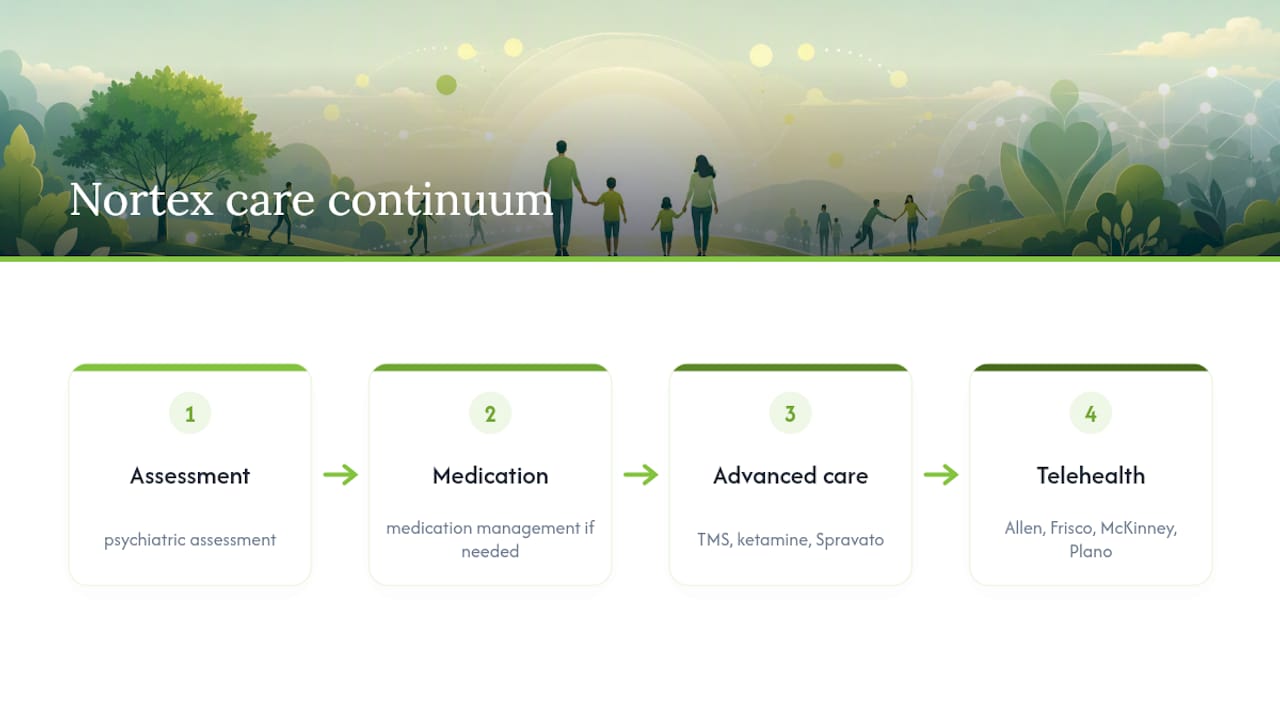
Nortex Psychiatry gives North Dallas families a full continuum in one place rather than juggling separate providers for evaluation, medication, and advanced care. That means a teen struggling with depression can get a psychiatric assessment, start medication management if needed, and, in treatment-resistant cases, discuss TMS, ketamine, or Spravato, all without starting over with a new provider each time. Telehealth appointments are also available for families in Allen, Frisco, McKinney, and Plano who can’t easily take a full day off for an in-person visit.
If you’re seeing the signs described above and want a professional opinion rather than more guessing, the next step is simple: reach out to schedule an initial evaluation and come prepared with your symptom timeline and any school observations. That single appointment usually clarifies more than weeks of wondering.
Sources
- SAMHSA – NSDUH Detailed Tables 2023
- CDC National Health and Nutrition Examination Survey data brief (2025)
- CHOP — Mood disorders in children and adolescents
For crisis signs, prioritize 911 or 988 over any of the resources above.
This article is general information, not a substitute for advice from a qualified doctor. Consult a qualified healthcare professional about your own circumstances before acting on anything here.
FAQ
What Are the Most Common Mood Disorders in Youth?
The most common are major depressive disorder, persistent depressive disorder, bipolar I and II, disruptive mood dysregulation disorder, and premenstrual dysphoric disorder.
How Long Do Symptoms Need to Last Before It’s a Concern?
Generally two weeks or longer with noticeable interference in school, home, or social functioning, according to CHOP’s clinical guidance.
Is Irritability a Sign of Depression in Teens?
Yes. Irritability and anger are often more common than sadness in adolescent depression, and clinicians treat it as a core symptom, not a personality trait.
Should I Start with a Pediatrician or a Psychiatrist?
Start with the pediatrician to rule out medical causes, then get a referral to a psychiatric provider like Nortex Psychiatry for a full evaluation if symptoms persist.
What Should I Do If My Teen Mentions Suicidal Thoughts?
Treat it as an emergency immediately and contact 988 or 911; don’t wait for a scheduled appointment.