


Mental health is the state of your emotional, psychological, and social well-being, affecting how you think, feel, and act every day. Understanding why is mental health important goes far beyond avoiding a diagnosis. It shapes the quality of your relationships, your ability to handle stress, and how fully you participate in your own life. According to the CDC, mental health influences coping ability, emotions, and decision-making across every stage of life. In 2026, about 22% of U.S. adults experience mental illness, with over 5% living with serious conditions that affect major life activities. Those numbers make one thing clear: mental health is not a niche concern. It is a core part of how all of us function.
Why is mental health important for physical health?
Mental and physical health are not separate systems. They influence each other constantly, and ignoring one creates real problems in the other.
Stress and anxiety can cause measurable physical symptoms, including elevated blood pressure and chronic headaches. That connection is not metaphorical. When your nervous system stays in a state of alarm, your body pays the price through inflammation, disrupted sleep, and weakened immune response.

The scale of this problem is significant. Mental disorders account for 1 in 6 years lived with disability globally, and severe cases reduce life expectancy by 10–20 years on average. That statistic reframes the conversation entirely. Poor mental health is not just an emotional inconvenience. It is a leading driver of physical decline and shortened lives.
Good mental health, on the other hand, supports the energy and resilience you need for daily tasks. People who manage stress well tend to sleep better, exercise more consistently, and recover from illness faster. The benefits compound over time.
- Chronic stress raises cortisol levels, which over time damages cardiovascular health
- Depression reduces motivation for physical activity, creating a cycle of worsening health
- Anxiety disorders are linked to gastrointestinal problems and chronic pain
- Good emotional regulation supports immune function and faster physical recovery
Pro Tip: Schedule mental health check-ins the same way you schedule annual physicals. Treating your emotional state as routine maintenance, not crisis response, prevents burnout before it starts.
How does mental health shape your relationships?
Mental health directly determines how you show up for the people around you. Emotional regulation, empathy, and communication all depend on a functioning psychological foundation.
When mental health is poor, relationships absorb the impact first. Irritability, withdrawal, and difficulty trusting others are common early signs. These patterns often appear long before a clinical diagnosis, which means strained relationships are frequently the first signal that something needs attention. The World Economic Forum notes that reduced engagement and strained relationships often precede formal diagnosis by months or years.
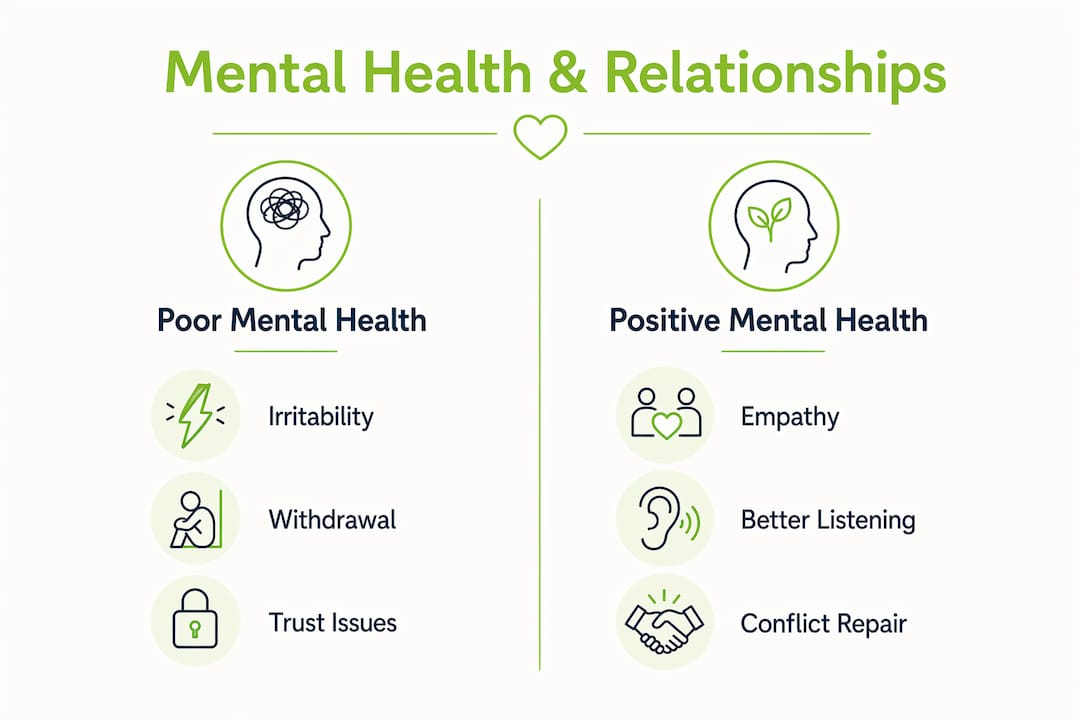
Positive mental well-being, by contrast, builds the capacity for genuine connection. You listen better. You repair conflict more effectively. You build the kind of support network that protects you during hard times.
For children and adolescents, this matters even more. Focusing on strengths and resilience in young people helps prevent mental health challenges and builds the emotional foundation they carry into adulthood. Creating safe, connected environments at home and school is not optional. It is protective.
Key ways mental health shapes social well-being:
- Emotional regulation allows you to respond rather than react in conflict
- Empathy depends on psychological stability and self-awareness
- Trust and vulnerability require a baseline sense of safety and self-worth
- Support networks form and hold together when members are emotionally available
What are the most common mental health challenges in youth and adults?
Mental health challenges are far more common than most people realize, and they carry serious consequences when left unaddressed.
Approximately 49.5% of adolescents have experienced a mental health disorder at some point in their lives. Currently, 8.4% of young people aged 12–17 are diagnosed with depression. These are not rare edge cases. They represent nearly half of the teenage population carrying some form of mental health burden.
| Challenge | Who it affects most | Key consequence if untreated |
|---|---|---|
| Depression | Adolescents and adults | Reduced functioning, physical decline |
| Anxiety disorders | All age groups | Chronic stress, relationship strain |
| ADHD | Children through adults | Academic and occupational impairment |
| Serious mental illness | 5%+ of U.S. adults | Major life activity disruption |
One distinction that often gets missed: the absence of mental illness does not mean the presence of mental well-being. The dual continua model recognizes mental health as a multidimensional state. You can live with a diagnosed condition and still flourish. You can also be symptom-free and still be struggling. Both dimensions need attention.
Early recognition and intervention in adolescent mental health improve long-term outcomes and resilience. Waiting for a crisis to act is the most expensive approach, both personally and economically.
Pro Tip: If you notice a teenager becoming more withdrawn, irritable, or disengaged from activities they used to enjoy, treat that as a signal worth exploring, not a phase to wait out.
How can you actively support your mental health?
Mental health requires the same ongoing attention you give physical health. It does not maintain itself.
Here are practical steps that make a real difference:
-
Schedule self-care like an appointment. Experts recommend treating self-care as a fixed commitment rather than something you do when time allows. Burnout develops in the gaps between good intentions and consistent action.
-
Build a sleep routine. Sleep is the single most underrated mental health intervention. Chronic sleep deprivation worsens anxiety, depression, and emotional regulation. Seven to nine hours is not a luxury.
-
Maintain social connections. Isolation accelerates mental decline. Regular contact with people you trust, even brief check-ins, provides a buffer against stress and low mood.
-
Manage stress with structure. Breathing exercises, physical movement, and time boundaries around work all reduce the physiological load of chronic stress. These are not soft suggestions. They have measurable effects on cortisol and mood.
-
Seek professional support early. The economic and personal burden of untreated mental illness compounds over time. Early action reduces long-term disengagement from work, relationships, and daily life.
Reviewing your lifestyle factors and mental health regularly gives you a clearer picture of what is working and what needs adjustment. Small, consistent habits outperform dramatic interventions every time.
For a structured starting point, a mental health self-care checklist can help you identify gaps in your current routine before they become problems.
Key Takeaways
Mental health is a foundational driver of physical health, relationships, and daily functioning, and it requires consistent, proactive attention rather than crisis-only responses.
| Point | Details |
|---|---|
| Mental and physical health are linked | Stress and anxiety cause measurable physical symptoms, including high blood pressure and chronic pain. |
| Relationships reflect mental health first | Strained connections and withdrawal often appear before a clinical diagnosis is made. |
| Youth mental health needs early action | Nearly half of adolescents experience a mental health disorder; early intervention improves lifelong outcomes. |
| Absence of illness is not well-being | The dual continua model shows you can have a diagnosis and still flourish, or be symptom-free and still struggle. |
| Self-care requires scheduling | Treating mental health maintenance as routine, not reactive, prevents burnout and sustains daily functioning. |
What we have learned about mental health over time
One thing I have noticed consistently in psychiatric practice is that people tend to pay attention to mental health only when something breaks down. A panic attack, a relationship crisis, a period of not being able to get out of bed. That reactive pattern is understandable, but it costs people years of functioning they did not have to lose.
The more useful frame is monitoring flourishing, not just illness. Are you sleeping? Are you present in conversations? Do you feel connected to the things that matter to you? Those questions reveal more than a symptom checklist. Monitoring flourishing alongside illness also reduces stigma and helps allocate support more effectively.
There is also a persistent misconception that mental health care is about eliminating distress. It is not. The real goal is building enough resilience that distress does not derail your life. Managing emotions effectively reduces the long-term impact of stressors. That is a skill, and like any skill, it develops with practice and support.
If you are reading this during a calm period in your life, that is actually the best time to build these habits. Do not wait for the next hard season to start paying attention.
— Felix
Mental health support at Nortexpsychiatry
Nortexpsychiatry serves individuals and families across Allen, Frisco, McKinney, Plano, and the broader North Dallas area with evidence-based psychiatric care. Whether you are managing anxiety, depression, ADHD, or navigating a difficult life transition, the practice offers both in-person and telehealth appointments designed to fit your schedule. For parents concerned about a teenager’s mental health, the medication management guide for teens is a practical starting point. For adults ready to take stock of where they stand, the self-assessment tool gives you a clear, structured way to evaluate your current mental health and identify next steps.
FAQ
Why is mental health important for daily life?
Mental health shapes how you think, make decisions, and manage stress every day. Poor mental health reduces energy, strains relationships, and increases the risk of physical illness over time.
What is mental wellness for teens, and why does it matter?
Mental wellness for teens refers to emotional, psychological, and social well-being during adolescence. Nearly half of all adolescents experience a mental health disorder at some point, making early support critical for long-term outcomes.
How does mental health affect physical health?
Mental health and physical health are bidirectional. Chronic stress and anxiety raise blood pressure, disrupt sleep, and weaken immune function, while good mental health supports physical resilience and recovery.
What is the difference between mental illness and mental well-being?
Mental illness and mental well-being are related but distinct dimensions. The dual continua model shows that a person can live with a diagnosed condition and still experience flourishing, and vice versa.
When should someone seek professional mental health support?
Seek support when you notice persistent changes in mood, sleep, energy, or relationships, especially if those changes last more than two weeks. Early action in mental health consistently produces faster and more lasting relief than waiting for a crisis.